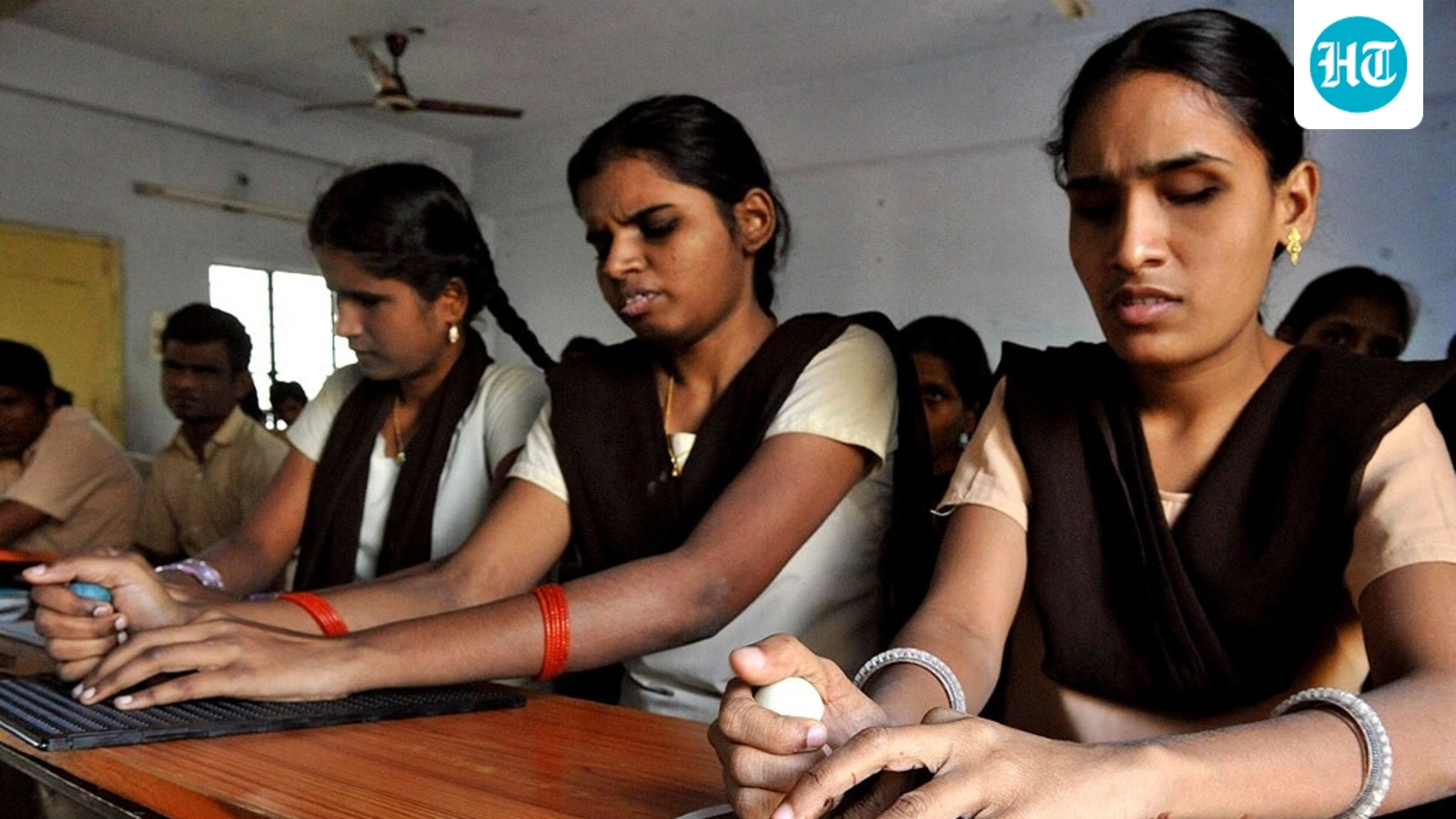
Addressing the digital divide through the Digital India Mission, India has marched on towards becoming a global “best practice” model of a digital welfare state. Yet, Persons with Disabilities (PwDs) remain largely excluded from this promise of universal outreach. Disability pensions, contrary to the very principles underlying disability rights, are determined not by the nature or extent of disability but by domicile, the discretionary decisions of State governments, and cumbersome bureaucratic processes. As a result, a vulnerable section of citizens continues to remain outside the ambit of a welfare architecture that otherwise prides itself on inclusivity and last-mile delivery.An inadequate safety netThe 2011 Census recorded 2.68 crore PwDs. Today, accounting for population growth and changing disease profiles, their number is conservatively estimated at 4.5 crore-6 crore. Although the Supreme Court of India has recognised the right to live with dignity as a fundamental right and the Rights of Persons with Disabilities Act, 2016 provides legal protection, disability benefits — especially pensions — remain fragmented, discretionary, and inadequate. As a result, the Indira Gandhi National Disability Pension Scheme covers only a small fraction of PwDs, while pension amounts in most States range from just ₹300 to ₹500 a month, with a few offering ₹1,000-₹3,000.India spends barely 0.02% of GDP on disability welfare including pensions. South Africa spends 0.12%-0.15% of GDP (six times more); Brazil 0.45%-0.50% (20 times more); OECD countries 2.2% (110 times more) and Australia 0.35%-0.40% (20 times more).Beyond politics, sound economics demands the inclusion of PwDs. The World Bank and UNDP estimate that low- and middle-income countries lose 3%-7% of GDP when PwDs are excluded from education, employment, and social security. Disability income improves household stability, rural consumption, and labour participation. Studies show fiscal multipliers of 1.4-1.6, while the 2025 Pro Bono Economics report found that the socio-economic returns from disability pensions exceed their costs by nearly 48%. Far from being a welfare expense, disability pensions are an investment and an effective economic stimulus.India must establish a Minimum Universal Disability Pension Floor Rate (MUDPFR) to give effect to the state’s constitutional obligation, under Article 41, to provide public assistance to persons with disabilities, and to operationalise Section 24 of the Rights of Persons with Disabilities Act, 2016, which guarantees adequate social security, including pension benefits. Such a measure would translate the promise of inclusive growth and “Sabka Saath, Sabka Vikas” into reality by shifting disability pensions from a matter of charity and discretion to a matter of citizenship rights. While ensuring that no disabled person receives less than a minimum pension regardless of where they live, a MUDPFR would still allow States to provide additional top-ups.This is not an unrealistic proposal. South Africa provides a national disability grant with uniform eligibility norms; Brazil’s BPC guarantees a national minimum income; and Australia and New Zealand operate nationwide disability pension systems. Several developing countries, including Kenya, Rwanda, Thailand and Indonesia, also provide disability income support at the national level. International experience shows that centrally set standards promote uniformity, universality and portability.A MUDPFR of ₹8,000 per month for 40 lakh beneficiaries would cost about ₹38,400 crore annually (0.08% of GDP), while ₹10,000 for 65 lakh beneficiaries would cost ₹78,000 crore. Even a pension of ₹15,000 per month would keep expenditure below 0.2% of GDP. Such spending is fiscally manageable when compared with allocations for food subsidies (₹2.05 lakh crore), rural development (₹1.80 lakh crore), tax concessions and revenue foregone (₹1.72 lakh crore), and infrastructure (₹11.11 lakh crore). Yet, disability pensions and inclusion continue to receive only a tiny fraction of public expenditure.From fragmentation to integrationThe current disability pension system, shared between the Ministry of Rural Development and the Department of Empowerment of Persons with Disabilities, leads to duplication, delays and diffused accountability. Countries that have faced similar challenges have addressed them through a single national authority — South Africa’s SASSA, Australia’s NDIA, Brazil’s INSS and Ireland’s Department of Social Protection. India too needs a National Disability Pension Authority to oversee eligibility norms, a national registry, portability, digital integration, grievance redress and State-wise performance monitoring — one standard, one system, one nation.Implementing a robust disability pension system would strengthen India’s bid for a UN Security Council seat by translating its commitments into action under Article 28 of the UN Convention on Rights of Persons with Disabilities, ILO Recommendation No. 202, SDG 1.3, and the G-20 New Delhi Leaders’ Declaration, all of which endorse social protection as a cornerstone of inclusive development.Combining pensions with employment support can move persons with disabilities from mere survival to productive participation. A MUDPFR could also yield economic benefits. Countries such as Singapore, South Korea, South Africa and Brazil integrate disability pensions with employment and social security systems. India should similarly strengthen its fragmented Disability Employment Incentive Scheme. Models abroad include employer tax incentives in Nigeria, the U.K.’s Access to Work programme, and Australia’s wage subsidies. Existing schemes such as PM-DAKSH, NAPS and State-level employer incentives provide a foundation for expansion.Constitutional imperativeA MUDPFR would give effect to the Constitution’s guarantees of equality, equal protection, dignity and the right to life. India has already standardised major welfare programmes — from food security and health care to PM-KISAN and pensions — and delivers benefits at scale through DBT and UPI. The capacity and technology exist. What is needed is the political will to prioritise dignity. Disability pensions remain one of the few entitlements determined by where a person lives. If dignity is a constitutional right, geography cannot decide the minimum support for survival.More than an economic or administrative reform, a MUDPFR is a moral one. It affirms that persons with disabilities are rights-bearing citizens, not recipients of charity. By transforming the state from a benevolent provider into a constitutional guarantor, it strengthens dignity, inclusion and citizenship.Should India continue with a system in which disability pensions vary according to State budgets, political priorities and bureaucratic complexities, leaving persons with disabilities vulnerable to hardship? Or should the Republic guarantee a minimum level of support for all? A Viksit Bharat cannot leave its most vulnerable citizens at the mercy of a postcode lottery. Federalism cannot be a justification for inequality.A MUDPFR is the next logical step in India’s welfare architecture, building on rights-based entitlements enabled by digital inclusion and DBT. It would humanise the state, uphold the dignity of persons with disabilities and strengthen the Republic.Over the past 75 years, India has steadily expanded its welfare state in pursuit of social justice. With the necessary platforms and delivery systems now in place, the time has come to secure the foundation. The real question is whether India recognises dignity for persons with disabilities as a constitutional right and a collective obligation. That promise is long overdue, and a MUDPFR offers a way to fulfil it.Sushil Kumar is a former Secretary, Government of India and an Advocate in the Supreme Court and High Court
Equality of treatment for Persons with Disabilities
India must establish a Minimum Universal Disability Pension Floor Rate to provide public assistance to persons with disabilities
TL;DRAI
India unifies disability pensions into ₹8,000-₹15,000 national scheme at 0.08-0.2% GDP cost, replacing fragmented State programs. Centralized system improves service delivery and operational efficiency—a digital governance model for scaling inclusive public services.
1,138 words~5 min read