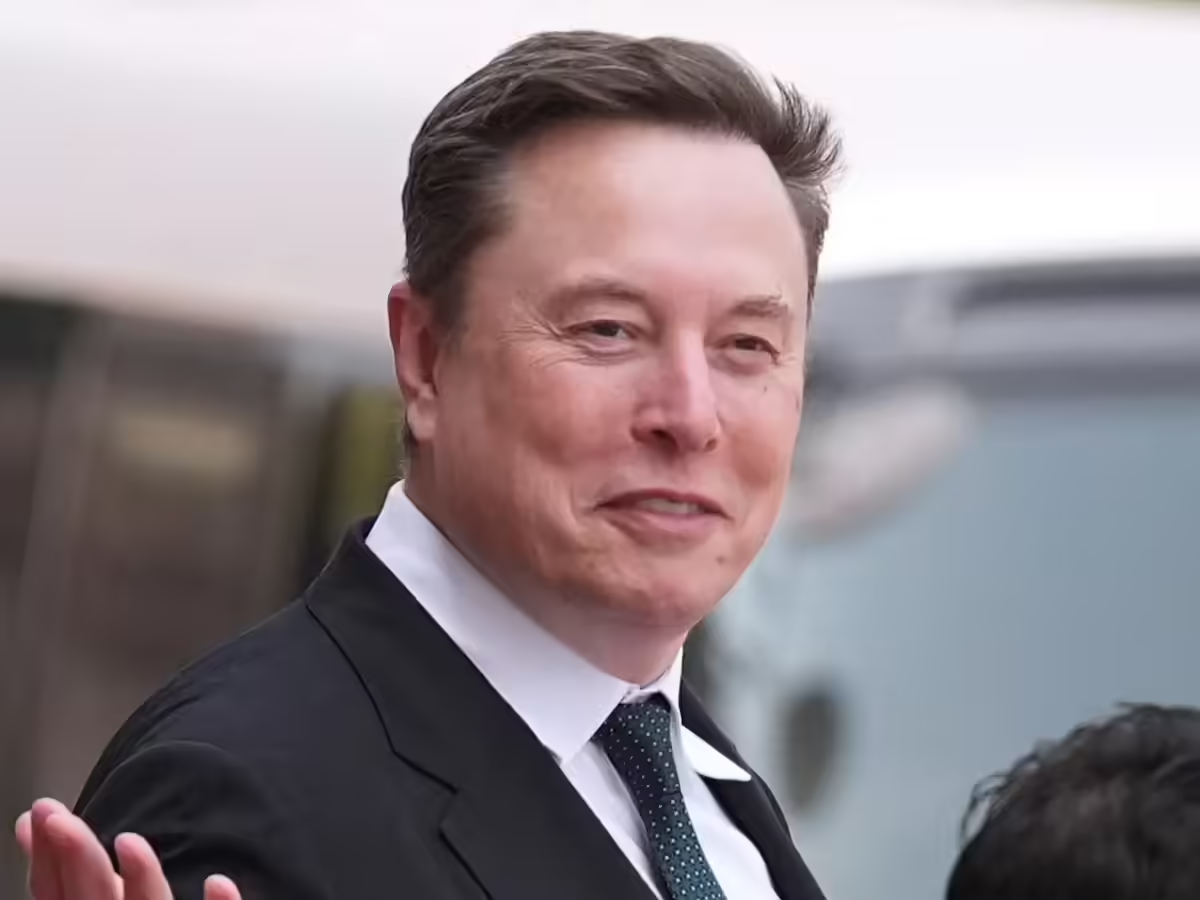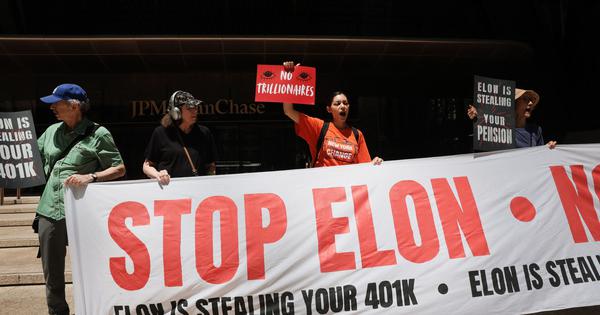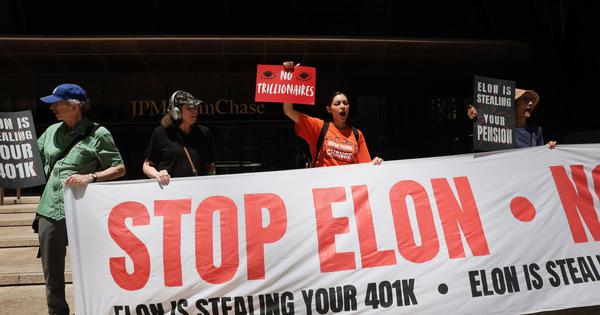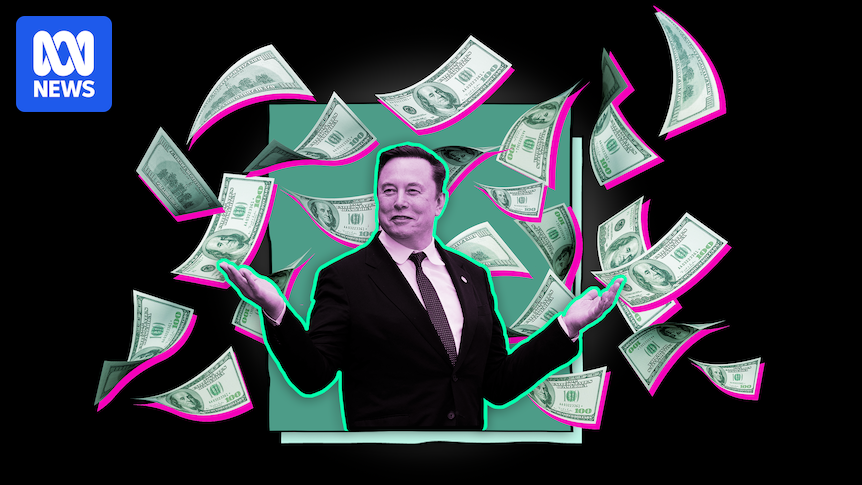
For much of modern history, capitalism has excelled at making the unimaginable seem ordinary. Millionaires once inspired awe. Billionaires subsequently stretched the boundaries of wealth beyond everyday comprehension. Now, with SpaceX's public debut propelling Elon Musk beyond the trillion-dollar threshold, another milestone has entered the economic lexicon.On paper, the world's first trillionaire now commands wealth exceeding the annual economic output of many countries, a comparison that says less about one man than about the changing scale of capitalism itself.The world's first trillionaire is less a curiosity of arithmetic than a signpost of something larger. The real significance of this milestone lies not in the number of zeroes attached to one man's fortune, but in what it reveals about the changing relationship between wealth, technology and power.True, a trillion-dollar fortune is largely a valuation, not a vault. But influence, unlike cash, need not be liquid. Even paper wealth on such a scale can shape markets, sway institutions, and increasingly alter the balance between corporations, governments and society. History suggests that extraordinary wealth matters less for the money it represents than for the power it confers.Every age produces wealth in its own image. Industrial capitalism created empires built upon steel, railways and oil. The digital revolution generated platforms connecting billions of consumers and businesses. A new phase now appears to be emerging, one characterised by founder-led technological ecosystems whose influence increasingly extends across industries, borders, and even traditional distinctions between public and private capabilities.John D Rockefeller accumulated wealth through oil. Henry Ford reshaped manufacturing. Bill Gates rode the software revolution. Jeff Bezos harnessed the internet. Their enterprises, however consequential, remained largely confined to identifiable sectors. Musk's constellation of ventures presents a different phenomenon altogether. EVs, reusable rockets, satellite communications, AI and autonomous technologies are no longer isolated domains. They increasingly reinforce one another, creating interconnected networks whose strategic significance extends well beyond their immediate commercial applications.Traditional valuation methods were built around visible revenues, predictable cash flows and clearly defined industries. 20th-c. capitalism sought to separate institutions from individuals, with professional managers and governance frameworks designed to ensure that companies outlived charismatic founders.The trillionaire phenomenon also reflects a deeper shift within capital markets. Investors are assigning extraordinary value not merely to present profits, but to the ability to shape technologies and industries still in their infancy, effectively transforming imagination itself into a source of economic power. Markets are increasingly financing possibilities rather than products, rewarding those capable of defining future economic landscapes.Wealth alone has never been the defining source of power. Influence over infrastructure, communications and technology may ultimately prove more consequential. Satellite networks underpin strategic communications. AI promises to reshape industries and labour markets. Space technologies possess commercial as well as geopolitical significance.In an earlier era, entrepreneurs depended upon governments for infrastructure and strategic capabilities. Increasingly, governments themselves are becoming users of private networks and technologies. The relationship between political authority and economic power may be undergoing a subtle, but profound, inversion, with implications extending far beyond commerce.Perhaps for the first time, capital markets are conferring upon private actors forms of influence once associated primarily with states, making the governance of economic power an increasingly geopolitical question. Markets can assign extraordinary valuations. But legitimacy has traditionally flowed from institutions and democratic consent.Political institutions evolved to oversee railroads, industrial trusts and energy monopolies. Regulatory frameworks were conceived for an earlier technological landscape. Whether existing arrangements are sufficiently equipped to address corporations operating simultaneously across AI, communications, mobility and space infrastructure remains an open question.None of this diminishes the extraordinary achievement represented by SpaceX. Few entrepreneurs have repeatedly converted improbable ambitions into commercially viable enterprises. Privatisation of space exploration, once the preserve of governments and science fiction, is now among the most dynamic sectors of the global economy.Industrial capitalism produced empires. Digital capitalism created platforms. The emerging era appears to be generating technological ecosystems whose scale increasingly resembles that of nations. Their founders command levels of influence that earlier generations associated with industrial dynasties or statesmen.Perhaps the most unsettling aspect of the trillionaire era is that markets can create concentrations of power faster than societies can create mechanisms to govern them. Technological revolutions move at exponential speed, while institutions rarely do. History, more often than not, is written in the widening gap between the two.The challenge confronting societies is no longer wealth without precedent, but power without precedent. The more consequential challenge is whether institutions, governance frameworks and democratic accountability can evolve rapidly enough to accommodate concentrations of economic power unprecedented in modern history.Future historians may regard this moment not as the triumph of one remarkable entrepreneur but as the beginning of a new chapter in capitalism itself - one in which the distance separating corporations from nations, and founders from institutions, becomes progressively harder to discern. The world's first trillionaire may ultimately be remembered not for the wealth he accumulated but for the questions his rise forced capitalism itself to confront.(Disclaimer: The opinions expressed in this column are that of the writer. The facts and opinions expressed here do not reflect the views of www.economictimes.com.)
$1,000,000,000,000: The larger story of Musk, the first trillionaire, lies not in wealth, but in power, tech and governance - The Economic Times
Elon Musk's trillion-dollar valuation marks a new era in capitalism. This unprecedented wealth reflects a changing dynamic between technology and power. Private entities now wield influence once held by nations. Markets are valuing future possibilities over present products. Societies face the challenge of governing this new scale of economic power as institutions struggle to keep pace with rapid technological change.
TL;DRAI
Musk hits $1T via SpaceX IPO, controlling integrated tech ecosystem (EVs, rockets, satellites, AI, autonomous) spanning critical infrastructure. For tech managers: unprecedented power—governments now depend on private satellite networks and AI, while governance institutions lag.
842 words~4 min read