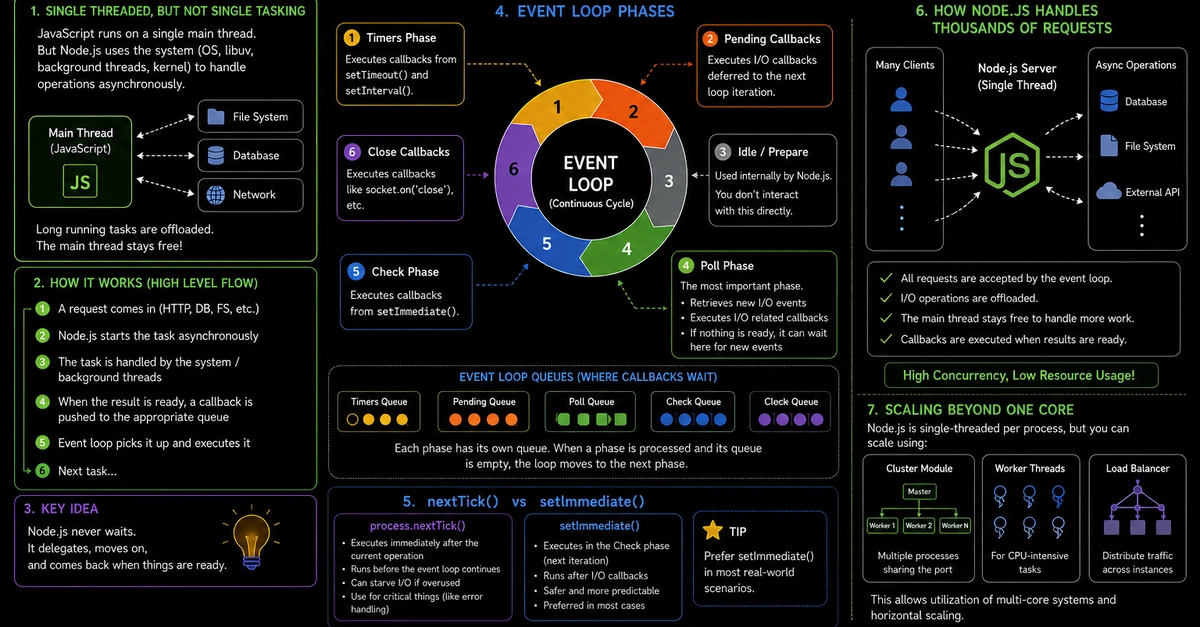
Every developer learning Node.js eventually finds out that the platform is single-threaded for JavaScript execution, but uses a libuv thread pool for asynchronous C++ tasks. However, there is an important architectural detail you must grasp: the libuv thread pool is not designed to execute your custom JavaScript code.
If you offload an intense image processing script, an enormous JSON parsing job, or a massive cryptographic loop into a standard async pattern, your server’s main event loop will grind to a halt.
In this deep dive, we will dissect Node.js Worker Threads from the fundamental memory layer up to practical design patterns with real code examples, step-by-step breakdowns, and real-world analogies.
1. The Core Problem: The V8 Bottleneck
Let's illustrate the bottleneck. Look at this standard Express route handling a heavy CPU-bound task (generating a massive array and sorting it):