Stateless AI is the easy case. A user submits a query, the system retrieves relevant context, the model generates a response, the interaction ends. The next query starts fresh. There is no continuity to manage, no accumulated context to maintain, no behavioral consistency to enforce across sessions.
Most enterprise AI deployments start as stateless systems. They encounter their limits when users start expecting the AI to remember prior interactions, when agents need to track progress across long-running tasks, and when the quality of AI responses depends critically on context that cannot be reconstructed from the current query alone.
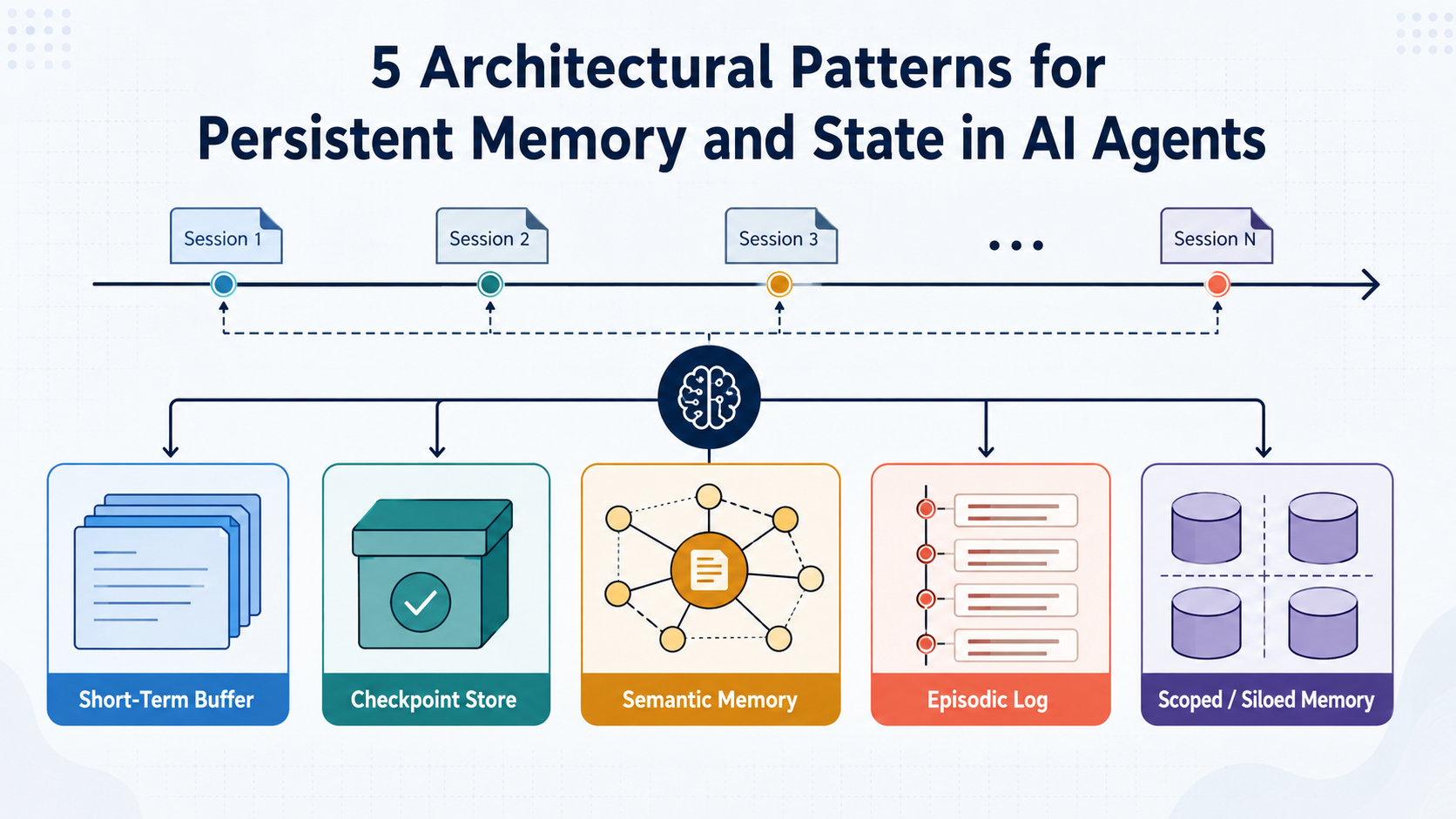
Designing memory and state for enterprise AI agents is an architectural problem that most teams approach too late, when the symptoms, an AI that forgets what it discussed last week, an agent that redoes work it already completed, are already causing user frustration.
The Four Categories of State That Enterprise AI Agents Need
State in AI agent systems is not monolithic. Different categories of state have different characteristics, different persistence requirements, and different update patterns. Conflating them leads to architectures that manage some state well and others poorly.