See more Daily Mail on Google - save us as a Preferred SourceBy JAMES TAPSFIELD, UK POLITICAL EDITOR Published: 16:08 BST, 12 June 2026 | Updated: 16:08 BST, 12 June 2026
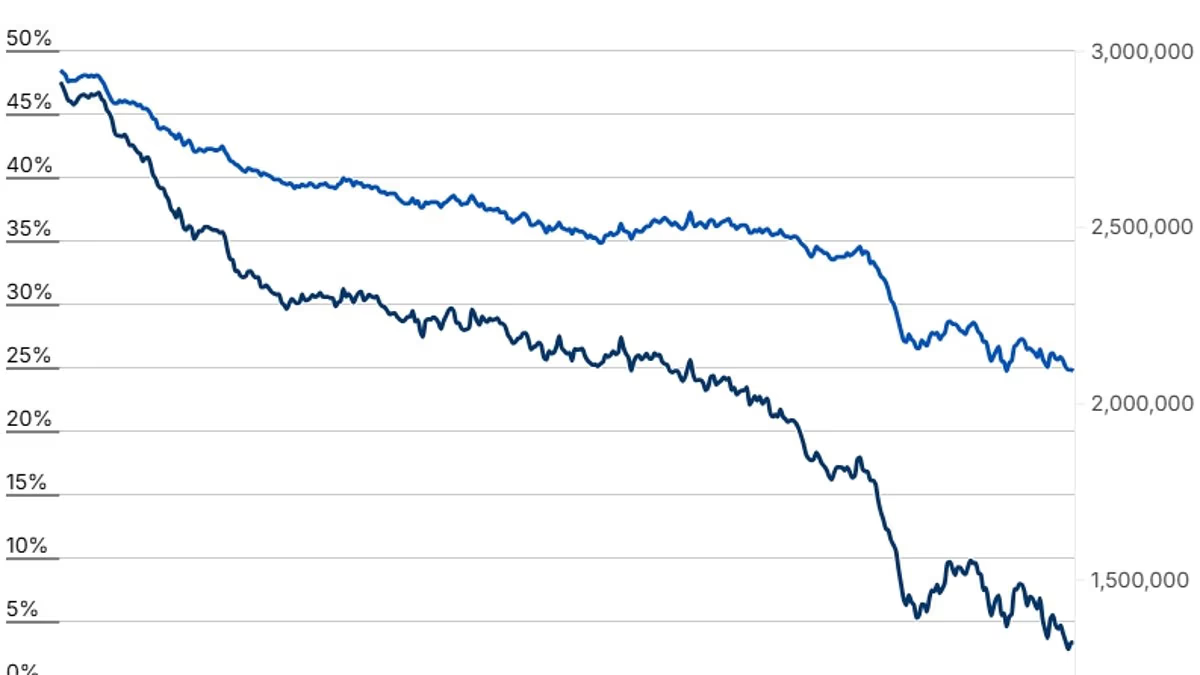
The decline in stay-at-home mums has been laid bare in figures showing they account for a dwindling proportion of the economically 'inactive' population.Just 24.8 per cent of the 5.3million women in the category were out of the workplace to look after family or home in the first quarter of this year.That is the lowest in data going back more than three decades - dipping marginally under the previous floor from the end of 2023. When official figures started in 1993 the proportion was nearly twice as high at 48.5 per cent. There were more than 2.9million at that stage, whereas this year it was 1.3million.Over the same period the total number of women aged between 16 and 64 classed as 'inactive' has fallen from six million to 5.3million.
The proportion of men saying they were out of the jobs market to look after family or home - which could also include people caring for elderly relatives - has increased, but only from 4.3 per cent to 6.1 per cent.The dramatic shifts could reflect that couples can no longer afford for only one person to be earning, the falling birth rate, or that more women want to maintain careers.House prices have soared since the 1990s, while the cost of living has increased sharply since Covid and the Ukraine war.Research by the ONS in 2023 highlighted how numbers of stay-at-home parents had been bucking the trend implied by population changes.The body modelled how demographic factors should be affecting figures on economic inactivity - people not working despite being working age - and then compared those estimates to what had actually happened.The statisticians estimated that the numbers dedicated to looking after their family or home should have risen by 18,000 between 2019 and 2022.But in fact that category saw a dramatic 251,000 plunge - offsetting a much wider surge in inactivity numbers after Covid.'The reasons for this decrease are not fully understood, but potential contributing factors may include behavioural changes and a decreasing number of births over the last decade,' the ONS said.