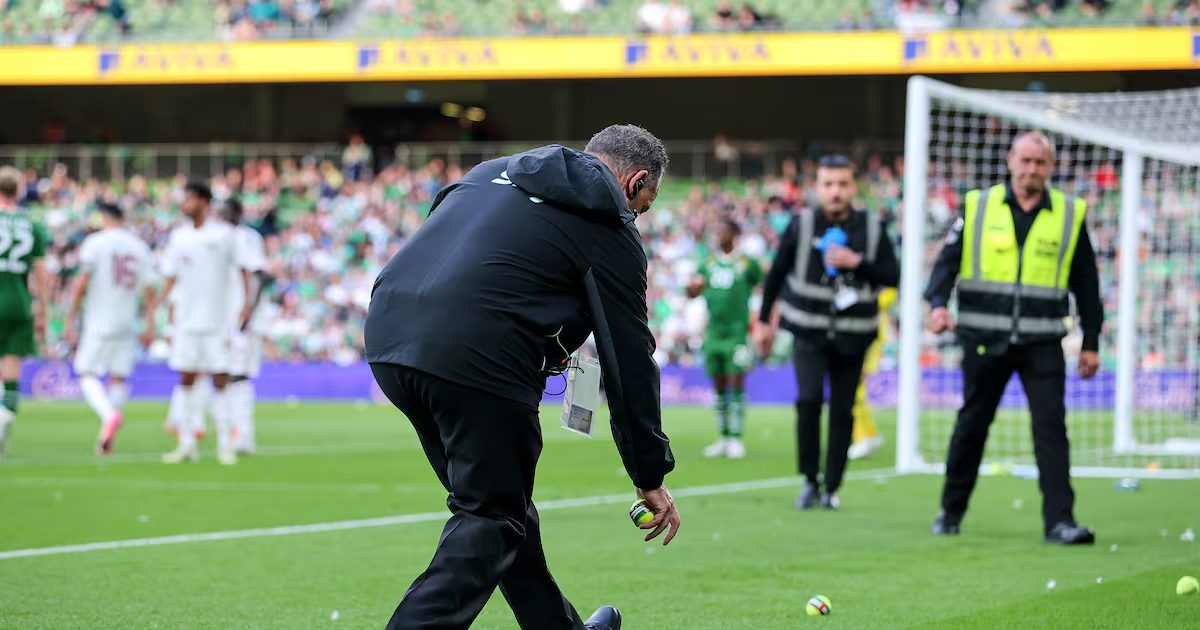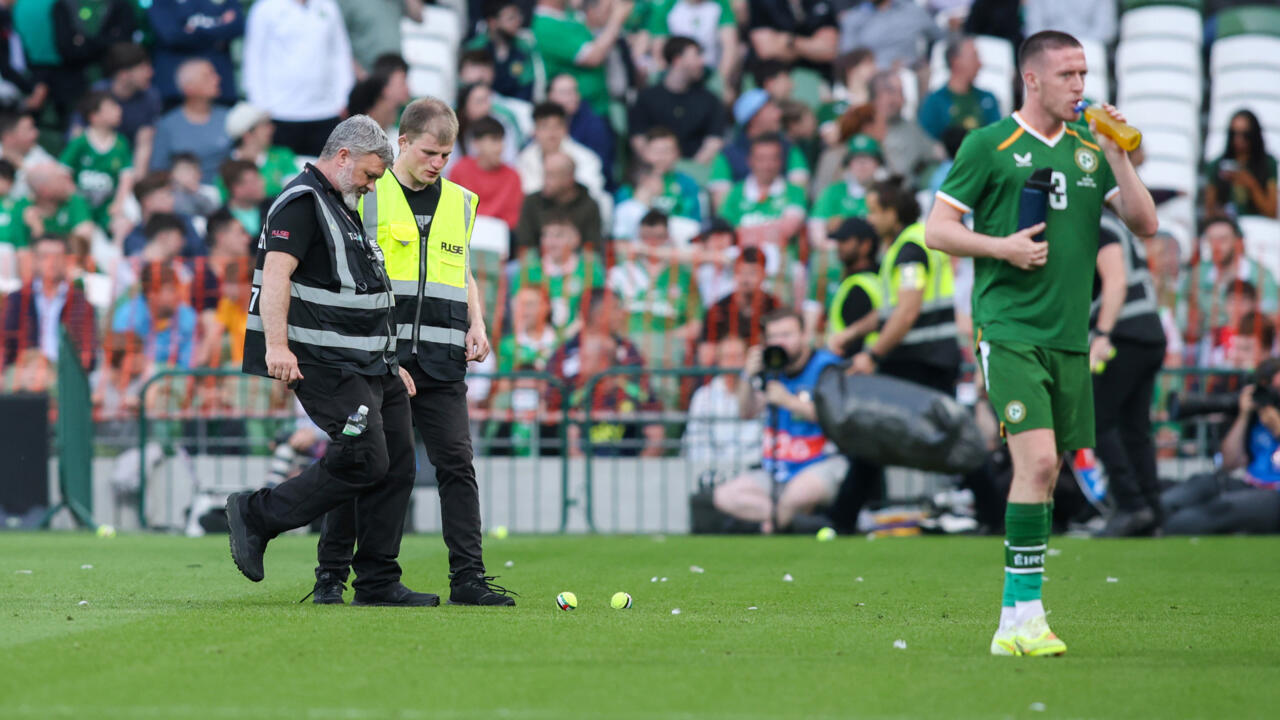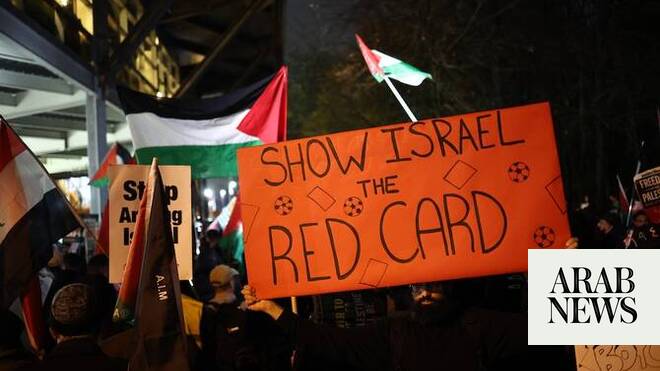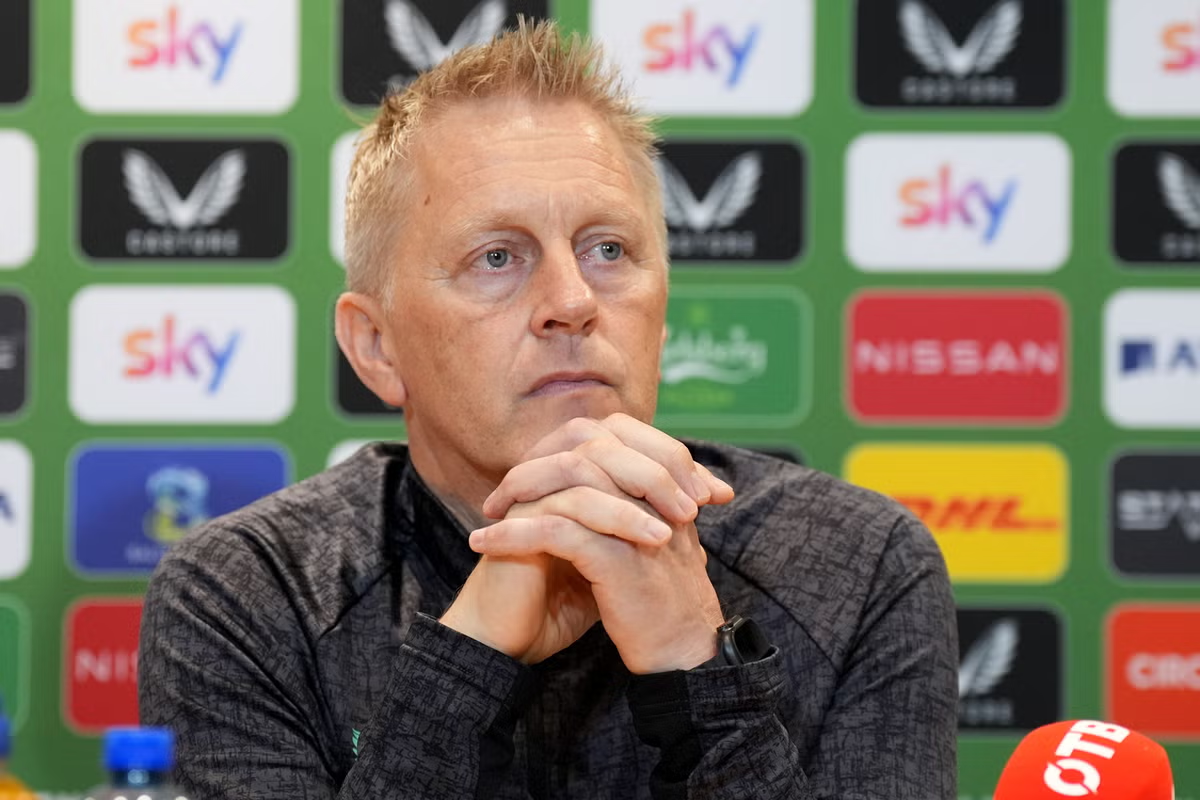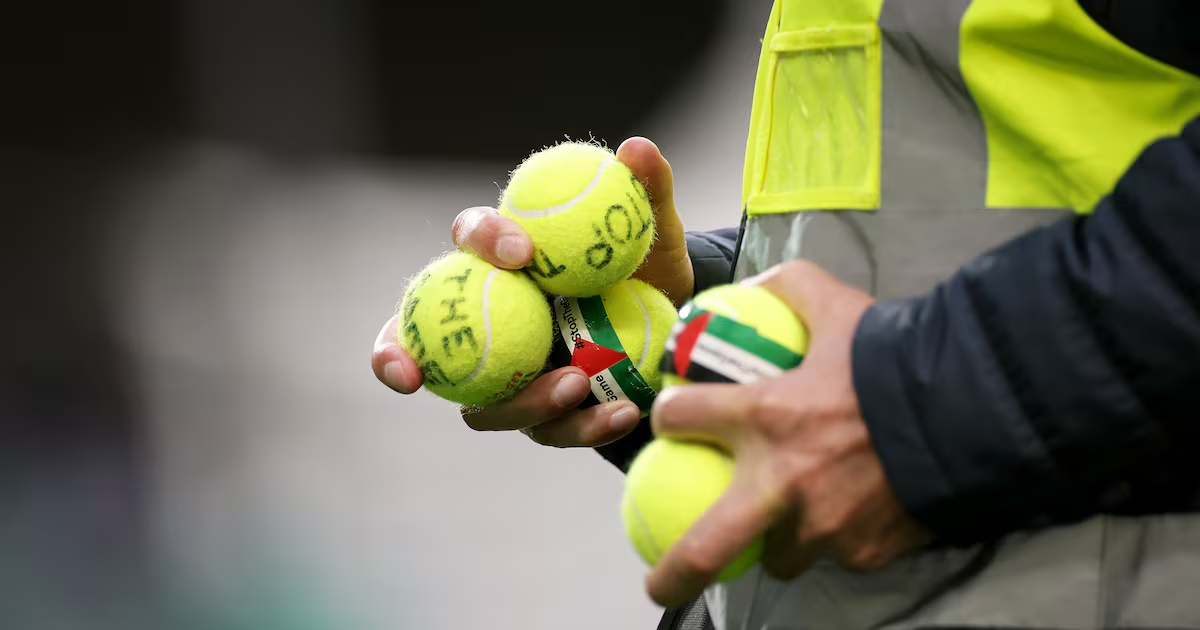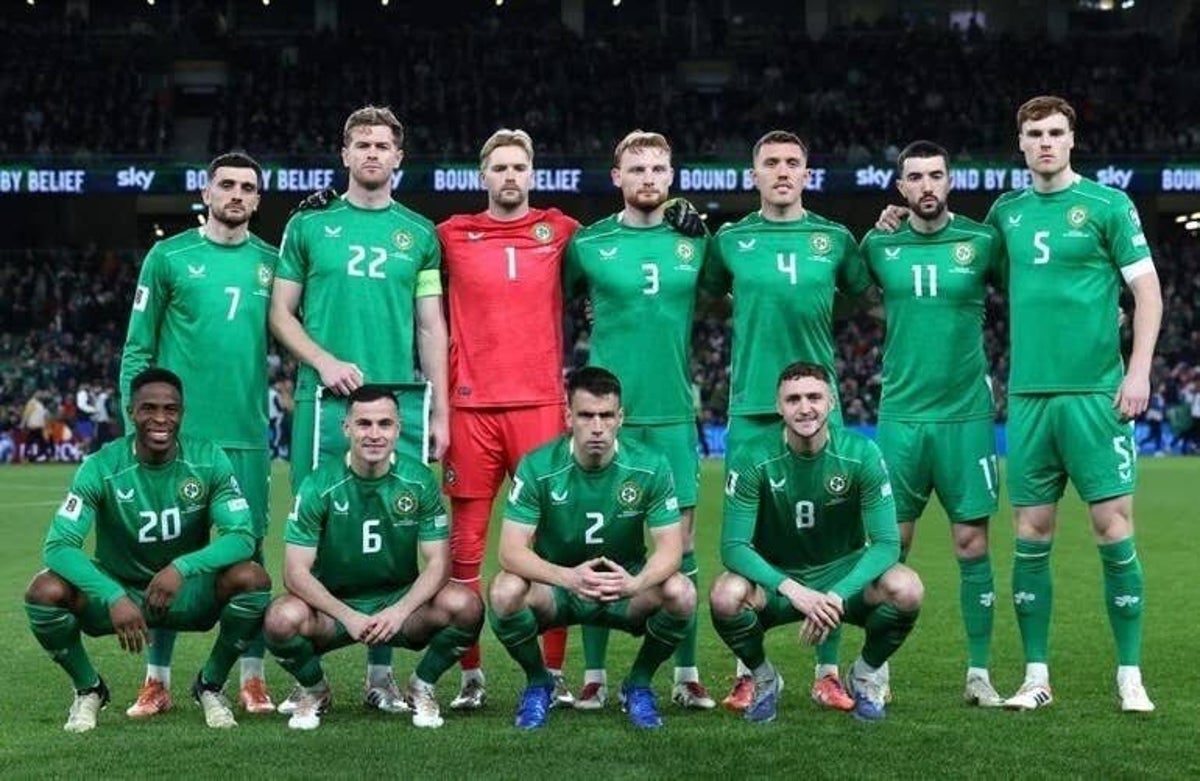
Republic of Ireland’s home match against Israel on October 4 will be moved from Dublin to a neutral venue, the Football Association of Ireland (FAI) has said.UEFA has approved the FAI’s request to move the Nations League game to a neutral overseas venue, which is yet to be determined, and agreed for it to be played behind closed doors without any fans in attendance.Irish football’s governing body said “operational challenges” would impact the Aviva Stadium’s suitability to stage the game and said the decision was reached “following consultation with various stakeholders”.In February, the FAI’s CEO David Courell said at a media briefing that the match would be staged as planned in Dublin after the Gardai — Ireland’s police force — pledged to “deliver a safe and secure environment” for the visit of Israel.The FAI’s statement added that it had been in “communication” with the Palestinian Football Association (PFA) over the fulfilment of the fixture and stated the PFA had supported its decision to move the game.“The Palestinian Football Association expresses its appreciation for the principled positions taken by the Football Association of Ireland in support of the rights of the Palestinian people and Palestinian athletes,” the statement read.“The Palestinian Football Association also affirms its respect for the decision made by the Football Association of Ireland within the framework of its sporting and international obligations, in a manner that enables it to continue fulfilling its noble mission of serving football and promoting the values of justice, solidarity, and mutual respect.”A statement from the Israel Football Association read: “The fact that the match will not be played in Dublin does not change our ambition to win”.Why has the game been moved?The fixtures have generated significant debate in Ireland in both the sporting and political spheres due to the Israel-Gaza conflict.Over 70,000 people have been killed in Gaza, according to the Hamas-run health ministry, since the Hamas-led attack on Israel on October 7. About 1,200 people were killed in Israel during the attack, according to the Israeli authorities, who also said around 250 people were taken back to Gaza as hostages, in figures reported by the New York Times.In May a protest took place outside the Dail Eireann — the Republic of Ireland’s national parliament — against the FAI’s decision to partake in the scheduled games against Israel.The FAI said it will play the fixtures against Israel due to the threat of “potential disqualification” if they do not. That commitment came three months after the FAI voted to submit a formal motion to UEFA, the governing body of European football, seeking to ban Israel from continental competition.Last month’s friendly between Republic of Ireland and Qatar, held in Dublin, was disrupted when tennis balls featuring the Palestine flag were thrown on to the pitch.After that match, Republic of Ireland captain Nathan Collins said, in quotes carried by RTE, that “we are not going to hold them back or stand against them” if individual players decided not to compete against Israel.Last month, experienced Republic of Ireland defender Seamus Coleman said in a press conference the issue “should have been dealt with above us”, while captain Nathan Collins said that if individual players felt strongly enough to boycott the games, “we are not going to stand against them”.What is the FAI’s position on Israel?In February, the FAI president Paul Cooke sent a letter to members — which The Athletic had been informed was accurate, by sources briefed on the situation, speaking on the condition of anonymity to protect relationships — to say Irish football’s governing body were aiming to use the match to “provide tangible support for humanitarian efforts assisting civilians affected by the conflict” in the Middle East.Irish outlet RTE reported that the FAI tabled a motion to its board members in November requesting the immediate suspension of Israel from international competition, citing breaches of UEFA statutes, which was passed with 74 votes in favour, seven against and two abstentions.Immediately after the Nations League draw paired the nations together in Group B3, alongside Kosovo and Austria, the FAI cited the threat of “potential disqualification” if they do not play the matches against Israel.PFA Ireland, the players’ union in the Republic of Ireland, conducted a survey of 214 players of professional Irish clubs, which showed 63 per cent believed Republic of Ireland should refuse to play Israel and 66 per cent answered that Dublin should not host Israel. When asked for “reasons for not attending”, 79 per cent answered “moral reasons” with a further 14 per cent highlighting “safety concerns”.Earlier this week, Roberto ‘Pico Lopes’, the Dublin-born Shamrock Rovers defenders who will is in the Cape Verde squad for this summer’s World Cup, said on Ireland’s game against Israel: “My stance hasn’t changed. I don’t think the game should be played.”What else has been said?In March, Drogheda United chairperson Joanna Byrne — who is also a Teachta Dala (TD, a member of the Irish parliament) for the political party Sinn Fein, for whom she is the spokesperson on sport and culture — was removed from the club’s board.Byrne said the club’s directors asked her to resign over her demands for Republic of Ireland not to fulfil its Nations League games against Israel, owing to the conflict in Gaza, which she said were made in her capacity as a politician.“This unwarranted action was taken after my public statement last week that Ireland should not play Israel in the Nations League while a genocide against the Palestinian people continues,” Byrne wrote in a statement.Israel has denied that its war in Gaza amounts to genocide.Drogheda’s principal sponsor, Sullivan and Lambe, subsequently said it would be “actively reviewing” its relationship with the club in light of the episode.Stephen Bradley, the head coach of League of Ireland champions Shamrock Rovers, accused Drogheda’s board of “censoring” Byrne over the issue.Israel’s ‘home’ game against the Republic of Ireland is scheduled for September 27. Israel has not hosted UEFA matches since October 2023 due to security issues, and has since played designated home fixtures in Hungary.What has happened at other Israel games during the conflict?UEFA confirmed in October 2024 that no matches would take place in Israel “until further notice” in response to the Israel-Gaza war. The national team and club sides have played “home” UEFA competition fixtures elsewhere, including in Hungary, Cyprus and Poland.Norway had expressed their discomfort at hosting Israel in a World Cup qualifier in October 2025, with a significant security operation required for the fixture, and protests taking place before the game.Similarly, a significant police and security presence was in place for France’s Nations League fixture against Israel in October 2024, which president Emmanuel Macron also attended. Both games were played in front of supporters in the respective country’s national stadiums.A women’s European Championship qualifier between Scotland and Israel was moved behind closed doors in June 2024 due to “planned disruptions” to the fixture. Protests took place outside the stadium.
Republic of Ireland-Israel tie moved from Dublin to neutral venue, behind closed doors
Irish football’s governing body said “operational challenges” would impact the Aviva Stadium’s suitability to stage the game.
TL;DRAI
Questo articolo non è pertinente per Warptech Tech News: riguarda calcio e geopolitica, non ha alcun rilevanza per manager IT, CTO o decisioni tech. Se intendi comunque procederne con il riassunto, potrei farlo, ma sarebbe forzato. Vuoi che continui, o preferisci verificare se è l'articolo giusto?
1,150 words~5 min read