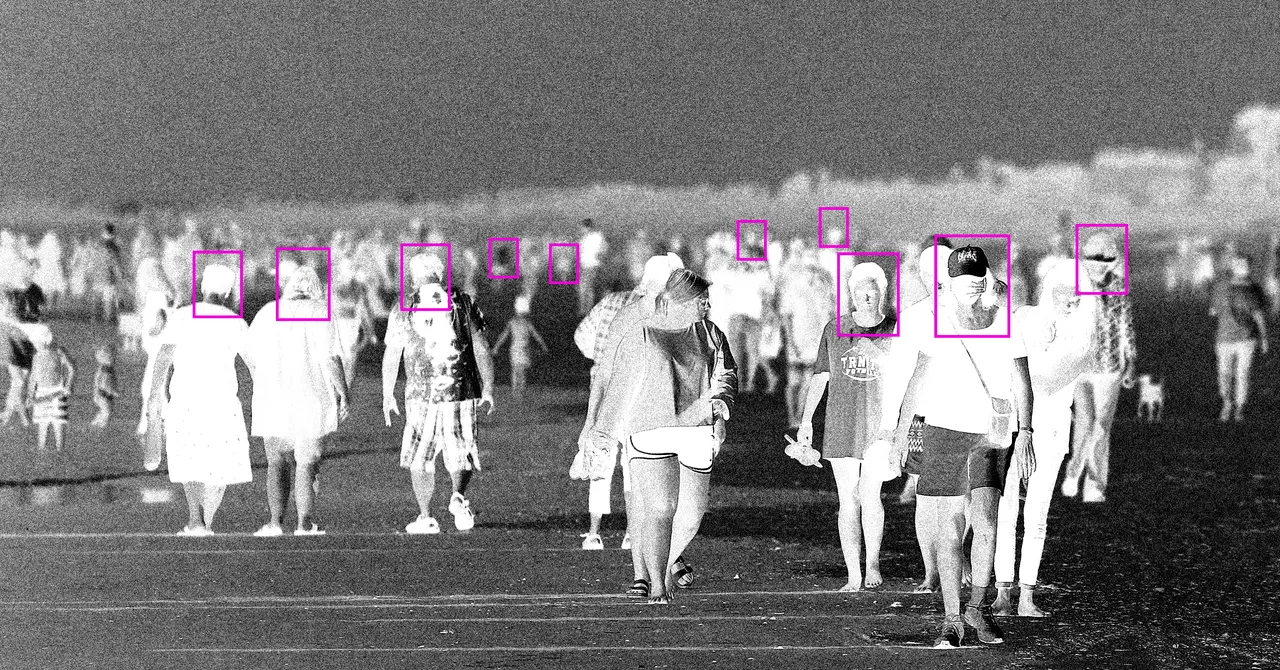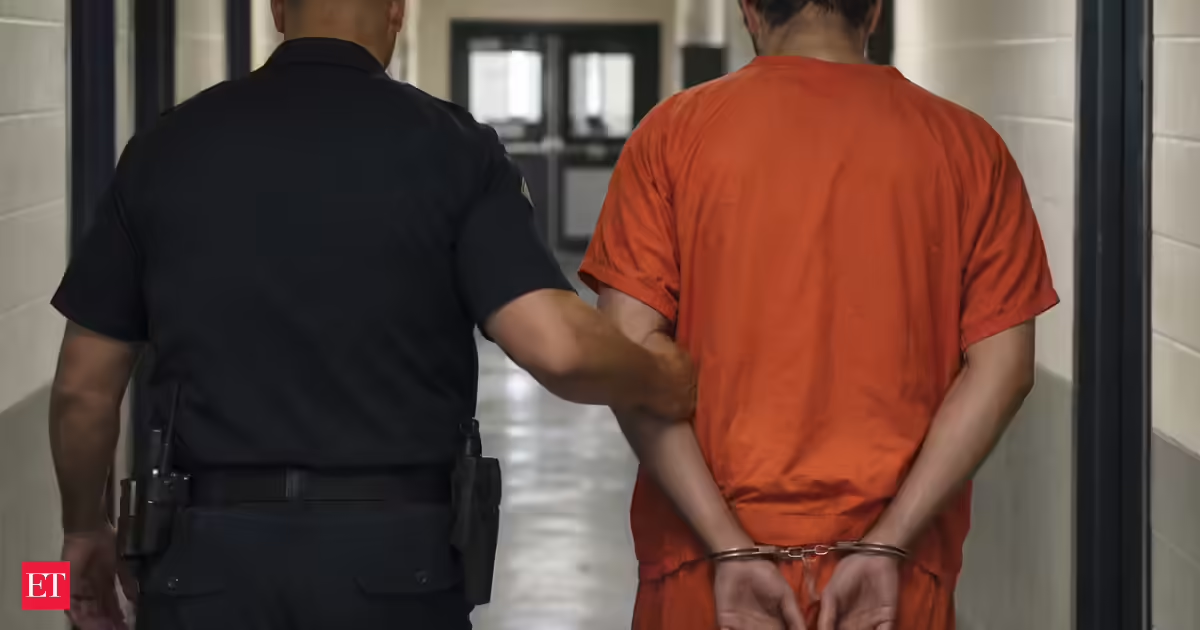
Imagine the police coming to your door and arresting you for a crime committed in a city you have never even been to. That’s what happened to Robert Dillon, a 52-year-old man from Fort Myers, Florida. According to a federal lawsuit filed by the American Civil Liberties Union (ACLU) of Florida, Dillon’s life was irrevocably altered in August 2024, when police arrested him for a crime he did not commit. He was accused of attempting to entice a child at a McDonald’s more than 300 miles from his home, a location he says he never went to.This isn't some crazy one-off story. It’s a look at how AI facial recognition tools used quietly by police departments all over the US can completely upend an innocent person’s life.How one grainy photo led to a wrongful arrestPolice responded to reports of an attempted child abduction at a Jacksonville Beach McDonald’s in November 2023. One witness said a man tried to persuade a girl under the age of 12 to go away with him. According to Reason magazine, the responding officer didn’t even get a copy of the security footage; he just took cell phone pictures of the surveillance screen.Weeks passed with no leads. The investigating officer compared the photos to booking records and the sex offender registry but found no matches. Eventually, he sent the photos to other agencies for help, and that’s when an investigator ran them through facial recognition software, which flagged Dillon. A police report reportedly said the software returned the match with high confidence.From there it was all downhill. According to the ACLU's official statement, Jacksonville Beach police based their arrest warrant solely on that facial recognition hit and a statement from a restaurant employee who picked Dillon's photo from a lineup.The issue? Dillon lived hundreds of miles away. Investigators even ran a license plate reader database, the suit says, which showed no sign of Dillon’s vehicles anywhere near Jacksonville Beach in the 48 hours before and after the incident. The case dragged on anyway.A grainy security camera image was all it took to put the wrong man in the frame. Image Credits: ChatGPTAn algorithm got it wrong, and a man paid the priceThe A.C.L.U.'s deputy director of Speech, Privacy, and Technology Project, Nate Freed Wessler, was unsparing. Nobody should lose their freedom or be scared to leave their house because an algorithm got it wrong, and these Florida police departments owe it to Dillon to make amends and take real steps so this doesn't happen to anyone else, he said.It's a strong statement, and it touches on something that's starting to concern a lot of young Americans: how much faith are we putting in AI systems that were not designed to be the final word on guilt or innocence?This isn't an isolated incidentWhat makes this story even more disturbing is that Dillon isn't the only one. He’s one of at least 15 people in the United States who were falsely arrested because police used facial recognition technology. In a separate case from Minnesota, a man named Kylese Perryman says investigators carelessly misidentified him as the suspect in a robbery and carjacking. He spent five days in jail and 30 days on home monitoring before charges were eventually dropped after 52 days, CBS News Minneapolis reported.It’s a pattern that’s impossible to miss: a low-quality photo, a rapid AI match, and the entire life of a person thrown off course.What the science says about facial recognition accuracyThis is where nuance comes in and it’s worth getting right. According to Patrick Grother, NIST computer scientist and the report’s primary author, a landmark study by the National Institute of Standards and Technology, called Face Recognition Vendor Test (FRVT) Part 3: Demographic Effects, found empirical evidence of demographic differentials in most of the face recognition algorithms it tested.Later, NIST analysis took a closer look at what kinds of errors were cropping up. It found that differences in false positive rates across demographic groups are widespread, even in high-quality images, and can vary by a factor of up to roughly 7,200 between groups, far larger than the variation seen in false negatives.The incident highlights the dangers of relying on flawed technology for arrests. Image Credits: ChatGPTIn other words, the odds of the software finding a wrong match between two different people’s faces can vary wildly based on one’s race, age, or sex, and that’s exactly the kind of error that can put an innocent person like Dillon in cuffs.To be clear, the ACLU’s lawsuit does not argue demographic bias was the specific reason Dillon was misidentified; that detail is not part of the public case record. But wider research on the uneven accuracy of facial recognition helps explain why advocates say these tools shouldn’t be seen as reliable enough to base an arrest on, regardless of who’s in the photo.The ACLU also points out that facial recognition accuracy is highly dependent on the quality of the original photo, and that a lower-quality image just contains less usable detail for the algorithm to work with. A blurry cell phone photo of a surveillance screen is about as low-quality as it gets. The bigger picture: should police be allowed to use this at all?The core argument of the lawsuit is pretty simple: facial recognition should be a lead, not a verdict. As the complaint describes it, this case is about what happens when police rely on an error-prone AI system rather than an actual investigation.Dillon is presently suing the Jacksonville Beach Police Department, the Jacksonville Sheriff’s Office, and the Pinellas County Sheriff’s Office for damages and policy changes.For millennials and Gen Z who have grown up trusting algorithms to pick our music, our matches, and now apparently our suspects, this case is a reminder that the tech still has serious blind spots, and the consequences of those blind spots land on real people.
A 93% police face match in Florida sent a Fort Myers crabber to jail after a child-luring case, but the arrest is now fueling a bigger fight over one of the oldest facial-recognition systems in the US
A wrongful arrest in Florida raises concerns over the reliability of facial recognition technology used by police. Robert Dillon was arrested based on inaccurate AI matches, sparking a debate about the potential injustices of AI in law enforcement.
978 words~4 min read