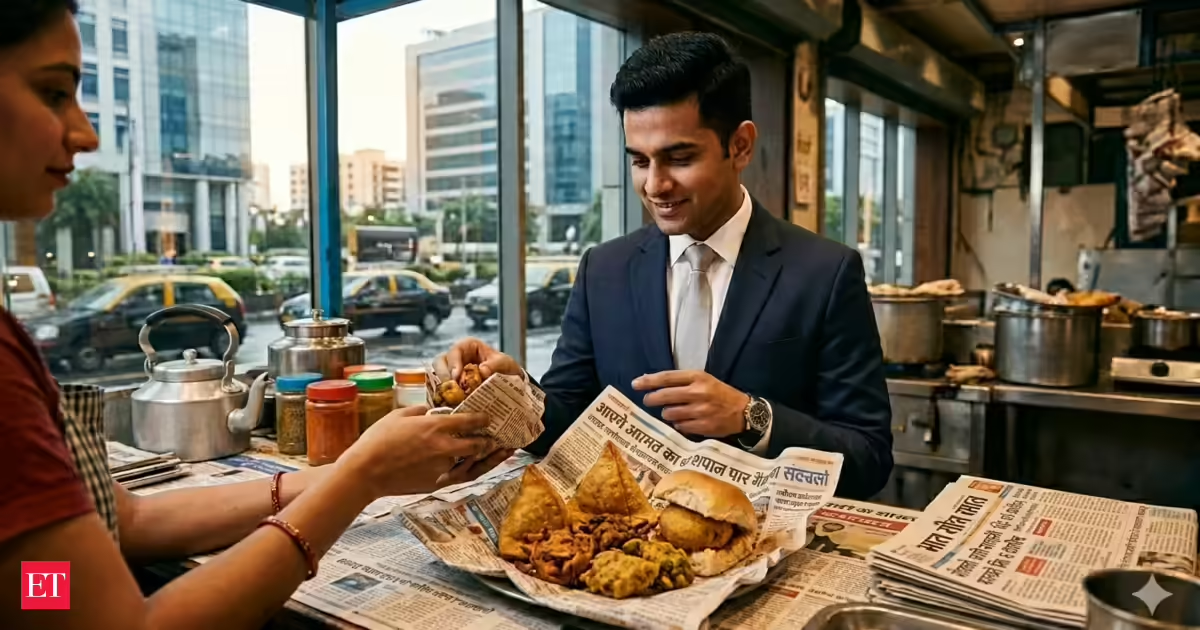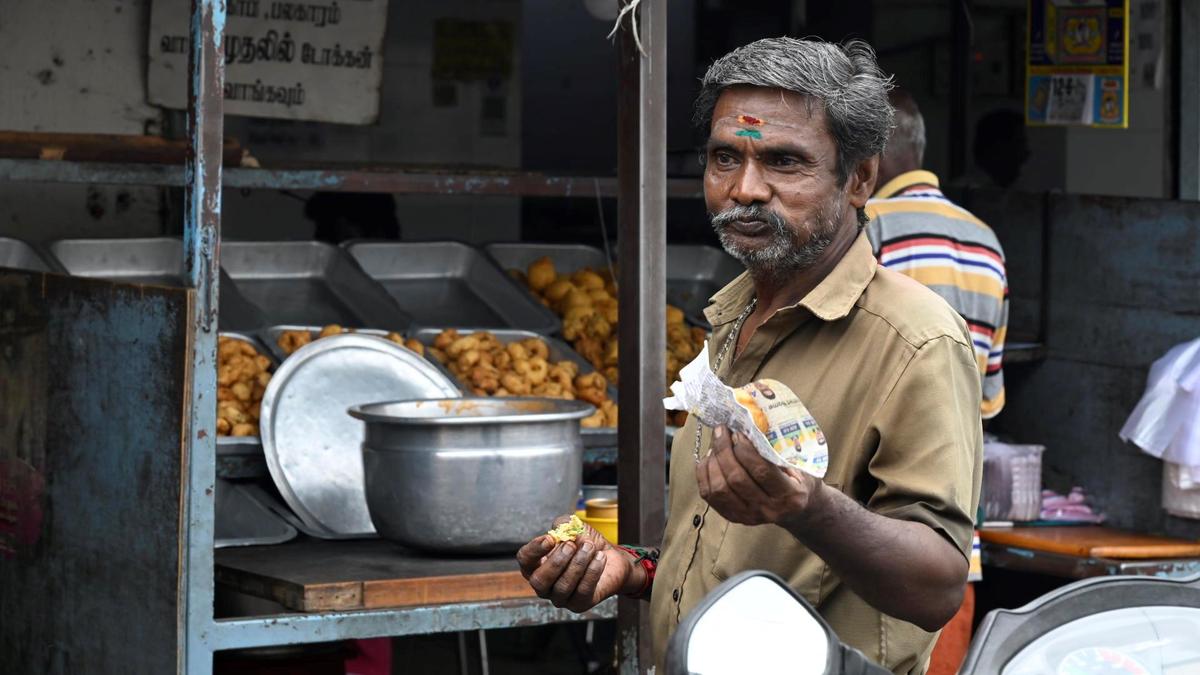
A man having a snack wrapped in old newspaper at an eatery in Erode on Friday.
| Photo Credit: M. GOVARTHAN
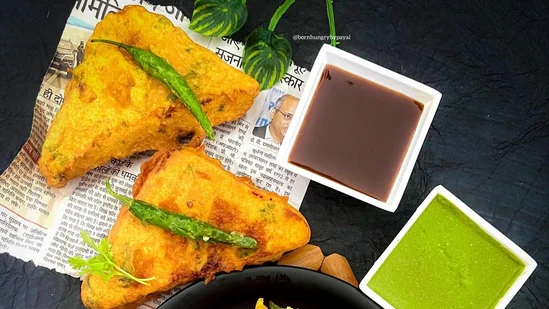
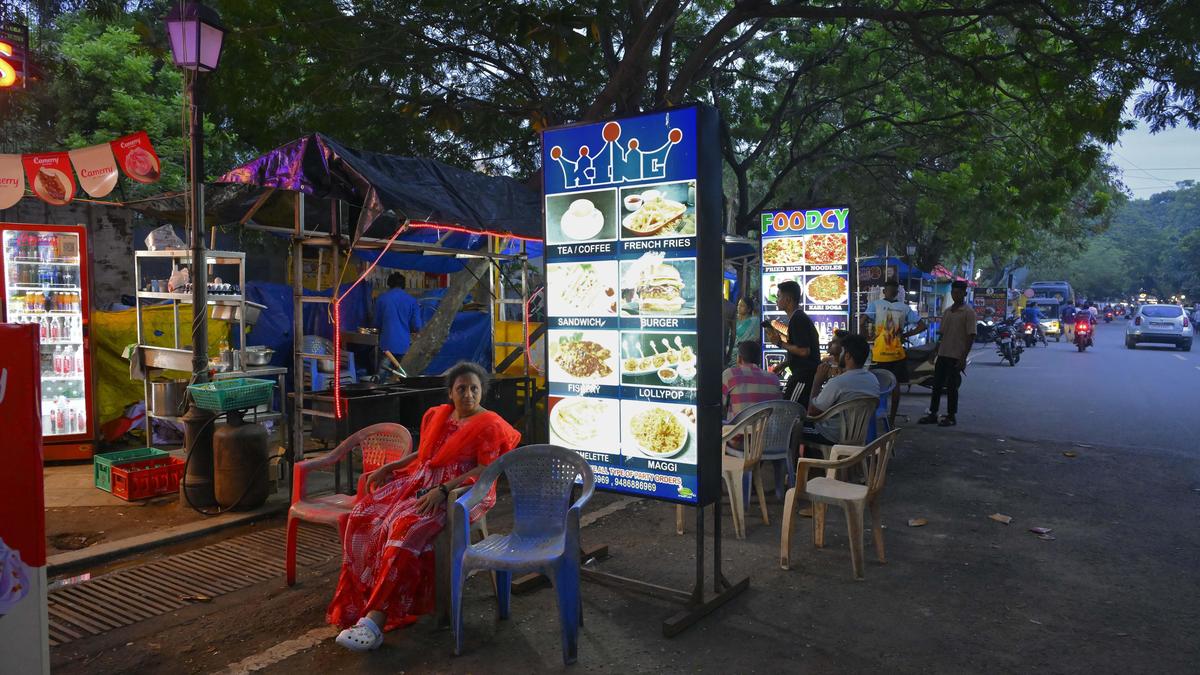
Deep-fried snacks such as vada, bajji, bonda and samosa continue to be wrapped and handed over to consumers in used newspapers at several tea stalls and bakeries across the district, despite a ban on the practice.This has raised questions about the extent of monitoring and enforcement by the Food Safety and Drug Administration Department. While many bakeries and eateries have switched to paper plates and food-grade packaging materials, hot snacks are still being placed on newspaper sheets or packed in them for takeaway at a number of establishments in both urban and rural areas.According to food safety experts, printing inks contain chemicals, pigments and heavy metals, including lead, that can seep into hot or oily food. Deep-fried snacks are particularly vulnerable as oil accelerates the transfer of contaminants from the printed surface. The Food Safety and Standards Authority of India (FSSAI) has prohibited wrapping, serving and storing food in newspapers.Experts further note that discarded newspapers may also contain traces of solvents, pigments, adhesives and substances associated with printing and recycling processes. Long-term exposure to such contaminants could pose health risks.Awareness among consumers remains limited, and many continue to accept newspaper-wrapped snacks out of habit and convenience. “Most people buy snacks without thinking about the paper used for serving them. Many are unaware of the risks,” said a resident of Kollampalayam, who wished to remain anonymous.