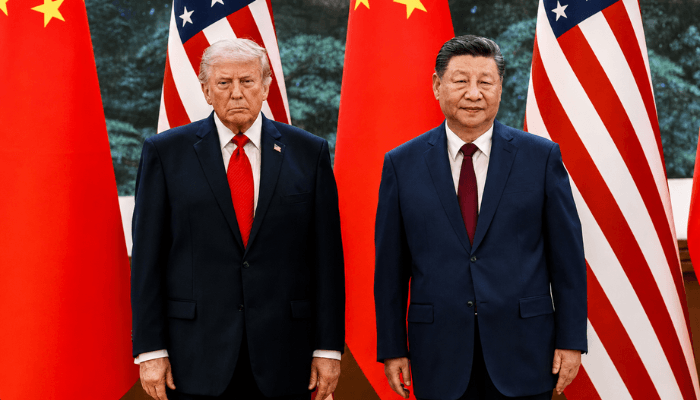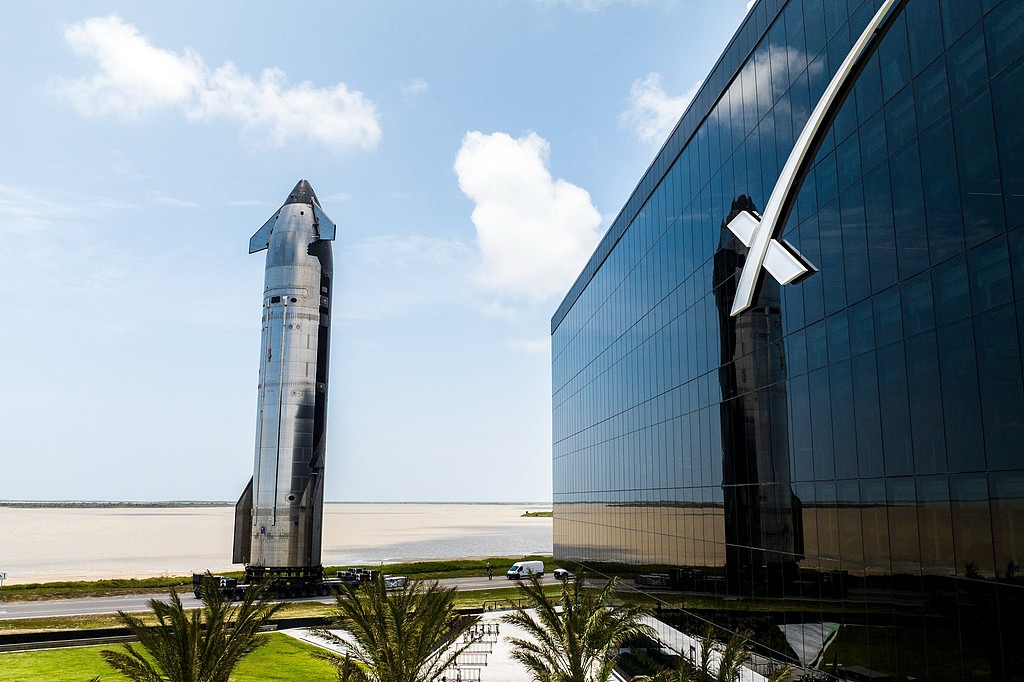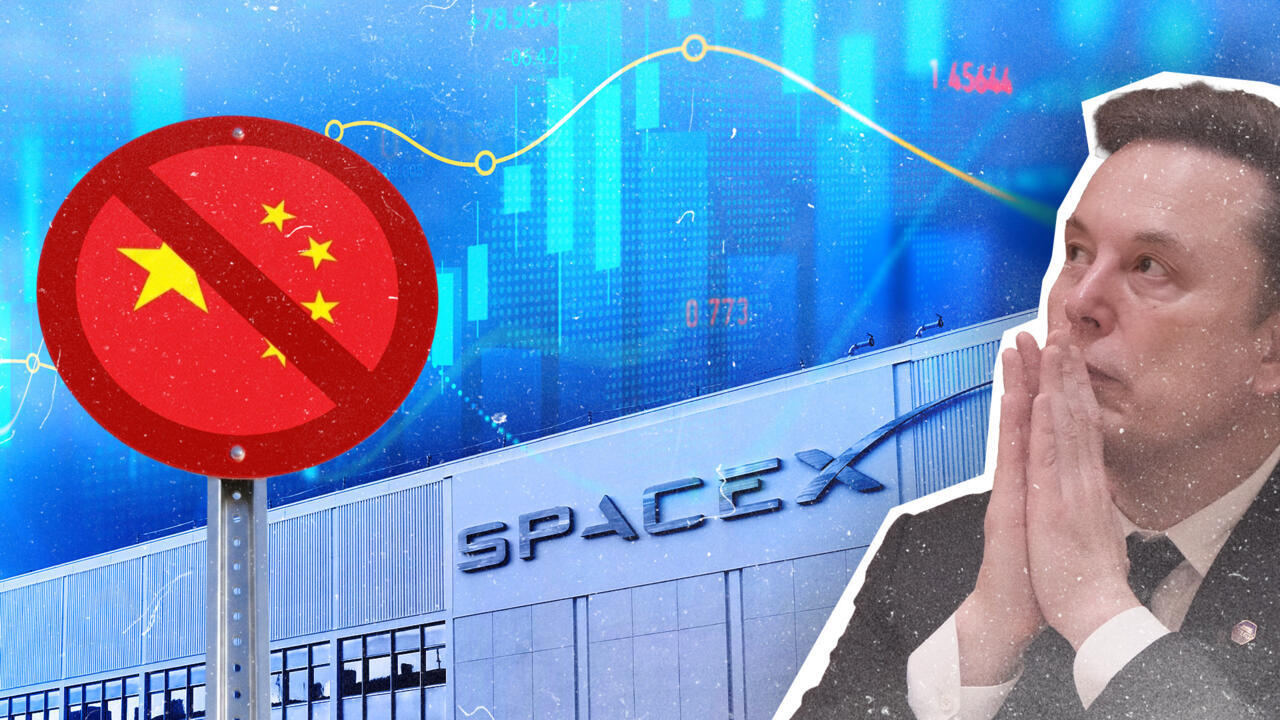
The biggest initial public offering (IPO) in history will happen without China. Billionaire tycoon Elon Musk’s aerospace and AI conglomerate SpaceX has decided that Chinese and Hong Kong investors will not be able to buy shares in the soon-to-be publicly traded company, which makes its Wall Street debut on Friday. “Mutual funds, private equities, sovereign funds, family offices and high-net-worth individuals from the two jurisdictions will all be blocked from this highly anticipated IPO,” reported the China Daily, a major English-language newspaper owned by the Communist Party of China. In the name of national security First reported by Bloomberg last Friday, the ban on a whole country from buying shares quickly went into effect. Reuters reported that people based in Hong Kong or mainland China trying to sign up to buy shares through the official SpaceX site were treated to an “Error 1009” message. “As far as I can recall, this is one of the first times an entire nation has been so explicitly excluded from an initial public offering,” said Grégoire Kounowski, an investment adviser at the Norman K group advisory firm. SpaceX has justified the decision on national security grounds. More precisely, the future darling of Wall Street has alleged that letting Chinese investors buy its shares would put the company in the crosshairs of the US International Traffic in Arms Regulations (ITAR), which govern trade in sensitive aerospace and defence technology, Bloomberg reported. ITAR puts strict limits around the sale and sharing of information concerning products included on a list of technology sensitive for US national security such as weapons, certain software or even technical data needed to build rockets. Watch moreSpaceX unveils plans to go public, with $1.75 trillion valuation SpaceX definitely fits the bill. “It is much more than just a private player in the aerospace industry,” said Louise Girard, a market analyst at XTB brokerage. “The company works with the Pentagon and intelligence agencies, and some of the technologies used by SpaceX in its Falcon and Starship launch vehicles are considered by the US government to be critical military equipment.” SpaceX is also developing the Starshield military satellite programme – a programme tailor-made for the needs of the US intelligence agencies. Getting in good with Donald Certainly, these projects seem sensitive in terms of US national security. But how would random Chinese investors buying shares in SpaceX actually put Americans’ safety at risk? “A company that goes public is required to share financial data with its shareholders, but not its technology or trade secrets,” Kounowski said. “Becoming a shareholder in SpaceX will not give investors access to the most sensitive information.” Perhaps more concretely, it’s a decision that will likely meet with warm approval in the White House. “The USA is cautious about letting China have too much exposure to key companies due to national defence worries,” said Alex Dryden, a specialist in financial markets at the SOAS University of London. Analysts said that SpaceX’s decision would likely help Musk win credit with US President Donald Trump. And likely at little cost to the world’s richest man. “SpaceX doesn't need Chinese or Hong Kong investors because the offering has generated such a buzz that overall demand already far exceeds supply,” Girard said. Watch moreMusk's SpaceX acquires xAI in largest M&A deal ever Despite this, most corporations preparing to go public try to draw in all the investors they can to raise as much money as possible. Indeed, the idea of cutting off a country of almost 1.5 billion people – of which, the China Daily reports, some 250 million have already invested in publicly traded stocks – might seem tantamount to suicide. Whether or not the ban can actually be enforced once the company goes public is another question. SpaceX “has the right to refuse to sell directly to Chinese investors, but it is much harder to prevent Chinese investors from participating in this initial public offering”, Girard said. In other words, investors from Asia’s leading economic powerhouse who want to “will always find ways to get around this ban”, Kounowski said. Will the banks that handle this massive IPO be able to verify that the offshore trading accounts buying up bundles of shares aren’t fronts for Chinese investors? And what about more complicated financial products that fold slivers of SpaceX in with other securities? Unpicking the tangled skein of globally traded financial vehicles could quickly prove maddening. At all costs But some would say that SpaceX is saving Chinese investors from putting money on a bad bet. For Dryden, “being blocked from this IPO might be a blessing in disguise for Chinese investors”. He pointed to reports that the massive valuation that SpaceX has put on its offering – a staggering $1.77 trillion – may have little relation to the company’s real value. Kounowski agreed that the gamble risked “ending badly for some unsuspecting investors”. The problem is that the Chinese seem ready to take significant risks to access SpaceX shares, according to the Financial Times – for example, buying cryptocurrencies promoted as being backed by shares in publicly traded US companies such as Musk’s conglomerate. The rush to buy up such assets has reached such a pitch that some investors have snapped them up without waiting to do the due diligence to make sure the investments are actually safe. Read moreMusk loses landmark lawsuit against OpenAI after jury finds he filed his claim too late Other investors have turned to anything that looks even a little like SpaceX, the South China Morning Post reported. Investments in China’s own aerospace companies have risen dramatically, as has the purchase of shares in subcontractors who could conceivably be called upon to work for SpaceX in the future, such as satellite antenna manufacturers. “The lengths they are going to in order to get exposure to the stock is troubling,” Dryden said. And Friday’s IPO may mark the beginning of a new age of restricted investment. After SpaceX, AI giants OpenAI and Anthropic will take their own first steps onto the stock market – and likely be walking on the same geopolitical eggshells as Musk’s corporation. “I strongly suspect that Anthropic, in particular, will be politically contentious,” Dryden said. “Some of the tools that they have developed would be very dangerous in the wrong hands – I suspect it will be hit by the same geopolitical concerns.” This article has been translated from the original in French.
SpaceX: Why Chinese investors are banned from the biggest IPO in history
Billionaire Elon Musk’s AI and aerospace giant SpaceX has banned investors from Hong Kong and mainland China from buying its shares as it goes public on Friday – a rarely seen restriction that shows…
1,070 words~5 min read