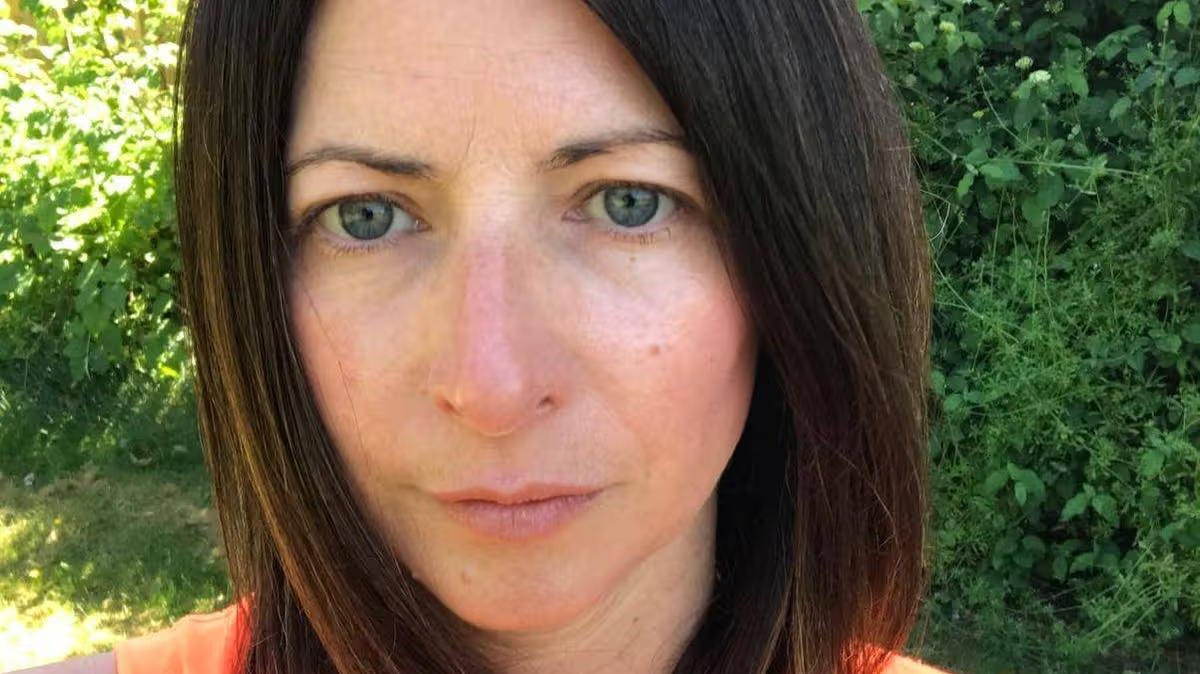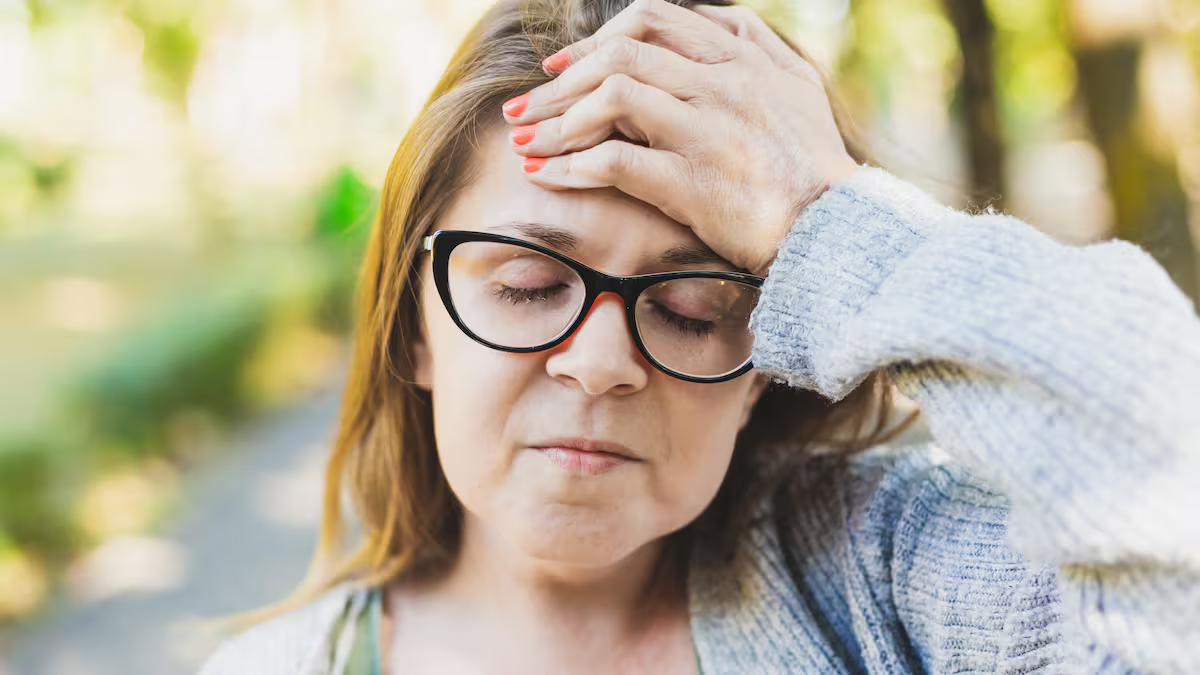
Like most working mothers in their mid-forties, Tamsyn Wood was no stranger to feeling tired after a long day.But when two years ago her hair began to thin, her nails started to become brittle and her skin began to lose its youthful glow, the therapist started to think there may be something more serious going on.‘I had all these symptoms working against me all the time,’ she says. ‘I had always been fairly articulate, but suddenly I was forgetting simple words and my mind would just go blank.'No amount of rest seemed to help and it would take many more months, and a mistaken diagnosis, before Tamsyn, 48, found out that her symptoms were due to an increasingly common vitamin deficiency.‘No matter how much sleep I got, I just felt really flat. My skin was drier than ever, my hair was lacklustre and thinning – and other people noticed it too,' she says.‘I got really bored of people telling me I looked tired.’The exhaustion was so debilitating that at just 46 years old it began to take over her life. An avid walker and keen cold-water swimmer, she found herself unable to take comfort in the things that used to keep her grounded.‘I love being outdoors, it helps me de-stress after a long day, but I was just exhausted,’ says Tamsyn, from North Devon. ‘The only way I can describe it is like a heavy cloud draining you of all your energy.’ Tamsyn had always been very health-conscious. But when she reached her mid-40s even going on a walk became a struggle As her symptoms worsened, so did her anxiety. ‘I kept having to pause when talking and, even when I could find the words, I wasn’t firing on all cylinders because I was worried there was something more serious going on,‘ she says.‘You think the worst. You hear of people getting early-onset dementia and despite only being 46, I was in a position where I couldn’t rule anything out. It was quite scary.’When she contacted her GP, she was told her symptoms were consistent with perimenopause, the early stages of the mid-life hormone change.Tamsyn was prescribed hormone replacement therapy (HRT) over the phone, with no further investigations.‘At first I was relieved,' she says. But weeks went by and nothing improved. ‘If anything, I felt worse,' Tamsyn says, explaining how she developed digestive issues on HRT.Ultimately, after just a month, she decided to come off the daily pill. ‘I‘ve always been cautious of what I put into my body,’ she says, adding that she was ‘disappointed’ that her GP didn’t explore other options before ‘slapping [her] on a generic dose of HRT.’It was only months later, after seeing a nutritionist, that she finally found an explanation: her vegan diet.Tamsyn had stopped eating animal products such as meat and dairy a decade earlier, in an effort to boost her health.However, as a blood test revealed, it had the opposite effect – triggering a severe iodine deficiency. She was recommended hormone replacement therapy (HRT) by her GP, who believed she was showing symptoms of perimenopause Iodine is a crucial mineral needed to produce thyroid hormones, which in turn regulate metabolism – the chemical reactions in the body that control everything from heart rate to brain function and cell repair.Experts say that dairy products are a main source of iodine in the UK diet. However, studies show that, in recent years, iodine deficiency has been on the rise in the UK.Experts believe that this increase could be due to the growing popularity of dairy alternatives such as oat milk. On the guidance of her nutritionist, Tamsyn started taking pure seaweed supplements - with one capsule containing 350mcg, 2.5 times the daily recommended amountYoung women are markedly more likely to have an iodine deficiency than most – with around a third of women of childbearing age now low in the essential mineral.In many countries, iodine is added to salt to avoid wide-scale deficiency. Studies suggest that a lack of iodine during pregnancy can lower the IQ of newborns and lead to other complications.However, iodised salt is not commonplace in the UK. And despite its growing prevalence, experts say that doctors often miss the symptoms of an iodine deficiency.‘An iodine deficiency can cause fatigue, lethargy, weight gain, dry skin, feeling cold and cognitive delay,‘ says nutritionist John Lukey.‘It affects everything – appetite, sleep patterns, body temperature – and the symptoms can be almost identical to those of menopause.‘Left untreated it can lead to brittle bones, reduced immunity, fertility issues and worsening menopausal symptoms.‘Tamsyn says the diagnosis came as a surprise. ‘I have always been really conscious about what I‘m putting in my body, so I thought it had to be perimenopause.'I‘m ashamed to admit I didn't even know iodine deficiency was a thing. I pay attention nutritionally to what I eat, avoid caffeine and drink a lot of water, so I didn‘t think it could be anything I was doing wrong.‘NHS guidelines state that people should be able to get all the iodine they need by eating a varied diet that includes fish, eggs and milk.However, for those who avoid animal products, experts say that a supplement may be necessary.Tamsyn began taking a daily seaweed supplement – one of the richest sources of iodine, as it absorbs the natural mineral from seawater.Again, conscious of what she was putting in her body, Tamsyn opted for pure organic seaweed capsules, from Doctor Seaweed, which cost 50p per pill.While seaweed is one of the richest sources of iodine, experts warn seaweed supplements may not be appropriate for everyone.For those who don't follow a vegan diet, but are low in iodine, Mr Lukey recommends supplements containing potassium iodide or potassium iodate.But for Tamsyn, making this simple change to her diet was life-changing.Within a month, her symptoms improved dramatically. Three months later, she realised her brain fog had lifted and she was starting to feel like her old self again.‘Getting a diagnosis was a huge relief and it was really reassuring to know that I wasn’t imagining things,’ she says.‘The biggest thing for me was getting my energy back. I have four kids and I’ve just become a grandma, so having energy for all these humans – and to show up as the best possible version of myself for my clients – has been the biggest thing.‘But the fact that these symptoms are continuously dismissed as menopause, when it could be something as simple as a vitamin deficiency, is really appalling.‘
I was tired and forgetting words.. then I found the real cause
Like most working mothers in their mid-forties, Tamsyn Wood, 48, was no stranger to feeling tired after a long day.
1,081 words~5 min read