Few business leaders have been as deeply embedded in popular culture as Elon Musk, the ambitious entrepreneur who has become a central figure in internet culture and amassed a fortune that has just made him the world's first trillionaire.
At a time when concerns about inequality are high and public attitudes toward the ultra-wealthy have soured, Musk has managed to retain a loyal following despite his stratospheric net worth and without the folksy persona that endeared other tycoons such as Warren Buffett to the masses.
While admirers view Musk's no-filter style as part of his appeal, critics have accused him of wielding oligarch-like power, raised concerns about governance at his companies and objected to his increasingly partisan political interventions.
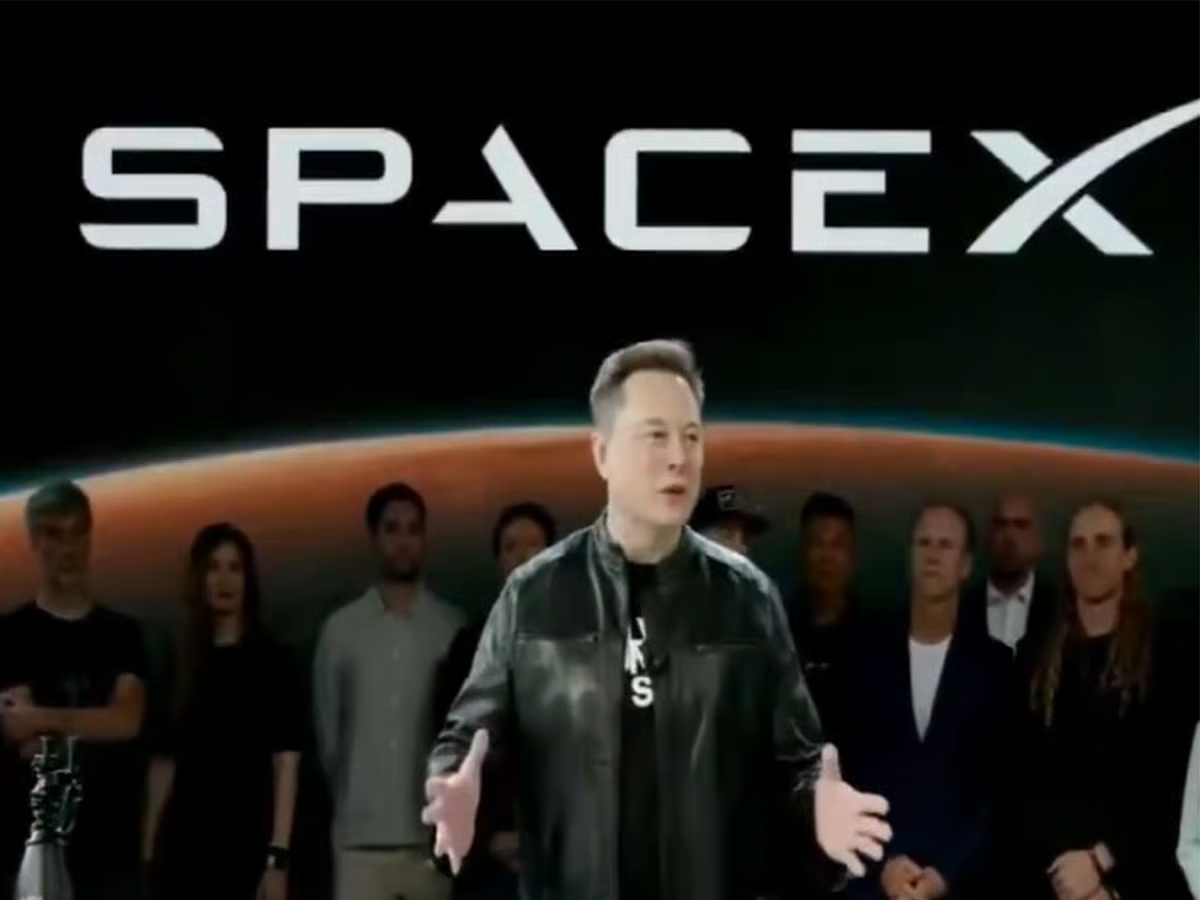
Still, SpaceX, the sprawling rocket, satellite and AI company that together with electric-car maker Tesla form the center of Musk's empire, raised a record $75 billion in its initial public offering on Thursday, highlighting investor enthusiasm for his business ventures.
Prior to the share sale, Forbes pegged his net worth at roughly $780 billion, far ahead of the man next in line, Alphabet co-founder Larry Page.