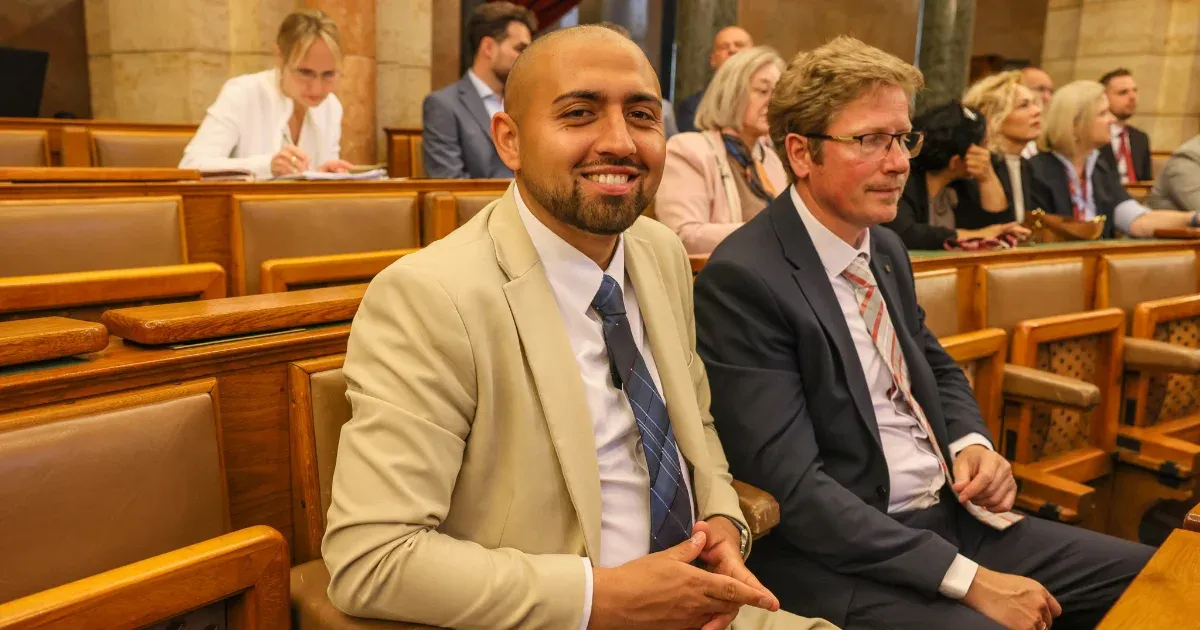
It was one of the most emotional moments of the transfer of power in Hungary: On May 9, just as the new National Assembly convened for its inaugural session, a group of children in white shirts entered the plenary hall of the magnificent neo-Gothic parliament building in the Hungarian capital Budapest. They played tamburas and guitars, and sang "Cigany Himnusz," the unofficial anthem of the Roma in Hungary. The opening lines go "zold az erdo, zold a hegy is" or "green is the forest, green is the hill."
It brought tears to the eyes of many of the members of parliament as well as to the tens of thousands who gathered outside parliament. Aladar Horvath, one of Hungary's best-known Roma civil rights activists and one of the country's first Roma members of parliament after the end of the communist dictatorship in 1990, was also there. "I too was moved to tears," he said. "It was as if we were finally coming home."After Orban, Hungary's Roma hope for changeTo view this video please enable JavaScript, and consider upgrading to a web browser that supports HTML5 video
Magyar fulfils a promise
The performance was the fulfilment of a promise that Hungary's new prime minister, Peter Magyar, had made in November 2025 when he met the children, members of a tambura ensemble SUGO Tamburazenekar, in the village of Sukosd in southern Hungary. He vowed he would invite them to play in the Hungarian parliament if his Tisza party won the elections.