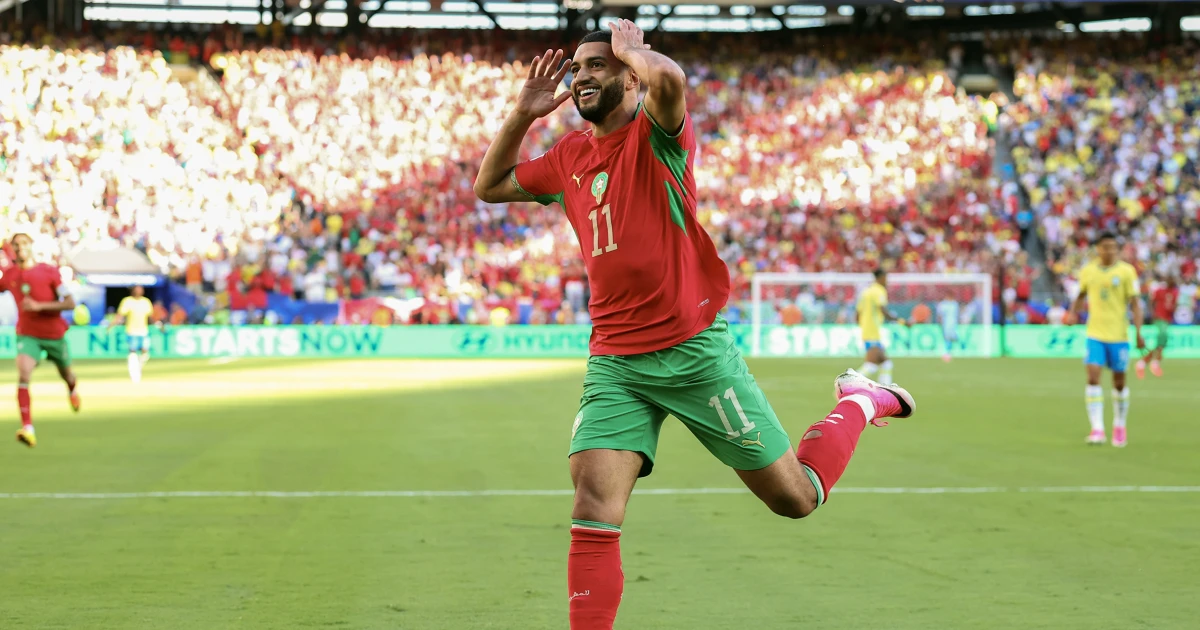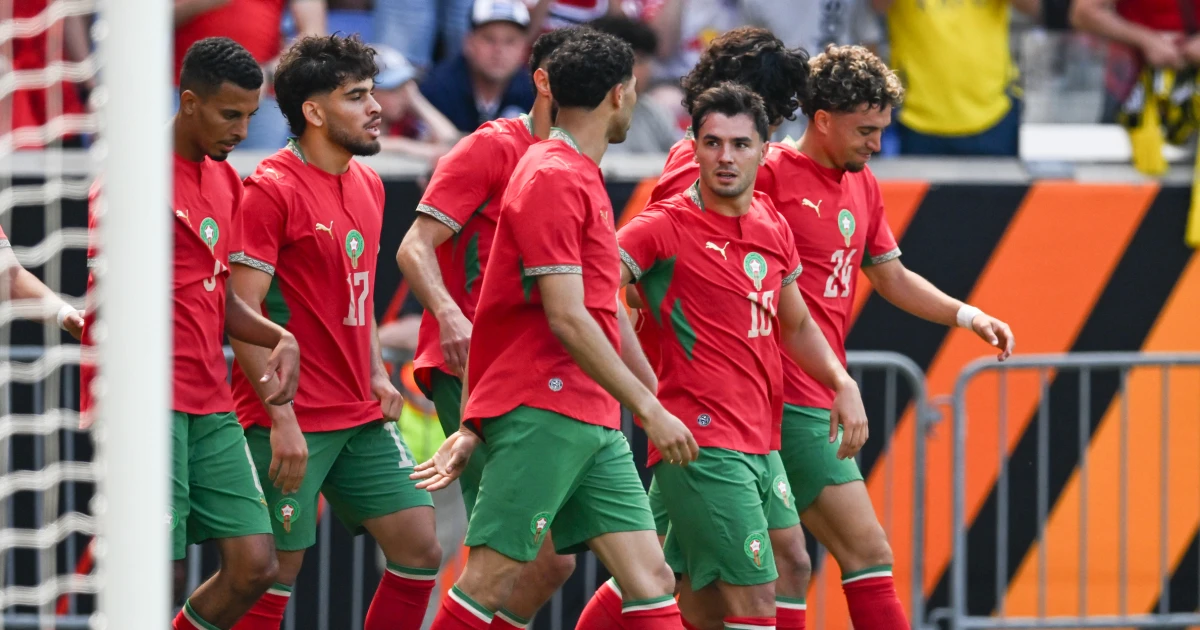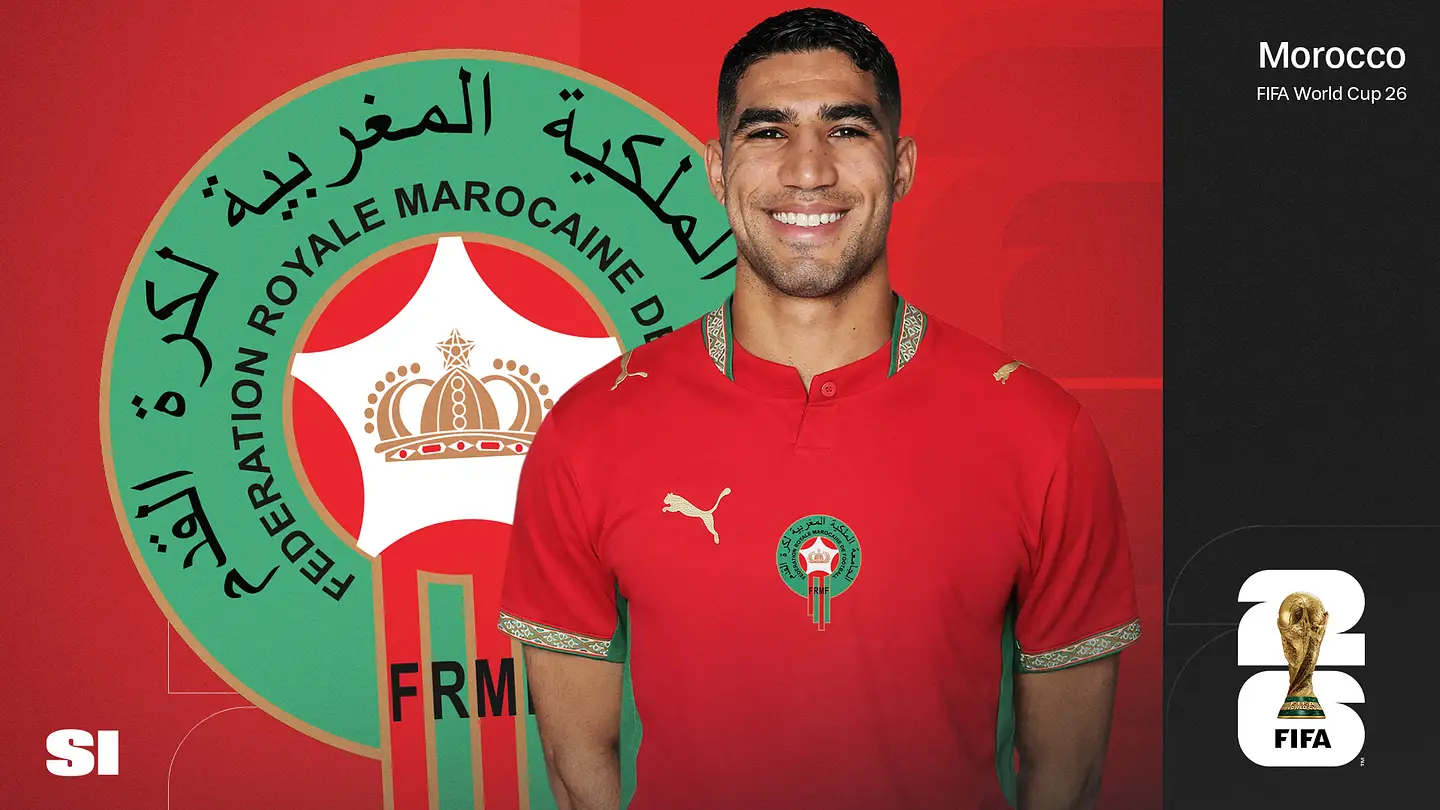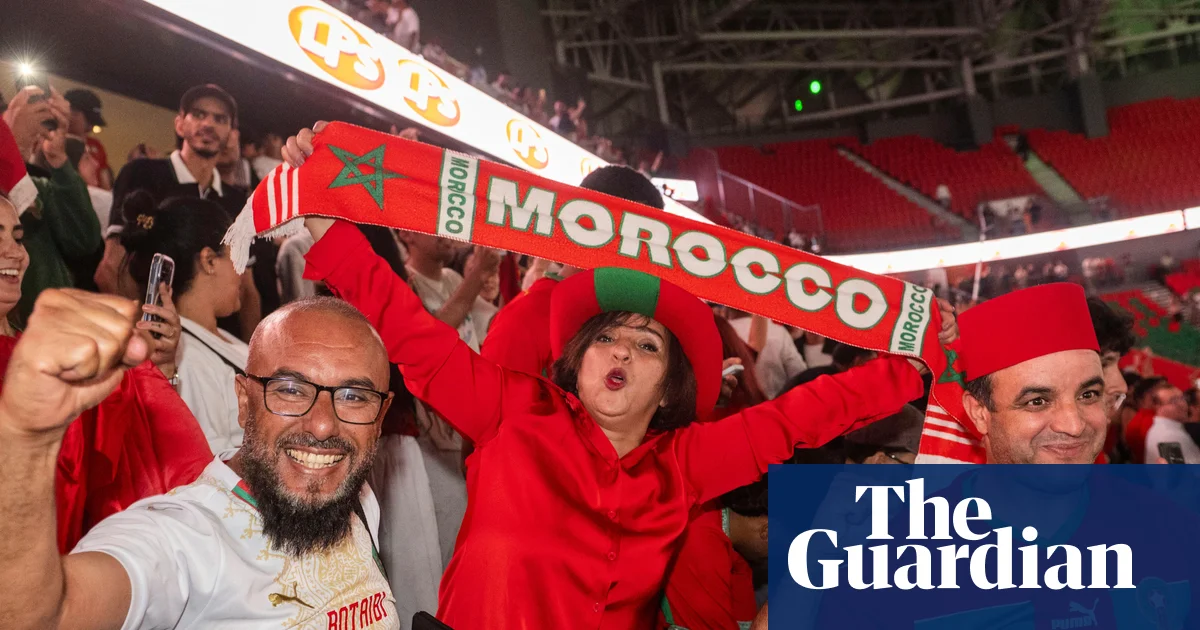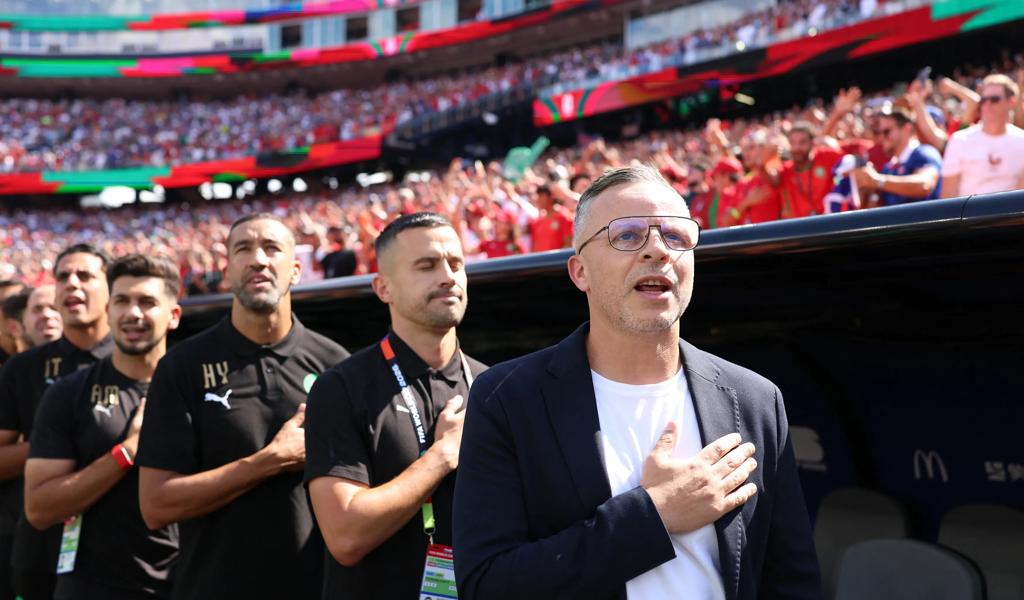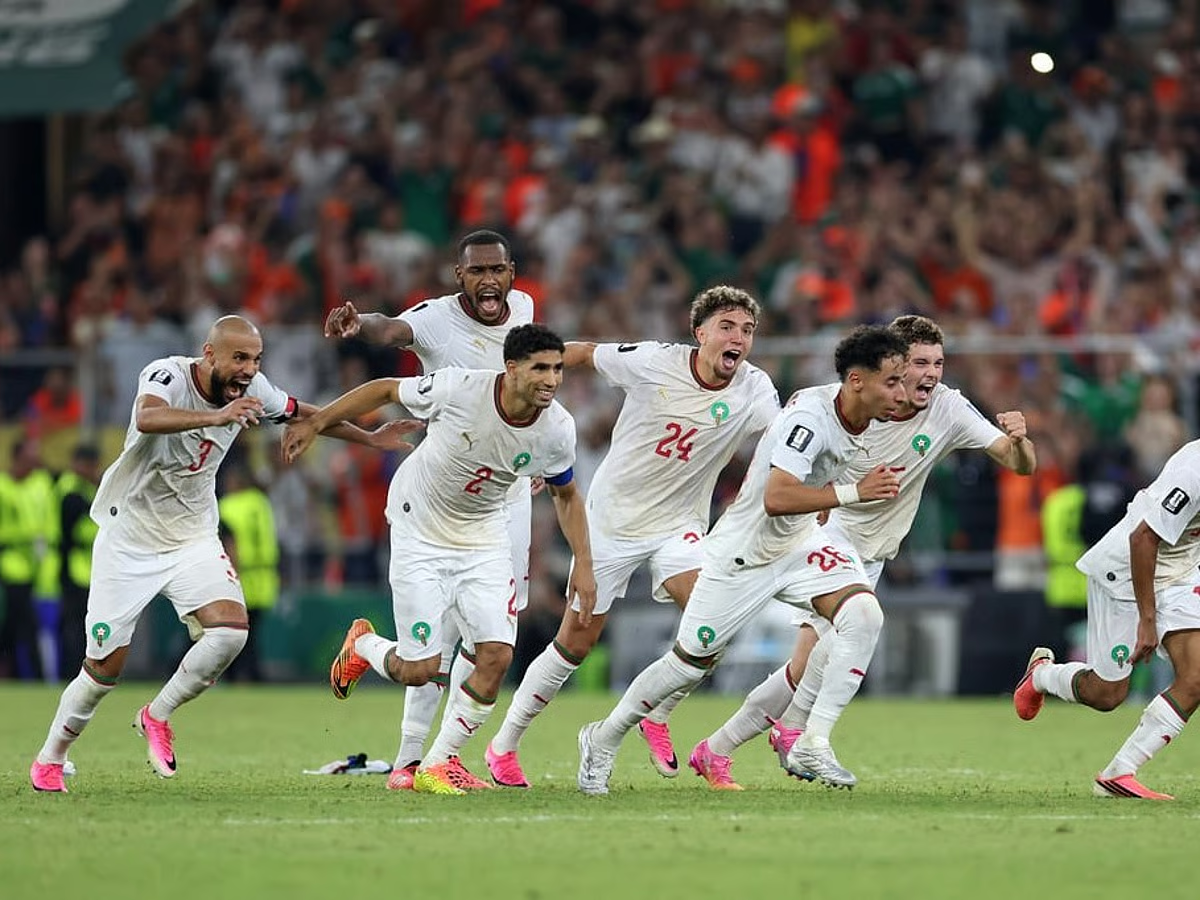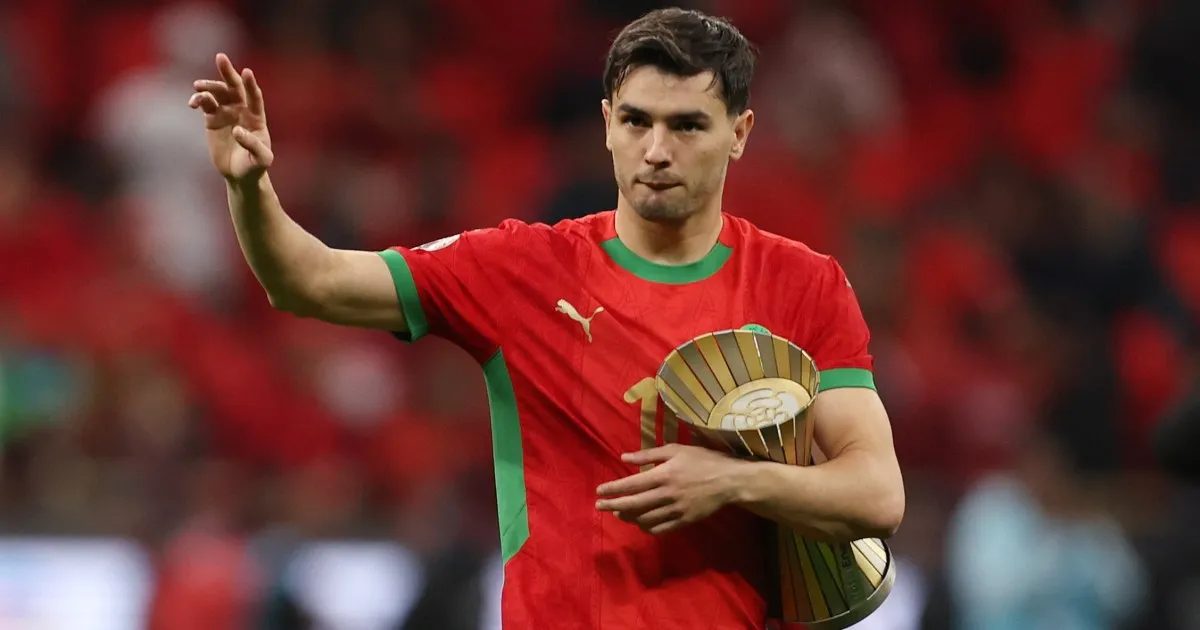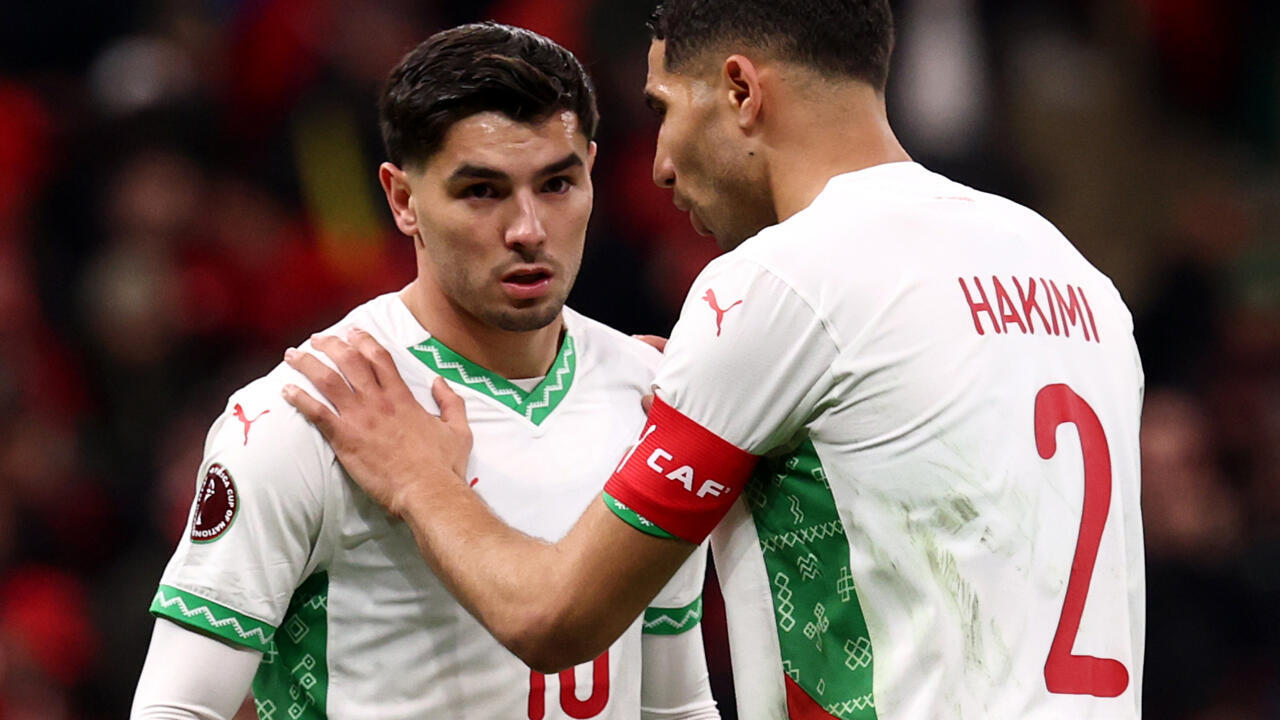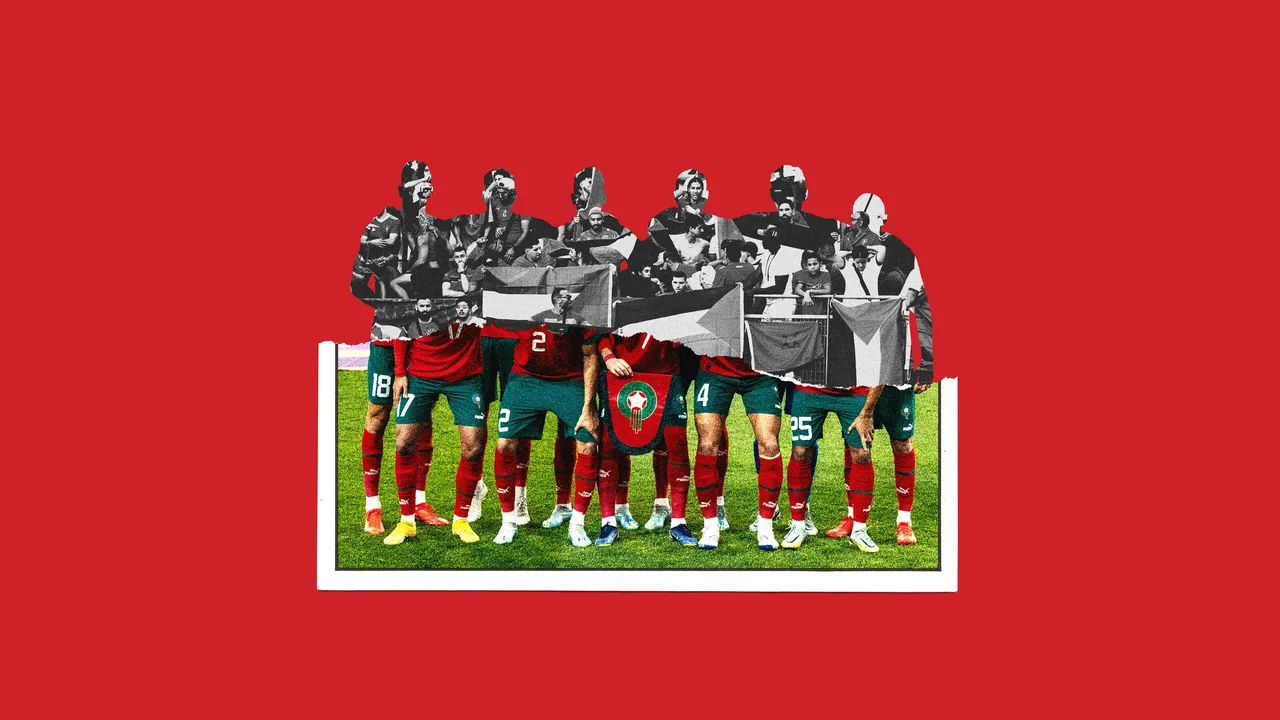
Four years ago, when Morocco reached the semifinals of the World Cup for the first time, the celebration stretched far beyond the country’s borders. The Atlas Lions, as the national team is known, were hailed as pan-Arab, pan-African, and post-colonial heroes. Cafés around Riyadh, the capital of Saudi Arabia, were filled to capacity with fans watching the games and rooting for Morocco. Stadiums in Gaza City and Ramallah broadcast the Atlas Lions’ matches on their oversized screens. In Beirut, cars were draped in banners of Moroccan red and green, while in Algiers horns honked in jubilation. Revellers in Baghdad and Muscat carried on similarly. In Nigeria, the President said Morocco had “made the entire continent proud.” A majority of Morocco’s squad is Muslim, prompting fans to gather for mass prayer sessions in Muslim-majority countries as far away as Indonesia. Al Jazeera declared that the team gave people from the Global South “the power to believe.” Walid Regragui, Morocco’s coach at the time, likened the groundswell of support to how moviegoers reacted to Rocky Balboa. “I think now the world is with Morocco,” he said.When history is made, observers like to define it. Morocco was just the third team from outside of Europe or South America to reach a World Cup final four. The other two were South Korea, in 2002, the year it co-hosted the tournament with Japan, and the United States, at the inaugural event, in 1930. But when commentators described Morocco as either the first African or first Arab country to reach the World Cup semifinals, discourse inevitably followed. Both, of course, were true. “The international debate sometimes appeared too binary compared to the Moroccan social reality,” Abderrahim Bourkia, a sociology professor at Morocco’s Hassan I University, in Settat, told me. The team, for its part, seemed keen to represent as wide a constituency as it could. “We want to fly Africa’s flag high just like Senegal, Ghana, Cameroon,” Regragui, the coach, told reporters. Players celebrated victories with Palestinian flags, a gesture of solidarity across the Arab world. They also displayed the Amazigh flag, a bright symbol of the Moroccan Indigenous population, from which, according to estimates, upward of half of the country’s people claim heritage. “Morocco defies easy categorization,” Safwan Masri, the Palestinian-Jordanian dean of Georgetown University in Qatar, and author of the forthcoming “They Told Us We Were Arab,” said. “It’s complicated, it’s layered, and it came into full display in what I think is a healthy manner.”Before Morocco’s success in 2022, the country had advanced from the World Cup’s opening-group stage only once, in 1986; it was then immediately eliminated in the first knockout round. “In Morocco, we had a saying, to the pilot: ‘Don’t turn off the airplane, because we will go back as soon as we can,’ ” Saad Moufakkir, a Moroccan soccer journalist, told me. “We didn’t know that it was our moment.” This year, the squad enters the tournament ranked seventh in FIFA’s official standings—its highest-ever mark. Team Morocco’s lineup features contributors from some of the world’s powerhouse clubs: Paris Saint-Germain, Real Madrid, Manchester United. Its youth team won the most recent Under-20 World Cup last year. Introductions are over. “We are no longer the underdog,” Moufakkir said. “People say 2022 was a miracle, but now it’s the beginning of a new football power. Expectations have changed completely.”Like many nations, Morocco’s devotion to soccer is a vestige of its colonial past. The sport took hold in the first half of the twentieth century, when France and Spain controlled the country. After Morocco gained independence, in 1956, soccer stadiums were regularly decorated with iconography of its royal family, which dates back to the seventeenth century. More recently, Mohammed VI, the current King, opened a network of sprawling, modern soccer academies—the primary complex, in Salé, is named the Mohammed VI Football Academy—to develop domestic talent from a young age. Upward of a hundred promising adolescent boys, scouted as young as six, are admitted each year to live and train at the facility full time, in a system that resembles top youth-development programs in Europe and South America.But the sport’s local traditions are not afraid to challenge authority. “Football in Morocco is not only entertainment,” Bourkia told me. “It is a space of identity, belonging and social expression.” Political dissent can be harshly policed outside the stadium, but domestic clubs’ most ardent fan groups, often called ultras, are brazenly outspoken in their cheering. Fans of Raja Casablanca, known as the Green Boys, belt a song titled, “F’Bladi Delmouni,” or “In My Country, They Wronged Me.” Ultras supporting the Rabat club Royal Army, ironically, recite chants that include the slogan, “The sons of bitches have become tyrants over us.” IR Tangier’s supporters cry in unison, “This life is not O.K. / It’s the reason for migration / Congrats, the country is empty.” Some groups have even been known to boo the national anthem.Perhaps as important as Morocco’s investment in nurturing domestic talent has been its improved efforts to scout and court eligible international talent —often the descendants of emigrants who have learned the game in world-class competitive environs elsewhere. The foundation of the national team’s current so-called golden generation came from abroad. Fourteen of the twenty-six men on Morocco’s 2022 World Cup roster were born outside the country; ditto nineteen on this summer’s squad. Among them are Achraf Hakimi, the team’s captain and one of the finest defenders in the world, who was born in Spain and came up playing for Real Madrid, before landing on a star-studded Paris Saint-Germain team. Brahim Díaz, a midfielder for Real Madrid who has also played for Manchester City and A.C. Milan, briefly suited up for Spain’s national team before switching his allegiance to Morocco. Neil El Aynaoui, an emerging midfield star, was raised in eastern France, and plays professionally in Rome. “We have, I think, more talent in Europe than Morocco,” Moufakkir told me. He noted that the national team’s players speak six different languages; their primary common tongue is English.Only nine players from Morocco’s 2022 World Cup run have returned for this year’s tournament. The most important début will be that of Mohamed Ouahbi, the team’s new coach. It was Ouahbi, born in Belgium to Moroccan parents, who helmed Morocco’s U-20 team to its championship last summer; he was placed in charge of the senior team just three months ago, after it had a disappointing showing in Afcon, Africa’s continent-wide competition. (Morocco lost in the final to Senegal, but was later granted a controversial forfeit victory after officials determined Senegal’s players had committed a disqualifying infraction by leaving the field during the game to protest a refereeing decision.) Ouahbi is a cerebral coach, favoring hybrid playing systems and mixing up attack strategies based on the opponent. “We don’t know how we’re going to play,” Moufakkir said earlier this month. He sounded excited.Recently, I went to Amlu, a Moroccan restaurant just off Steinway Street, in Astoria, to watch Morocco’s revamped squad play one of its final tune-up games, against Madagascar. During the 2022 World Cup, Astoria, which is more than one-third immigrants and dotted with North African shops, hosted standing-room-only watch parties for Morocco’s games, and flare-lit celebrations after its wins. (A headline during the celebrations: “Astoria Restaurants Are the Epicenter of the World Cup in NYC.”) The day I visited—a Tuesday afternoon, when Morocco hosted a friendly date with the world’s hundred-and-fourth-ranked squad—was understandably quieter.I was there with Saber Chawni, a Moroccan influencer with millions of followers, who is in the middle of an extensive trip around the U.S. to tell stories about the Moroccan diaspora. (He has also gone Jet-Skiing around the Statue of Liberty and skydiving in Orlando.) Over a plate of cookies and a pot of mint tea, he told me about attending the 2022 World Cup, in Qatar. Because he was more comfortable conversing in Arabic, we spoke mostly through a combination of translation apps. But when I asked what it was like to witness Morocco’s run that year, he brought a finger to each eye, then traced them down his cheeks. “Tears,” he said. I asked for his take on the debate over how to categorize Morocco’s representation. “Morocco is an Amazigh, Arabic, and African country,” he said.Even with Morocco resting key players, the day’s match was not much of a competition. After Morocco’s first goal, in the fourth minute, Chawni, who wore a navy polo, posted a video story on Instagram saying the game “might end with seven goals.” In Darija, a Moroccan Arabic dialect, he carried on a running dialogue with an older man in a yellow polo who was eating kebabs at the next table. The conversation had the recognizable rhythm of sports fans’ mixture of banter and good-natured ribbing. I asked the pair if they had met each other before. “Just today,” the older man, who grew up in Casablanca, said, matter-of-factly. “Moroccan people are cool.”Practically the entire game was played in Morocco’s attacking third. The final was 4-0, which undersold its decisiveness. By the second half, Chawni was dashing off video clips of his travels to an editor for editing and posting later. “Work, work, work,” he said. While visiting Doha in 2022, he had thought he had been overly optimistic by not booking his return flight until the day after the tournament final—a decision which came in handy when Morocco reached the third-place game, held the day before. “Here in America, I did the exact same thing,” he said. “Which means we are going to reach the final—Inshallah.” ♦
How the Moroccan World Cup Team Became a Symbol of the Global South
In 2022, the Atlas Lions became the first African team and Arab team to reach the World Cup semifinals. In this summer’s tournament, they’re aiming to prove they’re more than an underdog story.
1,593 words~7 min read