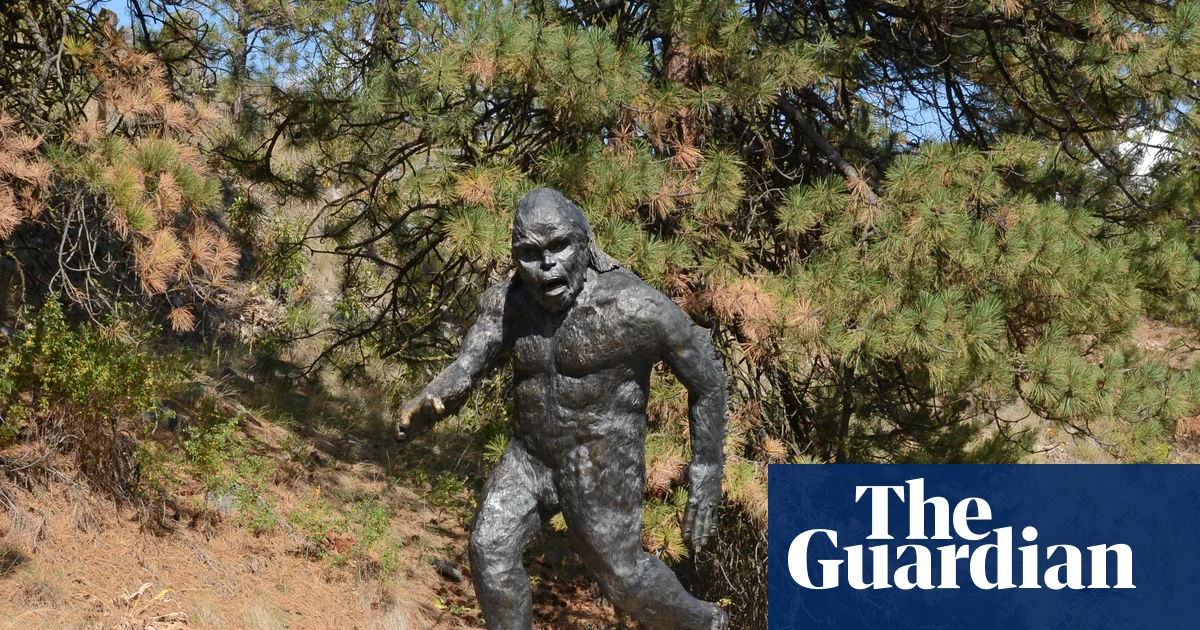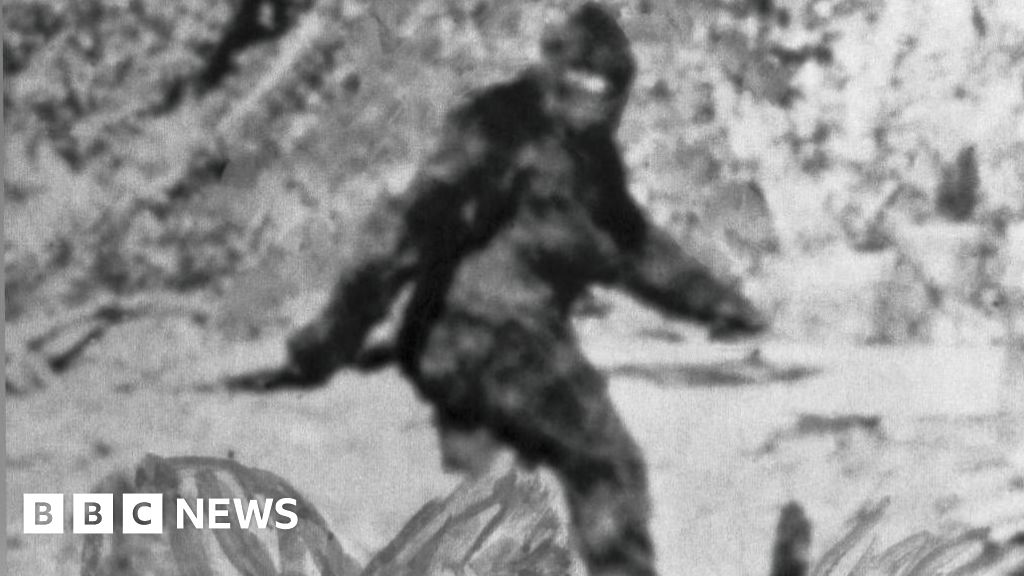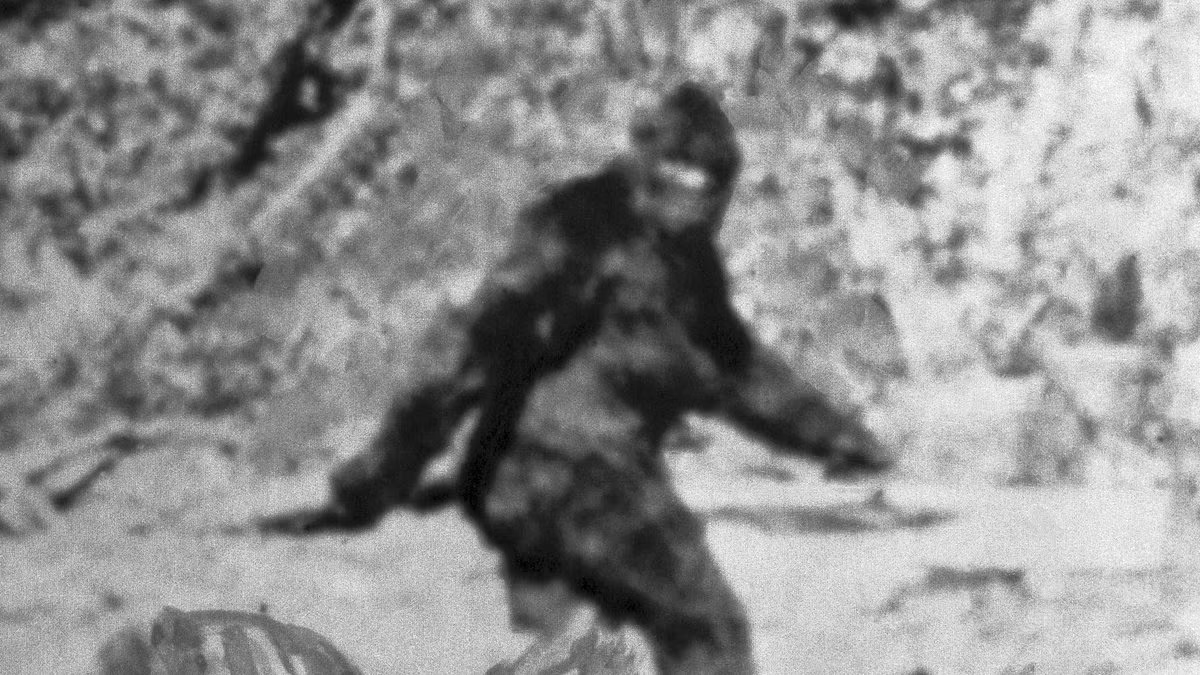
A spate of Bigfoot sightings has been reported in Canada, with one witness describing a 'massive figure' that emitted an 'earthy' smell.The two-legged beast, also known as Sasquatch, is a mythical creature said to roam the forests of North America and has long featured in Indigenous traditions and popular folklore.Although some believe Bigfoot is real, there is no scientific evidence to support its existence.But a string of recent sightings in rural Ontario has reignited speculation and left sceptics questioning whether the legendary creature could be more than just a myth.'The birds stopped, the wind seemed to die down, and it got oddly quiet. That's when I noticed movement ahead of me,' one witness wrote. A 'strong, earthy smell' hung in the air. Then, 'a massive figure slowly stepped out from behind the trees, and my heart instantly started racing'. Moments later, it vanished back into the forest and 'everything slowly went back to normal'.The following morning, another witness reported seeing two creatures around sunrise. 'One big, one not so big. The cinnamon was prominent on the smaller one,' they wrote. 'There was an earthy stench.' The pair appeared to be scavenging through garbage. When the witness knocked on wood to scare them off, 'they knocked back. That scared me off.' A spate of Bigfoot sightings has been reported in Canada , with one witness describing a 'massive figure' that emitted an 'earthy' smell (stock image of a Bigfoot statue in British Columbia, Canada) This image is believed by some to have captured 'bigfoot' in Eureka, CaliforniaThe creatures' size, smell and movement matched closely with descriptions of the Sasquatch, or Bigfoot, a bipedal ape that believers say exists at the periphery of human understanding. Within days, the reports were circulating online and added to the Bigfoot Mapping Project containing thousands of sightings from across the decades. The sightings, which were reported in early April, were soon picked up by local media, sparking the latest wave of fascination and scepticism over claims that a large, undiscovered creature could be lurking in the forests of North America.A third sighting was reported in the same area later that month, with a witness claiming they saw a ‘7ft creature with black fur just standing along the tree line’.What made the reports particularly unusual was their location. Chatham-Kent is one of Ontario's least forested and most heavily farmed regions.The vast landscape is made up mainly of cropland broken up by small pockets of woodland and river valleys - a far cry from the remote wilderness usually associated with Sasquatch legends.Earlier this year, in January, a fourth reported hearing 'something walking nearby' before a 'piercing scream' rang out in Michigan, just an hour's drive from Chatham-Kent.Canada, like the United States, has a long history of cryptid sightings. Some tales, such as a 1620s account of a mermaid swimming up to a boat before being struck on the head with an oar by a terrified sailor, have stretched the imagination.Others, including reports of giant sea serpents in the Pacific, may have been cases of mistaken identity. Hick Lake in Sasquatch provincial park showcasing its calm waters, wooded shoreline, and campground surrounding. The park is named after the Sasquatch, the famous cryptid said to roam the areaBut no cryptid has captured the public imagination quite like Bigfoot.'Humans are naturally curious, and while there can be something frightening about the unknown, there can also be something exciting about it,' said Josh Redstone, a professor of philosophy at Carleton University.'For people who believe in Sasquatch, there is excitement around the possibility of discovering something new.'Centuries before European settlers arrived, Indigenous nations told stories of large human-like creatures living in forests that moved between the physical and spiritual worlds. Others viewed the creatures as malevolent forces used as cautionary tales for children.However, it was not until 1929 that the idea of a prehistoric creature surviving in the wilderness entered wider public consciousness.An article written by an Indian agent recounted stories from the Chehalis First Nation, which described the 'Sasquatch' – a name derived from the Halq'eméylem word 'Sasq'ets'.
Bigfoot fever in Canada after spate of 'sightings'
The two-legged beast, also known as Sasquatch, is a mythical creature said to roam the forests of North America.
676 words~3 min read