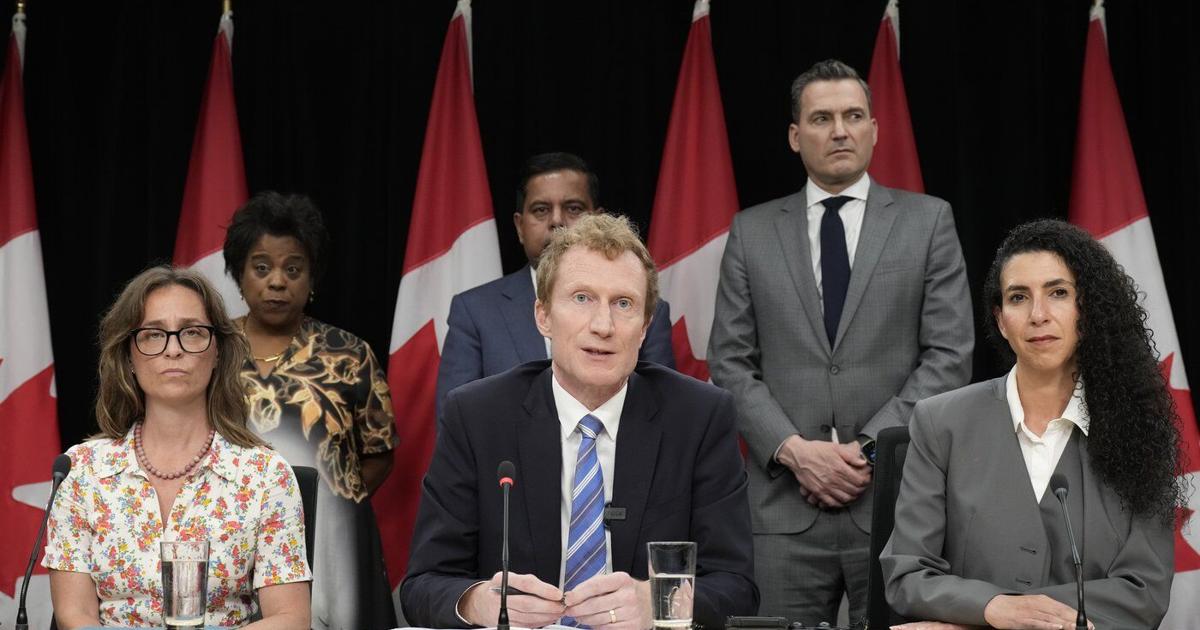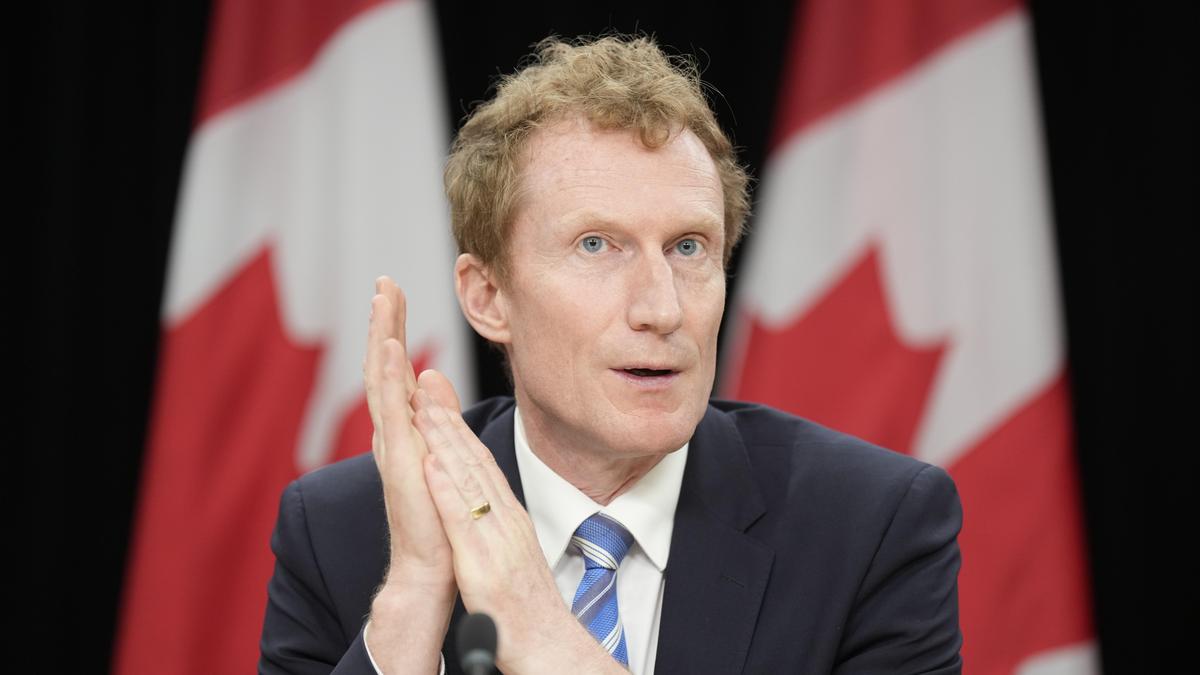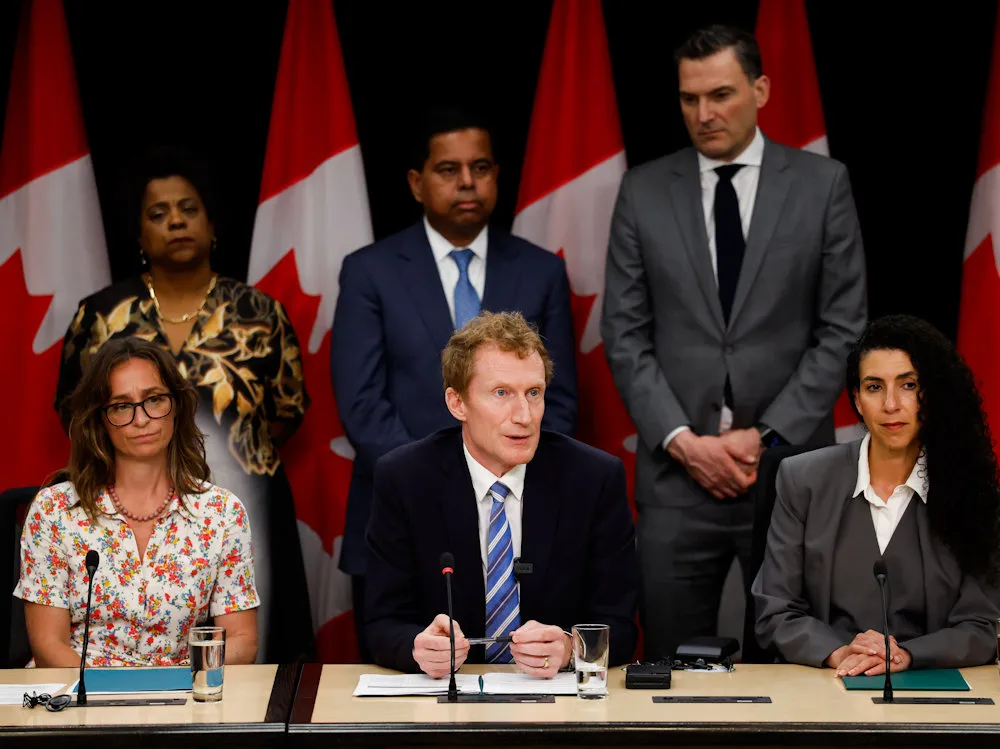
Skip to Content Subscribe Our Offers My Account Manage My Subscriptions FAQ Newsletters Canada Canadian True Crime Canadian Politics Health World Israel & Middle East Financial Post NP Comment Longreads Puzzmo Diversions Comics NP News Quiz New York Times Crossword Horoscopes Life Eating & Drinking Style Sponsored Play for Ontario Travel Travel Canada Travel USA Travel International Cruises Travel Essentials Culture Books Celebrity Movies Music Theatre Television Business Essentials Advice Lives Told Tails Told Shopping Buy Canadian Home Living Outdoor Living Kitchen & Dining Tech Style & Beauty Personal Care Entertainment & Hobbies Gift Guide Travel Guide Amazon Prime Day Deals Savings National Post Store More Sports Hockey Baseball Basketball Football Soccer Golf Tennis Driving Vehicle Research Reviews News Gear Guide Obituaries Place an Obituary Place an In Memoriam Classifieds Place an Ad Celebrations Working Business Ads Archives Healthing Epaper Manage Print Subscription Profile Settings My Subscriptions Saved Articles My Offers Newsletters Customer Service FAQ Newsletters Canada World Financial Post NP Comment Longreads Puzzmo Diversions Life Shopping Epaper Manage Print Subscription HomeNP CommentJamie Sarkonak: The Liberals' Bill C-34 is a boomer plan to censor the internetThe legislation aims to censor political speech, while putting draconian rules around what kids can do onlineLast updated 8 hours ago You can save this article by registering for free here. Or sign-in if you have an account.Minister of Canadian Identity and Culture and Minister responsible for Official Languages Marc Miller during a press conference after tabling the new bill entitled the Safe Social Media Act in Ottawa on Wednesday, June 10, 2026. (PHOTO BY HYUNGCHEOL PARK/Postmedia)On Wednesday, the Liberals tabled Bill C-34, which would restrict minors from social media. That’s the headline pitch, but the bill goes much further, offering cabinet the power to ban children from online games, shut online entities out of Canada completely and order websites to censor content deemed “harmful” by the government. It’s a Great Canadian Firewall in the making.Enjoy the latest local, national and international news.Exclusive articles by Conrad Black, Barbara Kay and others. Plus, special edition NP Platformed and First Reading newsletters and virtual events.Unlimited online access to National Post.National Post ePaper, an electronic replica of the print edition to view on any device, share and comment on.Daily puzzles including the New York Times Crossword.Support local journalism.Enjoy the latest local, national and international news.Exclusive articles by Conrad Black, Barbara Kay and others. Plus, special edition NP Platformed and First Reading newsletters and virtual events.Unlimited online access to National Post.National Post ePaper, an electronic replica of the print edition to view on any device, share and comment on.Daily puzzles including the New York Times Crossword.Support local journalism.Create an account or sign in to continue with your reading experience.Access articles from across Canada with one account.Share your thoughts and join the conversation in the comments.Enjoy additional articles per month.Get email updates from your favourite authors.Create an account or sign in to continue with your reading experience.Access articles from across Canada with one accountShare your thoughts and join the conversation in the commentsEnjoy additional articles per monthGet email updates from your favourite authorsSign In or Create an AccountorYou see, the bill does not specify what specific kinds of safety measures will have to be followed, which kinds of websites will have to follow them, how big a site’s userbase must be to attract regulation, which AI chatbots will be regulated, and a number of other things. Michael Geist, the privacy and internet expert at the University of Ottawa’s law school, has counted a total of 50 decisions that will be left to cabinet and digital safety decision-makers. These would be made after the bill passes, comfortably outside the oversight of Parliament.This newsletter from NP Comment tackles the topics you care about. (Subscriber-exclusive edition on Fridays)By signing up you consent to receive the above newsletter from Postmedia Network Inc.We encountered an issue signing you up. Please try againThis means just about everything on the internet is in scope. The bill only makes two types of websites completely off-limits: online services “whose primary purpose is to facilitate the sale, listing or advertisement of goods or services” and those “whose primary purpose is to provide directories, search results, maps or navigation tools.” Even this is a tough line to draw: where does one put Steam, the PC games store-plus-social platform? And why are we to tolerate the harm that can come from sales and search engines? There are brothels on Google Maps; there are sex games on Steam; there are personal … very personal … ads on Craigslist.Also off-limits would be private chats. The bill also states that online entities wouldn’t be required to “search content on a regulated service that it operates in order to identify harmful content” — but rules could still be made requiring these entities “to use technological means to prevent content that sexually victimizes a child or revictimizes a survivor from being uploaded to the service,” which is reasonable, especially now that AI should make scrubbing for abusive content much easier.In 94 pages, the bill proposes broad power for cabinet to come up with other categories of online services to regulate. It does give the broad strokes of some of the rules that will come with that. Sites that have pornographic content will have to include “age-verification or age-estimation measures” that are “effective” and that destroy whatever information was used to verify a user’s identity; these sites would also have to retain “all records, including information and data” that are necessary to prove compliance. Similar requirements would exist for social media sites, with cabinet reserving the option to exempt platforms whose age verification methods it finds satisfactory. Cabinet could also mandate that these websites use specific age-verification methods.The bill would also create the means for the Liberals to censor the internet. All social media platforms would have a duty to minimize the risk of “harmful content,” and a digital safety commssion would be set up to adjudicate complaints about such content online. The definition of “harmful content is cast unworkably wide, grouping content sexualizing children in with “content that foments hatred” and “content that incites violence.” It includes the addendum that this should not be regulated in a way that “unreasonably” limits free expression, which doesn’t offer security at all. We should expect that this scheme will be used to limit the reach of online videos that portray favoured minorities in a bad light, whether that be news of transgender mass shooters or of migrant violence in Europe.The consequence for missing the bar set by cabinet, whether it be failure to censor or to scrutinize the age of users, would be a fine as high as $10 million or three per cent of gross revenue, whichever is greater.For the children, it has long been clear where the concerns lie online: TikTok is an infinite-scroll, short-video platform engineered by a civilizational enemy that can quickly turn addictive for children (and adults), shortening their attention spans and sending them down rabbit holes of toxic content, whether it be sexual, radical, violent, or, as with the latest diabetes-inducing trend of soaking pineapple spears in Kool-Aid, unhealthy.It’s not the only offender: Instagram is the modern glamour magazine, exposing its users to richer, more luxurious, more beautiful lifestyles that they’re unlikely to ever obtain. Facebook is a pool of AI slop and a platform where, historically at least, exploitation occurred. Snapchat is an app that features prominently in police news releases about online luring busts. And of course, there are the porn sites, which host everything from consensual activity to re-uploaded abuse videos behind easily bypassable age-gates.It’s no wonder that there is interest in putting age filters on such sites. But there is a such a thing as parental responsibility — which should include putting limits on screen time and barring objectionable sites from children’s access using the available tools. Instead of PSAs and campaigns to encourage online hygiene, we’re getting more government control.We’re also seeing regulations so strong that they could very well ban children from much of the gaming world; indeed, many games and game platforms have a social component that could land them in the 16-and-up-only category. Unfortunately, Bill C-34 is completely blind to the issue of online games, as if its drafters don’t actually spend time on the internet themselves, and haven’t bothered to understand how young people use online spaces.Meanwhile, under this bill, even the adults are to be treated like children, with limits to be imposed on speech offensive to the progressive mind. A “harmful content” censorship regime threatens to undermine critical conversations about criminality, terrorism, extremism, anti-social behaviour, gender roles, and really anything that involves being critical of certain groups, particularly those considered vulnerable by the left. It’s hard as is to have these discussions in Canada, where data collection on these topics is poor and where the limited research available is unrigorous and often politically driven.The Liberals could have kept to the simple goal of keeping sexual content online away from minors, as it is in the physical world. Instead of coming up with an elegant solution, they’re using it as cover to usher in a plan that will muzzle adults and oust children from video games in the process. It’s a terrible bill for all ages.National Post Get the latest from Jamie Sarkonak straight to your inbox Join the Conversation This website uses cookies to personalize your content (including ads), and allows us to analyze our traffic. Read more about cookies here. By continuing to use our site, you agree to our Terms of Use and Privacy Policy.
Jamie Sarkonak: The Liberals' Bill C-34 is a boomer plan to censor the internet
The legislation aims to censor political speech, while putting draconian rules around what kids can do online
1,594 words~7 min read