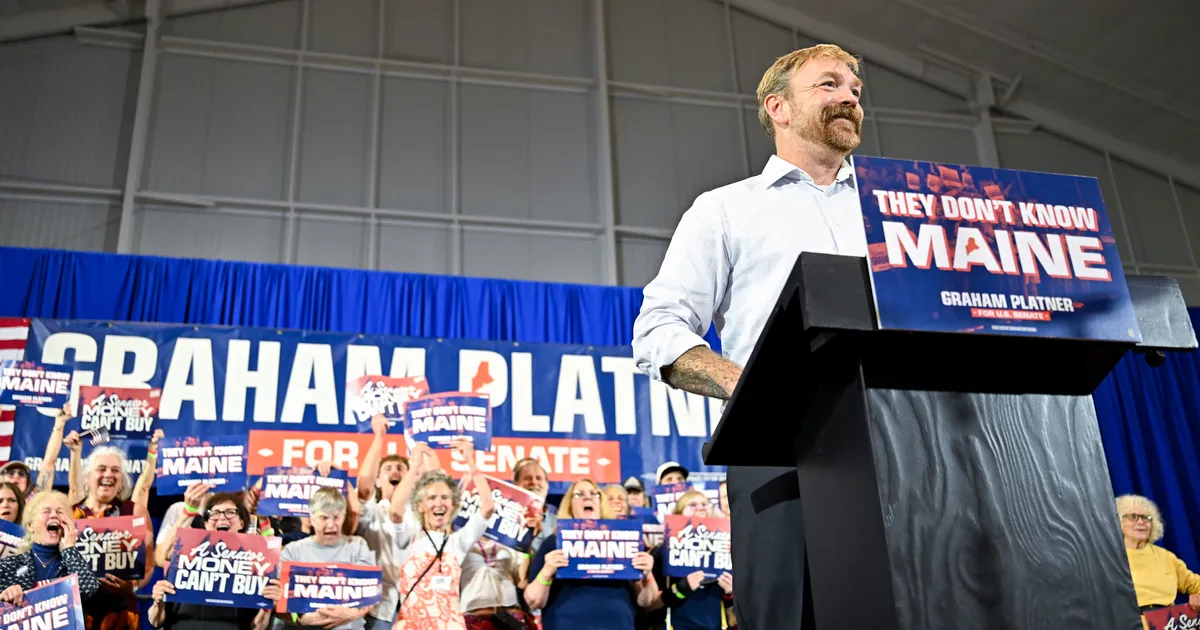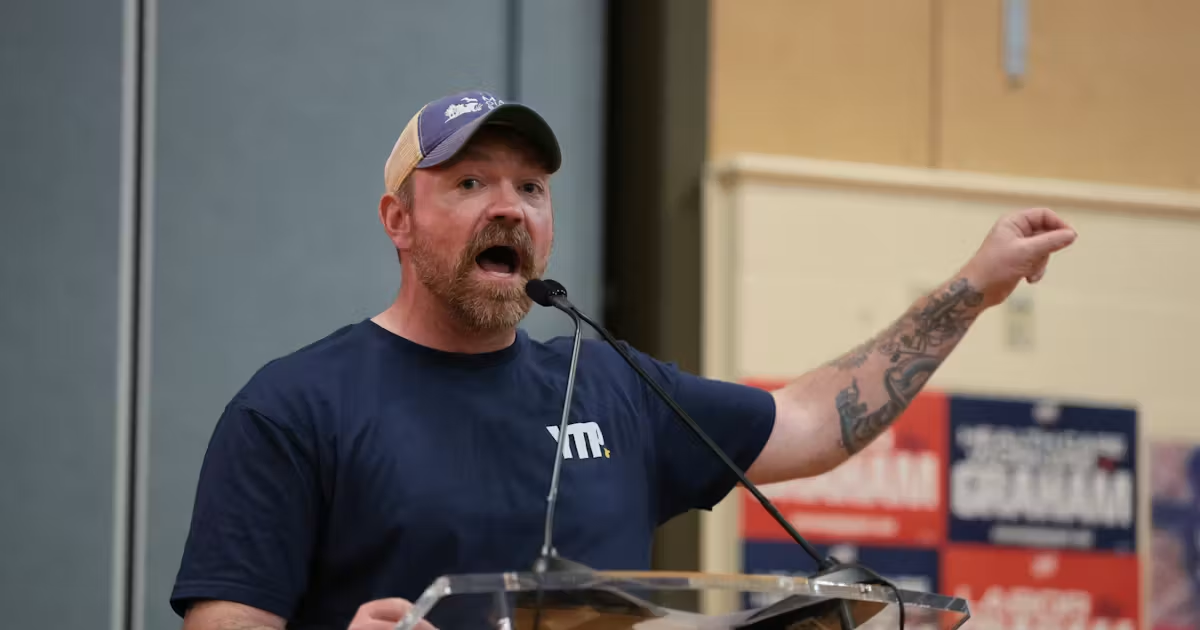
On Tuesday night, oyster farmer and combat veteran Graham Platner overwhelmingly sailed to victory in the Democratic Senate primary in Maine. His opponent, Gov. Janet Mills unofficially dropped out in late April, leaving Platner effectively unopposed. But a series of scandals rocked his candidacy, leaving his viability against Republican Sen. Susan Collins in November in question.
The veteran has repeatedly emphasized the way his combat trauma made him a worse version of himself, and how in later years he has been able to heal and evolve. In Maine, Democrats so far appear to have accepted that message of redemption, and his promise to provide a progressive economic agenda for Maine.
“It’s a very working-class state that has been very badly impacted by job loss and then, in recent years, by a pretty extreme wave of gentrification,” Intercept reporter Noah Hurowitz says. “The progressive policy agenda of Graham Platner combined with the perceived authenticity of his ‘I am a fighter, I will actually do this,’ whereas Janet Mills who has been in power and overseen a lot of this and has not been perceived to bring a lot of the changes that Mainers seek” is resonating with voters.
We also check in on California, where Intercept contributor Jordan Uhl breaks down the latest conspiracy theories about voter suppression, which conservatives have hinged on the defeat of former reality TV star Spencer Pratt, and the early results in the governor’s race. Uhl also breaks down how betting platforms like Kalshi and Polymarket are adding to the confusion, and what that could mean come November.