“He was just sat in front of a computer. Not allowed to talk or eat. Told when to go to the toilet,” one mother told The i Paper. “I sometimes found my son sobbing. It was really damaging.” Her son, who has ADHD, had become trapped in what she called “the dark underbelly of education” – a cycle of seclusion that left him worse, not better.
Another 12-year-old was so distressed he stabbed his mother with a cheese knife. An 11-year-old girl scrawled words about suicide across her hand. A seven-year-old with autism was found naked by his mother, rocking back and forth, asking when he would see his friends again.
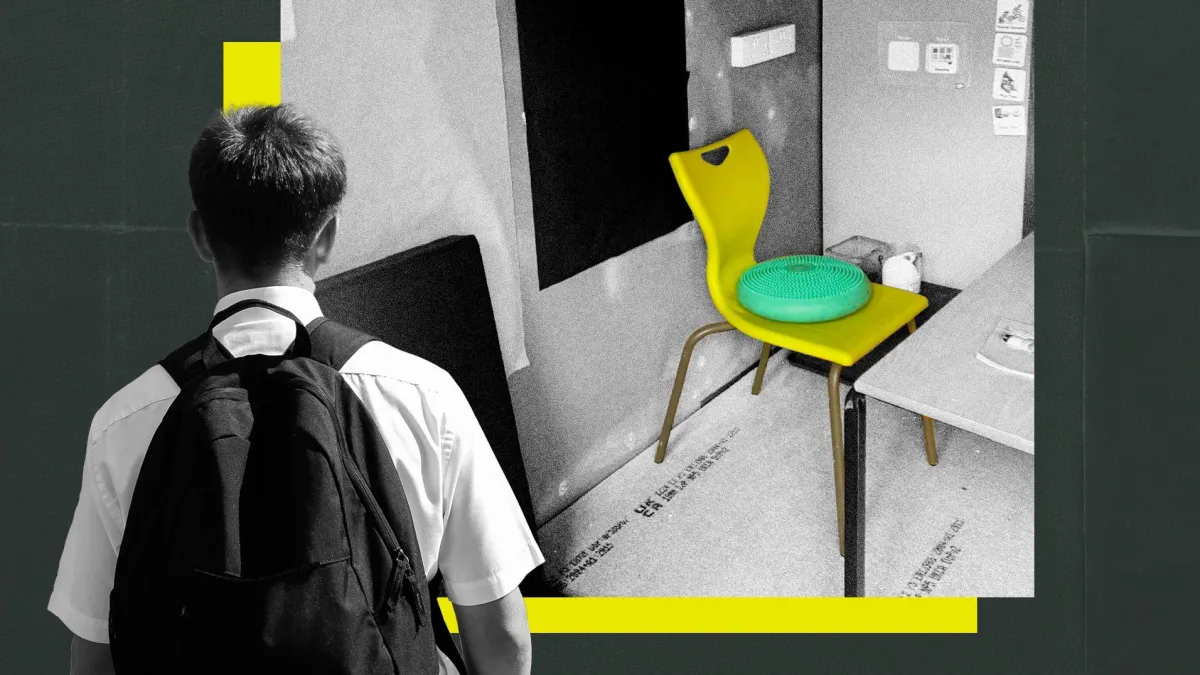
These are just some of the behaviours exhibited by children who have been put in so-called school seclusion rooms. Given names such as Rainbow and Sunshine, they are intended to keep pupils safe and minimise disruption. A survey of 6,121 teachers by Teacher Tapp, an app that polls educators in England daily, found that these rooms are now used in 90 per cent of secondary schools and 21 per cent of primaries.
Shorts
But documents seen by The i Paper, which include 100 accounts of children placed in those rooms, suggest that some of them are used to isolate and punish students, including those with special educational needs. Parents describe finding their child crying alone in a windowless room, or left for hours in spaces they describe as “smelly”, “cold” and the size of a “small shed”.