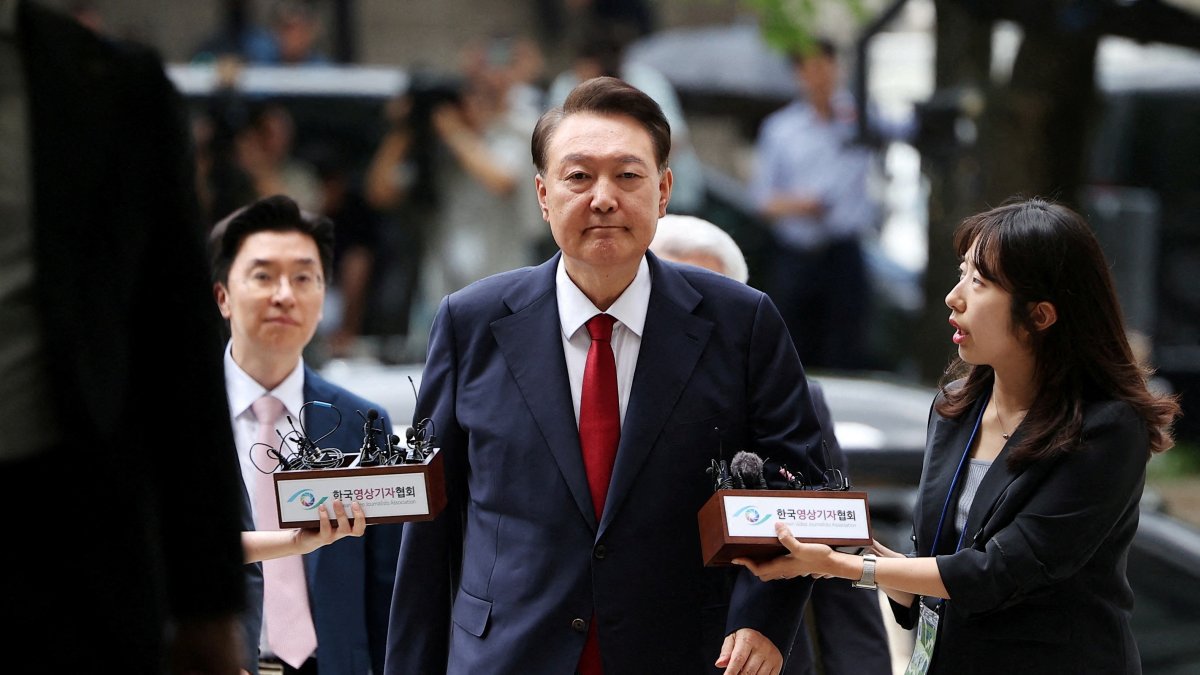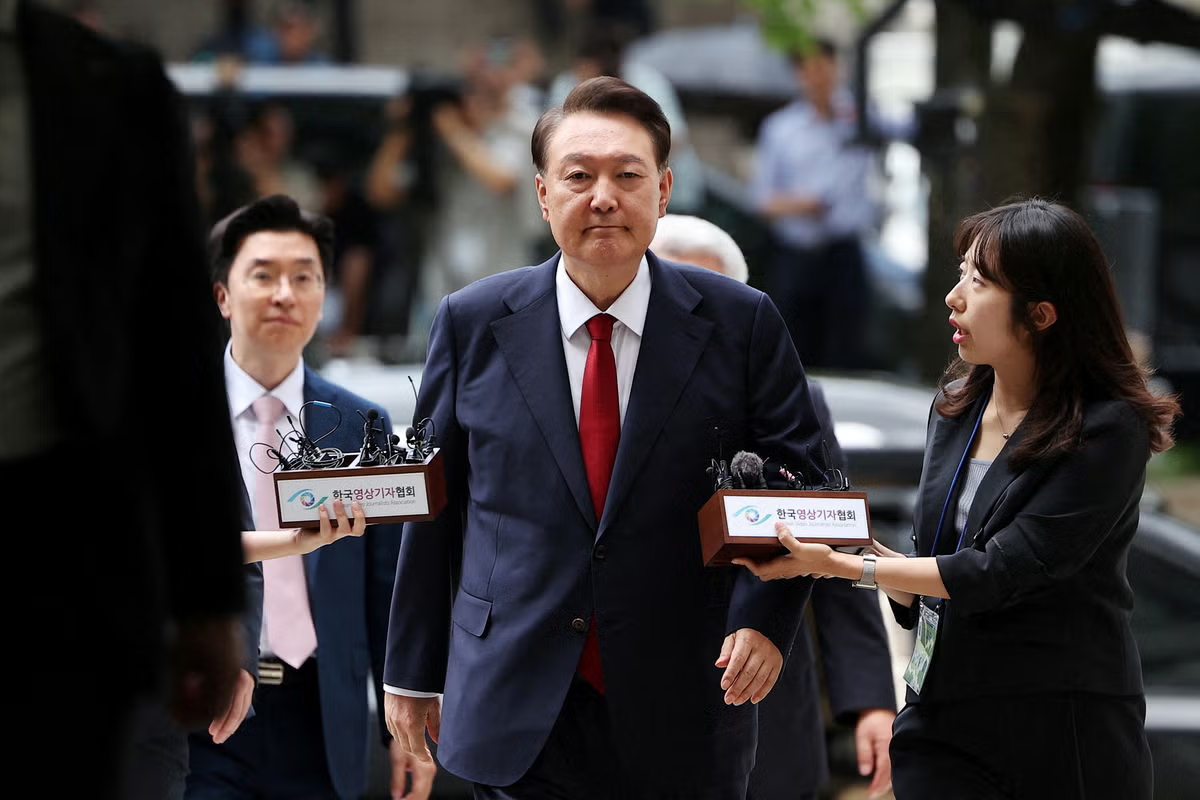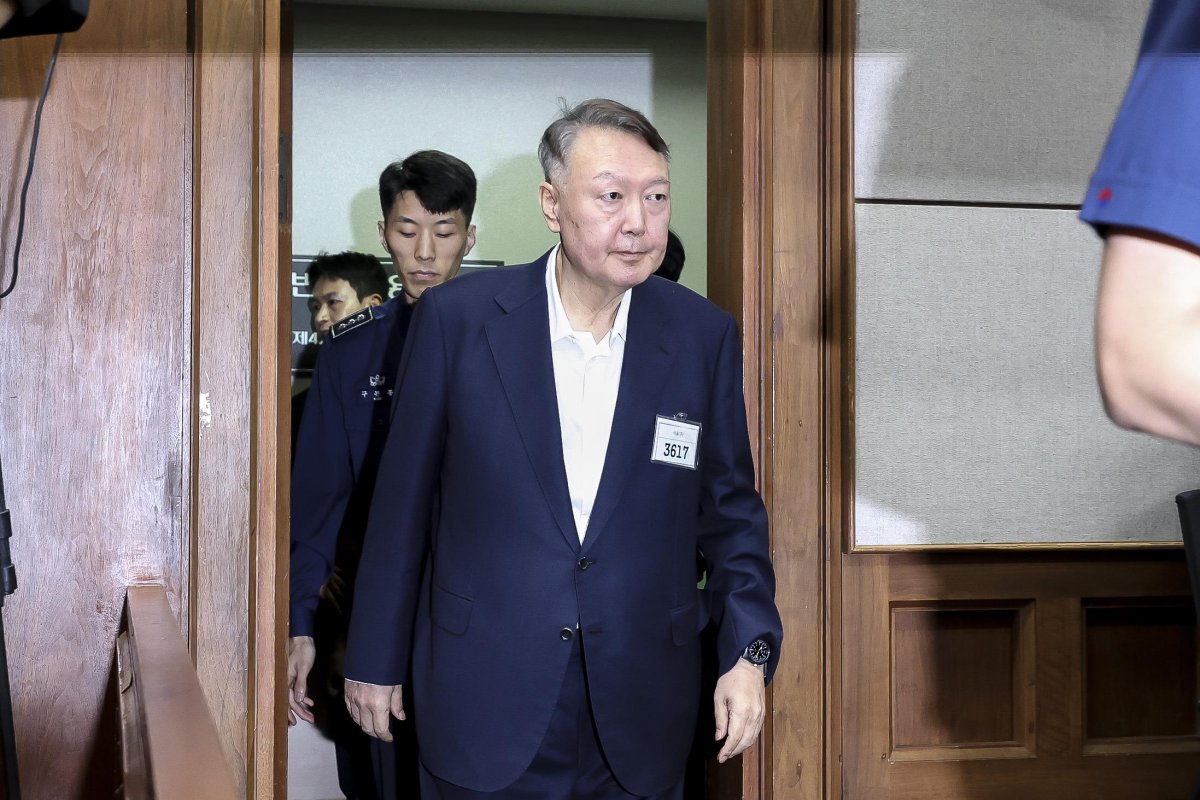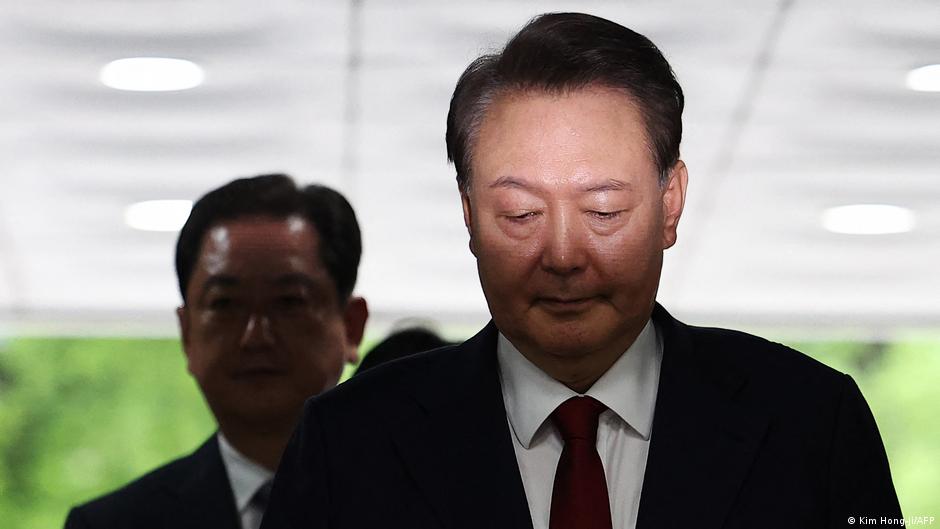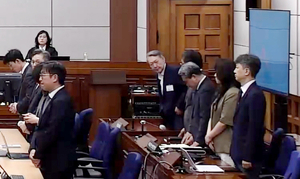
Former President Yoon Suk Yeol (center, back) attends a hearing on charges of benefiting the enemy and abuse of authority at the Seoul Central District Court in Seoul's Seocho-gu on Friday. (Yonhap) The Seoul court's decision Friday to sentence former President Yoon Suk Yeol to 30 years in prison for ordering drone infiltrations into Pyongyang has cast new light on the operation's broader afterlife, beyond questions of criminal liability.The key questions are what impact, if any, the operation had on inter-Korean relations, and how North Korea used the incident to shape its narrative toward the South.The Seoul Central District Court found that Yoon ordered the October 2024 operation with the intention of provoking North Korea into a military response that could create the conditions necessary to justify a declaration of martial law, which he did Dec. 3, 2024.The court ruled that the operation sought to "provoke North Korea" and "heighten military tensions between the two Koreas" in order to create a national emergency.The ruling prompted a rare and strongly worded response from Seoul's Unification Ministry, which said, "A former president abandoning his responsibility for national security and the safety of the people and pushing the Korean Peninsula to the brink of war is a historic tragedy and an act that can never be tolerated."The ministry added that "the government will strive to ensure that such a devastating tragedy is never repeated and that peaceful coexistence on the Korean Peninsula and a people-centered policy toward North Korea take firm root."While the court focused on Yoon's alleged intent, analysts say the broader significance lies in how Pyongyang subsequently incorporated the drone incident into its own narrative toward South Korea.Whether the Pyongyang drone incident fundamentally altered North Korea's policy toward South Korea remains open to debate.The available evidence suggests that Pyongyang integrated the episode into a broader narrative portraying the South as an adversary, while establishing additional political justification for a stronger response should similar incidents occur again.Another excuse for North Korea?The drone incident resurfaced in inter-Korean relations in April this year, when President Lee Jae Myung expressed regret over the episode and said his administration had no intention of provoking North Korea. Lee's remarks were among the first conciliatory gestures by the new government toward Pyongyang.North Korea's response, however, was carefully calibrated.In a statement carried by the state-run Korean Central News Agency, Kim Yo-jong, vice department director of the Central Committee of the Workers' Party of Korea and the influential sister of North Korean leader Kim Jong-un, described Lee's remarks as a "very fortunate and wise" decision and said he had shown "the attitude of a frank and broad-minded person." The statement added that Kim Jong-un "highly appreciated" Lee's attitude.At the same time, Kim Yo-jong stressed that "the clear fact is that the drone from the ROK violated the airspace of our country" and argued that South Korean authorities could not evade responsibility "no matter who is the perpetrator and whether it is a deed by any civilian organization or individual."While acknowledging Seoul's stated lack of intent to provoke, she warned that any recurrence would carry serious consequences.ROK stands for South Korea's official name, Republic of Korea.Analysts say the significance of the statement lay less in its seemingly conciliatory tone than in the framework it established for future interactions. Hong Min, a senior research fellow at the Korea Institute for National Unification, argued that although Kim's statement at the time appeared to accept Lee's expression of regret, "its real purpose is to create a binding mechanism to prevent a recurrence and to preemptively establish justification for future responses."According to Hong, the statement constructed a four-step logic: South Korea committed wrongdoing, South Korea expressed regret, North Korea magnanimously accepted that expression of regret and any future recurrence would therefore justify retaliation."The effect of this structure is to fix South Korea's wrongdoing as an official acknowledgment of responsibility and a promise to prevent recurrence," he said, adding that it also "preemptively secures the legitimacy of North Korea's future response."Yang Moo-jin, a distinguished professor at the University of North Korean Studies, similarly argued that the episode reinforced North Korea's existing portrayal of South Korea as a "hostile state." He said subsequent messaging in April "reaffirmed that South Korea's identity as North Korea's foremost hostile state remains unchanged" and reflects "an intention to block the spread of messages of goodwill toward South Korea that would contradict the narrative of hostility."At the same time, Yang cautioned against reading too much into later official interpretations.Yang noted that Kim Yo-jong herself did not use the term "hostile state" in her statement and instead focused on ending provocations, abandoning attempts at contact and warning of consequences should such incidents recur.As a result, Yang said, portraying the statement primarily as a warning to an enemy state "may itself be criticized as overly subjective."
Beyond Yoon’s verdict: How drone operation echoed across inter-Korean ties
The Seoul court's decision Friday to sentence former President Yoon Suk Yeol to 30 years in prison for ordering drone infiltrations into Pyongyang has cast new
TL;DRAI
Yoon received 30 years for ordering October 2024 drone infiltrations into Pyongyang to provoke North Korea and justify martial law. Pyongyang used the incident to preemptively justify future responses and entrench its hostile narrative.
803 words~4 min read