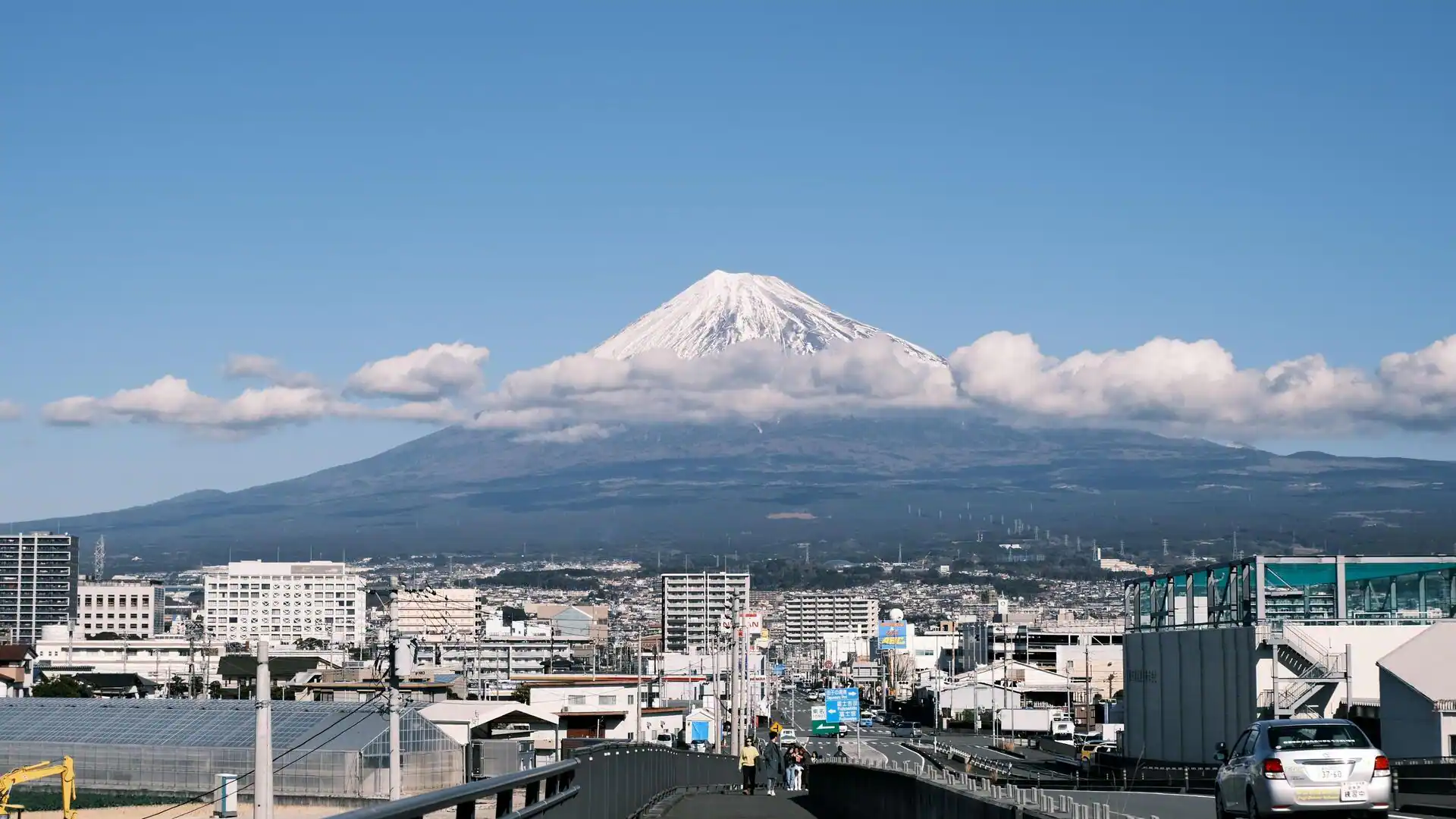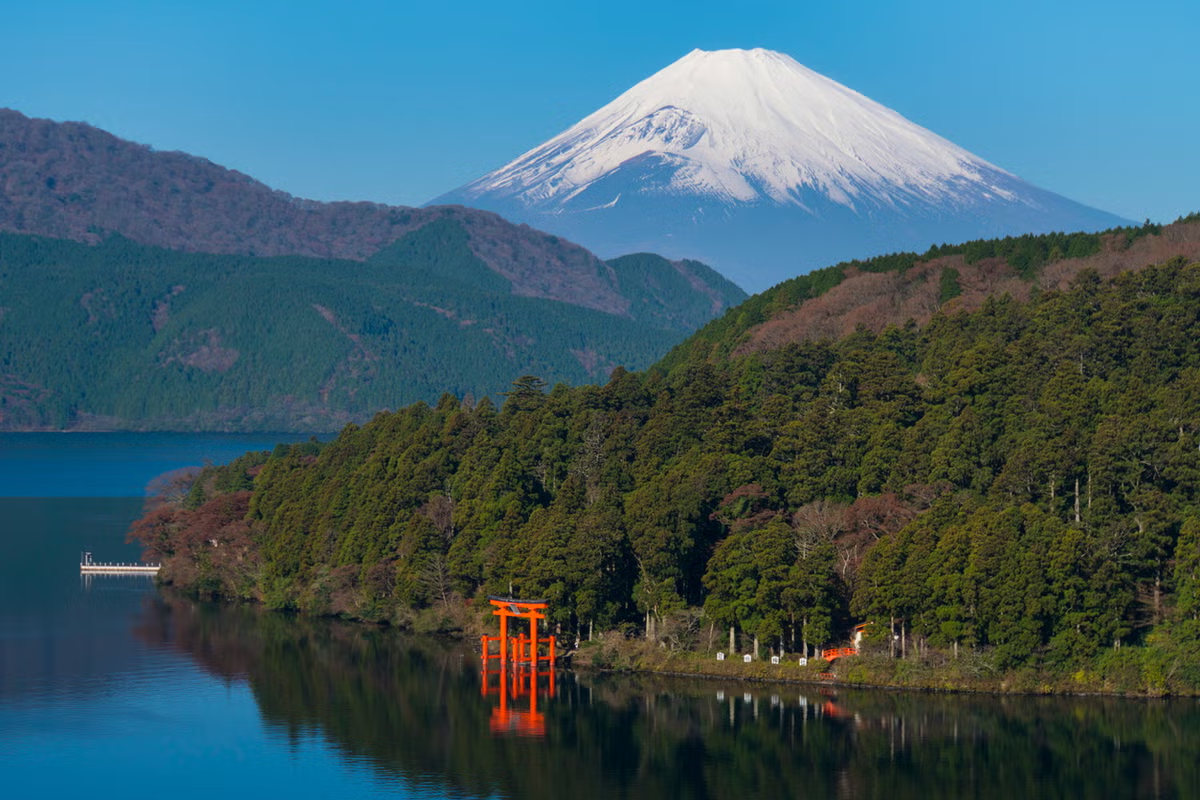
To reach the sulfur springs of Hakone, I boarded a dinky cable car at the foot of the Owakudani Valley with six other visitors. The journey takes all of 30 minutes, quickly climbing to give sweeping views of the countryside. Fir-covered peaks stretched out in each direction; the shimmer of a lake was spotted. And then, suddenly, we crested over a hill and let out a collective gasp: there was Fuji, impossibly taller than the rest, capped, perfectly, by snow. There was a flurry of excitement as we crowded to get photographs. The mountain demanded attention. As we pulled into Hakone’s hot springs, each of us gave furtive glances back at it, resplendent in the sunshine. Hakone's black eggs are a local delicacy (Getty Images/iStockphoto)I had set out to explore the more peaceful side of Japan, hoping for an antidote to frantic modern life. I craved the countryside and, after some research, Kanagawa Prefecture seemed to comfortably fit the bill. There was the majesty of the mountain, dominating the skyline. But the wider Fuji-Hakone-Izu National Park itself seemed remarkable. In autumn, the depth of burning foliage rivals that of Maine. In spring, the air is bouncy, fresh, and restorative. Unless, of course, you’re at those hot springs, where sulfurous gas is used to cook infamous black boiled eggs – something of a local delicacy. More luxuriously, those springs feed onsen in traditional inns, or ryokans, across the region. The most spectacular of those is the Gora Kadan Hakone, built in the 1930s as a summer villa for the imperial family. By 1948, it had been converted into a place for everyone to stay in, and is now home to some 40 rooms. The garden at Gora Kadan Hakone (Sophie Dickinson)Read more: I took my four-year-old to Japan – this is everything I learntIt is a studiously architectural place: sunlight is dappled through perfectly-placed windows; its numerous levels are tucked into the landscape, making its corridors feel especially intimate. Among my favourite areas was an almost vintage, 1980s-style saloon for coffee, which overlooks a manicured garden. With a just-whisked matcha in hand, it was an unrivalled spot for contemplation. Hakone is not exactly off the beaten track. It is only 50 miles from Tokyo and accessible, easily, by an two-hour train journey. Although the resort is well-known, I was surprised by how quiet it was. Known for its many art galleries (the Pola Museum was a favorite), there is a hushed atmosphere – no selfie sticks or crowds of visitors here. After our cable car ride, we wandered through Hakone’s winding streets – excited by a vending machine, charmed by tiny craft shops – and back to the ryokan. The rooms were so perfectly seamless I found myself sending photographs of the wooden joinery to friends back at home: not something I’ve ever done before. Sophie at Gora Kadan Hakone (Sophie Dickinson)The floors are lined with supple tatami mats, while paper screens separate the sleeping, eating and dining rooms, each decorated tastefully with ceramics or wall hangings. Most incredibly, though, some rooms have their own onsen, overlooking the forest behind. After a day of exploring, I eased myself into the naturally warm waters and exhaled. The ryokan’s extraordinary sense of hospitality was best displayed at mealtimes. Both breakfast and dinner are served in the room: endless dishes of delicate pickles, expertly-sliced sashimi, yuzu soup with shrimp dumplings, shimeji mushrooms and freshly-caught crab. Sake was served on ice; meals were concluded with fine teas and correspondingly-flavoured cakes. This was an experience like no other, far exceeding the hurried hotel dinner or scramble to find a decent restaurant. As an escape from everyday life, I couldn’t have asked for much more. The view of the mountain from Gora Kadan Fuji (Gora Kadan Fuji / Miyoshi Kazuyoshi)Read more: Why completing Japan’s historic 88 temple pilgrimage is so rewarding – and gruellingThere’s a sister outpost, too: Gora Kadan Fuji. Tucked into the foothills of Shizuoka Prefecture, and at the base of the mountain, it is designed to bask in the peak’s glory. An impossibly stylish reception area is almost spiritual in its reverence. There’s a dark, hanging fireplace and Hiroshi Sugimoto’s calligraphic artworks on the walls, but the mountain takes centre stage. Again, that concept of omotenashi, or anticipatory hospitality, was in evidence: a tea was already waiting for me and I was shown to a viewing platform where I could drink in the view.Replete with onsen, swimming pool and massage rooms, I could happily have stayed within the serene ryokan’s grounds for the duration of my trip. Japan’s tourist numbers increased some 70 per cent between 2023 and 2025 to 43 million visitors, and so a genuine sense of calm can be difficult to find. Tokyo is chaotic and bright and exciting, but not a rest from a busy work schedule or hectic responsibilities. Here, though, with its luxuriously deep beds and infinite landscape views, was something more considered.The ryokan is designed to feel restorative (Sophie Dickinson)There was, however, a national park to be explored. I elected to visit the luminous Subashiri Sengenjinja Shrine, tucked into woodland. It is often visited by those ascending the mountain, and according to legend was built in 807 before being rebuilt in 1718 after an eruption. Two Komainu, or lion-dogs, guarded its entrance; birdlife fluttered overhead. Nearby is a wonderfully strange cave network, marked by the Kawaguchiko Field Center, where thousands of years of lava flow through the hollows of felled trees has created a diverging set of tunnels. A rudimentary visitors’ centre offers helmets and torches, and then you’re off, hunched down and, at times, crawling, through the tubes. It’s a fascinating, if slightly eerie experience. Elsewhere in the national park are three other networks: Narusawa Ice Cave, known for its stalagmites, Fugaku Fuketsu, a natural glacier, and Komoriana, home to three species of bats. The 350-metre long Komoriana is known for its flying inhabitants, but most are decorated only by their natural geological features.A precisely-sculpted bean cake was left for Sophie to try (Sophie Dickinson)When I got back to my room, a precisely-sculpted bean cake had been left on the table for me to try. An anticipatory snack, before I headed to the sleek restaurant for dinner and plum wine.It can be tempting to throw everything into a trip to Japan, spending weeks frantically moving between cities. Instead, this peaceful region of the country – so close to its hectic heart – was a meditative escape. How to do it Japan Airlines fly from Heathrow to Tokyo, taking around 14 hours. Trains from Tokyo to Hakone run daily, taking from one to two hours depending on the route. Where to stay Gora Kadan Hakone’s luxurious double rooms start at £579 per night, including the exquisite breakfast and dinner.Book nowGora Kadan Fuji, which is renowned for its philosophy of recuperation and rest, offers doubles from £630 (also including breakfast and dinner). Book now
I found the peaceful heart of Japan less than two hours away from Tokyo
In search of a restorative break, Sophie Dickinson swerved the country’s capital and explored the traditional ryokans in the foothills of Mount Fuji
1,156 words~5 min read