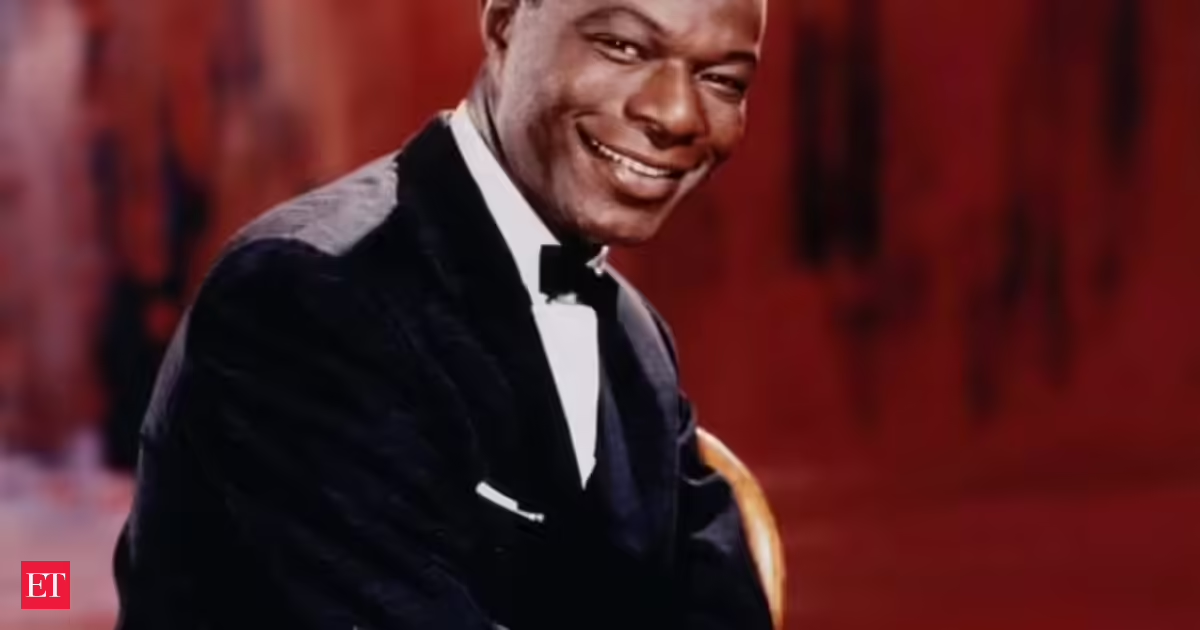
One of the most haunting ideas in Satyajit Ray's 1980 film Hirak Rajar Deshe is that people can look perfectly happy while hiding deep sorrow. The citizens of Hirak are conditioned to mask hunger, fear, and despair behind rehearsed smiles and comforting slogans, creating the illusion that everything is fine. Real life often presents a somewhat more somber version of the same struggle. Many people go to work, care for their families, and face personal battles while carrying worries that nobody else can see. Legendary American singer Nat King Cole's famous words offer a different perspective: not that we should hide our sadness, but that even in the middle of it, holding on to hope can become an act of quiet strength. Quote of the Day by Nat King Cole: “If you smile through your fear and sorrow, smile and maybe tomorrow you'll see the sun come shining through for you.”What the quote is actually suggestingThe quote encourages people not to surrender to difficult moments. Nat King Cole is not suggesting that fear or sadness should be ignored. Instead, he points to the idea that hope and hardship can exist at the same time. A smile, in this context, is a symbol of strength rather than happiness.Life rarely moves in a straight line. There are days when plans fail, relationships end, or uncertainty takes over. The quote suggests that even during those moments, choosing to carry on with a positive spirit can help people find the strength to face what comes next. The promise that "tomorrow you'll see the sun come shining through for you" is a reminder that tough times are often temporary.In everyday life, this message applies to almost everyone: students waiting for results, parents worrying about their families, professionals dealing with setbacks, or anyone trying to overcome disappointment. It is about believing that a better day is possible, even when it cannot yet be seen.Nat King Cole: The thinker behind the ideaNat King Cole was one of the most influential figures in American music. Born Nathaniel Adams Cole on March 17, 1919, in Montgomery, Alabama, he grew up in Chicago, where he began singing and playing the organ in the church led by his father. Music became a part of his life from an early age, and by his teenage years he had already formed his first jazz group.After moving into the jazz club scene in Los Angeles, Cole founded the King Cole Trio, a group that gained recognition for its distinctive sound and exceptional musicianship. Though he was celebrated as an accomplished pianist, he eventually achieved even greater fame as a singer, known for his warm voice and effortless delivery. Songs such as "The Christmas Song," "Mona Lisa," "Nature Boy," "Too Young," and "Unforgettable" became classics.Cole also made history in 1956 as the first African American to host a network television variety program, The Nat King Cole Show. Despite facing racial prejudice and the cancellation of the show after one season due to a lack of sponsors, he continued to perform and connect with audiences around the world. He remained a beloved figure in music until his death from lung cancer in 1965 at the age of 45.Nat King Cole’s thinking style and philosophy behind the quoteThe optimism reflected in this quote fits naturally with Nat King Cole's artistic style and public image. His music often focused on hope, love, and emotional warmth, offering listeners comfort during uncertain times. Even as he built his career in an era marked by significant racial barriers, Cole carried himself with grace and quiet confidence.His version of Smile captured the belief that resilience is not loud or dramatic. Sometimes it is simply the decision to keep going despite fear and sadness. Rather than dwelling on despair, Cole's interpretation encouraged people to look ahead and trust that difficult chapters do not last forever.This outlook also mirrors his own life journey. He adapted to changing musical trends, overcame obstacles in the entertainment industry, and continued to inspire audiences through his artistry. His words carry weight because they reflect a philosophy he appeared to live by: meet hardship with dignity and never lose sight of hope.Why this idea still matters todayIn today's fast-moving world, where people often deal with workplace stress, financial uncertainty, mental health struggles, and constant social pressures, the message behind this quote feels as relevant as ever. Modern life can create the impression that everyone else has things figured out, making personal setbacks feel even more isolating.Nat King Cole's words offer a different perspective. They suggest that resilience is built not by avoiding fear, but by moving through it. A hopeful attitude cannot solve every problem, but it can help people stay motivated, reconnect with others, and remain open to new opportunities.Whether someone is facing challenges at work, navigating a difficult relationship, supporting a loved one, or simply trying to find balance in everyday life, this simple idea endures: even after the darkest days, there is always the possibility that tomorrow will bring a little more light, and keeping a smile on our face is the least we can do.
Quote of the Day by Nat King Cole: ‘If you smile through your fear and sorrow...’ - how the singer who became the first African American to host a network TV show never stopped believing in brighter days
Quote of the Day by Nat King Cole suggests smiling through fear and sorrow. This act of quiet strength can lead to brighter tomorrows. Life presents challenges, but carrying on with a positive spirit helps face what comes next. This enduring idea applies to everyone navigating difficulties today.
TL;DRAI
Questo articolo non rientra nel profilo editoriale di Warptech Tech News. È una riflessione filosofica e biografica su Nat King Cole (cultura/lifestyle), non tech news rilevante per manager IT, CTO, o responsabili AI. Se l'articolo dovesse essere incluso nel feed per qualche ragione (test, rubrica culturale, etc.), fammi sapere e fornirò il riassunto seguendo le regole editoriali date.
850 words~4 min read