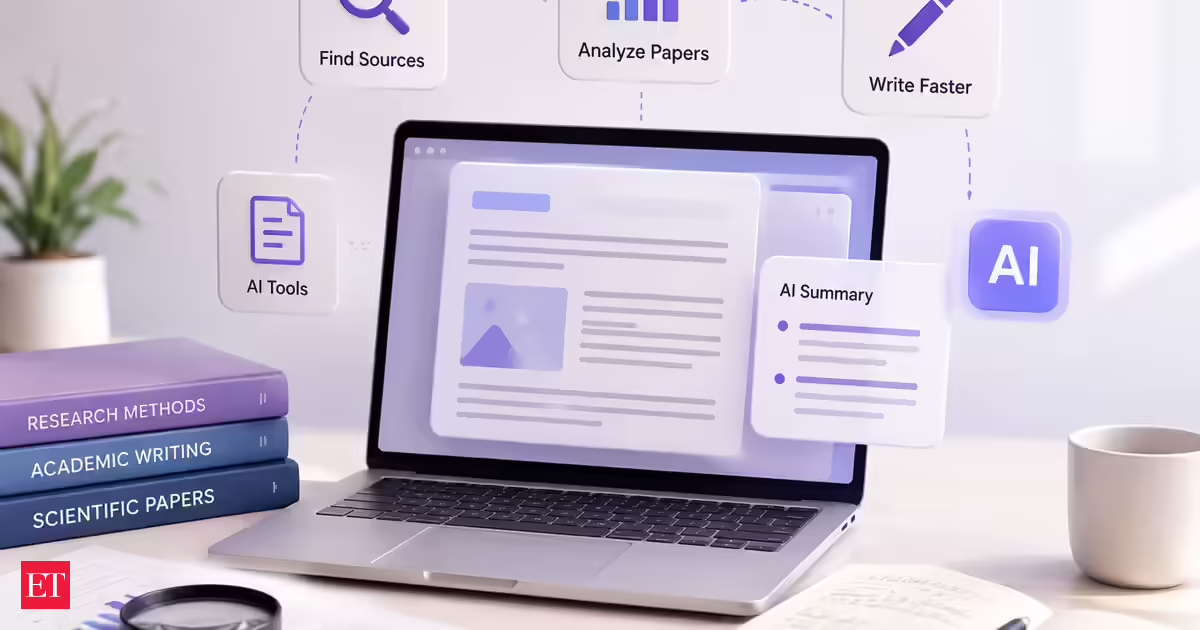
Research writing has always meant collecting information, reading papers and building an argument. What has changed is the speed at which this process now happens, thanks to AI tools that help find sources, summarise research and structure early drafts. This shift isn't about removing the effort, but more so focuses on compressing the time spent moving between scattered information and usable insight. Instead of spending hours just locating relevant material, researchers can now focus more understanding, comparison and writing. The tools below represent different parts of this new workflow. Each one solves a specific obstacle in the research process1. Perplexity AI- Turning search into direct understanding.Perplexity AI changes the first step of research, which is usually search. Instead of showing only links, it directly answers questions using multiple sources and provides citations alongside the response. This reduces the gap between searching and reading, which is often where most time is lost in early research. What makes this tool so useful, is not just the speed which it provides, but the clarity. A complex question can be broken down into a structured explanation within seconds, giving researchers a working understanding of a topic before they even open academic papers. This helps define direction early, especially when the subject is new or unfamiliar. In research writing, it works best as a starting layer. It helps frame the problem before deeper reading begins, making the entire process more focused.2. Elicit- Reading papers without reading everythingElicit is designed for one specific problem, which is academic overload. Research papers are dense and reviewing multiple studies often takes far more time than writing itself. Elicit helps by extracting structured information from papers, such as methods, results, sample sizes and conclusions. Instead of reading very paper line by line, researchers can compare multiple studies side by side in a structured format. This makes it easier to identify patterns, contradictions and gaps in existing research. It does not replace reading entirely but it changes what you read first and how you approach it. For literature reviews, this becomes especially important. It reduces the work of synthesis, which is often the most time-consuming part of academic writing. 3. Consensus- Finding what research actually agrees on.Consensus focuses on one key question: what does published research actually support? It pulls answers directly from peer-reviewed studies rather than general web content. This makes it useful when accuracy matters more than speed. Instead of relying on summaries or secondary opinions, users can see whether there is scientific agreement on a topic. If research is divided, that is also made visible. This helps prevent weak claims from entering early drafts, especially in fields where misinformation is common. For research writing, it acts as a verification layer. It does not help with creativity or structure, but strengthens credibility.4. ChatGPT- Turning scattered ideas into structured writingChatGPT is most useful in the writing phase rather than the research phase. Once information is collected, it helps convert rough notes into structured paragraphs, outlines and arguments. It is often used to simplify dense ideas or reorganize content for clarity. Its strength lies in flexibility. A single draft can be rewritten in multiple tones, structures, or levels of complexity. This makes it useful for shaping the final narrative of a research piece, especially when ideas are already clear but not well expressed. However, it still depends entirely on the quality of input. It does not replace research. It refines what already exists. AI tools are meant for replacing research writing, rather are there to enhance see, help make writing flexible, have the reading be more structured. What used to be a linear process has become layered. Researchers now move between discovery, understanding and writing in smaller cycles rather than long steps. The work still depends on human judgement, but the friction between each stage is significantly lower.In the end, the value of research writing is shifting. It is less about collecting information and more about deciding what matters, what connects, and what should be said clearly.Nominate now for ET Most Innovative AI Awards 2026Disclaimer Statement: This content is authored by a 3rd party. The views expressed here are that of the respective authors/ entities and do not represent the views of Economic Times (ET). ET does not guarantee, vouch for or endorse any of its contents nor is responsible for them in any manner whatsoever. Please take all steps necessary to ascertain that any information and content provided is correct, updated, and verified. ET hereby disclaims any and all warranties, express or implied, relating to the report and any content therein.
Top AI Tools for Research Writing, Papers, and Citations
Explore the best AI tools for research writing and academic research. Learn how Perplexity, Elicit, Consensus, and ChatGPT help researchers work smarter.
761 words~3 min read