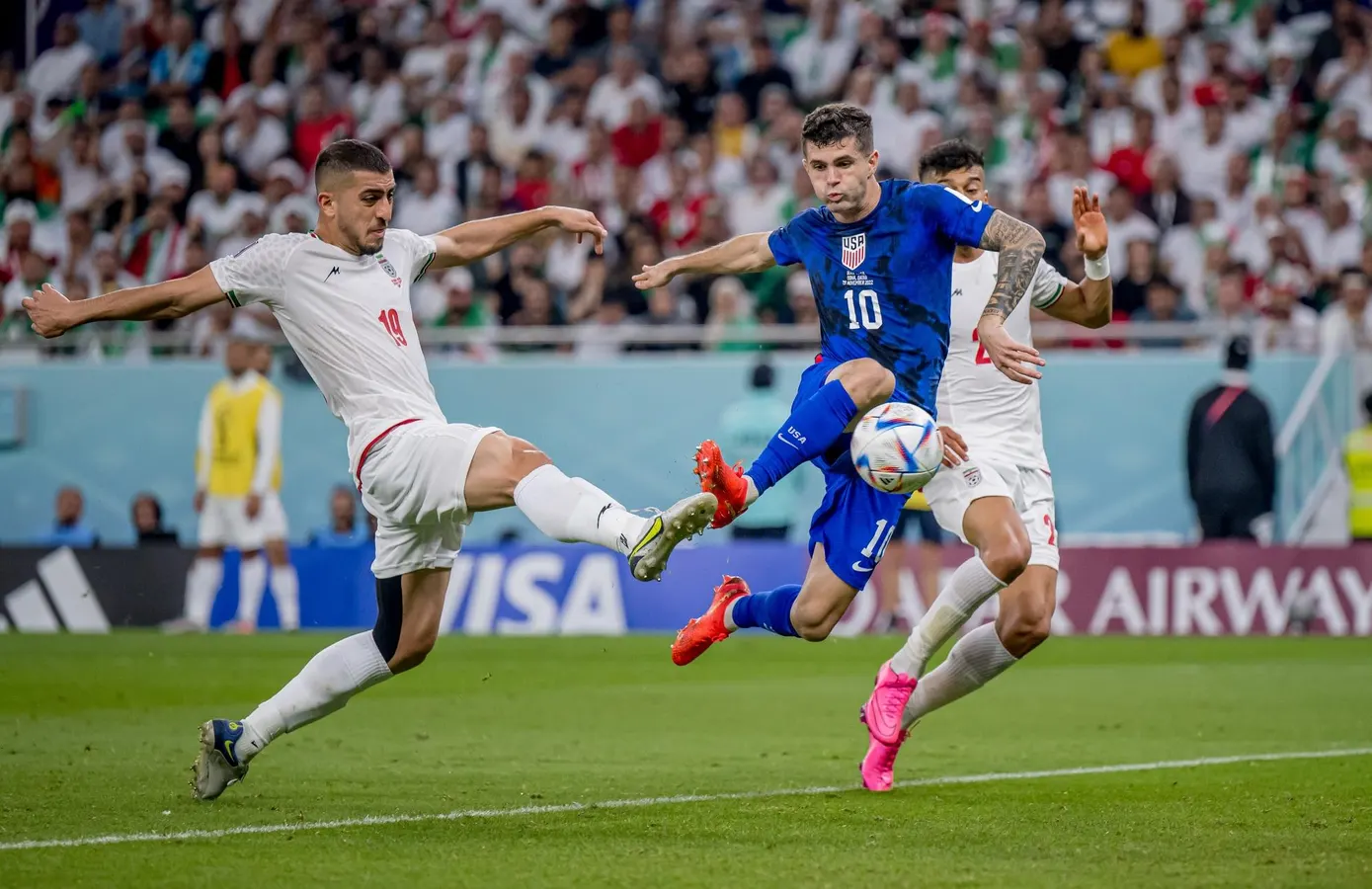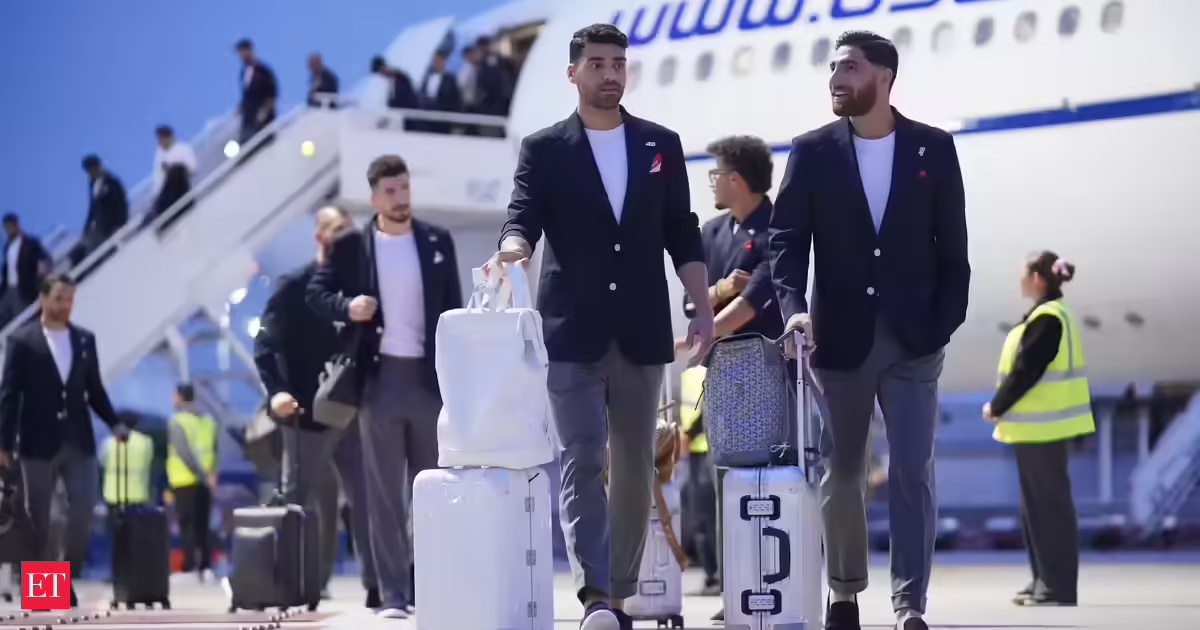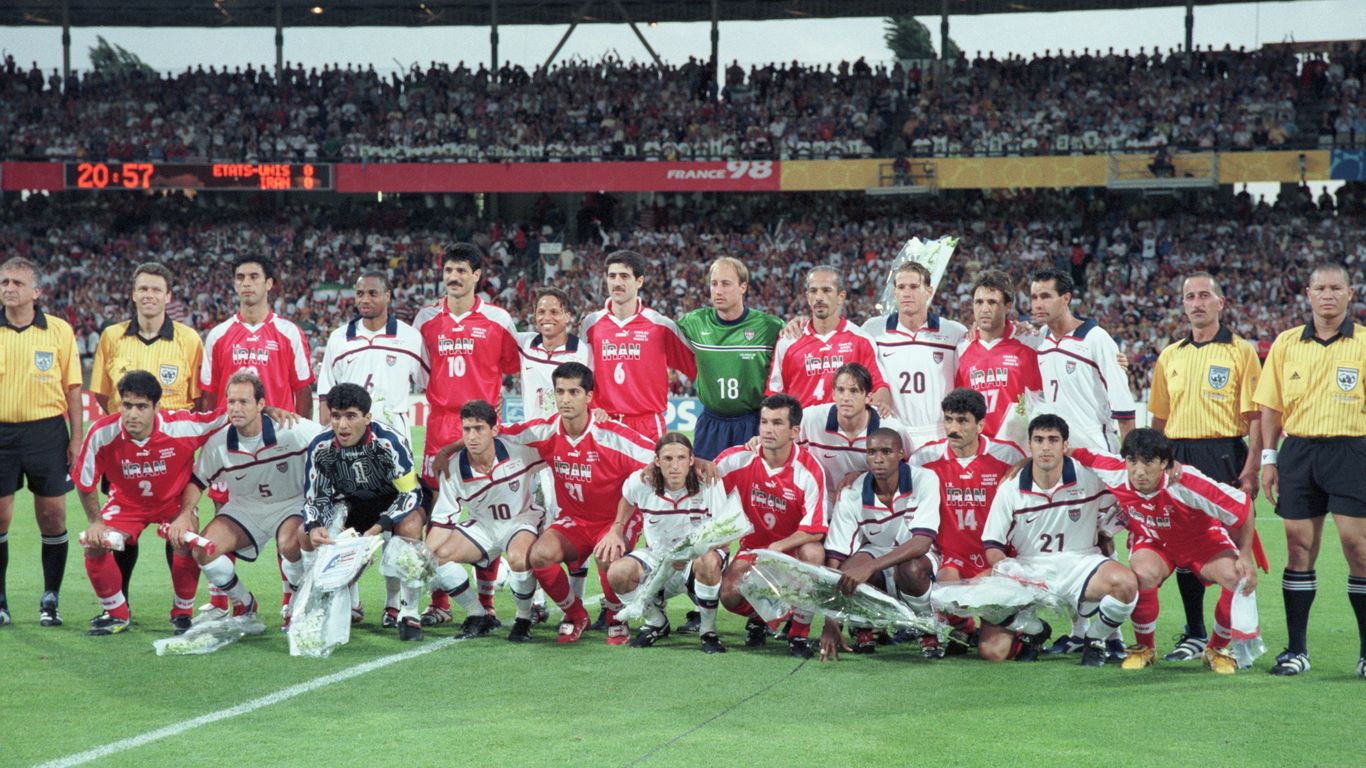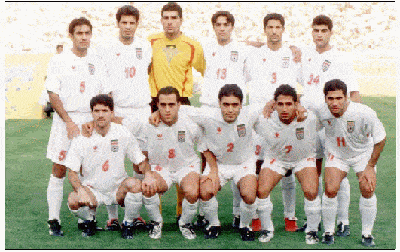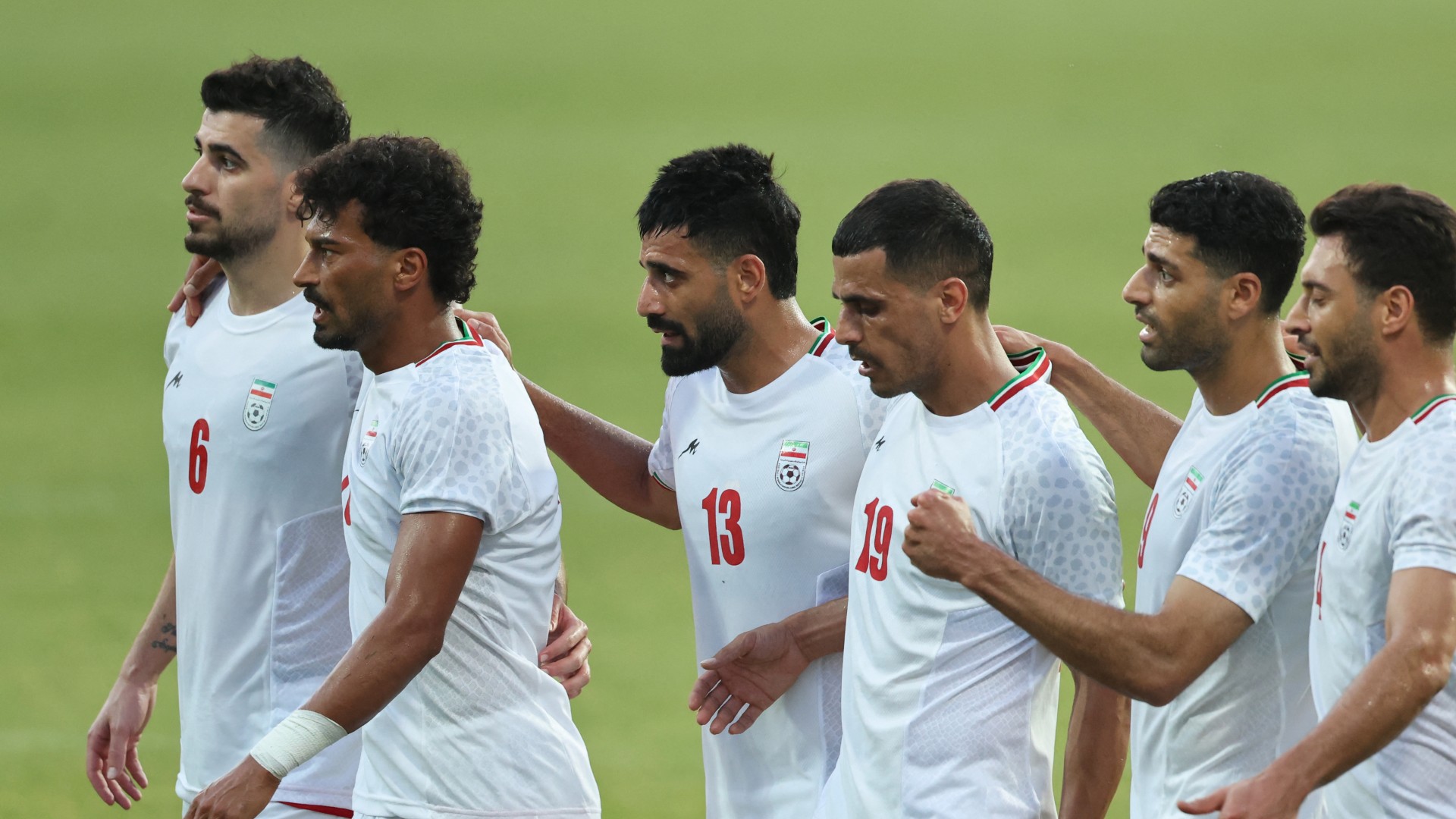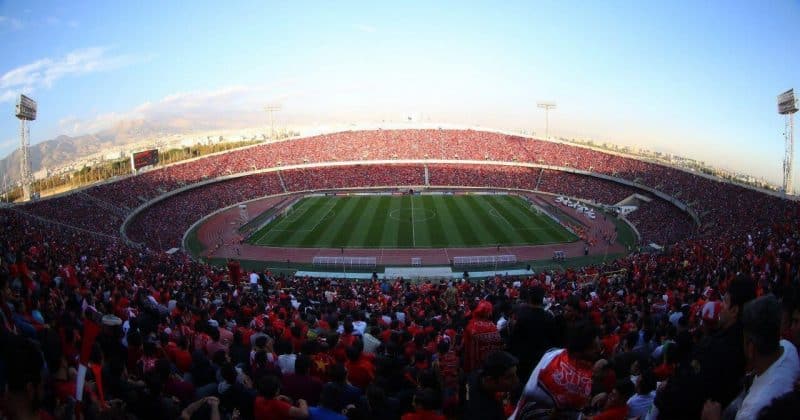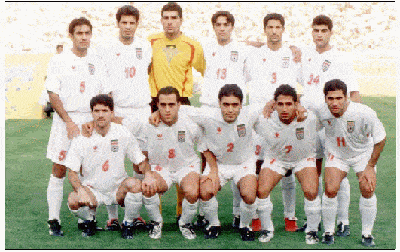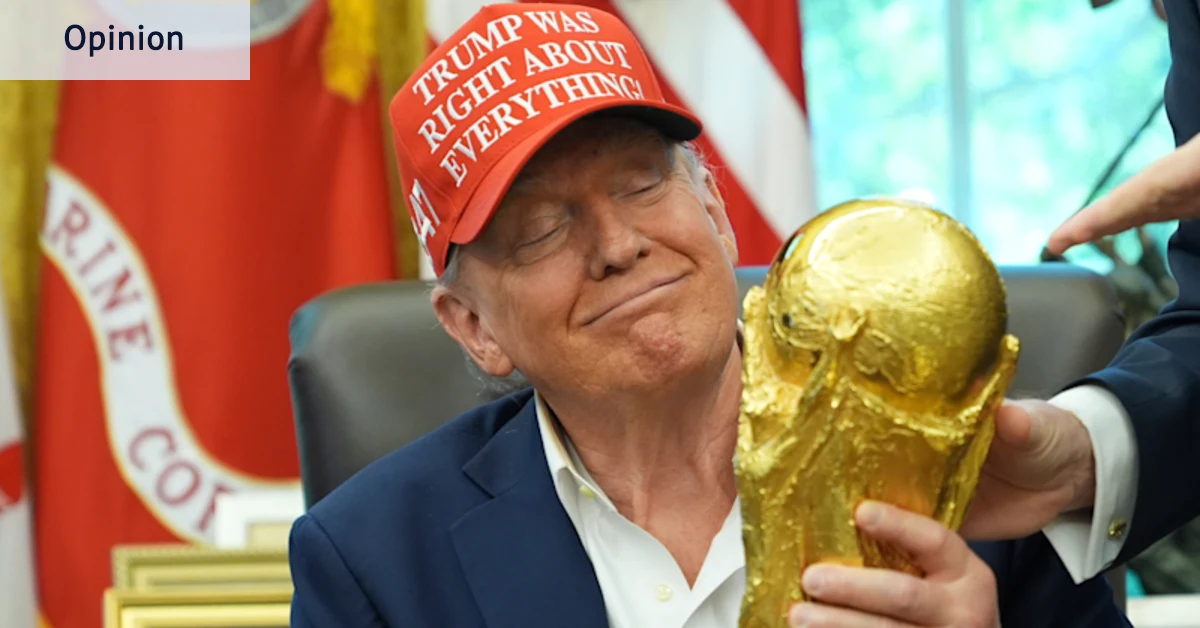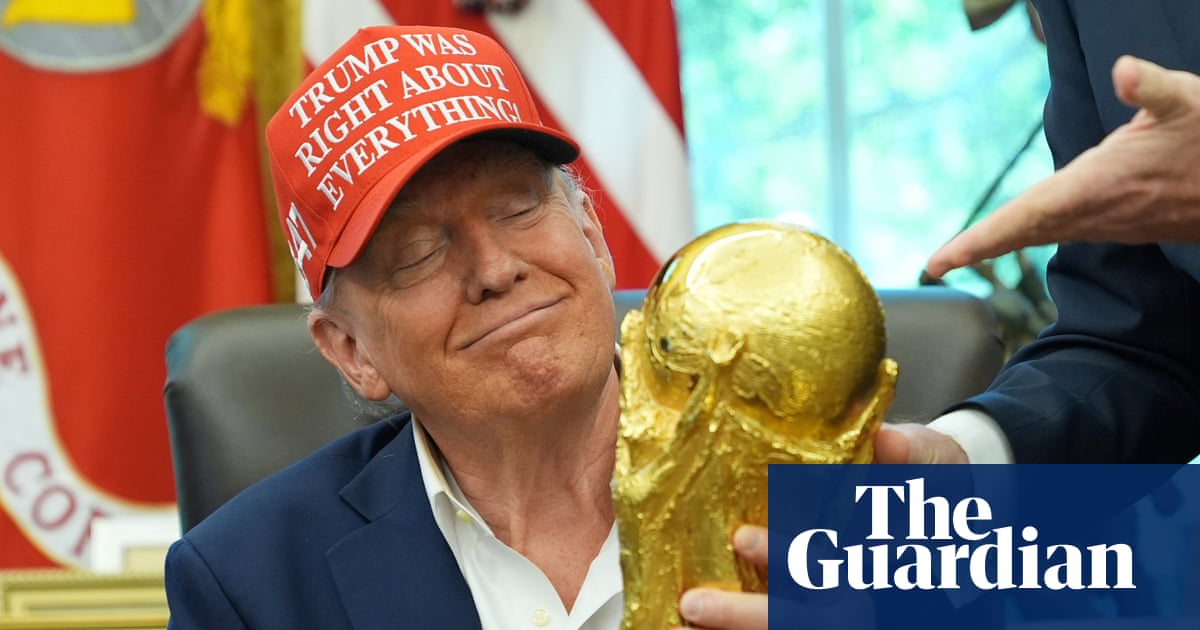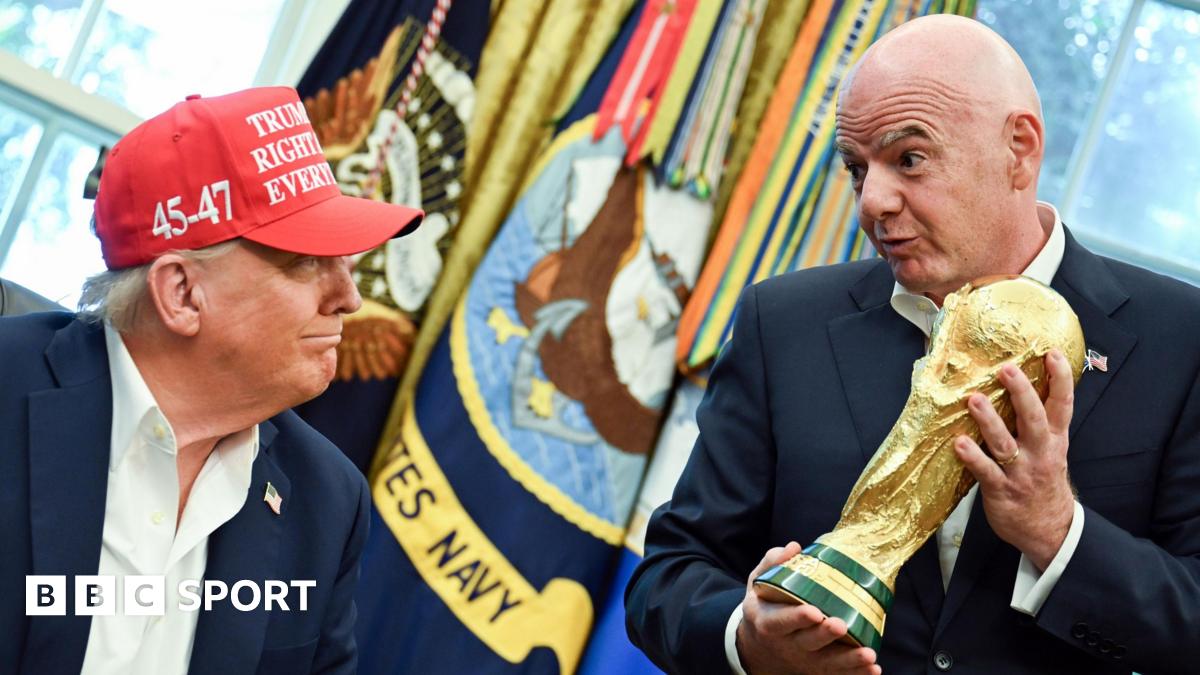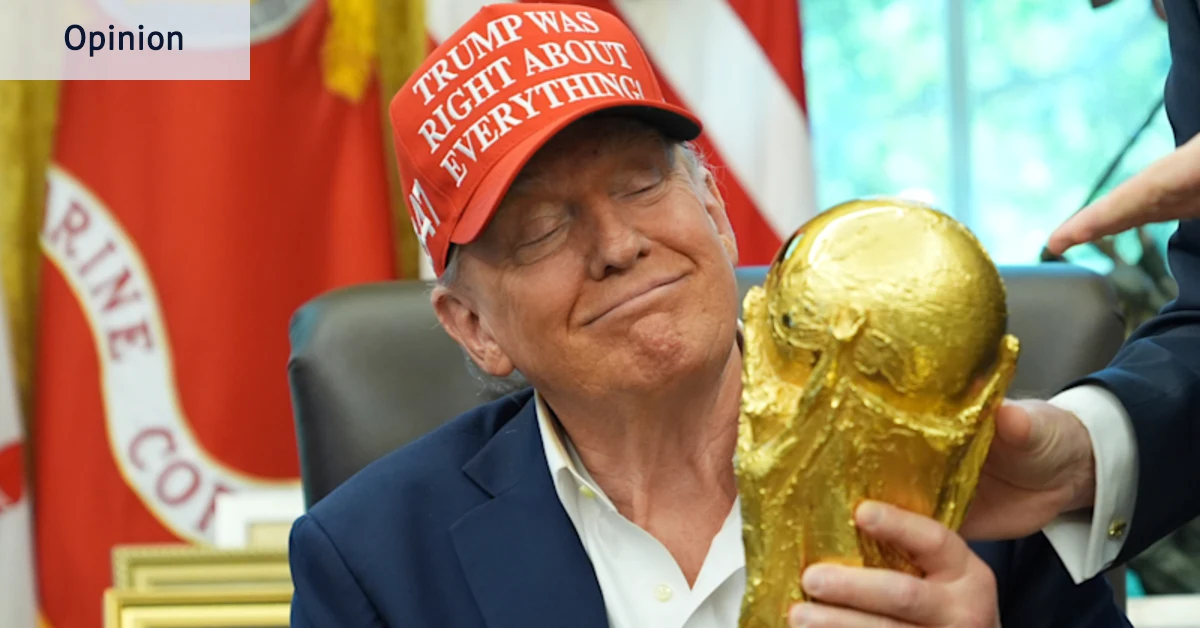
OpinionJune 12, 2026 — 3:30pmWhile football fans across the globe spend the opening days of the 2026 FIFA World Cup anxiously calculating group ladders and goal difference, there will be another cohort watching just as closely. Political pundits.Because amid the football permutations sits one extraordinary possibility: a knockout clash between the United States and Iran. For football fans, it would be compelling viewing. For diplomats, strategists and media commentators, it could be something else entirely – one of the most politically charged sporting contests in modern history.US President Donald Trump and FIFA president Gianni Infantino at the White House last year.APAnd perhaps, in the strangest twist of all, it could provide United States President Donald Trump with the corporate box backdrop for the “peace deal” he has long promised but never quite delivered. That might sound fanciful. But then again, the World Cup has always been something of a political, eh, football.Trump has never hidden his affection for triumphant sporting teams, championship celebrations or cameras pointed in his direction. Nor has he shown reluctance to intertwine politics and spectacle.In preparing for the 2026 World Cup, co-hosted by the United States, Canada and Mexico, Trump cultivated a highly visible relationship with FIFA President Gianni Infantino. Oval Office meetings, public appearances and ceremonial exchanges raised eyebrows among critics who argued the line between global sport and political theatre was becoming increasingly blurred.Members of the Iranian national team arrive at Tijuana International Airport ahead of the 2026 FIFA World Cup.Getty ImagesThe symbolism matters. Trump established a White House taskforce to oversee preparations, positioning the presidency at the centre of the tournament’s machinery. Infantino, in turn, awarded Trump FIFA’s inaugural “Peace Prize” at the 2025 World Cup draw in Washington – a move some saw as crafty diplomacy, others as sycophantic flattery.Meanwhile, questions about visas, border policy and security have already fuelled debate about who can enter a tournament supposedly designed to unite the world. Even before a ball was kicked, politics had already arrived at the World Cup.Somali referee Omar Artan was denied entry to the United States despite being selected by FIFA to begin his World Cup officiating journey – a diplomatic embarrassment that exposed the uneasy collision between football’s global ambitions and Trump’s hardline immigration policy. It has been one of several sports diplomatic incidents to overshadow the build-up, alongside scrutiny of visa access for fans from nations affected by United States travel restrictions.Infantino sought to dampen tensions on the eve of the tournament, urging fans to “chill and relax” as criticism mounted over immigration issues, visa delays and ticketing concerns. Defending FIFA’s handling of the tournament, he argued no other organisation could have secured the participation of Iran in a competition co-hosted by one of its geopolitical rivals.And then there is Iran. If results fall a certain way, the United States and Iran could meet in the knockout rounds – compressing decades of geopolitical tension into 90 minutes of football.There is also history between these two nations on football’s biggest stage. When Iran defeated the United States 2-1 at the 1998 World Cup in France, the match was billed as the “mother of all games” because of the fraught relationship between the two governments. Yet, before kick-off, Iranian players handed white roses to their American opponents in a gesture of peace watched by millions. The symbolism mattered as much as the scoreline. If the nations meet again in 2026, the political temperature will be hotter and the scrutiny greater. Trump may attend. No white roses this time, one suspects.It would not be the first time the World Cup became a political stage. Back in 1934, Benito Mussolini transformed the tournament in Italy into a fascist showcase, using football as propaganda for his regime. Italy’s triumph became more than sporting success; it was political validation for Il Duce.England’s 1966 victory over West Germany carried echoes of wartime memory and national identity. The infamous chant “Two World Wars and One World Cup” showed how football can become a vessel for triumphalism.Then came 1986, when Diego Maradona’s “Hand of God” goal helped deliver a famous victory over England just four years after the Falklands War. To Argentinians, it became more than a goal; it was catharsis.South Africa’s hosting in 2010 symbolised the nation’s reintegration into the world after apartheid, while Qatar’s 2022 tournament sparked arguments over labour rights, global influence and the now familiar accusation of “sportswashing”.Russia was the controversial choice to host the 2018 tournament even though it had just annexed Crimea. But its team has been excluded from qualification for this tournament because of the Russian invasion of Ukraine, evidence that geopolitics no longer lurks quietly around the edges of football – it walks straight onto the pitch.Which is what makes 2026 feel different. The politics are no longer hidden in symbolism or retrospective interpretation. They are front and centre. This World Cup is being staged in an America led by perhaps the world’s most media-conscious politician, alongside a FIFA administration increasingly comfortable operating in a political orbit.If Iran and the USA meet, the football will be fascinating. But every camera shot of a presidential suite, every handshake, every carefully choreographed appearance would carry another layer of significance.Would Trump use the moment as diplomatic theatre? Undoubtedly. Could football provide the backdrop for an unlikely icebreaker? Possibly. Or would the spectacle simply amplify tensions already simmering beneath the surface? Plausibly.But this World Cup, like those that came before, is not just about football. From Mussolini to Maradona, from apartheid-era healing to Qatar’s scrutiny, the game has always reflected the politics of its time.Tony Yang is a sports diplomacy researcher at Bond University.Get a weekly wrap of views that will challenge, champion and inform your own. Sign up for our Opinion newsletter.From our partners
One possible World Cup match would Trump all others, and not for the football
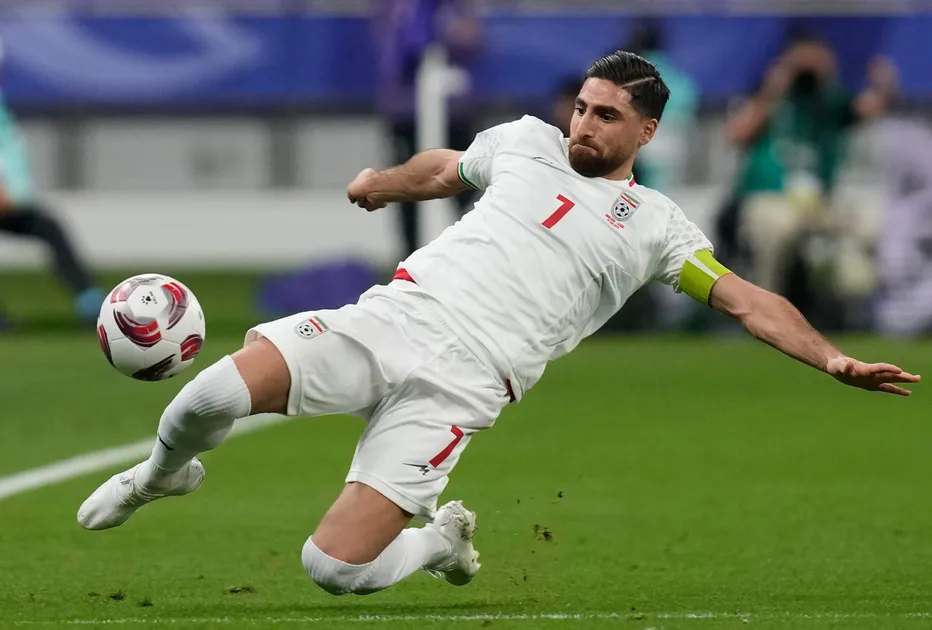
If results fall a certain way, the United States and Iran could meet in the knockout rounds – compressing decades of geopolitical tension into 90 minutes of football.
961 words~4 min read