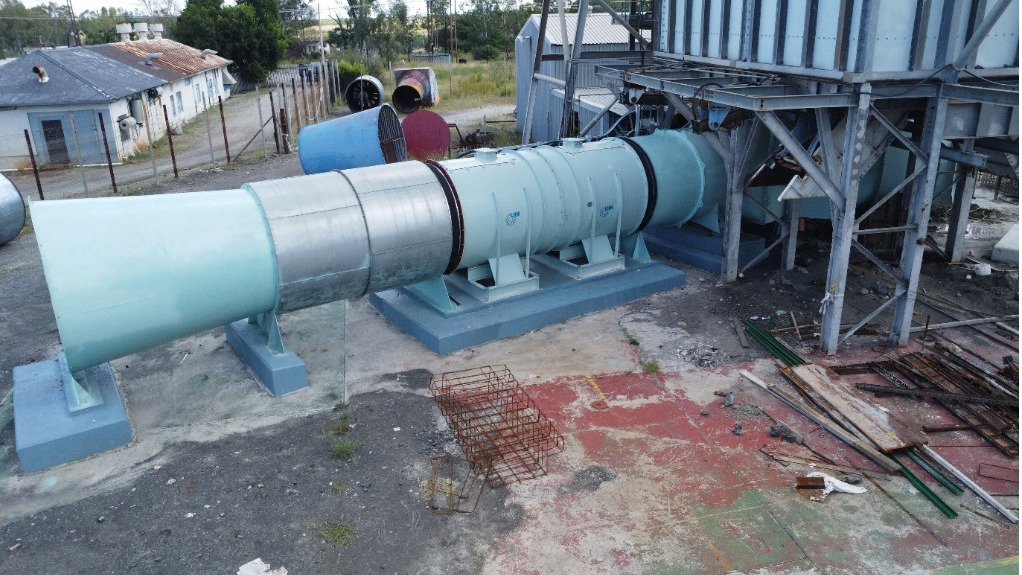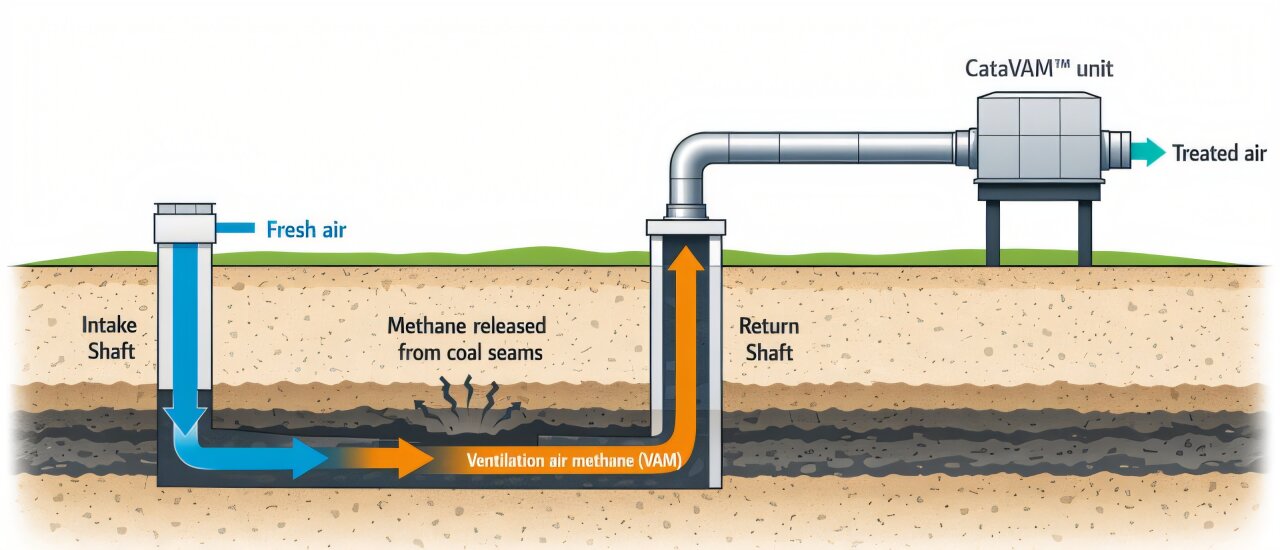
Mine ventilation diagram showing how fresh air moves through underground workings and exits as ventilation air methane (VAM). At the surface, the methane-diluted exhaust stream passes through a CataVAM unit designed to destroy low-concentration methane (AI-generated schematic). Credit: CSIRO
Every underground coal mine has one thing in common: Coal seams leak methane gas into the tunnel network, presenting a serious safety hazard. The control is the same the world over: continuously pump fresh air through the workings, diluting and pushing out the methane. High-volume mechanical ventilation systems are a cornerstone of mine safety, but they create a stubborn environmental problem.
Exhaust air from coal mining, called ventilation air methane (VAM), carries methane at safe concentrations—typically well below 1%, ensuring a safety margin below the 5% explosive range. Dusty and damp, the VAM is often pumped at hundreds of cubic meters per second.
Methane is roughly 28 times more potent as a greenhouse gas than CO2. VAM accounts for more than 60% of all fugitive emissions from Australian coal mines and around 15% of the nation's total methane output. That makes methane a material liability, one that regulators, investors and mine operators are increasingly required to address.