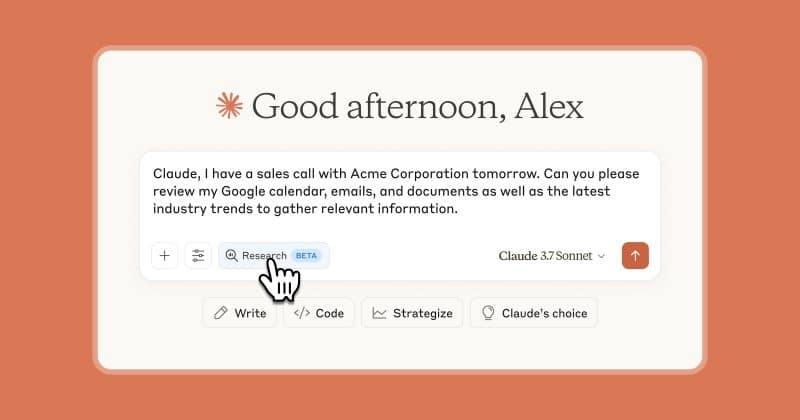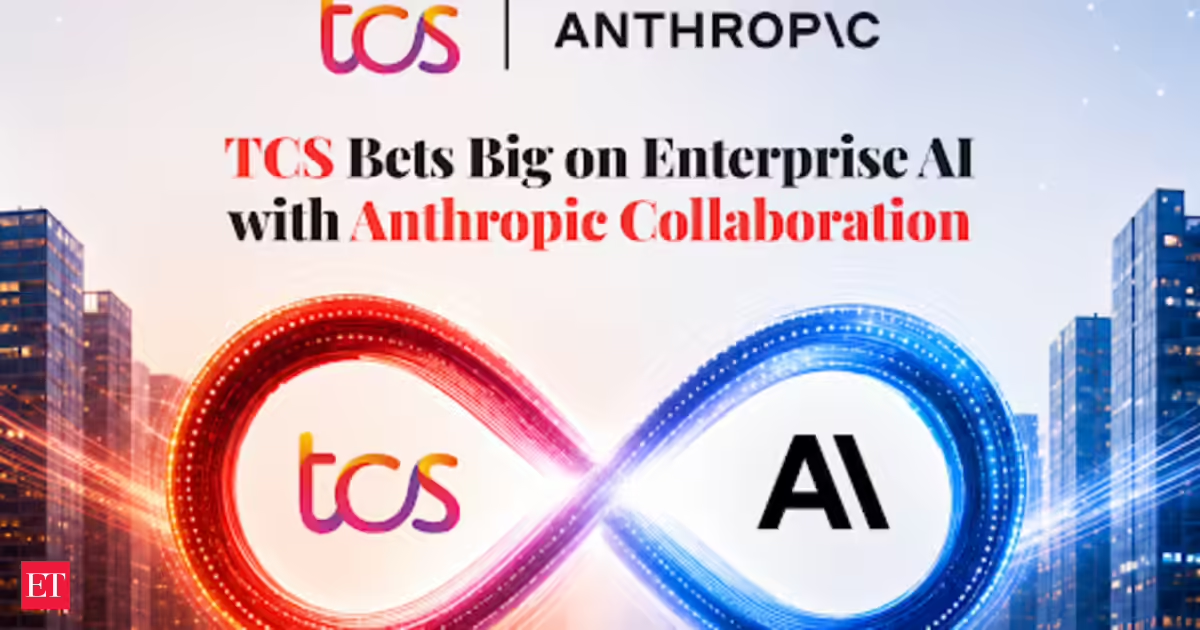
SynopsisTCS and Anthropic have partnered to deploy Claude across enterprise operations, from software engineering to customer service, signalling a decisive shift from AI experimentation to large-scale adoption. As AI evolves into an agentic technology capable of executing complex, multi-step tasks, businesses are no longer asking whether to adopt AI, but how to embed it at the core of how they operate. For TCS, this collaboration is a strategic move to lead that transformation on behalf of enterprises worldwide.ET OnlineNot long ago, a large software project would typically require teams of developers, analysts, and project managers to work together over several months. Today, advances in artificial intelligence are beginning to reshape that process, enabling organisations to automate routine tasks, accelerate development cycles, and enhance decision-making at scale. This shift is prompting businesses to rethink how work is organised and how technology creates value. The conversation around AI has moved beyond experimentation and pilot projects to a more fundamental question: How can organisations embed AI into the core of their operations?That is what makes the partnership between Tata Consultancy Services (TCS) and Anthropic significant.By becoming one of Anthropic’s key global partners, TCS is gaining access to advanced AI capabilities through Claude, Anthropic’s family of large language models. But this is not simply about adopting a new technology platform. It is about building an AI-first enterprise model that could influence how businesses operate in the years ahead.The collaboration will see TCS deploy AI across software engineering, finance, legal, marketing, customer service, and business operations. Thousands of employees are expected to work alongside AI systems, using them not just as assistants but as active participants in day-to-day workflows.This reflects a broader shift taking place across industries. AI is moving beyond content generation and automation to become what many describe as an “agentic” technology. Unlike traditional software that waits for instructions, AI agents can analyse information, make recommendations, execute tasks, and manage multi-step processes with limited human intervention.For enterprises, this opens the door to a fundamentally different operating model. Software development can be accelerated by AI-generated code. Customer queries can be resolved through intelligent agents. Internal workflows can be managed more efficiently, reducing manual effort and improving decision-making speed.The implications extend far beyond productivity gains. As AI becomes integrated into core business processes, organisations will increasingly compete on how effectively they deploy and scale intelligent systems. Access to powerful AI models alone will not be enough; success will depend on how well companies combine technology with domain expertise, governance, and human oversight.For TCS, the partnership represents an opportunity to position itself at the centre of this transformation. As enterprises worldwide look for guidance on adopting AI responsibly and at scale, technology service providers will play a critical role in translating AI’s potential into measurable business outcomes.More broadly, the partnership highlights where the AI industry is heading next. The first wave was about building powerful models. The second wave was about experimentation. The next phase will focus on large-scale adoption, in which AI becomes embedded across every layer of an organisation.In that sense, the TCS-Anthropic collaboration is not just another technology announcement. It is a glimpse into a future where AI is no longer a tool businesses use occasionally, but a capability woven into how they operate, innovate, and grow.Disclaimer Statement: This content is authored by a 3rd party. The views expressed here are that of the respective authors/ entities and do not represent the views of Economic Times (ET). ET does not guarantee, vouch for or endorse any of its contents nor is responsible for them in any manner whatsoever. Please take all steps necessary to ascertain that any information and content provided is correct, updated, and verified. ET hereby disclaims any and all warranties, express or implied, relating to the report and any content therein.Read More News onRead More News on
TCS partners with Anthropic to deploy Claude across enterprise operations at scale
TCS and Anthropic have partnered to deploy Claude across enterprise operations, from software engineering to customer service, signalling a decisive shift from AI experimentation to large-scale adoption. As AI evolves into an agentic technology capable of executing complex, multi-step tasks, businesses are no longer asking whether to adopt AI, but how to embed it at the core of how they operate. For TCS, this collaboration is a strategic move to lead that transformation on behalf of enterprises worldwide.
TCS deploys Claude across operations—software engineering, finance, customer service; thousands of employees will use AI agents daily. Signals shift from experimental pilots to production adoption; success depends on embedding agentic systems with governance into core workflows.