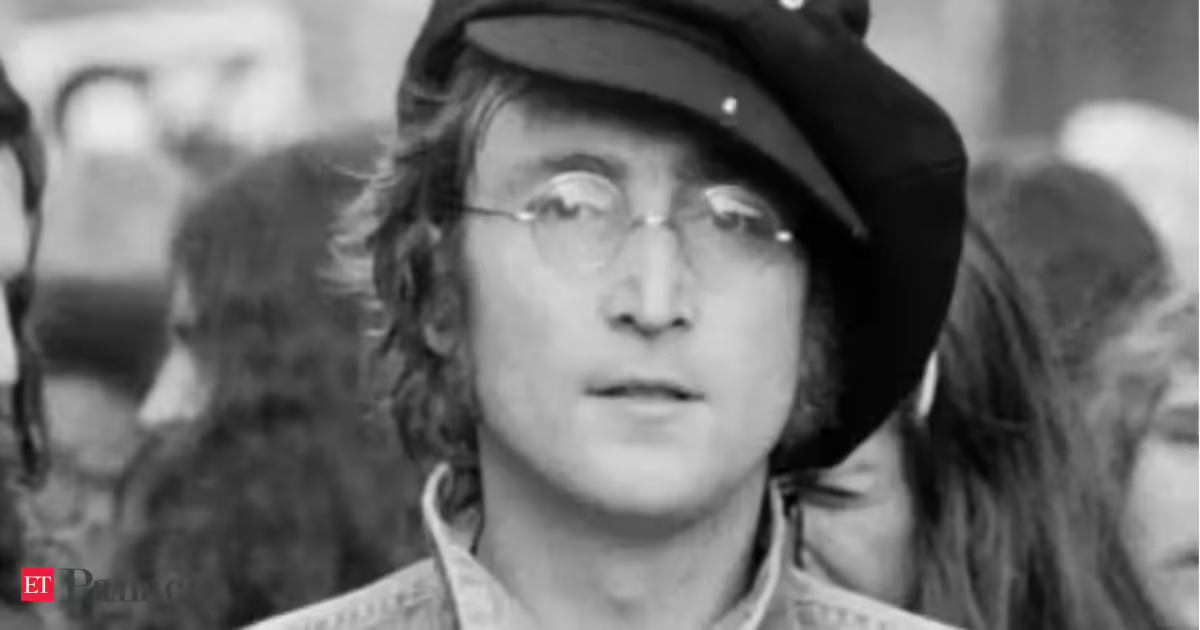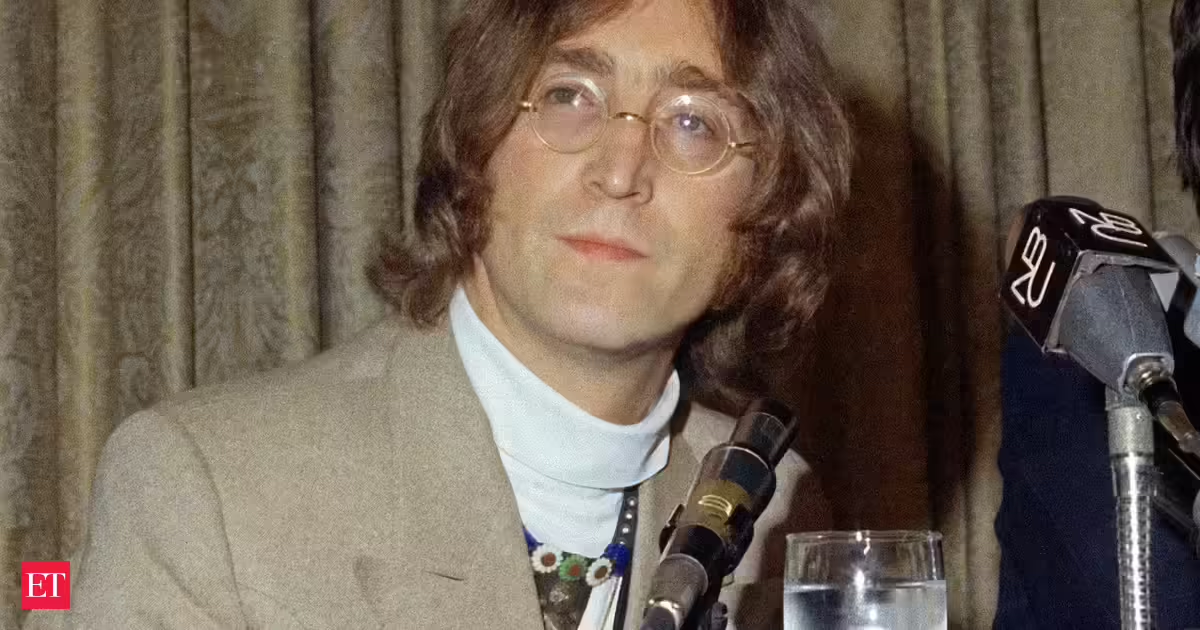
In Peter Weir’s 1998 film The Truman Show, the sun rises every morning for a man who has no idea millions are secretly watching his life. Yet the sunrise’s beauty needs no applause. In real life, too, a colleague who stays late to fix a mistake without telling anyone, or a parent who wakes at night to soothe a child, quietly helps others, creates something meaningful, or does the right thing without receiving praise. That raises a familiar question: does a good deed lose its value if nobody notices? Beatles founder John Lennon once addressed this quirky question.Quote of the Day by John Lennon: “When you do something noble and beautiful and nobody noticed, do not be sad. For the sun every morning is a beautiful spectacle and yet most of the audience still sleeps.”What the quote is actually suggestingThe quote is a reminder that the value of an action does not depend on how many people see it. Lennon compares noble acts to the sunrise, a daily event of extraordinary beauty that many people miss simply because they are asleep or too busy to notice.The message is simple: do good because it is good, not because it will be rewarded. In everyday life, people often put effort into helping family members, supporting friends, working honestly, or creating art, only to feel disappointed when their contributions go unnoticed. The quote suggests that recognition is not the true measure of meaning.It also speaks to patience and emotional resilience. Sometimes the world is distracted, and sometimes people fail to appreciate what is in front of them. That does not make the act itself any less valuable. Like the rising sun, genuine kindness, creativity, and integrity carry their own quiet significance.John Lennon: The thinker behind the ideaJohn Winston Ono Lennon was born on October 9, 1940, in Liverpool, England, and grew up in a difficult family environment. Separated from his parents at a young age, he was largely raised by his maternal aunt, Mimi Smith, while the early loss of his mother left a lasting impact on him. Those experiences shaped both his emotional depth and his lifelong search for human connection.At just 16, Lennon founded a skiffle band that eventually evolved into The Beatles, the group that would redefine popular music and become one of the most influential cultural forces of the 20th century. As a songwriter, singer, and rhythm guitarist, he helped create timeless classics while also building a reputation for his candor and willingness to challenge convention.Beyond music, Lennon was an author, graphic artist, and outspoken activist. Following the Beatles' breakup, he pursued a solo career and collaborated extensively with his second wife, Yoko Ono, on music and experimental art projects. Albums such as John Lennon/Plastic Ono Band and Imagine reflected his deeply personal and idealistic worldview, often blending vulnerability with calls for peace and social change.Lennon stepped away from the spotlight for several years to focus on family life before returning to music in 1980. That same year, on December 8, he was shot and killed outside his New York City apartment building. Though his life ended at the age of 40, his music and ideas continue to influence generations around the world.John Lennon’s thinking style and philosophy behind the quoteMany of Lennon's best-known songs and public statements revolved around authenticity. He believed that art should be honest rather than artificial and that people should question social expectations instead of blindly following them. His partnership with Yoko Ono also reinforced this approach, embracing the idea that simple acts and ordinary moments can carry profound meaning.This quote reflects that larger philosophy. Rather than encouraging people to chase validation, Lennon points toward inner conviction. He suggests that beauty and goodness exist independently of recognition. A sunrise does not become less magnificent because people sleep through it, and a sincere act of kindness does not lose its worth because it goes unnoticed.The idea also mirrors Lennon's own life. Even at the height of global fame, he often explored themes of isolation, vulnerability, and the search for genuine human connection. His work repeatedly argued that external applause is fleeting, but honesty and compassion have lasting value.Why this idea still matters todayIn an age of social media, where achievements and experiences are often measured by likes, shares, and comments, Lennon's words feel especially relevant. Many people struggle with the pressure to make every accomplishment visible or every act of kindness public. The quote offers a different perspective: not everything meaningful needs an audience.The message applies across many areas of life. Parents make sacrifices for their children that often go unrecognized. Teachers, caregivers, and volunteers spend countless hours helping others without expecting praise. Employees work behind the scenes to make teams successful, and artists create simply because they have something to express.Lennon's reflection reminds us that the absence of attention does not mean the absence of impact. Some of the most important contributions are quiet ones, and some of the most beautiful moments happen whether or not anyone is watching. Like the sunrise, their value comes from what they are, not from who notices them.
Quote of the Day by John Lennon: ‘When you do something noble and beautiful and nobody noticed, do not be sad…’ - why doing good without recognition may be one of life's greatest strengths
Quote of the Day by John Lennon suggests that the value of noble deeds lies in their inherent goodness, not in public recognition. Like the unnoticed sunrise, acts of kindness and integrity possess intrinsic worth, regardless of whether they are observed. This perspective encourages doing good for its own sake.
850 words~4 min read