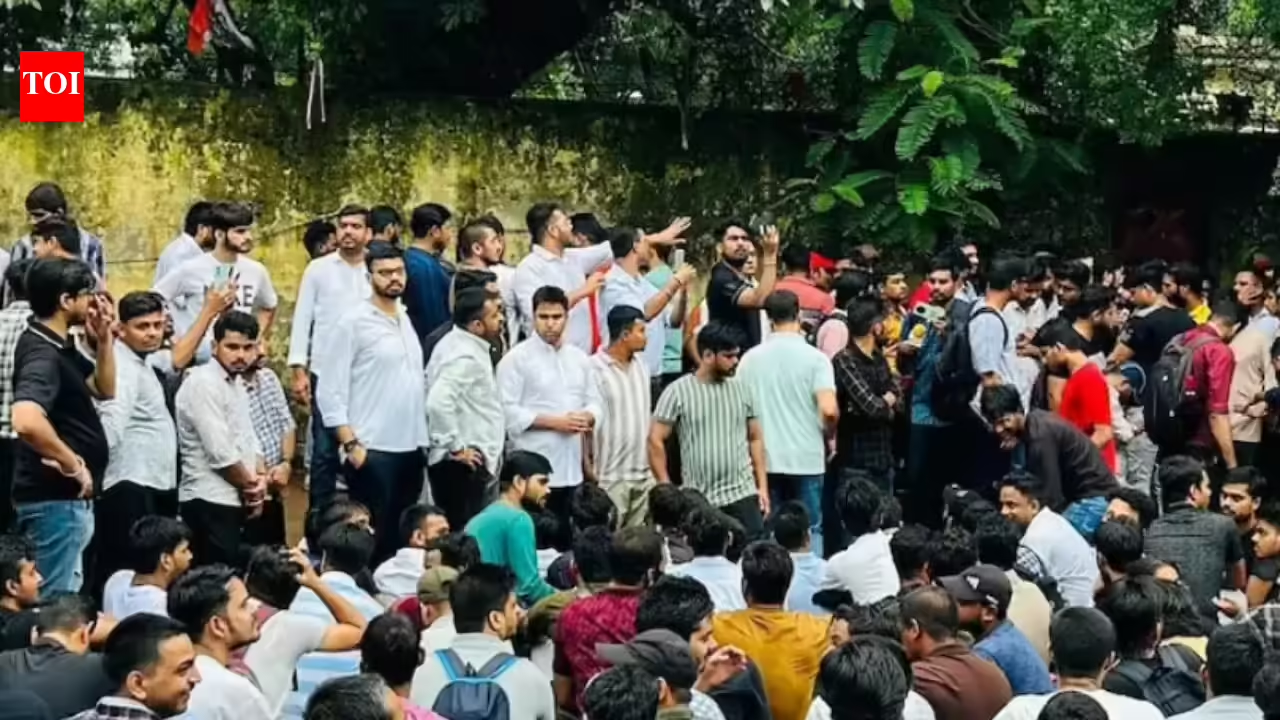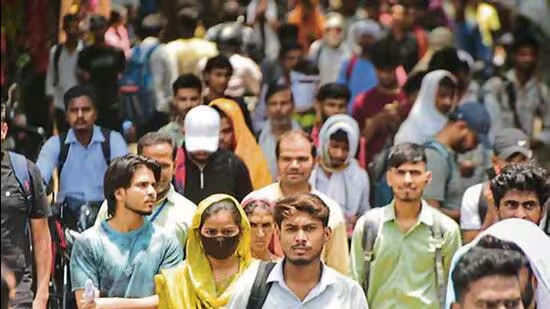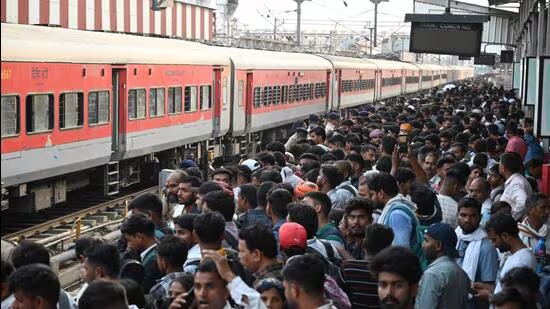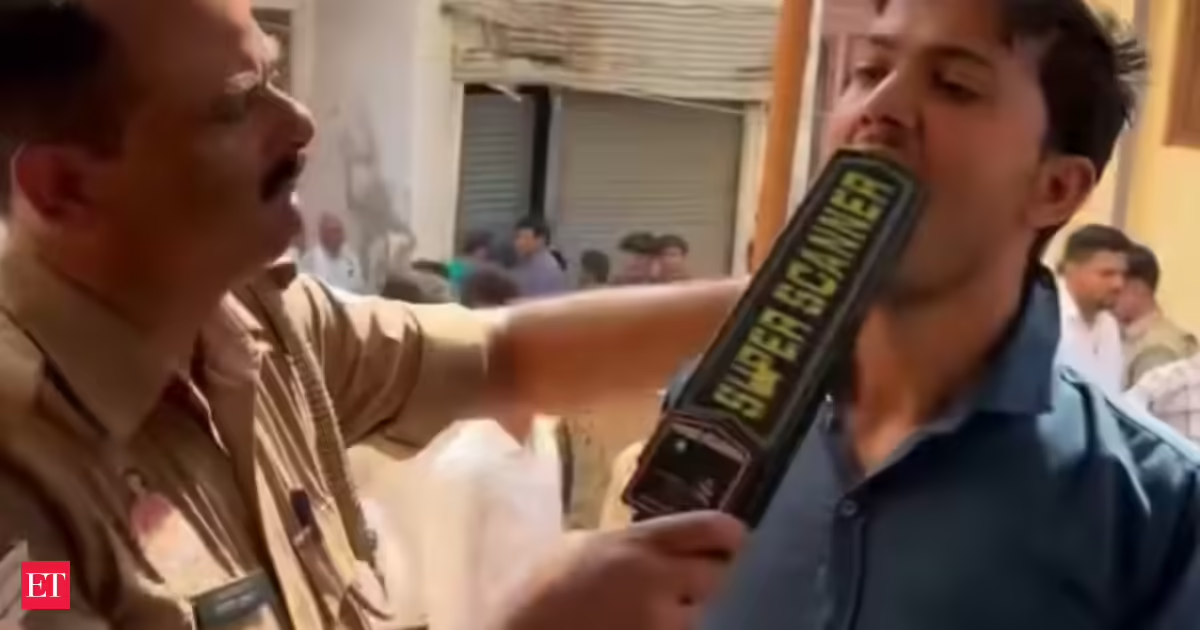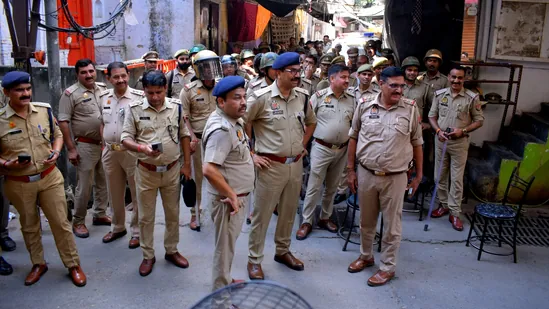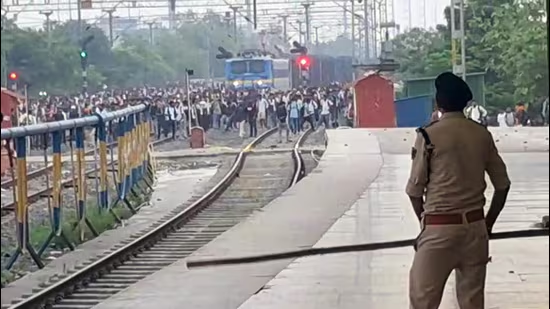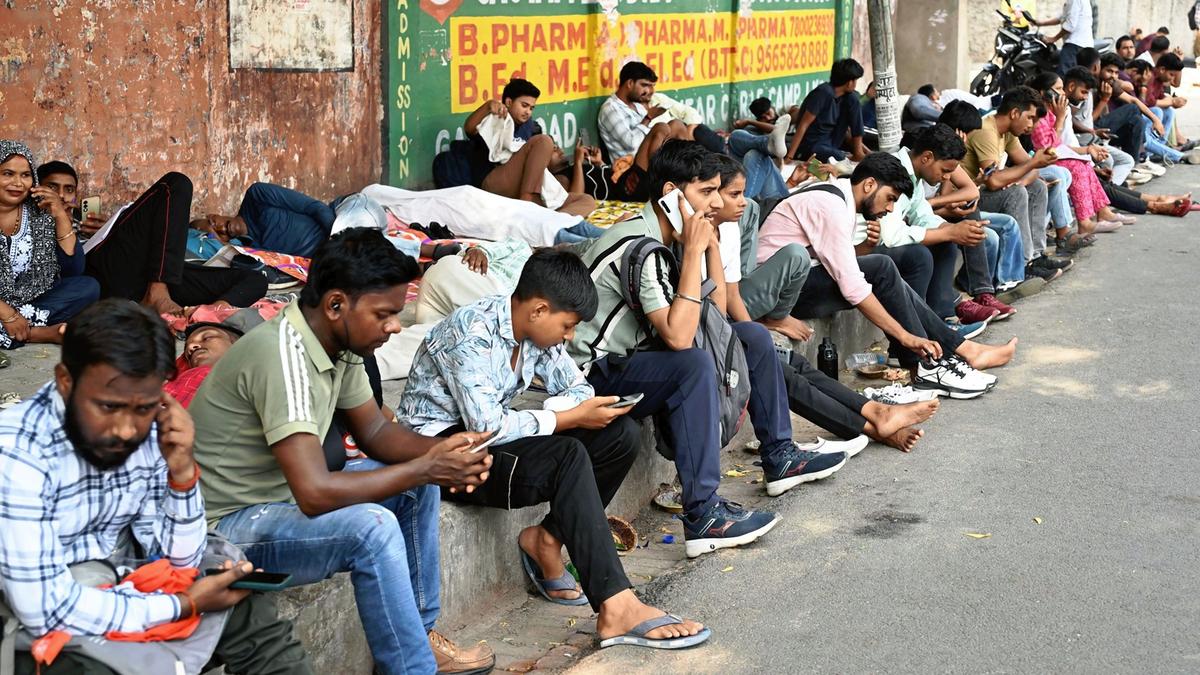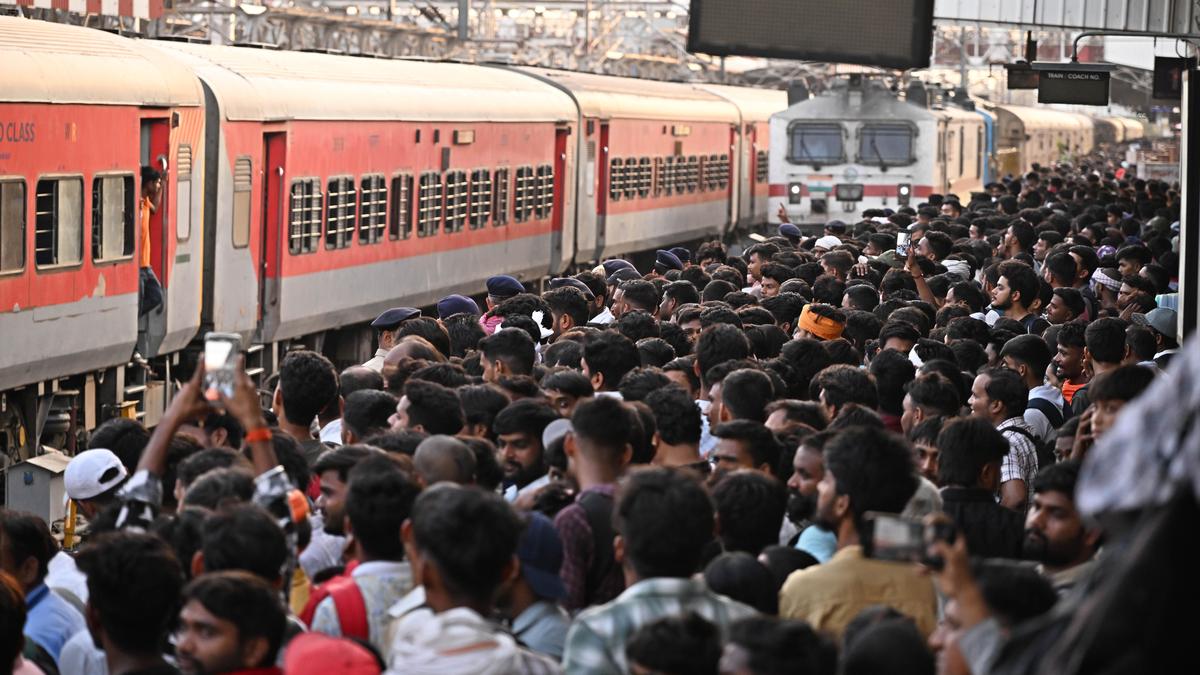
Vishal Maurya boarded the Ganga Sutlej Express at Akbarpur Junction in Uttar Pradesh (U.P.) on June 8. The 22-year-old was headed to Lucknow, 194 kilometres away by rail. Across the seven-hour journey, what played in Maurya’s head on loop was a plea. All he wanted was to pass the constable-rank examination to be held on June 10 in Uttar Pradesh’s capital.Maurya is from Ghughurpatti in Ambedkar Nagar district, and passed out of school four years ago. If he gets through the test, he hopes to change the lives of his parents and lift generations of disadvantages off their shoulders.His parents work as agricultural labourers in their village, and don’t own land. “When they find work, they earn ₹300. I aspire to change their fortunes. I studied diligently for the exam, inspired by my online teacher who shares motivational stories of youths from similar backgrounds who have succeeded in becoming constables,” Maurya said. He added that for generations they had “lived a life of inferiority”. This was an opportunity “for people like us to change our lives”. Maurya is a first-generation learner. He works part-time as a construction labourer.On June 9, he was in Lucknow’s Charbagh railway station, with thousands of others who had arrived to take the exam. Charbagh is Lucknow’s main railway station, situated in the heart of the U.P. capital, just 3 km from Hazratganj, the downtown area and main shopping centre of Lucknow. Hazratganj remained overcrowded with candidates for the U.P. constabulary posts written examination. Held across June 8-10, all trains departing from or arriving at the station were fully booked. Thousands of U.P. constable aspirants stand on the floors, with many sitting in the lavatories of the trains. On the platforms, there is barely any space to walk. Thousands queue up to charge their phones via a few dozen charging points.In the last week of December, 2025, U.P. notified 32,679 posts of police constables and equivalent positions, the lowest category of the workforce under the State police force. The registration process, which began on December 31, 2025, and ended on January 30, 2026, led to 28.86 lakh aspirants filling the form to appear in the written test at 1,183 centres across 75 districts. More than 1.35 lakh candidates were allocated test centres in Lucknow.The platform of possibilityAt the train station, Maurya’s story found resonance with a stranger, Vaibhav Chaudhary, 24, from Gorakhpur, a B.Tech graduate in Computer Science. Screen-locking his OPPO A3x5G smartphone, he said, “Everyone in this sea of people has a story filled with urgency, desperation, hope, and aspiration for this job. While taking the exam, I thought of my 15-year-old sister and the need to provide her with better educational opportunities, so she won’t have to struggle as I did.”Chaudhary battled the 40 degrees Celsius heat in a yellow vest. He was returning from Barabanki, about 20 km from Lucknow, after taking the recruitment examination. To be eligible to qualify, people must be between 18 and 27 years, depending on the job, gender, and reservation, and have passed class 12, the highest school examination.Chaudhary works as a gig worker in Gorakhpur. He says there are barely any private-sector office jobs that match his education. “I was offered a ₹20,000 job in an IT firm in Noida. It was impossible to survive there on such a low salary,” he said. Noida is in U.P. and is a part of the National Capital Region. “A constable’s job is much better than poorly paid engineering jobs. It provides job security and stability and includes attractive perks and social security benefits, like medical insurance and gratuity.” His parents are marginal farmers with four acres of land.The platforms were full of stories of people coming in for exams, or leaving after, or coming back after writing them. “I intentionally missed five trains before boarding the Suhaildev Superfast express, but I still had to travel in the bathroom,” said Pushpesh Kumar, 21, a second-year BA English Literature student who took online coaching for the test. He took the exam because “There are hardly any job opportunities for English graduates. I am working as a private tutor, making ends meet, preparing for government jobs.” His plan B is a government teaching job, “but that is a long road as I need to do a B. Ed (Bachelor’s in Education).”Sensing the massive influx of candidates, U.P. Chief Minister Yogi Adityanath instructed the Uttar Pradesh State Road Transport Corporation (UPSRTC) to provide 50% concession on fares to candidates appearing for the examination. They simply had to present their admit cards to bus conductors. Despite this, the public transport system was overcrowded for at least three days in the State, with many passengers having pre-booked train tickets complaining of not being able to board the train because of the huge rush of young aspirants at multiple railway junctions.Testing, testingOver 21.92 lakh aspirants appeared in the examination. The written test consisted of 150 objective-type multiple-choice questions of two marks each. The written examination syllabus was divided into four sections: General Studies, General Hindi, Numerical and Mental Ability tests, and Reasoning.The Uttar Pradesh Police Recruitment and Promotion Board (UPPRPB), the recruiting agency, will prepare a list of shortlisted candidates who passed the written test on a date yet to be announced. Since 2008, the UPPRPB has been entrusted to conduct selections for various non-gazetted posts, including that of the U.P. constable. A senior Indian Police Service (IPS) officer as Chairman of the agency heads and oversees all the activities that occur in the board.The second stage is the Physical Standard Test (PST), where height will be checked. For general and Other Backward Class (OBC) male candidates, the minimum height requirement is 168 cm, while the minimum chest measurement requirement is 79 cm (without expansion) and 84 cm (with expansion). For general and OBC females, the minimum height requirement is 152 cm and the minimum weight is 40 kilograms.In the final stage, the candidates need to make it through a physical efficiency test, in which men must run a distance of 4.8 km in 25 minutes and female candidates 2.4 km in 14 minutes. A new entrant will earn roughly ₹21,700 a month, with a slew of benefits enjoyed by government servants.Struggle and hope
U.P. Police Constable Exam: When hope and desperation collide
Aspirants flock to Uttar Pradesh for constable exams, highlighting the urgent need for job opportunities amid rising desperation and hope.
TL;DRAI
2.9 milioni di candidati competono per 32.679 posti polizia in Uttar Pradesh; caos logistico alle stazioni ferroviarie durante l'esame. Segnala crisi occupazionale privato IT: laureati CS rifiutano salari ₹20K/mese; talento devia verso job security pubblica.
1,979 words~9 min read