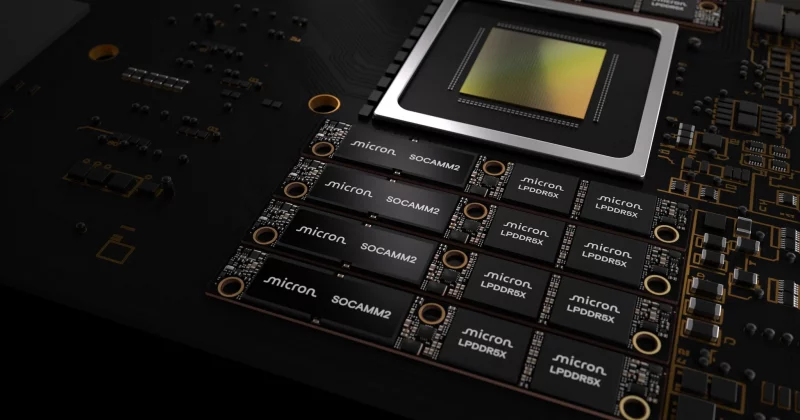
Here's a fact that should stop every AI infrastructure engineer in their tracks: as of mid-2026, the de facto standard for serving a 671B DeepSeek-R1 model in production still requires 8x H100 GPUs and roughly $200,000 of hardware. Meanwhile, an open-source project from MADSys Lab at Tsinghua University has been quietly running 236B-parameter MoE models on a single workstation since 2024, and hit 286 tokens/s prefill on DeepSeek-R1 671B on commodity hardware. That project is kvcache-ai/ktransformers, and as of 2026-06-12 it has 17,264 Stars, 1,313 Forks, and an Apache-2.0 license. The 2026 AI infrastructure conversation has been dominated by NVIDIA rack-scale systems and the ever-growing VRAM bill. KTransformers is the open-source counter-narrative: it lets you run frontier-class MoE models on a mix of consumer GPUs and CPU RAM, and it does this with five production-grade techniques that almost nobody talks about.
Context: Why CPU/GPU Hybrid Inference Matters in 2026
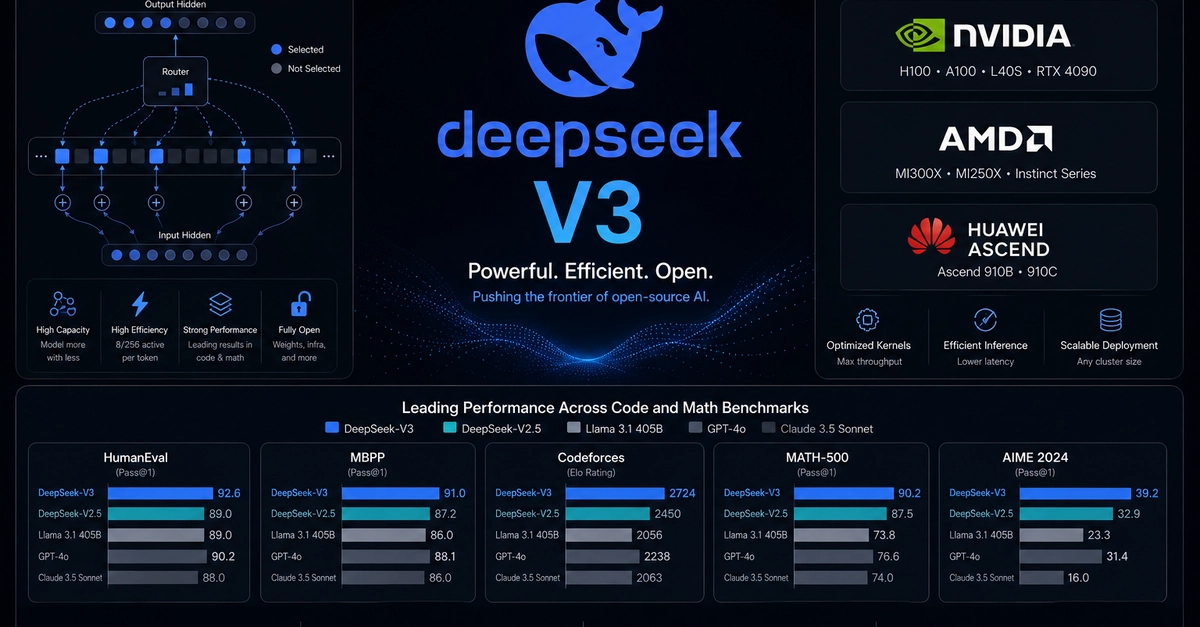
In 2026, Mixture-of-Experts (MoE) has become the default architecture for frontier open-weight models. DeepSeek-V3/R1, Qwen3-235B-A22B, Kimi-K2.5, GLM-4.7, and the new DeepSeek-V4-Flash are all MoE. The naive assumption is that MoE inference still needs H100-class GPUs because each token only activates a few experts, so the active parameter count is small, but the total parameter count is enormous (671B for DeepSeek-R1, 1T for Kimi-K2.5). The CPU-GPU hybrid approach moves the "cold" experts to CPU RAM and keeps the "hot" experts on the GPU. KTransformers has turned this idea into a production framework that supports nine different MoE models as of v0.6.2 (released 2026-05-03). The 2026 ACM SIGOPS paper "KTransformers: Unleashing the Full Potential of CPU/GPU Hybrid Inference for MoE Models" formally published the architecture.