Show Caption
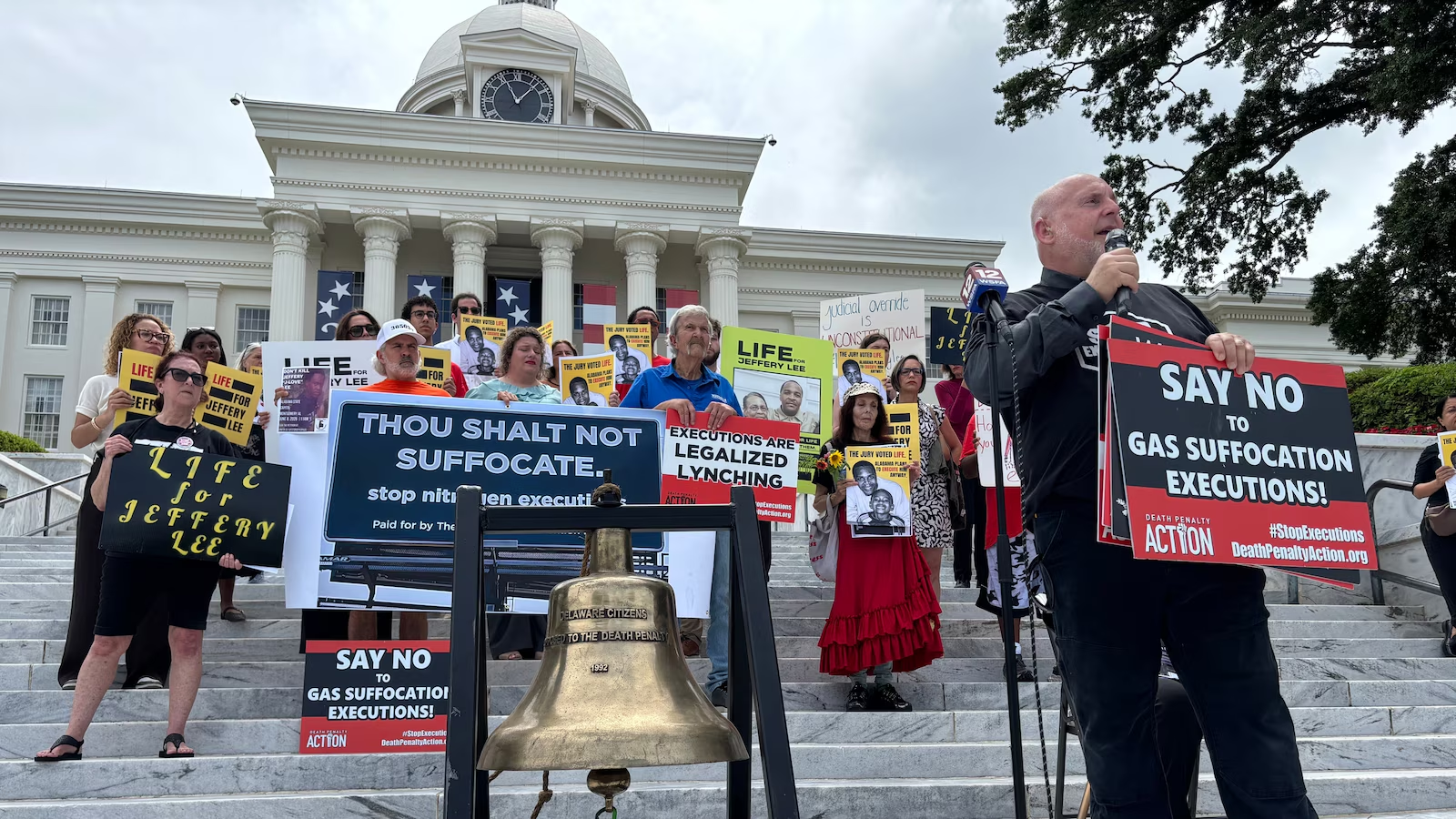
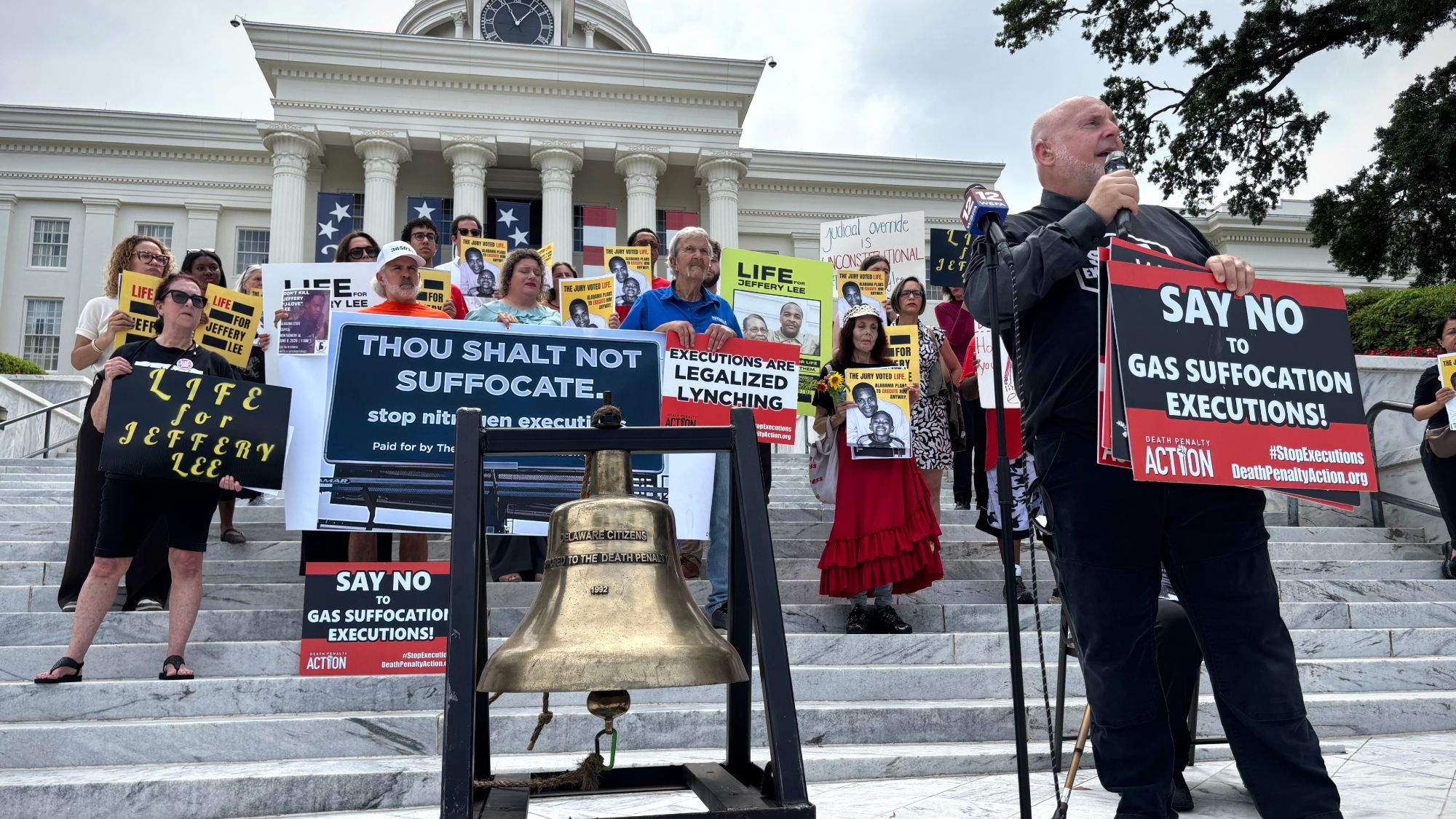
WASHINGTON – The Supreme Court on June 11 said Alabama can’t immediately execute a death row inmate using a controversial method of nitrogen gas that a lower court said is likely unconstitutional.Alabama had argued, in an emergency appeal, that the suffering and distress caused by nitrogen gas does not violate the Eighth Amendment’s ban against cruel and unusual punishment.In a brief and unsigned ruling, the court rejected the state’s request that it allow the execution to proceed on Thursday despite the lower court's decision. Alabama can still go through the regular appeals process, which will take time. Or the state can use another authorized execution method, including the electric chair or lethal injection.The Supreme Court has never found a method of execution to be unconstitutional.Three of the court's six conservatives − Justices Clarence Thomas, Samuel Alito and Neil Gorsuch − said they would have allowed the execution of Jeffery Lee to proceed as initially planned.Lee’s attorneys had argued that, by filing an emergency appeal, Alabama was asking the Supreme Court to make an irreversible life-or-death decision without the full review of the regular appeal process.“Mr. Lee faces irreversible harm if executed by an unconstitutional method before appellate review concludes,” his attorneys told the Supreme Court, “and the public interest lies in ensuring that executions comply with the Constitution.”What is execution by nitrogen gas?Lee, who was convicted of a double murder during a pawn shop robbery in 1998, would have been the ninth person in the nation – and the eighth from Alabama – to be killed by nitrogen gas.Under the method, executioners strap an inmate to a gurney with chest and shoulder harnesses and attach a mask to his face. Ultra-high-purity nitrogen gas flows into the mask, and that displaces breathable air until none is left. The inmate loses consciousness and dies.After a three-day bench trial this spring on the constitutionality of nitrogen gas – the first in the nation – a federal judge in Alabama found that the person being executed “experiences severe air hunger and corresponding emotional distress, anxiety, physiological stress, and physical discomfort.”But the judge said Lee’s attorneys had not shown that the pain experienced goes well beyond what’s needed to cause death.Why did a court rule the execution was unconstitutional?The Atlanta-based 11th U.S. Circuit Court of Appeals disagreed.The court said the distress lasts for one to three minutes, a timeframe that’s intolerable under the Constitution.“Such suffering, we believe, is over and above the mental distress that typically accompanies the knowledge of impending death by execution,” the appeals court said.The American Thoracic Society told the Supreme Court in a filing that nitrogen gas executions cause “intense, inhumane suffering," and is considered too inhumane for euthanizing mice or dogs.“The Eleventh Circuit’s decision holding that execution by nitrogen hypoxia would be constitutionally intolerable aligns with the science,” the group wrote.What execution method did Lee ask for?Both the district judge and the appeals court signed off on the alternative method of execution that Lee was required to choose when opposing nitrogen gas.A firing squad, the district judge ruled, produces a quick and painless death.Alabama argued that it can’t quickly or easily turn to that method of execution. State officials said they would need time and resources and, even then, may not be able to find enough expert marksmen willing to fire the guns.“A method that rests on the availability of five trained executioners would risk a reliability problem like the one that led the State to adopt nitrogen hypoxia in the first place,” Alabama Attorney General Steve Marshall wrote in his appeal to the Supreme Court.In May, Tennessee called off an execution after prison staff could not find a vein to administer lethal injection drugs.States have also had trouble getting the drugs, leading several to turn to nitrogen gas.What was Jeffery Lee convicted of?On Dec. 13, 1998, Lee walked into a pawn shop and shouted "Give me your money!" as two accomplices waited in a car, court records say. Within six seconds, Lee used a 12-gauge shotgun to shoot Jimmy Ellis, Elaine Thompson and Helen King, court records and archived news reports show.Ellis and Thompson were killed while King survived the shooting, which drew national attention because Ellis was a noted Elvis impersonator at the time.A jury found Lee guilty of first-degree murder and in a 7-5 vote, recommended that he be sentenced to life in prison without parole. But using override authority allowed under Alabama law, the judge in the case sentenced Lee to death.The fact that the jury in the case recommended life in prison, partly because Lee has mentally disabilities, has drawn protests in recent weeks.