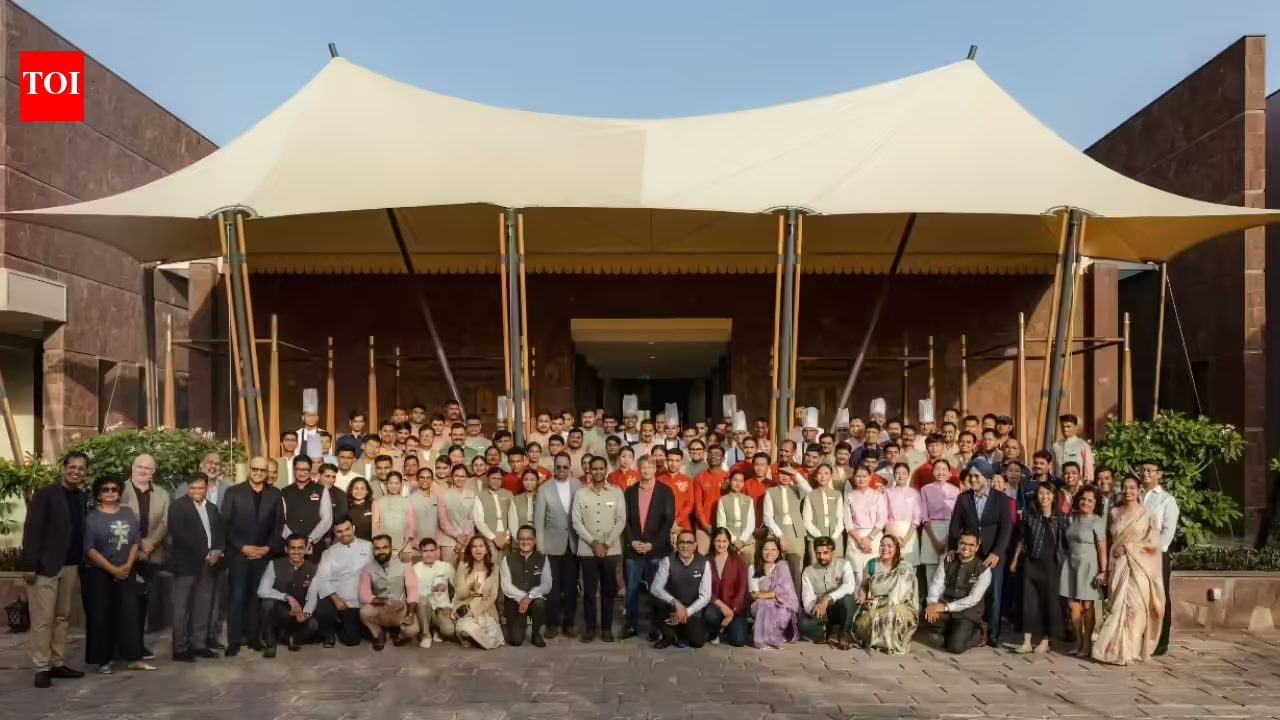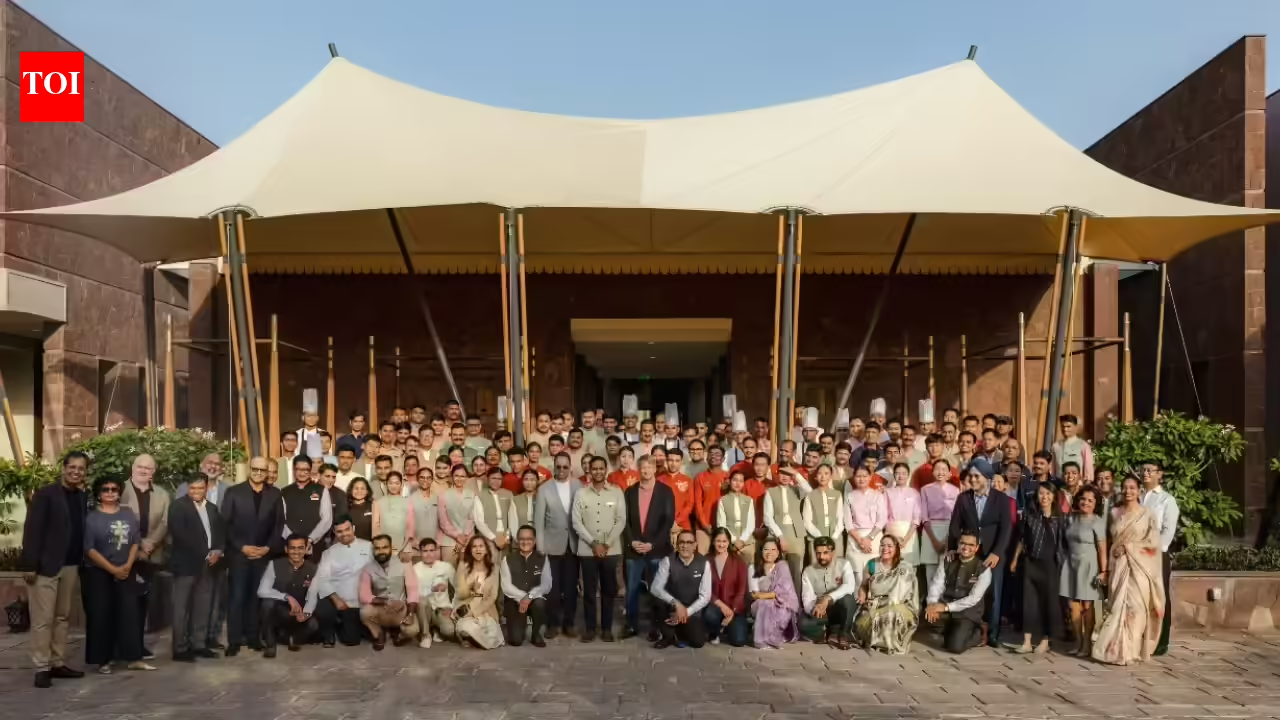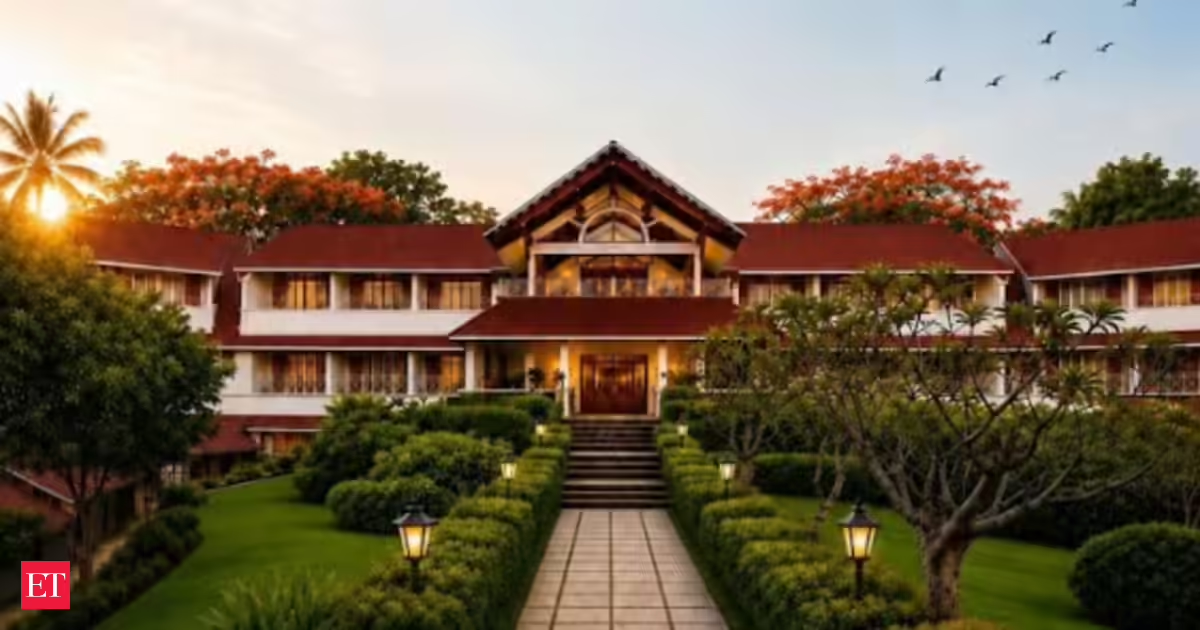
New Delhi|Mumbai: India is one of Marriott International's fastest-growing markets globally and, after a record 2025 and despite the ongoing geopolitical strife, the company is at the beginning of a "significant" growth story in the country, said David Marriott, chairman of the board at the world's largest hospitality company.India's growing importance to Marriott International is reflected in the company's decision to open its 10,000th property globally in Ranthambhore, marking a milestone as it nears its 100th anniversary. "India in many ways, is the birthplace of hospitality, and there couldn't have been a more fitting location," he said in an interview.Marriott's confidence in the India story is rooted in expansion numbers. "When I was here about 16 months ago, I think we had around 150 hotels-today, we're north of 220," said Marriott, 51." I am told we'll be close to 300 by the end of this year. I keep teasing the team that we'll be above 300, but either way, it's an exciting growth trajectory."200 hotels in the pipeline“We also have around 200 hotels in the pipeline, which means we'll essentially double our current footprint over the next five years. That's remarkable.”Uncertainties due to geopolitical tensions are “inevitable,” he said, referring to the Gulf war. “I've always believed that if more people travelled internationally, we would have more peace,” said Marriott.“Travel helps people appreciate differences, and that's ultimately a very positive force. Perhaps, over time, that greater understanding can contribute to a more peaceful world.” The good news is that people still want to spend their money on travel. “So, while these disruptions may temporarily affect demand, when the situation stabilises, travellers come back very quickly,” he said. “That gives us a great deal of confidence about the future of travel.”The company did see an impact early on due to the war, said Rajeev Menon, president, Asia Pacific excluding China (APEC).Shift in demand“More than 40% of inbound travel into India typically comes through the Middle East, and a significant portion of Asia's energy supplies also move through the region. So, there was certainly some disruption,” said Menon.In India, the chain had forecast double-digit revenue per available room growth in March. That turned negative quickly due to cancellations, said Menon. By April, performance had moved back into marginally positive territory, although not at earlier levels.“In May, we were back to strong double-digit growth, and June is tracking in a similar fashion,” he said. “Looking ahead, forward bookings remain strong. Intra-Asia travel is growing at a phenomenal pace. So, travel demand hasn't disappeared, it has simply shifted.”In February, Marriott International said its top five growth markets in the Asia-Pacific, excluding China, with the highest number of signings in 2025 were India, Thailand, Vietnam, Malaysia and Japan. India topped with a record 99 deals representing over 12,000 rooms.Marriott ruled out tapping the public markets in India to fuel further expansion and said the company is happy remaining listed on Nasdaq. It views India as a “critically important” market for future growth.Fast-growing middle classIn May last year, Marriott International announced the global launch of its new collection brand for the midscale and upscale lodging segments—Series by Marriott—through a deal with Concept Hospitality.Established in 1996 by Param Kannampilly, Concept Hospitality has a portfolio of six brands and over 100 operational and in-pipeline hotels. Concept Hospitality’s brands such as The Fern, The Fern Residency, and The Fern Habitat will be affiliated with Series by Marriott on an exclusive basis across India, it had said. Marriott has also made a small equity investment in Concept Hospitality.“The addition of the Series by Marriott brand to our portfolio also brings in an entirely new segment of travellers, particularly more local travellers, which is fantastic,” said Marriott. “We're going to continue investing here—more brands, more hotels, more people, more customers and more partnerships.”David Marriott is only the third chairman of the board in the company's 99-year history, preceded by his father JW Marriott, Jr (Bill) and grandfather JW Marriott. “This part of the world is home to an incredibly fast-growing middle class,” he said. “People want to travel and see the world, and we want them to love our brands. Fortunately, they already do. Our goal is to ensure that when Indian travellers think about travelling outside India, Marriott is the first brand that comes to mind.”While technology is reshaping hospitality, Marriott said the personal touch would always remain at the heart of the industry. AI's role, he added, would be to improve personalisation, reduce friction and help guests navigate travel more effectively.That philosophy extends to Marriott's view of competition from home-sharing platforms such as Airbnb. While alternative accommodations have carved out a meaningful niche, Marriott is of the view that travellers continue to value consistency, service and human interaction. “People want to be taken care of,” he said.Marriott was founded 99 years ago as a nine-seat root beer stand in Washington DC and has grown into a global portfolio of 10,000 properties spanning 146 countries and territories.The latest property is a particularly apt one to mark a big number for the group. “My grandfather had a deep love for nature and the outdoors, so the fact that it's a resort and spa located near the Ranthambore Tiger Reserve makes it a perfect choice for hotel number 10,000,” Marriott said.
India among Marriott's fastest-growing markets; footprint to double in 5 years
Marriott International sees India as a key growth market. The company plans to double its hotel presence in India within five years. This expansion includes over 200 hotels in the pipeline. Marriott's confidence stems from India's growing middle class and strong travel demand. The company is committed to investing further in India, bringing more brands and properties to the country.
879 words~4 min read