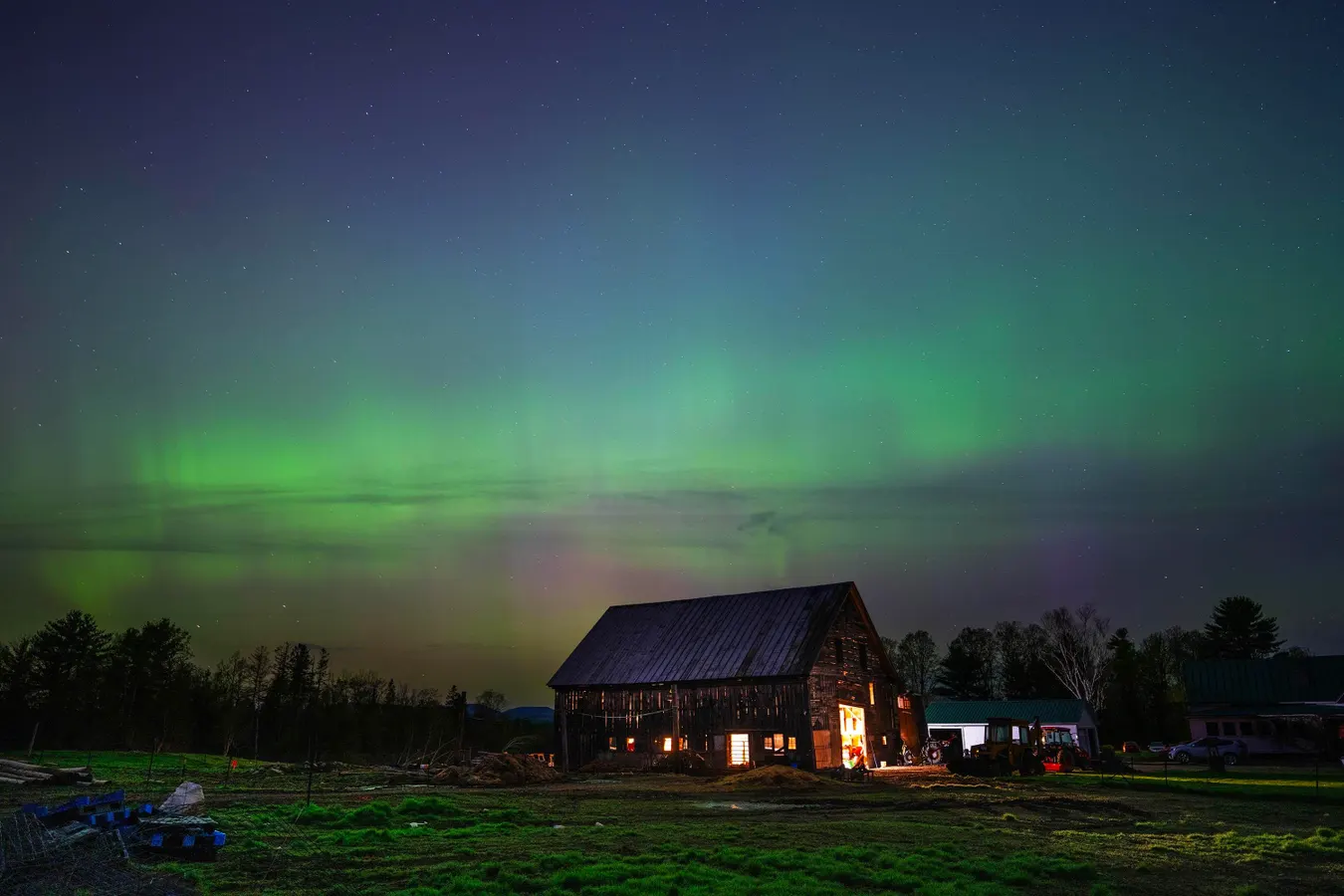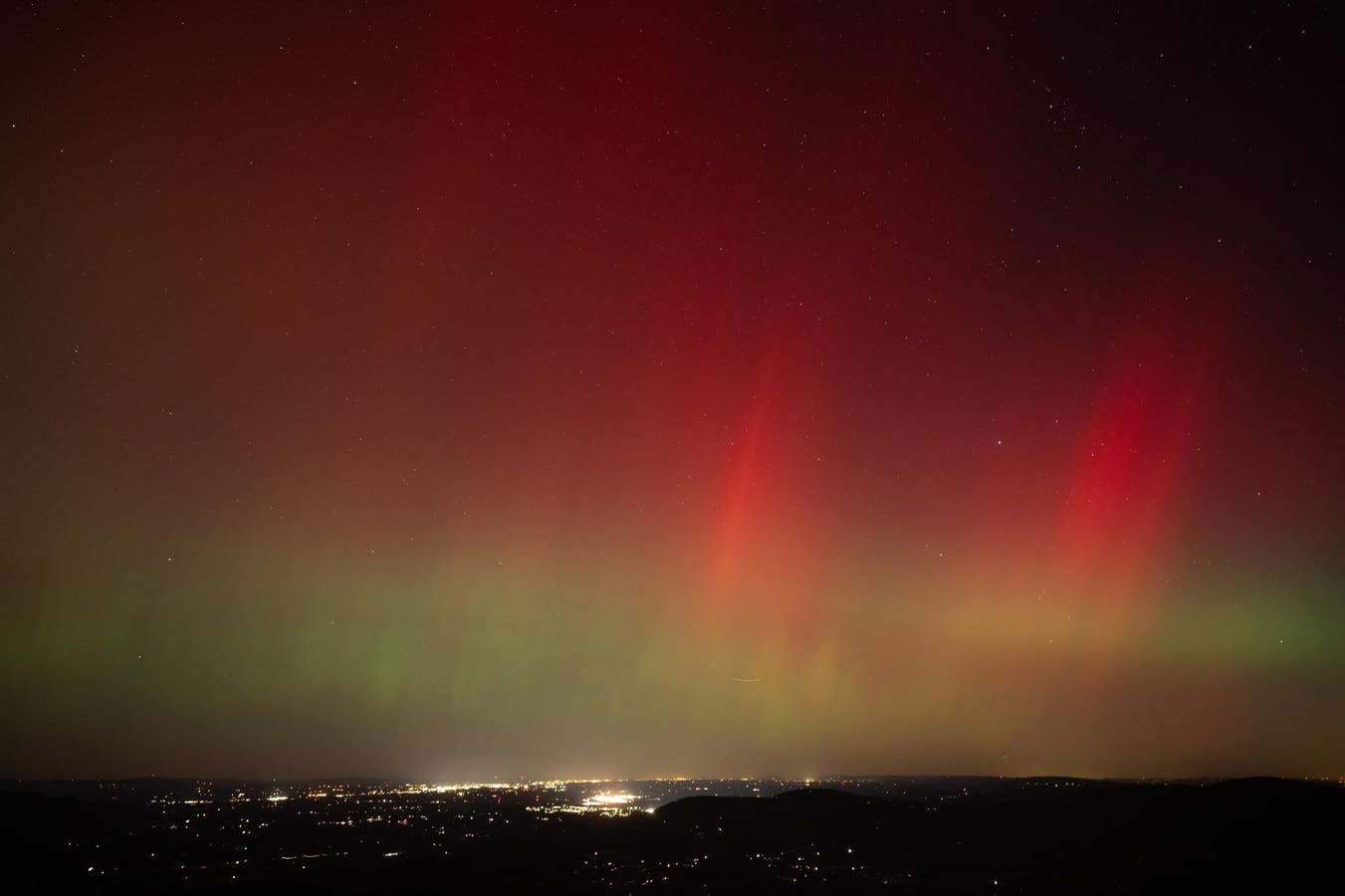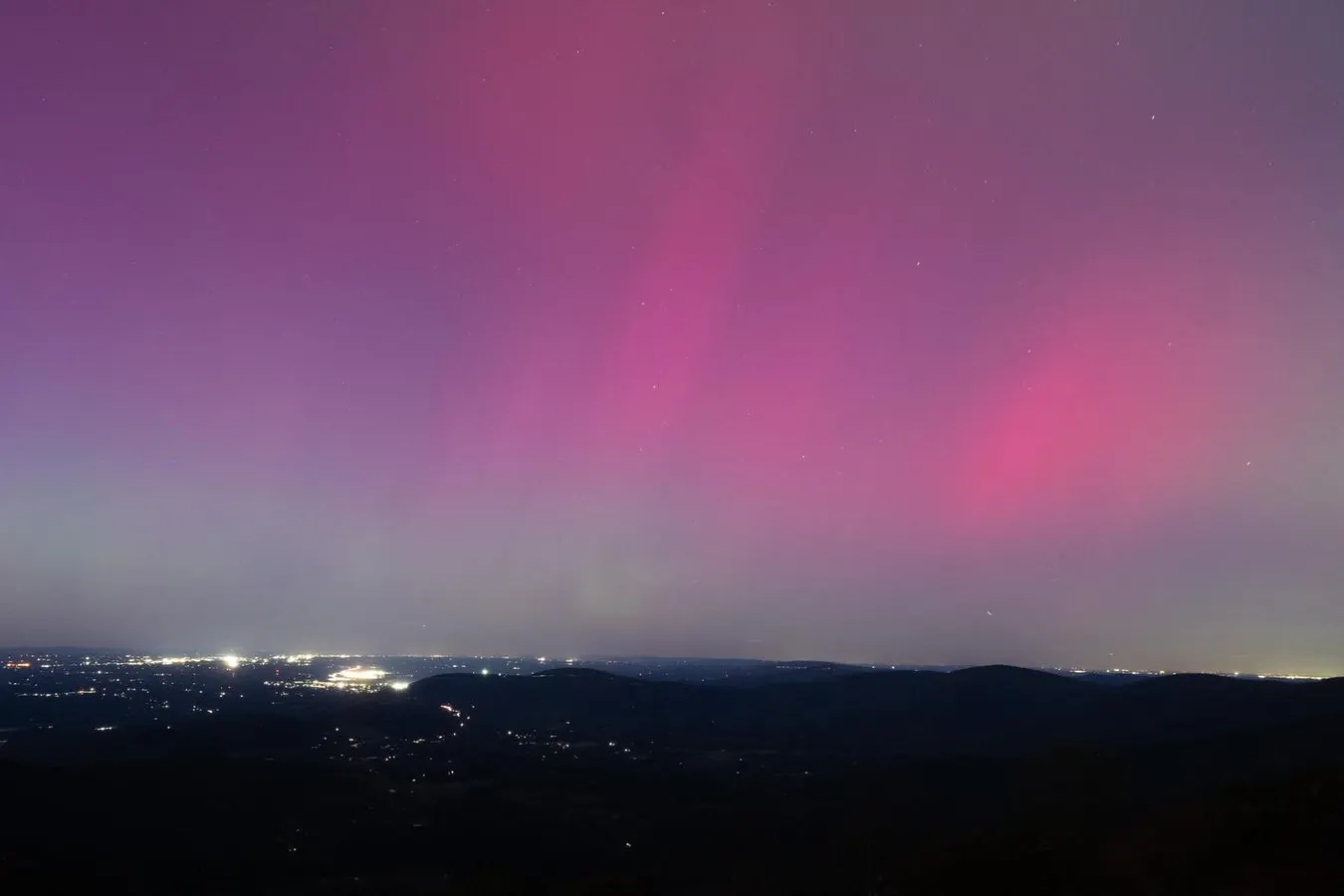
ToplineThe northern lights may make their latest appearance of the month Thursday night, as the National Oceanic and Atmospheric Administration has forecast mild auroral activity along the northern U.S. border.The northern lights make an appearance in Virginia in 2024. Photo by SAUL LOEB/AFP via Getty ImagesKey FactsNOAA issued a Kp index of four for Thursday night, meaning the aurora may be “quite pleasing” to look at for people in the right places.Geomagnetic storm impacts, which can potentially strengthen auroral displays, have not been forecast for Thursday night.Friday night may also provide a chance at seeing the northern lights, as NOAA has issued a Kp index of five alongside a forecast that suggests visibility stretching a little farther south than Thursday night.Where Will The Northern Lights Be Visible? NOAA’s forecast shows a chance of seeing the northern lights in northern Washington, the northern tip of Idaho, northern Montana, North Dakota, northern South Dakota, northern Minnesota, northern Wisconsin and the Upper Peninsula of Michigan. Those states have a relatively low chance of catching the lights compared to much of Alaska, where a “high” chance of visibility is forecast for a large portion of the state’s interior.Thursday's aurora forecast.NOAAWhat’s The Best Way To See The Northern Lights?Locations with little to no light pollution can improve chances of seeing the lights, which are typically most active between the hours of 10 p.m. and 2 a.m. High vantage points and little to no moonlight can also help. Thursday’s waning crescent phase means the moon will only be about 16% illuminated.What’s The Best Way To Photograph The Northern Lights?Smartphone users should avoid using flash and utilize night mode and low apertures if their devices are capable. Wide-angle lenses can help when snapping photos with traditional cameras. Tripods are recommended for all camera types.Key BackgroundJune has marked a somewhat active month so far for the northern lights, which comes after the sun reached the height of its 11-year solar cycle in 2024, leading to a 500-year peak of auroral activity. Semi-consistent northern lights showings that have persisted since 2024 are expected to significantly decrease in activity by next year.Further ReadingAurora Dashboard (NOAA)
Northern Lights: Aurora Might Be Visible In 8 States Thursday Night
Viewers in some states along the Canadian border might catch the northern lights, according to the National Oceanic and Atmospheric Administration.
355 words~2 min read