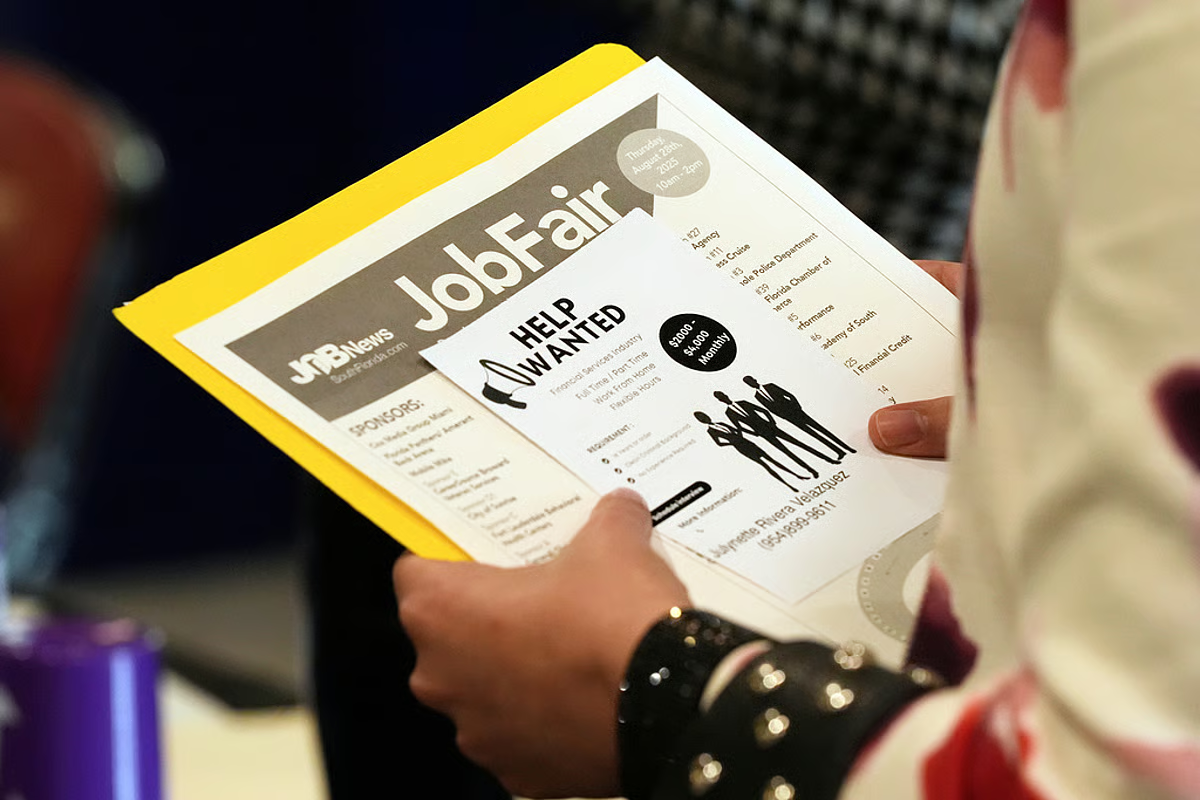
Jobs gloom among young people has tripled in the past decade prompting many to stop bothering to work hard and save, according to a new think-tank report.One in fourteen now believe they have a high chance of ending up on the long-term unemployment scrap heap, according to the Institute for Public Policy Research (IPPR).According to the analysis, 16 to 21 year-olds ‘have lowered their expectations as housing becomes less affordable, secure work harder to find, and the traditional pathways to adulthood feel increasingly out of reach’.As a result, there is growing evidence of ‘financial nihilism’ in which many work less and splash money they do have on risky bets such as cryptocurrencies rather than planning for the future, the report from the Left-wing think-tank found.Critics blamed Labour’s damaging policies including sharp hikes in employer national insurance and the minimum wage which are widely believed to be behind a sharp rise in youth unemployment.Latest official figures show the number of people classed as not in employment, education or training (NEETs) has risen to more than a million for the first time in more than 12 years. Separate recent figures show that record numbers of young people are emigrating. Labour's policies are blamed for soaring youth unemploymentEllie Harris, principal research fellow at the IPPR, said: ‘Young people are telling us clearly that the deal no longer adds up. For too many, the promise that hard work will lead to security and opportunity no longer feels credible.‘This should concern all of us. Expectations shape behaviour. When young people lose faith in their futures, that doesn’t just affect their wellbeing, it risks weakening economic growth, productivity and social cohesion too.’Tory business spokesman Andrew Griffith said: ‘Young people should be optimistic about the future of our great country but it’s understandable they despair when they look at Labour’s broken jobs market and rising youth unemployment.‘Sadly too many are voting with their feet and leaving the country entirely.’Hugh Osmond, the former Pizza Express entrepreneur, said the dismal findings were ‘entirely caused by governments and socialist thinking’.He pointed to the impact of national insurance and minimum wage increases which have made it costlier to hire young people as well as a ‘massive increase’ in regulation.Hospitality has been among the parts of the economy worst hit by the rising cost pressures imposed by Labour. And Kate Nicholls, chair of industry body UK Hospitality, said the IPPR research 'brings into sharp focus the very real concerns young people have about their future and the impact reduced job opportunities are having on their confidence'.She added: 'Rising employment costs are forcing businesses to cut back just when we should be creating jobs and career pathways.'If Government wants to improve job opportunities and support young people into work, it must urgently reduce the cost burden on employers and back sectors like hospitality to grow, invest and create jobs once again.'The IPPR found that the share of young people who believe they have a low chance of becoming successful has tripled from 2 per cent to 6 per cent since 2015.And 7 per cent think they have a high chance of joining the ranks of the long-term unemployed, also up threefold.The findings also showed a declining belief in the idea that hard work will pay off, with only one in four believing ‘everyone has a fair chance to get on in life’.Much of the gloom is linked to a deterioration in mental health. The study finds that four in ten women and three in ten men aged 16 to 24 have poor mental health and that this tends to mean a sharply reduced expectation of success later in life.The study said: ‘For much of the post-war period, Britain offered young people a basic promise: if you work hard and do the right things, you can expect greater security and opportunity than the generation before you.‘That promise was never shared equally. But for many young people today, it feels not just frayed, but fundamentally fractured.‘Young people today are less confident in their future. They no longer believe that basic promise – hard work will pay off – to be true.’It added that there were growing signs of ‘financial nihilism’ in the UK 'where young people who feel the system no longer rewards effort, spend more relative to their wealth, invest in riskier assets like cryptocurrencies, and work less'.
Jobs gloom among young people triples over past decade
Jobs gloom among young people has tripled in the past decade prompting many to stop bothering to work hard and save, according to a new think-tank report.
TL;DRAI
UK youth unemployment gloom tripled to 7% while only 25% believe hard work ensures success, signaling lost economic faith. This 'financial nihilism' erodes the tech talent pipeline as young professionals emigrate, creating recruitment pressure for years.
724 words~3 min read