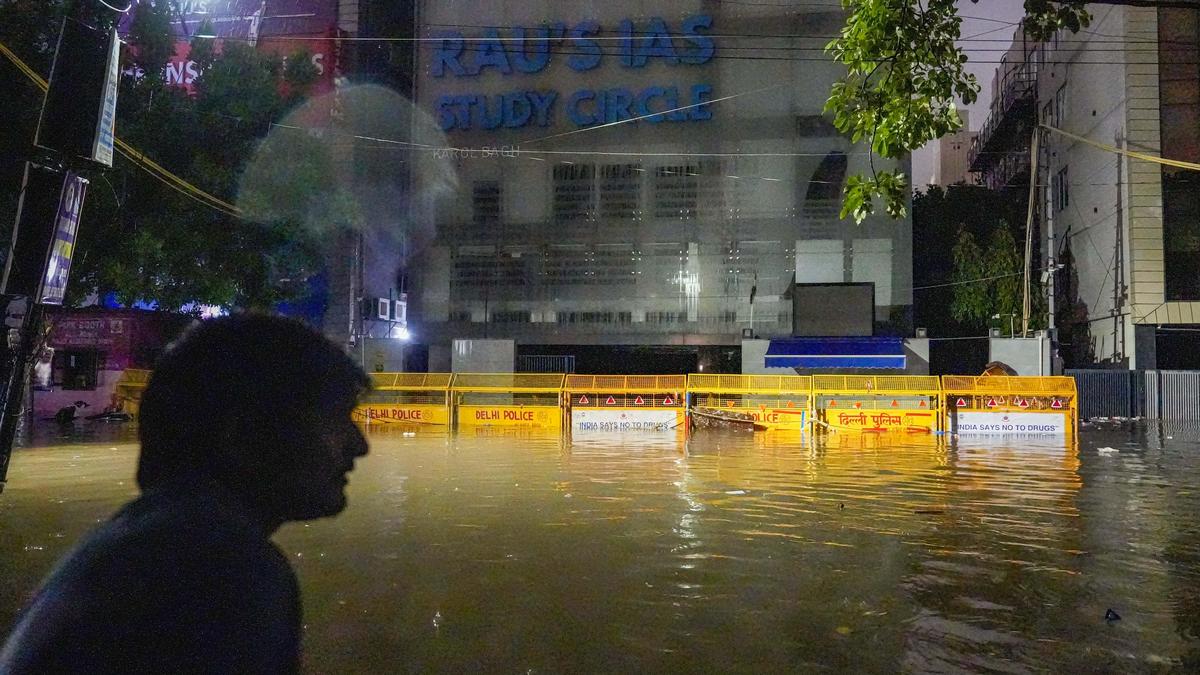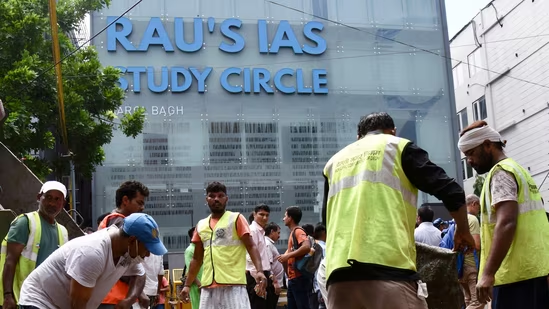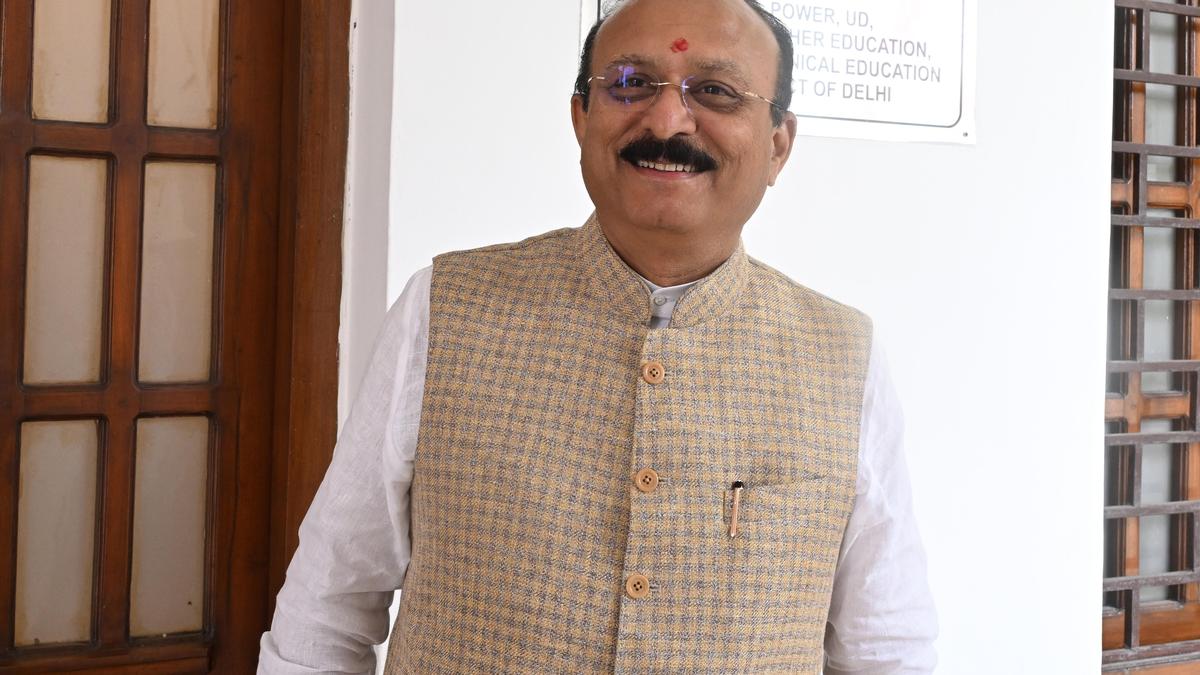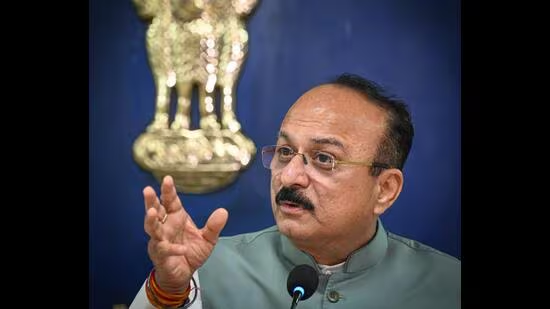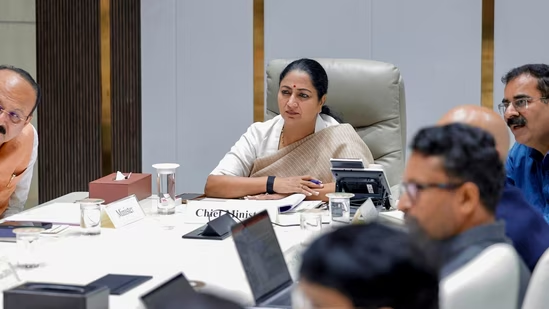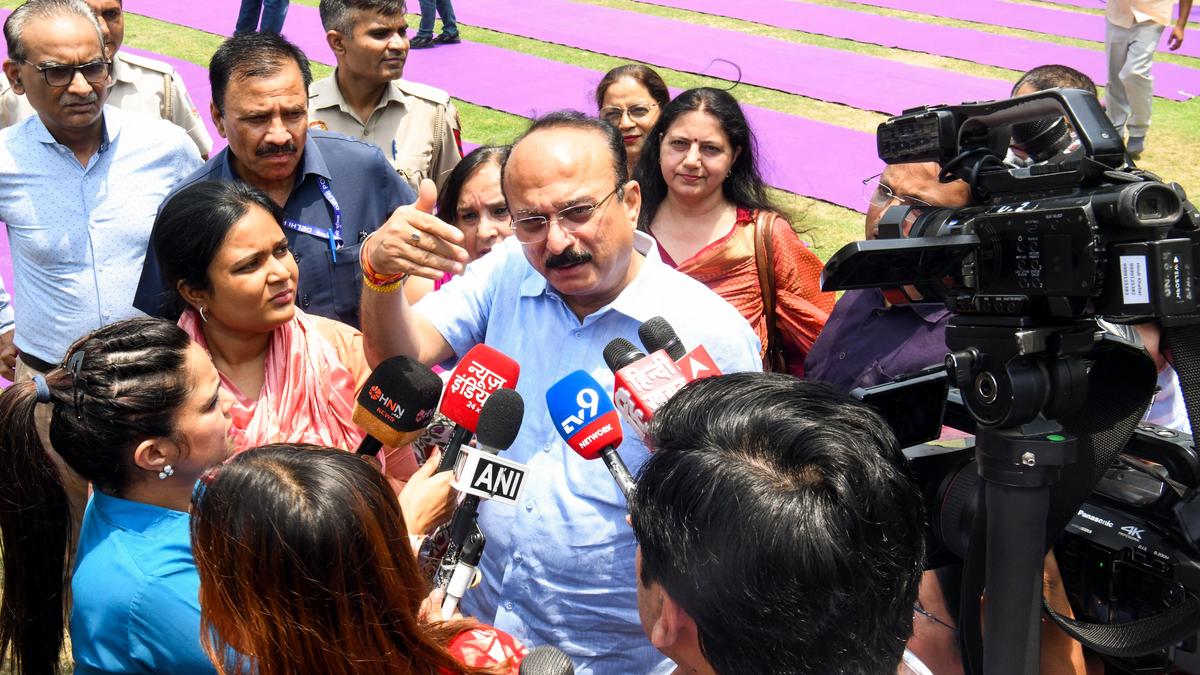
NEW DELHIDelhi govt to set up committee to regulate coaching centresThe Delhi government on Thursday decided to bring all coaching centres under a regulatory framework and will constitute a multidisciplinary committee to formulate detailed guidelines, as recommended by a high court committee formed to look into the Rajendra Nagar coaching centre deaths of 2024, education minister Ashish Sood said. This will entail fixing a fee structure and ensuring safety standards, among other measures, he said.The decision was taken at a high-level meeting helmed by Sood, and attended by the Municipal Corporation of Delhi (MCD), Delhi Fire Service (DFS), directorate of higher education, Delhi Police, labour department, health department and urban development department, among others.The director of higher education was designated the nodal officer for drafting the policy.Sood said, “We had received the report of the justice RK Gauba Committee and deliberated on its recommendations to address infrastructure and safety concerns, as well as issues related to faculty qualifications, curriculum standards, and fee transparency. A committee headed by the director of higher education will now consult all stakeholders and draft a regulatory framework for the coaching industry within the next three months.”Officials said that the committee will cover key aspects of coaching centres, including fee structure, student safety and welfare, mental health support and counselling mechanisms. The policy will also focus on infrastructure standards and building safety compliance, fire and emergency preparedness, and teacher and staff welfare by standardising working conditions.The committee will also set up grievance redressal mechanisms for staff and students, besides conducting periodic inspections and ensuring compliance.On July 27, 2024, three public service aspirants, Nevin Delvin, Shreya Yadav and Tanya Soni, drowned in a flooded basement of Rau IAS Study Circle, after it was flooded due to a heavy spell of rainfall. The incident caused public outrage, with students of several institutes of Old Rajendra Nagar and Karol Bagh staging a protest for nearly 20 days, demanding regulation and checks in the area. After the incident, illegal libraries running in the area were shut by the municipal corporation and several coaching centres were sealed.Subsequently, the Delhi High Court constituted a high-level committee headed by retired justice RK Gauba to examine shortcomings in coaching hubs and recommend measures to prevent such incidents. The committee submitted a 5,000-page report identifying key issues and recommendations.Documents accessed by HT, of a meeting held in February by government officials from various departments, stated that the coaching industry is grappling with “systemic challenges” ranging from unsafe infrastructure and fire safety violations to excessive academic pressure, misleading advertisements and fragmented oversight by multiple agencies.The document stated that the committee listed “unsafe basements, inadequate ventilation, blocked exits, fire safety violations, overcrowding and poor sanitation” as the most pressing concerns, particularly in densely populated coaching hubs. The committee said one of the biggest challenges is the lack of clarity regarding the legal status of coaching centres. It pointed to “ambiguity regarding the status of coaching centres (educational vs commercial), fragmented oversight by multiple civic agencies, and evasion of norms through misuse of residential premises.”The report also highlighted widespread infrastructure deficiencies, noting that many coaching facilities operate in premises that do not meet basic safety and accessibility standards.To address these issues, the committee recommended a clear classification system for coaching centres and the framing of explicit norms covering “infrastructure, batch size, ventilation, sanitation, fire safety, hostels and pedagogical environment.” It advocated for a sector-specific regulatory approach with the education department designated as the nodal authority, as announced by Sood a day before.Among the most significant recommendations was the consideration of a statutory regulatory authority to register and issue licence for coaching centres, prescribe faculty qualifications and curriculum standards, conduct inspections and audits, enforce fee transparency norms and address grievances.The committee also noted “excessive academic pressure, long class hours, lack of counselling support, mental health distress and incidents of student suicides” as concerns. It recommended mandatory access to professional mental health counsellors in coaching centres, a limit on daily instructional hours, mandatory breaks, and the establishment of formal grievance redressal mechanisms and internal support systems.The committee identified non-transparent fee structures, exploitative refund policies and false academic claims as widespread problems. To improve accountability, it recommended mandatory disclosure of complete fee structures, fair refund policies and a ban on misleading advertisements and “false topper claims”.
Delhi govt to set up committee to regulate coaching centres
The Delhi government will regulate coaching centres to ensure safety, fee transparency, and mental health support following a tragic drowning incident. | Latest News Delhi
715 words~3 min read