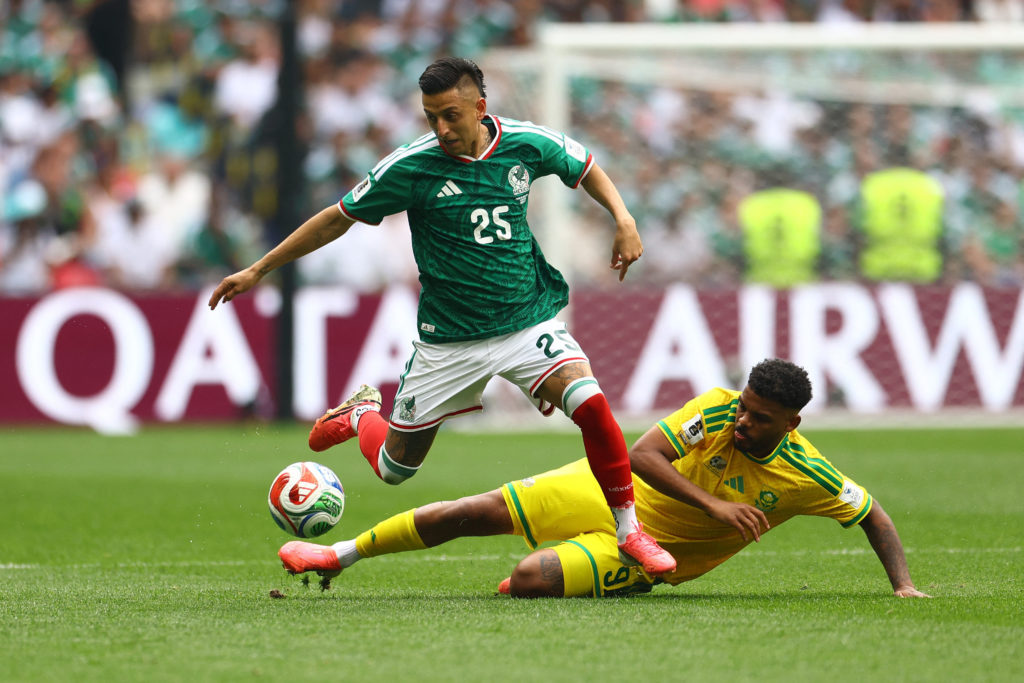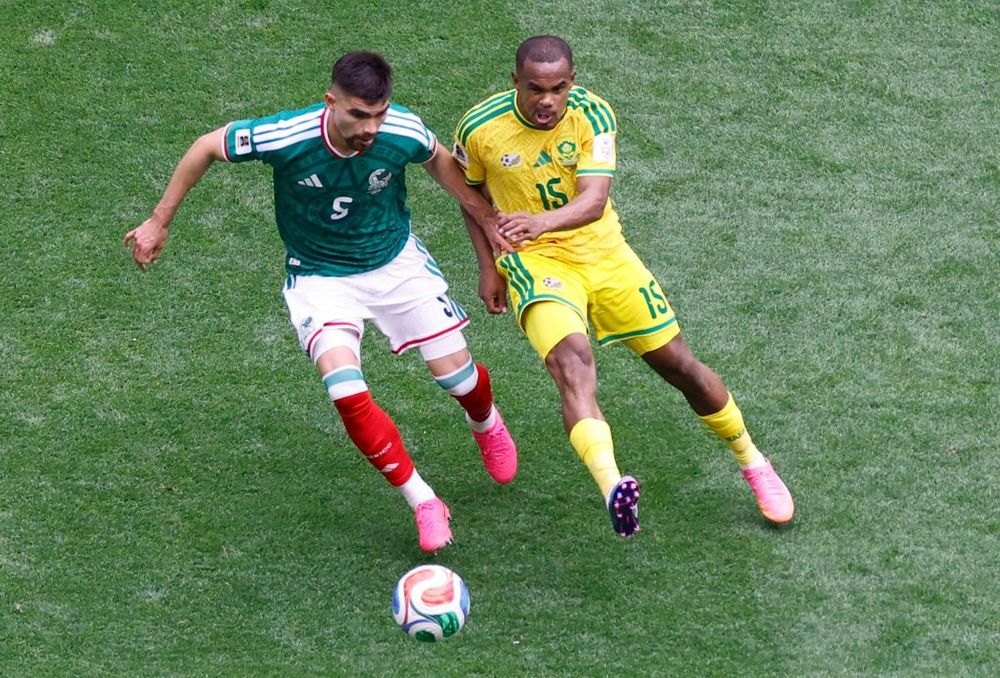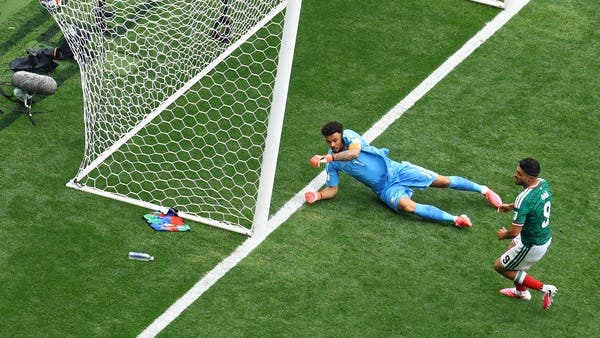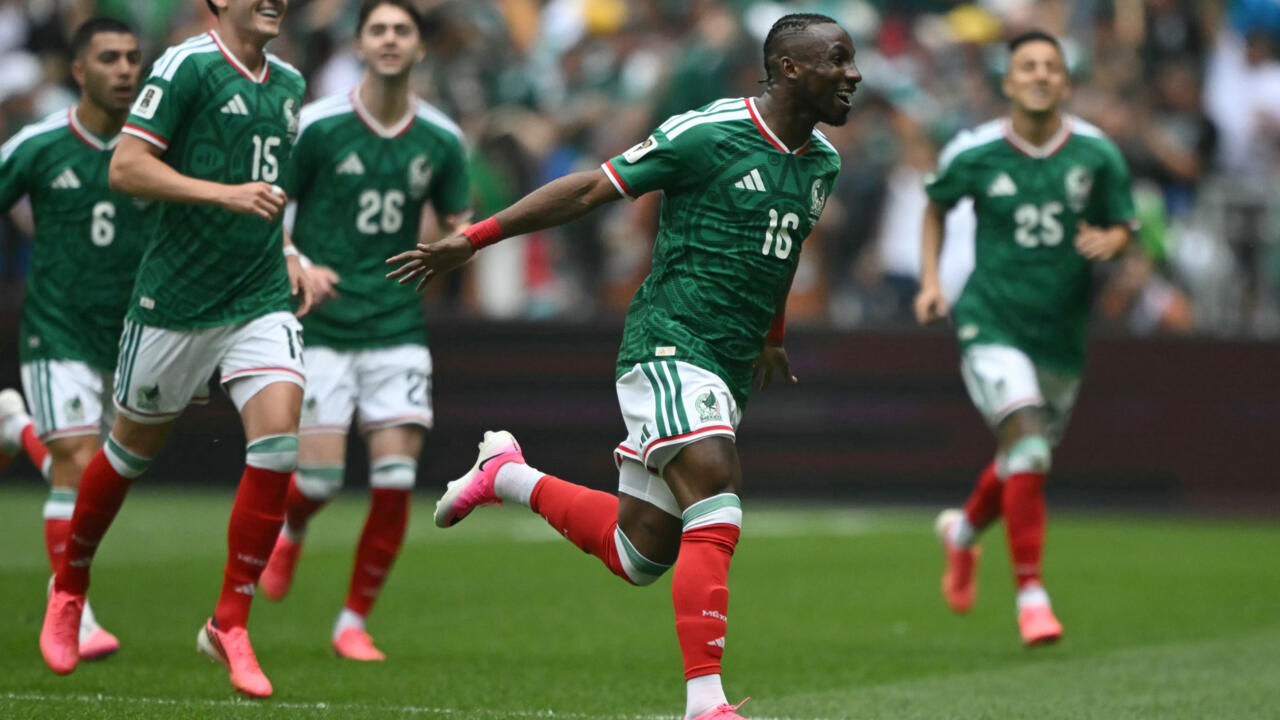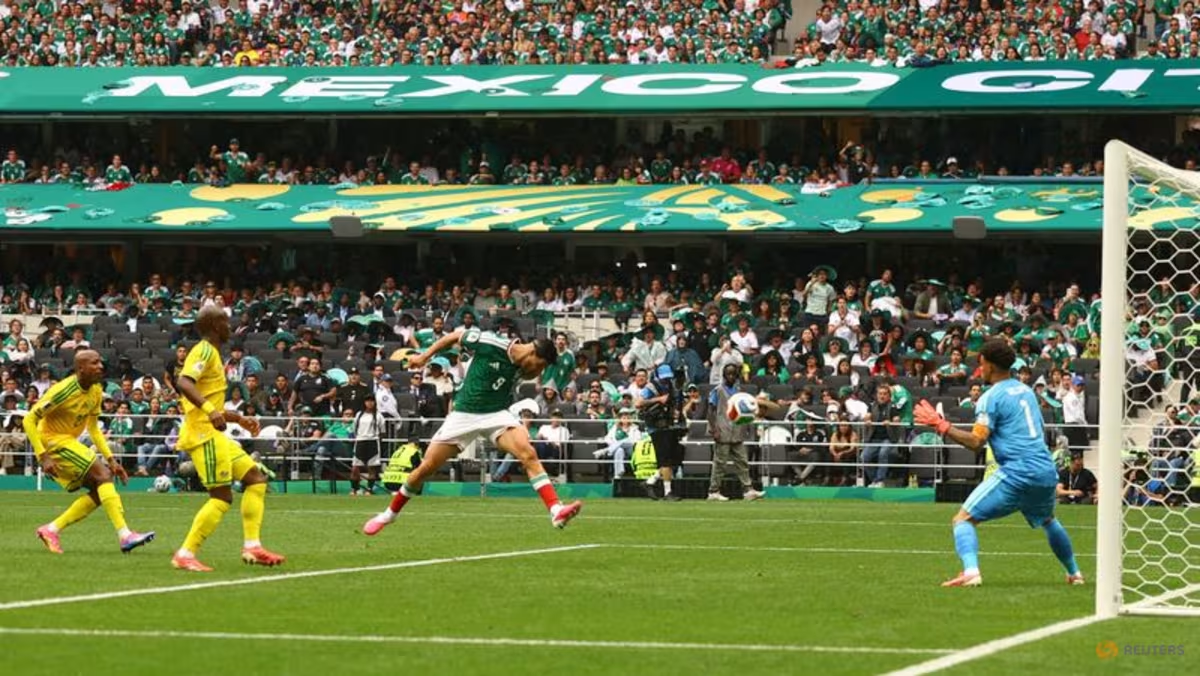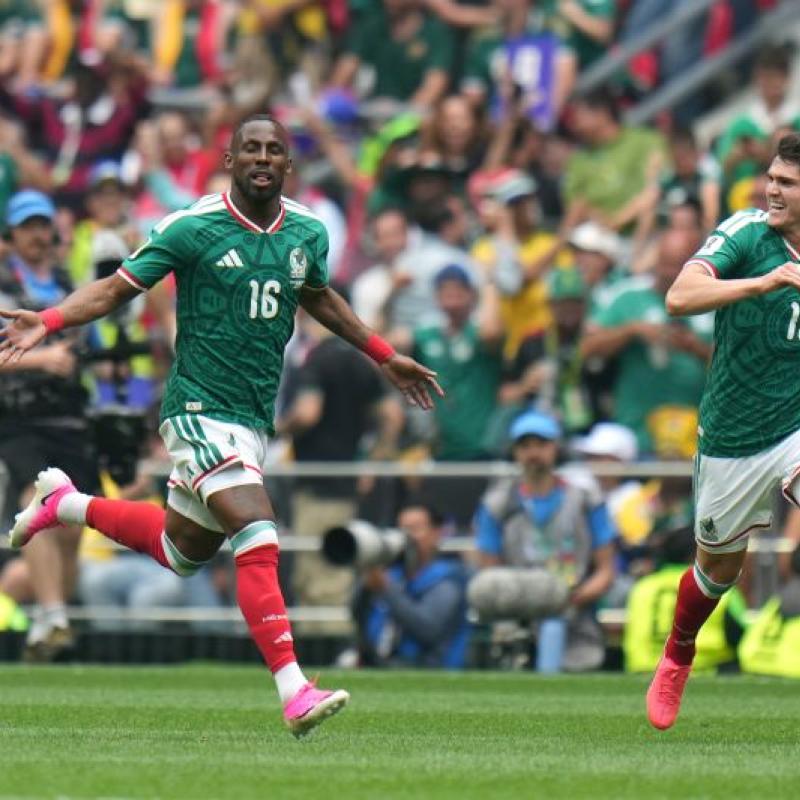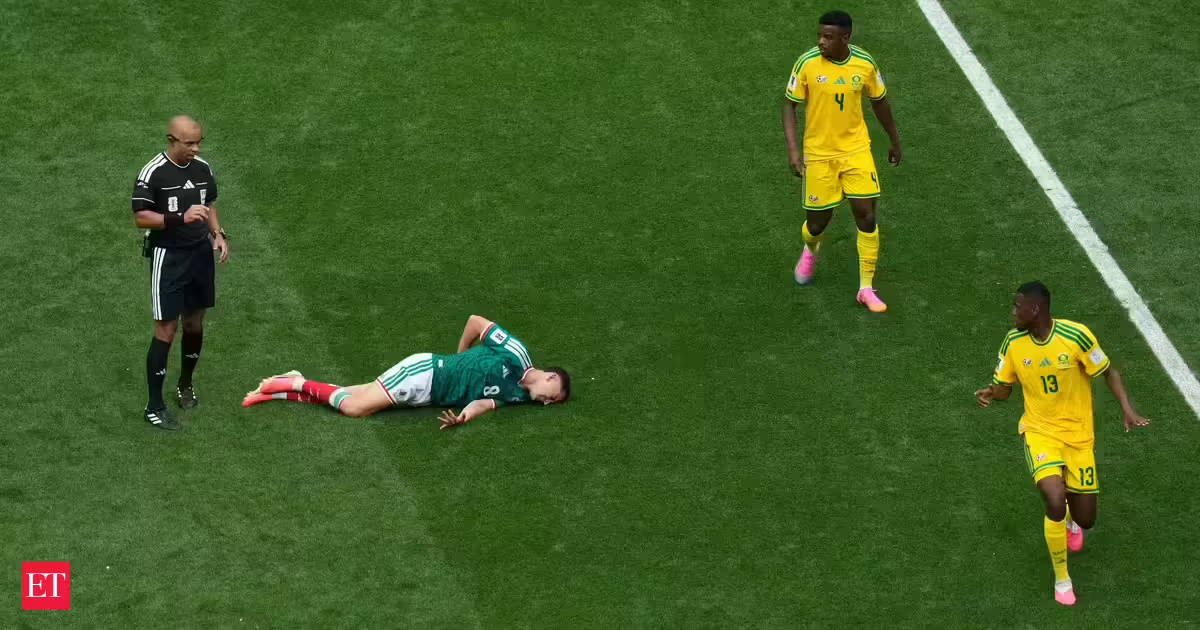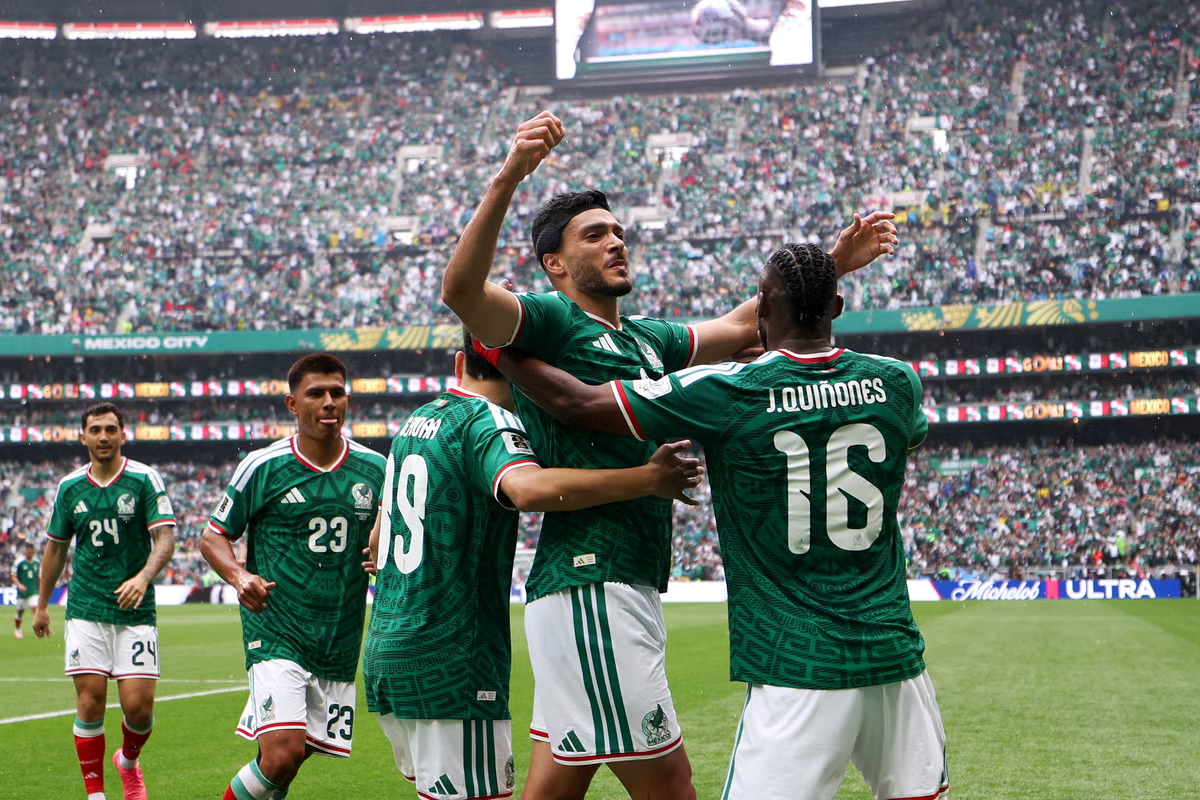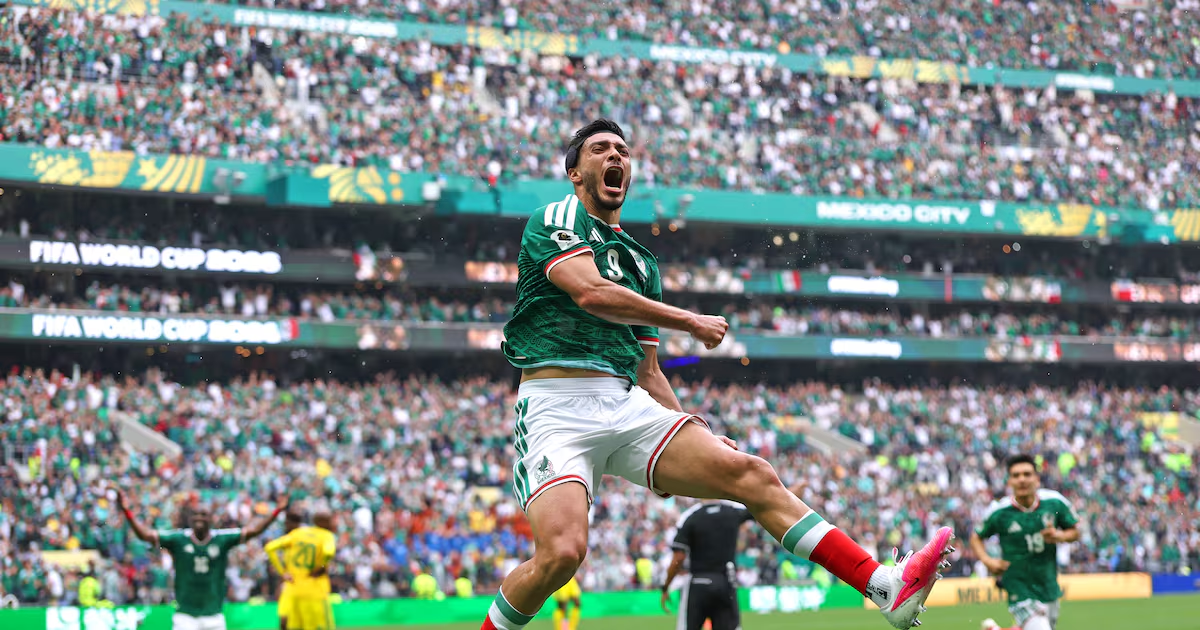
World Cup, Group A: Mexico 2 (Quinones 9, Jiménez 67) South Africa 0A crowd of 80,824 at the World Cup’s biggest and most famous stadium enjoyed one of Mexican football’s greatest days, as the co-hosts made easy work of nine-man South Africa. The Azteca was full two hours before kick-off in anticipation of the opening ceremony, which turned out to be an enjoyable jumble of nonsense, including magnificently feathered conchero dancers, ageing Mexican rockers, Shakira, a flag parade at which the American flag was resoundingly booed, and Salma Hayek, whom Gianni Infantino cleverly deployed as a shield against boos as he displayed the World Cup trophy to the crowd.On Wednesday, Infantino rhapsodised about “The Azteca ... a cathedral of football ... blessed by the Gods of football”, before adding “or Estadio Ciudad de Mexico, as we call it at the World Cup”. Let’s ignore Fifa’s dull homogenisation policy and keep calling it the Azteca for now.That beautiful word calls to mind images of Pelé, of Maradona... and of human sacrifice. The Bafana appeared on the big screen, moving in formation up the tunnel. Their singing and shuffling dance gave the scene an appropriately ceremonial air. Here come the victims, food for the hungry gods.A view of the stadium ahead of the game. Photograph: Kevin C Cox/Getty Images The crowd howled at the yellow-shirted South Africans, while the big screen displayed a curious message: “WHO WILL WIN? MEXICO 93.1% SOUTH AFRICA 6.9%.” Such was the expectation on the home team, which has been their historic curse. Lucky as they are to play for this crowd at one of the world’s greatest stadiums, there is a dark side to the privilege. The crowd’s thirst for a victim has to be sated. If it’s not the opponent then their own team will have to do. South Africa seem less accustomed to pressure. The same process of homogenisation that has made World Cup stadium names boring has also been at work in the game itself. Everywhere, teams are increasingly playing the same way. But the vast majority of this South African squad plays in the domestic league. Might they show us something different? They did, but it was a style that didn’t make any sense. They play out with short passes from the back, but they don’t seem to expect to be closed down. They do all this at a relaxed 1990s pace. On seven minutes, Raul Jimenez sprinted to close down Ime Okan, who’d had a long time to decide what to do with the ball, and blocked his eventual attempted clearance out for a goal kick.If the 35-year old Jimenez was chasing like that, Mexico had clearly identified a vulnerability. Within two more minutes their tactics had paid off.Mexico's Julián Quinones celebrates scoring the opening goal of the tournament. Photograph: Carl de Souza/AFP via Getty Images There was no apparent danger when Ronwen Williams rolled a straight pass out to Sphephelo Sithole, 20 yards out in the middle. But as Sithole turned with a casual touch, Mexico’s midfielder Erik Lira exploded into a challenge that caught the defender by surprise and knocked the ball loose. Julián Quinones pounced and smashed a 15-yard shot between the legs of Williams. As the beer and paper sombreros flew, you had to wonder what South Africa thought they were doing. If you aren’t ready to be closed down, it’s crazy to play out from the back with straight passes to the front of your own box. You have to go long – and later, when South Africa did this, they nearly scored. This was that rare Aztec sacrifice when the victim seized the obsidian knife from the priest and plunged it into his own chest. On 23 minutes, we had the first mandated “hydration break” of the World Cup. The players walked towards their dugouts and the broadcasters cut to ad breaks. In the stadium, the announcer declared “the POWERADE HYYYY-DRATION BREEEAK!” as though introducing a wrestler, the speakers boomed out This Girl, and fans flooded down the stairwells for toilet breaks or beers. Then it was Dance Cam, as the camera picked out individual fans who were socially pressured to cavort for the edification of the crowd. Sadly the people seemed to lap up this nonsense, which broke the rhythm of the match and the occasion. This time it helped Mexico, as South Africa were having their only good spell of the game just before the stoppage. When play resumed Mexico were back in control, and the stadium atmosphere was notably more subdued. Quinones eventually hit the post but the home side could not add to the lead.Would South Africa learn from their mistakes and adapt in the second half? No. In the 46th minute Williams tried to roll out the same short pass to Sithole, but Alvaro Fidalgo had already anticipated the ball and intercepted before Williams’ pass had even reached his team-mate. This time Mexico couldn’t punish the mistake. But two minutes later Brian Gutierrez burst through on to a ball over the top and the luckless Sithole bundled him over just outside the box to earn the first red card of World Cup 2026.Raul Jimenez celebrates after scoring Mexico's second goal. Photograph: Rodrigo Oropeza/AFP via Getty Images Raul Jimenez scored Mexico’s inevitable second with a back-post header with the last touch of the ball before the second Powerade Hydration Break; this time the Mexico mariachi goal music of La Negra segued straight into Van Halen and the crowd just kept dancing. You could see their delight in the joy of Jimenez, who suffered a near life-changing injury in 2020, when he fractured his skull in a clash of heads with David Luiz. Now his perseverance on the road to recovery has led him to a moment of joy that Mexico will always remember. There was still time for VAR to send off South African sub Themba Zwame for a rabbit-punch on Gutierrez, completing a miserable day for the South Africans.And on 92 minutes, Mexico’s Cesar Montes received the third straight red card of the day – an astonishing tally for one match, given that there were only four red cards in each of the Qatar and Russia World Cups. The crowd didn’t care. The World Cup has lift-off.
Mexico make easy work of nine-man South Africa to give World Cup lift-off
American flag met with chorus of boos during opening ceremony at the Azteca
1,046 words~5 min read