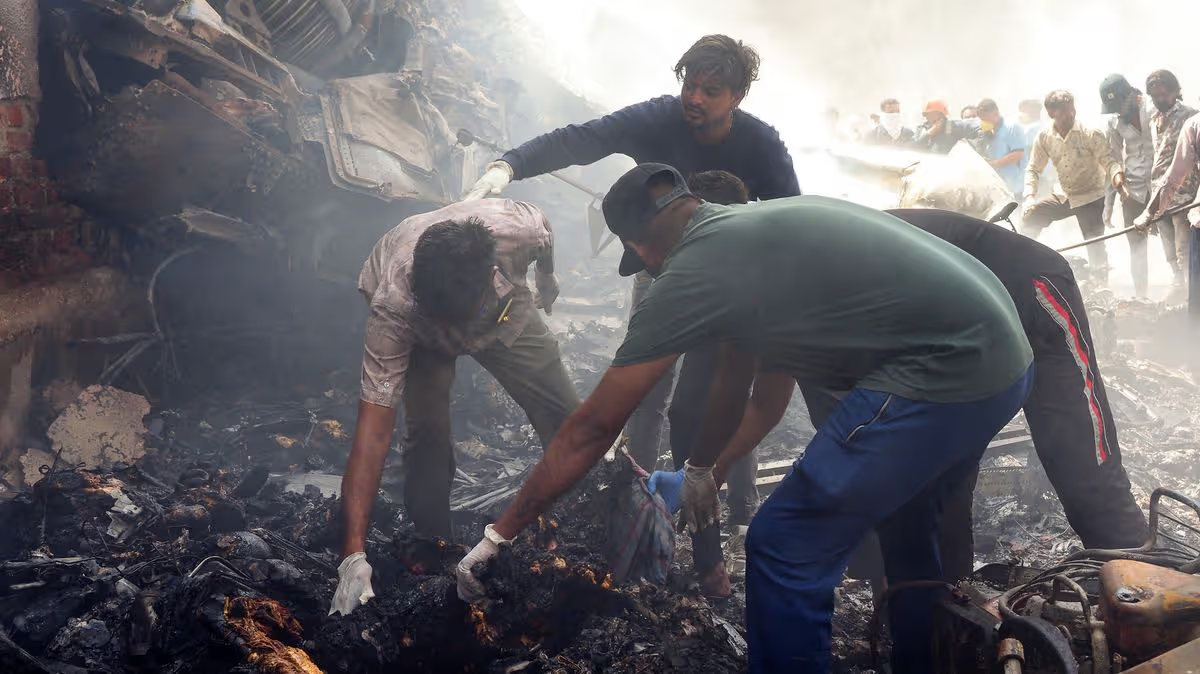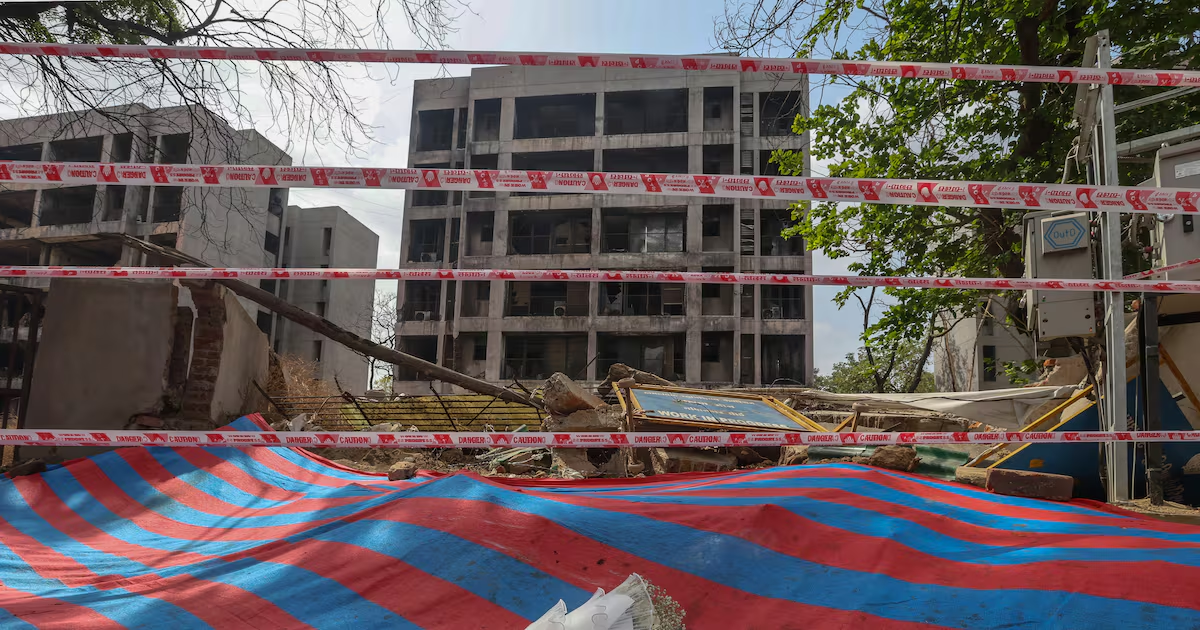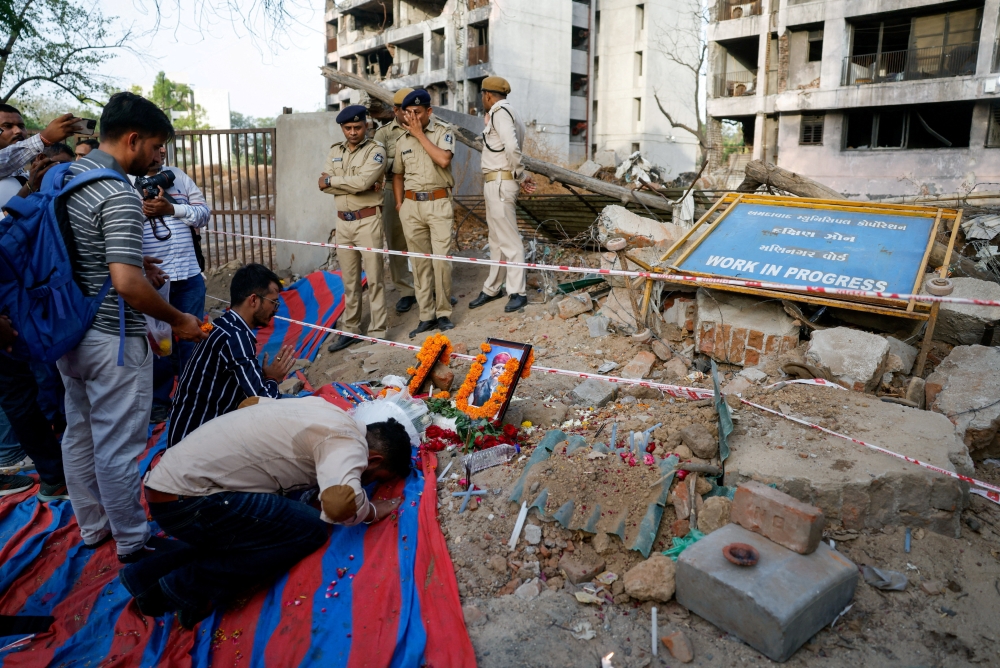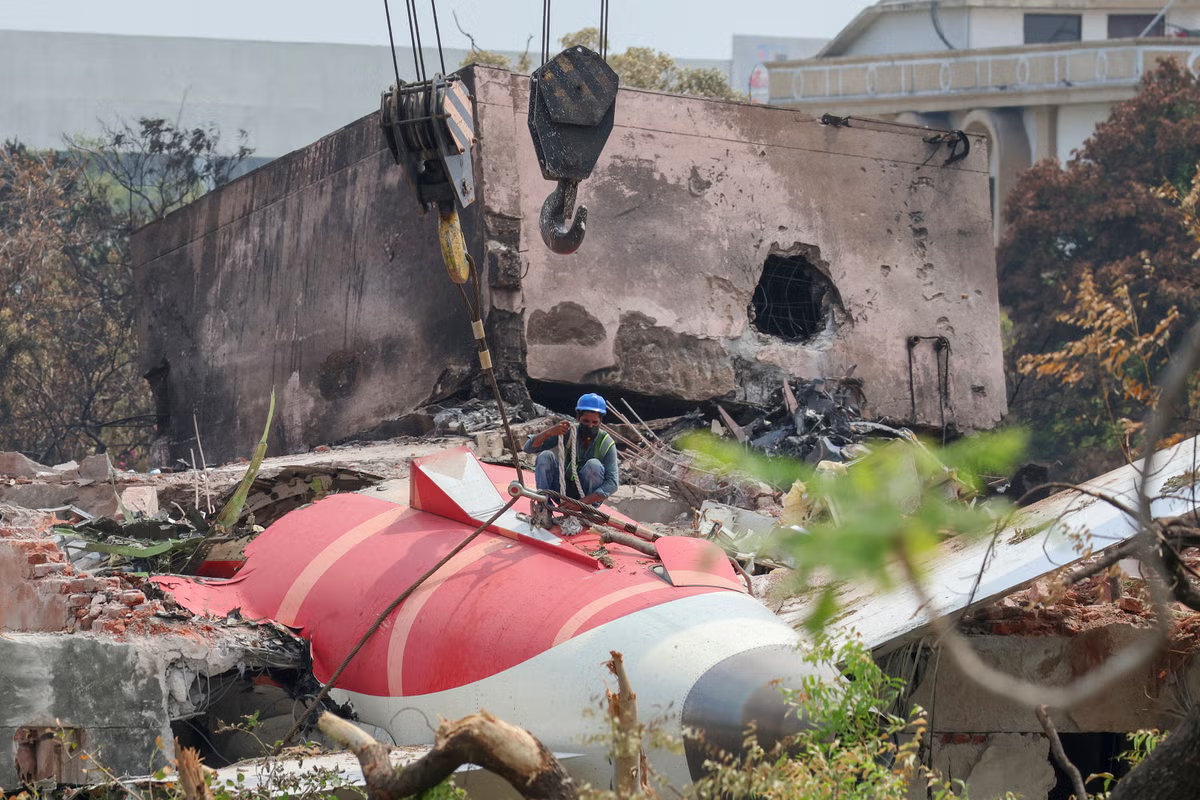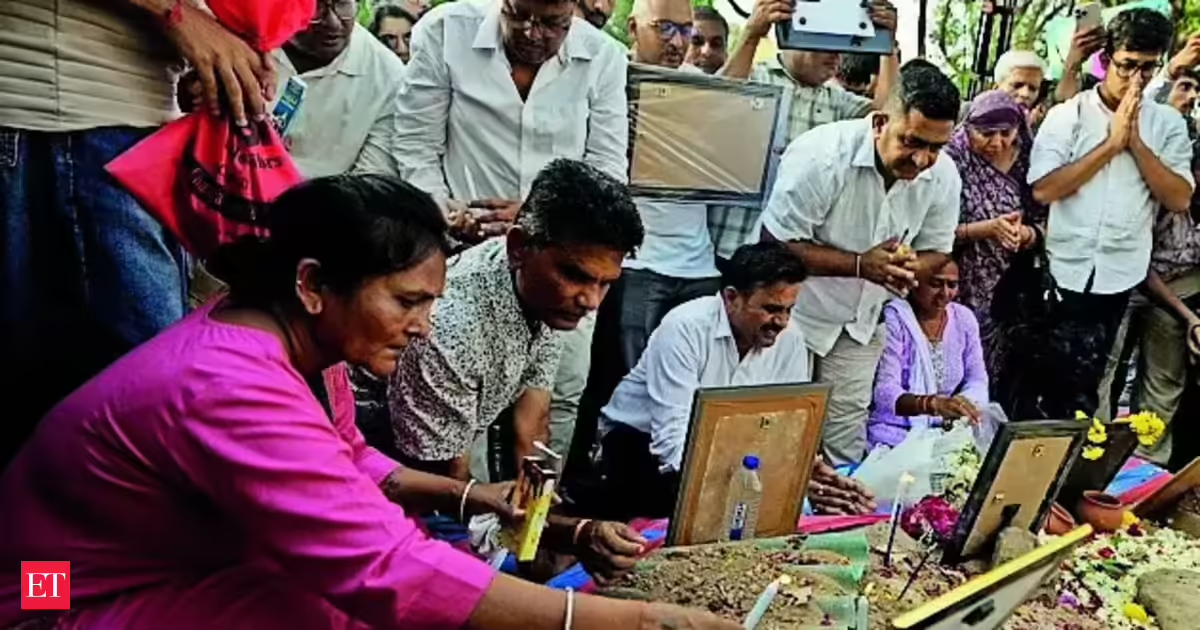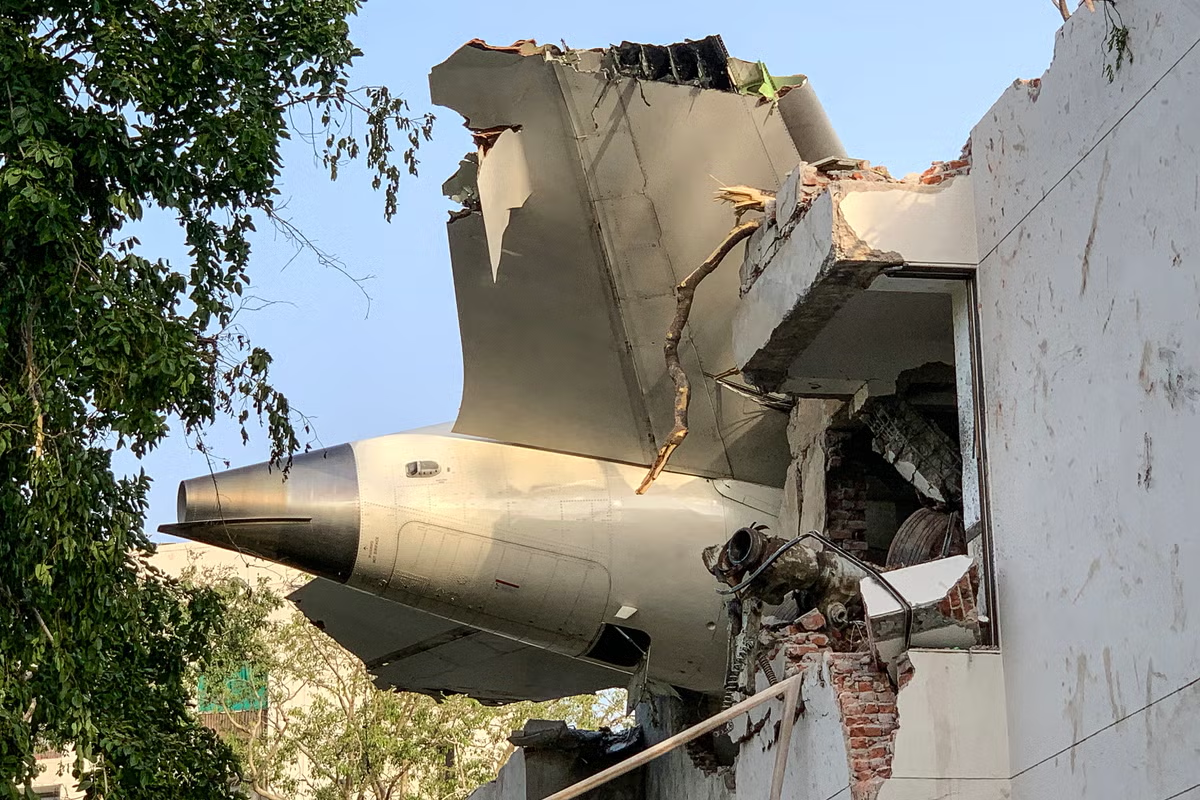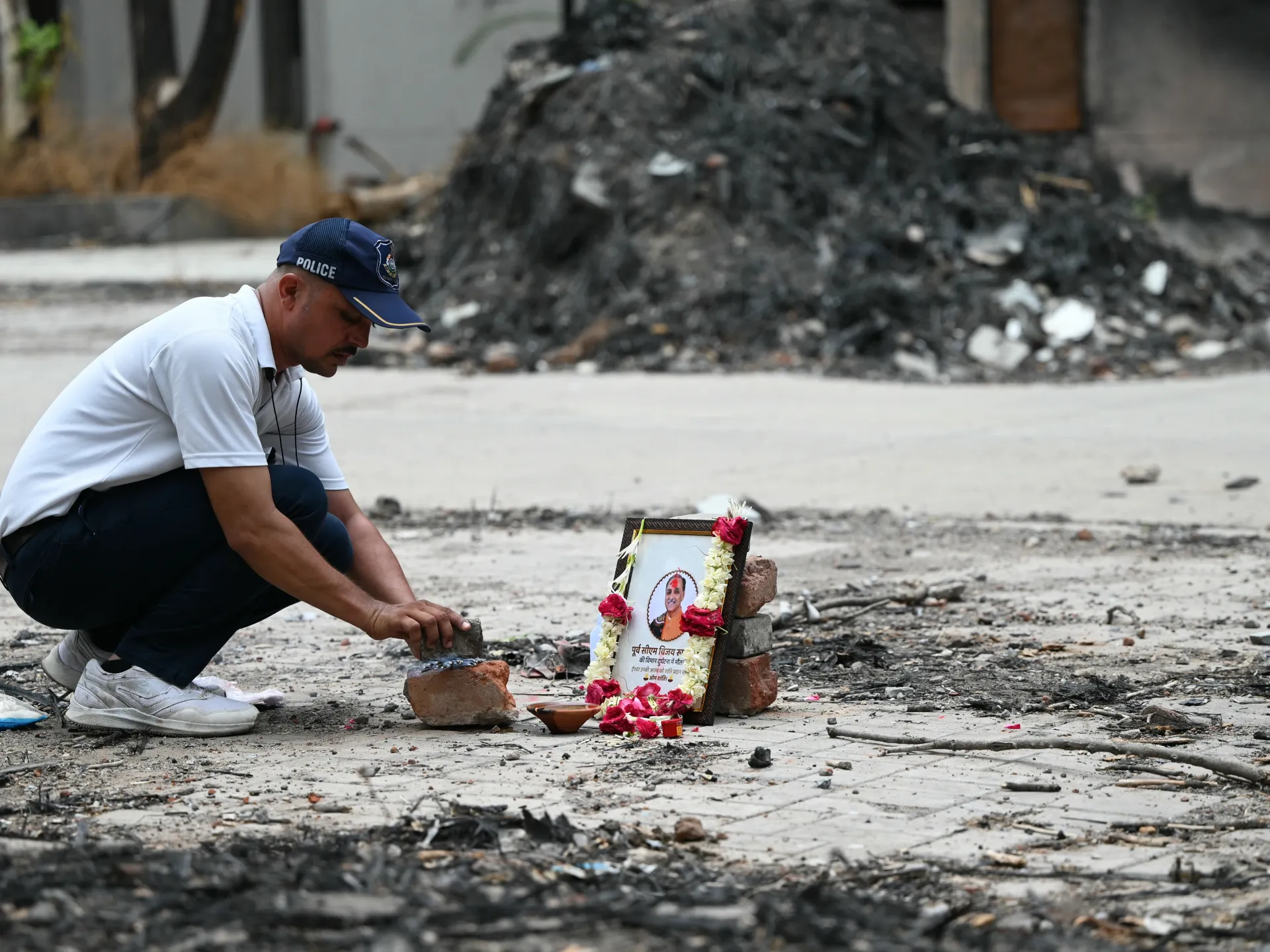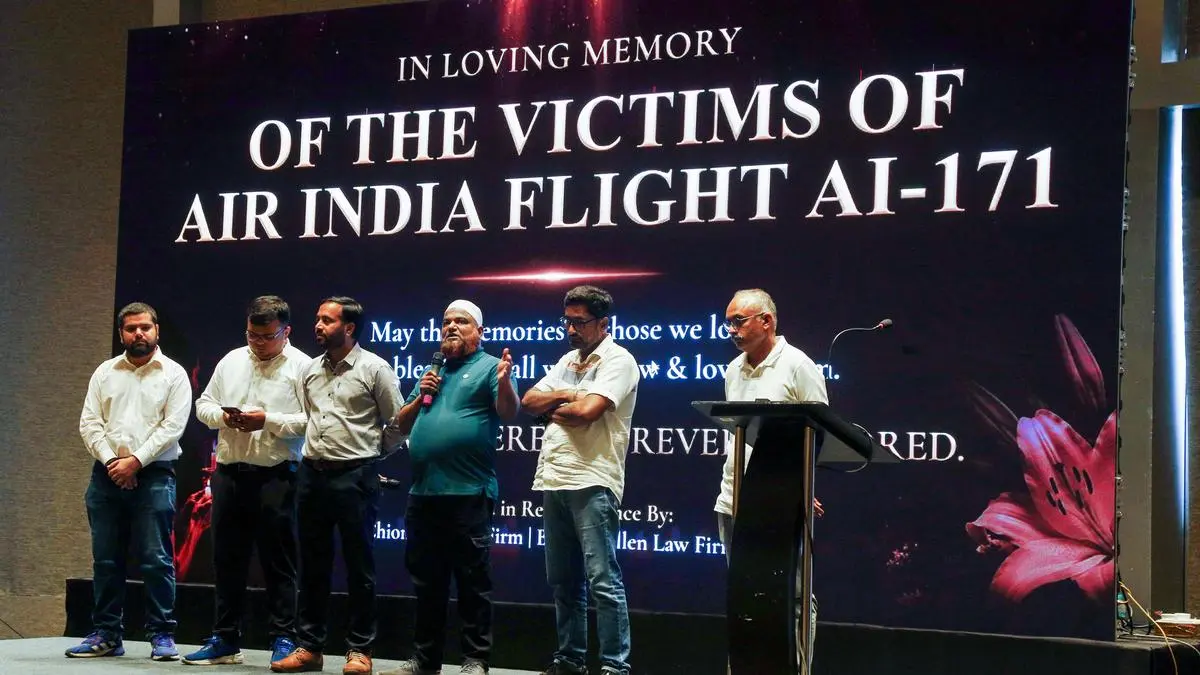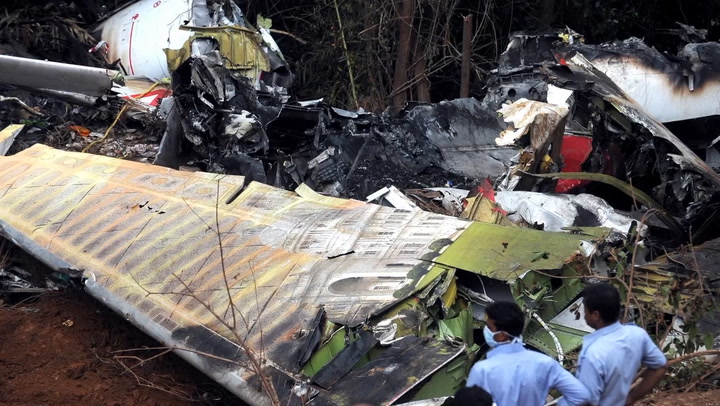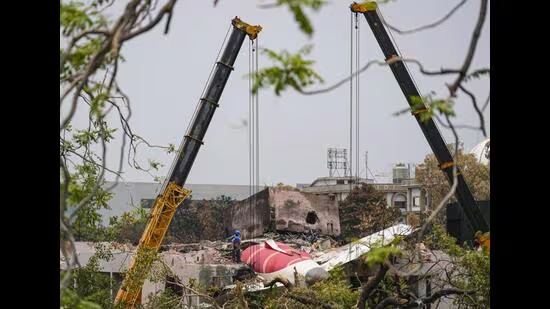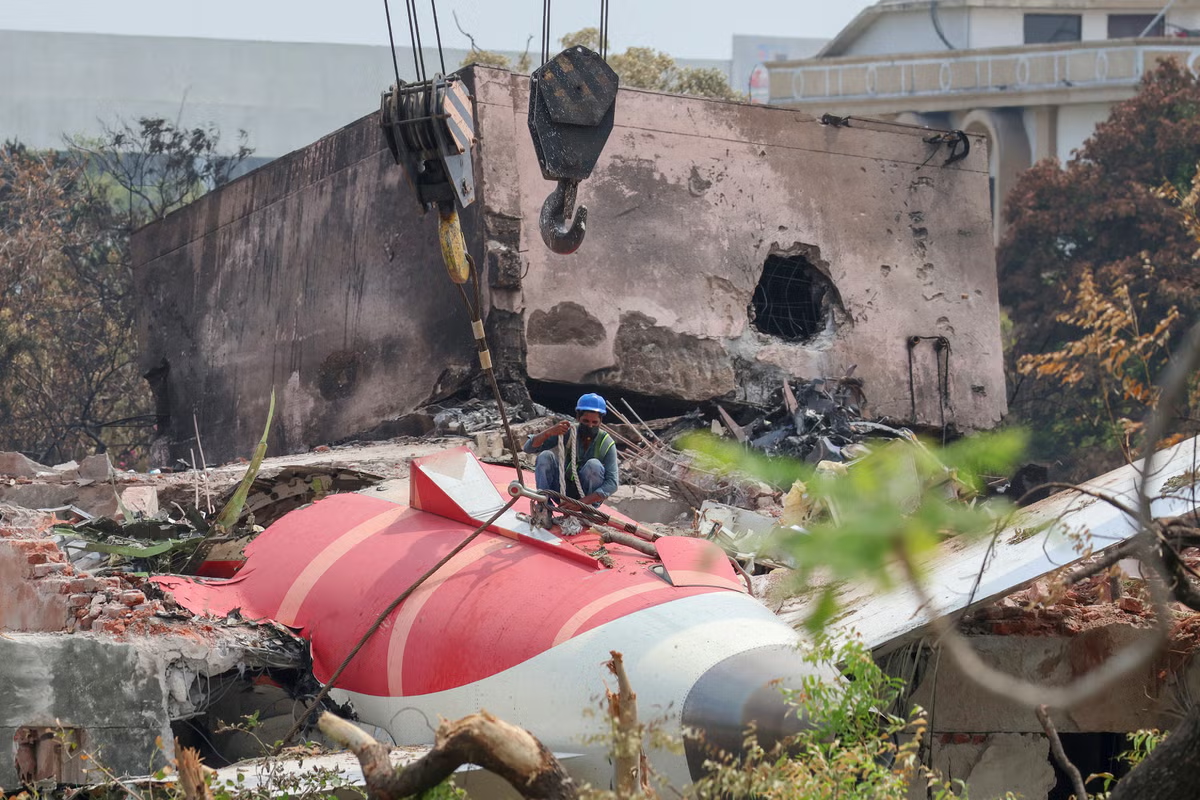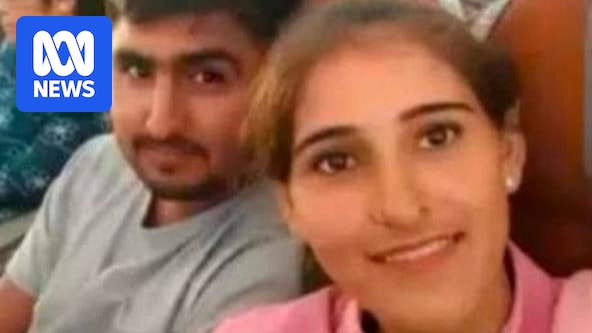
One year ago, Savdhanbhai Chowdhary got a call about his son, Kamlesh Chowdhary, a call he still clearly remembers.Warning: This story contains details that some readers may find distressing."I got a call from my son's friend," he said.Kamlesh's friend from London asked Mr Chowdhary if he could share the details of the flight his son and daughter-in-law had taken earlier that day.The friend didn't share the real reason why he wanted that information, but Mr Chowdhary suspected something was not right."I sensed something wrong in his voice, I could feel something was happening," he said.Savdhanbhai and his wife had gone to drop off the newly married couple at Ahmedabad airport for their flight to London on June 12, 2025.The elderly couple was halfway back to their village in Thavar, Bansakantha, about 200 kilometres north of Ahmedabad, when Mr Chowdhary decided to head back and see what was going on."I could sense it in my heart something had happened," he said.He later found out that the plane had crashed moments after take-off.The Air India plane crash on June 12, 2025, claimed 260 lives. (ABC News: Som Patidar)"I don't know how that day passed, how we went to the hospital, how things unfolded, I can only recall bits and pieces," he said, wiping tears as he recalled the events of one year ago."That day plunged our lives into darkness."All passengers, except one, were killed in the crash."We only had two sons in our family, no girls, so when [Dhapuben] came into our family, she became a part of the family as our daughter, not our daughter-in-law," he said.Kamlesh and Dhapuben had recently got married and were headed to London to start their new life together."It was a grand wedding," recalled Mr Chowdhary.Kamlesh had moved to London to study some years back, was settled there, and had come for his wedding, arranged by the family.Newly married couple Kamlesh and Dhapuben Chowdhary's photographs are on the wall of the Chowdhary home. (ABC News: Som Patidar)Their pictures hang in the open verandah of the family home. On the side are chillies Mr Chowdhary had harvested that morning."We were filled with pride when our villagers used to say their sons will follow in the footsteps of my son and go abroad," he said.Kamlesh was the first from this tiny village in Western India who had gone overseas for higher education.Despite not having enough money Mr Chowdhary, a cattle farmer, had taken a loan and worked hard to ensure he could send his son to school and get him the best education possible."Our lives were bright … but then this happened, and our lives that had such sunshine just ended," he said.A screenshot of the last phone call Kamlesh and Dhapuben Chowdhary made to their family. (Supplied)As the head of the family, Mr Chowdhary said he feels pressure to support and uplift his wife and younger son."If I want to cry, I do so alone at night," he said, adding that he goes into the bathroom to cry "to hide" his pain."Sometimes I think what is the purpose of living? We live and work for our children, and then suddenly everything is gone."Waiting for answersOne thing that doesn't let the Chowdharys move on is the lack of answers about what led to Air India flight 171 dropping from the sky that day."There is no justice until the report is out," Mr Chowdhary said.A preliminary report of the investigation into the crash was released in July last year.It identified that both of the 12-year-old Boeing 787 Dreamliner's fuel-control switches abruptly moved to the "cut-off" position, starving the engines of fuel and triggering total power loss.But beyond that, very limited information is available, and a full transcript of the black box recordings of the plane was never released."We want a fair investigation, we demand the government release the data of the black box," Mr Chowdhary said.Air crash investigations are complex and often take months, and under international aviation rules, final reports are generally expected within a year.But for the families, a year without answers is hard to digest."What happened? Why it happened? We need to know," he said.In a statement to the ABC, Boeing didn't answer the questions it was asked and instead deferred "to India's Aircraft Accident Investigation Bureau (AAIB) to provide information".The ABC contacted AAIB multiple times for a statement and an interview. At the time of publication, no response was received.The victims who were not on the planeA total of 260 people died in the crash.There were 241 passengers and on-board staff, as well as 19 people who were killed on the ground as the plane crashed into BMJ Medical College's hostel.Hetalben Prajapati's husband, Mahesh Jirawala, was among the 19 people who lost their lives on the ground.For two months Hetalben Prajapati was unaware her husband's body had been found in the Air India crash. (ABC News: Som Patidar)Mr Jirawala, a filmmaker by profession, was driving near the college in Ahmedabad when the plane dropped out of the sky."I was at the school, and I called him to come pick me up. He said he couldn't, so I went home on my own," Ms Prajapati said.She recalls speaking to her husband at 1:30pm that day, moments before the plane crash took place.When she called him again, his phone was switched off."We waited till 9pm, and then my in-laws went to the police station to lodge a missing persons complaint," she said.While her husband's family had learned of Mr Jirawala's death, they hid it from Ms Prajapati for months.When eventually the 27-year-old was shown a picture of her husband's dead body at the office of Air India owner Tata, it was only then that she finally accepted her husband was dead.Hetalben Prajapati had gotten married in March 2025. In June her husband was killed in the Air India crash. (ABC News: Som Patidar)"My in-laws lied to me, saying my husband is just missing and not dead," she said.Ms Prajapati told the ABC that her in-laws also took the compensation money that was awarded to the families of victims.She does not want to accept that the person she loved has passed away."I lost my person," she said."The person who we lost will not return, but at least we should know why this incident happened," Ms Prajapati said.Grief and a wait for "justice" have created a bond between some of the families, as local advocate Kuldeep Ishrani told us."I reached the airport on 12th June, 2025, as a journalist," Mr Ishrani said."But after filing the information to my news station, I was taken by the scenes in front of me, and I started doing what I could to help people there."For the past year, he has been involved with the families of the crash, helping them either with getting support from authorities or from Tata."I saw first-hand the impact, the burned bodies, the police working, and the doctors working," he said."I have never seen something like this."'Too hot to touch'It's a sentiment echoed by the first responders, including doctors from BMJ Medical College, the biggest hospital in the area that was treating crash victims alongside its own doctors and students."It was a very difficult time. We are doctors, but we had never seen something like that. All of the bodies were totally burnt, charred," said Deep Maheswari, a doctor and resident at the college."I still remember how hot the bodies were."The bodies were too hot to touch. We were trying to figure out how to identify and we could not even touch them."At the time of the incident, Dr Maheswari was a second-year resident at the college. He was having lunch in one of the hostel buildings when he heard what sounded "like a blast"."We went out, and it was chaos. We didn't know what was happening," he said.The BJM Medical College's hostel is yet to be rebuilt. (ABC News: Som Patidar)Soon enough, Dr Maheswari and fellow doctors were at the crash site, identifying remains, helping with DNA identification so families of the victims could take their loved ones back home.It is a task he did for nearly 36 hours on the first day.For nearly 15 days, long shifts at work identifying bodies while families of victims were asking for remains was routine."It was personally very difficult, I knew one of the victims," he said.One of his distant cousins was a passenger on the plane."My relatives would come and literally beg me to give them his remains, to find their son, but I couldn't help them," Dr Maheswari said.He had to wait for DNA tests and follow the procedures outlined before he could help his relatives.He said the pressure of working as a doctor at that time, in that situation, had altered him for life.Disha Vasavada also recalls the difficulty of providing aid last year.An assistant professor at the Department of Psychiatry, Dr Vasavada was stationed at the crash site to help families of victims as they would come and realise their loved one had died."We knew the numbers; we knew only one person had survived. So we couldn't offer them hope, but we had to help them the best we could," she said.Dr Vasavada said there are still days when a plane would fly by the teaching medical hospital, and she would get flashbacks of the crash."It still catches you off guard from time to time," she said.For the families of the victims, like the Chowdharys, the memory never really leaves them."We just want the government and the authorities to release the report now," Mr Chowdhary said."It has been one year now."
Air India crash plunged victims' families 'into darkness'
One year on from the fatal Air India crash that claimed 260 lives, families of victims are still waiting for a report into the investigation.
1,594 words~7 min read