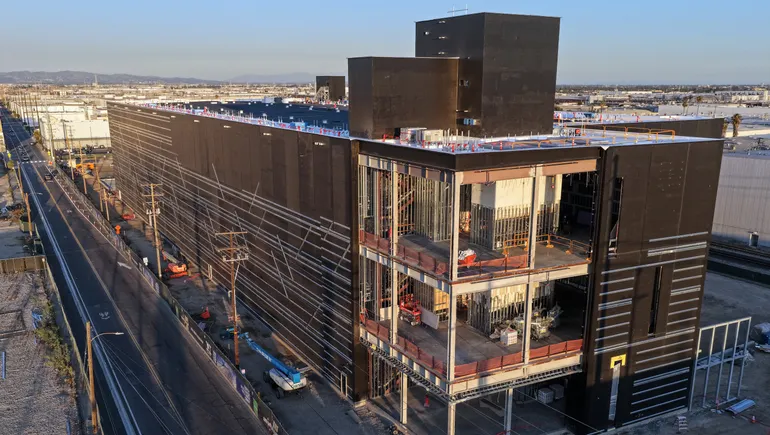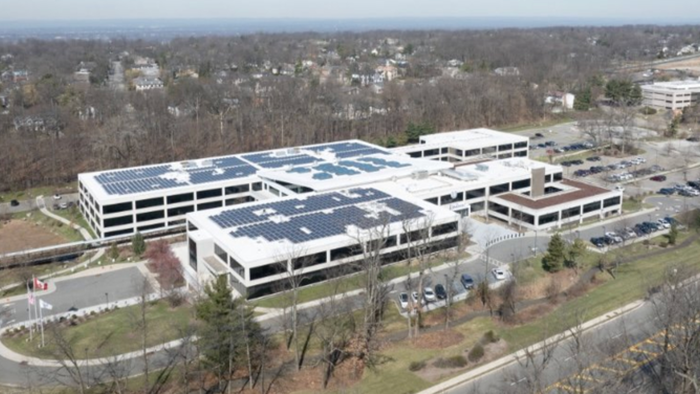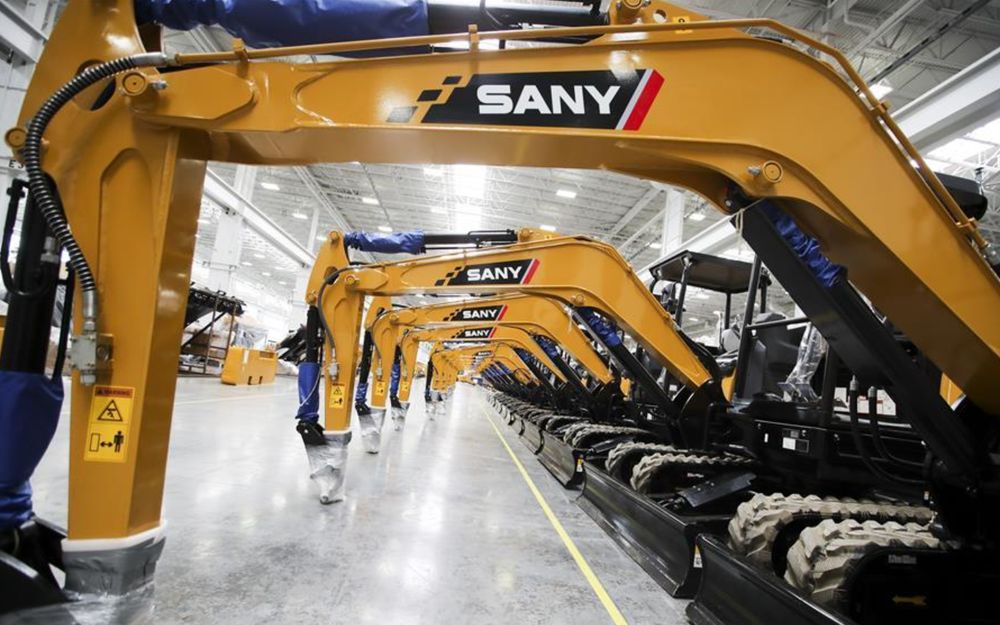
Arthur Hutton and Ken Bianco in their respective facilities in Savannah, Georgia
Jan Klauth
Ken Bianco lets out a brief laugh when he hears the question. Open a factory in California — where most of his customers are? "Absolutely not," says JCB's vice president of commercial operations, slicing the air with his hand as if swatting away a bothersome fly. "California has become too slow," he says. "Everything takes too long there — it's simply not business-friendly."Bianco is standing in the lobby of construction and industrial equipment manufacturer JCB. To his left sits a model of the world's fastest diesel engine, to his right a backhoe loader painted with a flame motif. When the company, founded in Britain in 1945, planned its first US plant in 2001, one thing was clear: it would head south. "Georgia welcomed us with incredible incentives," Bianco recalls. Today, the firm's North American headquarters stands here, complete with 500,000 square feet of production space, and a second large plant is currently under construction in the "Lone Star State" of Texas.That Republican-governed states in the American South are attracting so much investment is no coincidence. A look at the data reveals a pattern. Georgia, Florida, South Carolina, Utah, and Texas ranked among the country's leaders in both economic and population growth in 2025.While US GDP as a whole rose by 2.1% last year, Florida and South Carolina recorded gains of just over 3%, according to the Bureau of Economic Analysis — the highest rate of any state. Utah comes in just below that, with Texas also above the national average.The trend of recent years is clear: While liberal metropolitan regions such as San Francisco, Boston, and New York remain the centers of finance, Big Tech, and research, industry is shifting ever more strongly into the Southern states. Manufacturing firms in particular are increasingly drawn to places where Republicans hold power. According to a report by CBRE, one of the nation's largest real estate brokerage firms, 725 companies relocated their headquarters between 2018 and 2025. Increasingly, they left high-tax states like California or New York for Republican states like Florida or Texas.Economies of powerhouse states like New York and California are still growing too, driven above all by the tech boom. But the stronger momentum is currently elsewhere, as the population figures show. While New York's headcount is stagnating, California has been losing residents for several years — and the list of big-name companies turning their backs on the "Golden State" is growing steadily longer.South Carolina, by contrast, is currently the nation's fastest-growing state in percentage terms. Texas, according to the US Census Bureau, is gaining the most residents in absolute numbers: In the past 15 years alone, nearly 7 million people have moved there. Often overlooked, Utah is also buoyed by a young, growing population, while Florida leads the field in immigration from abroad.