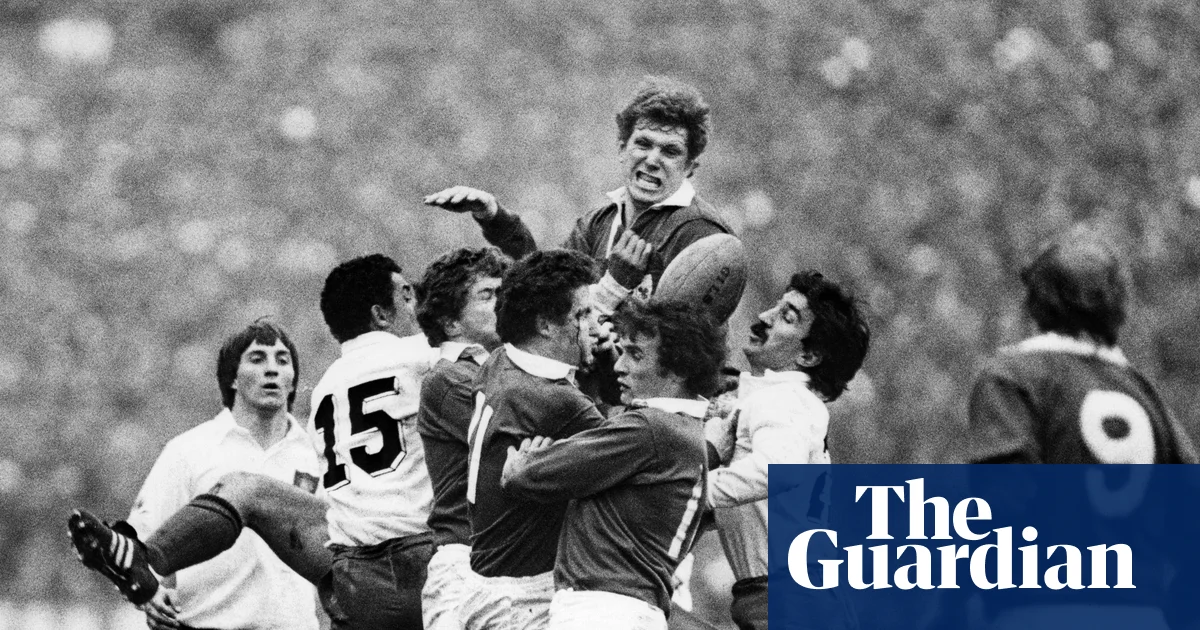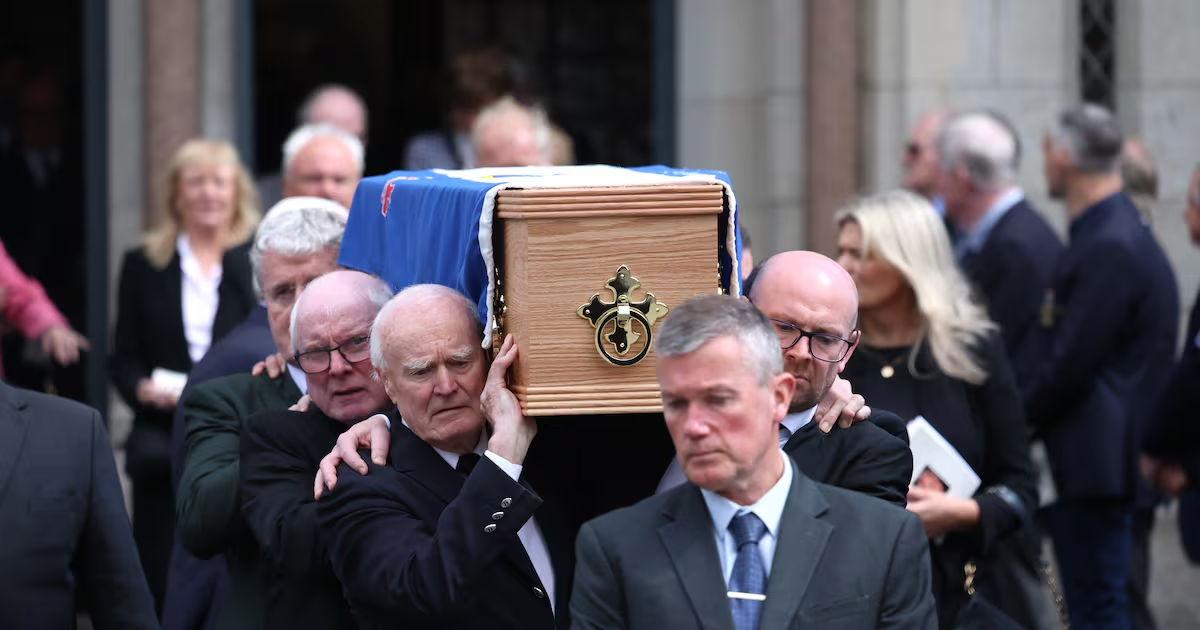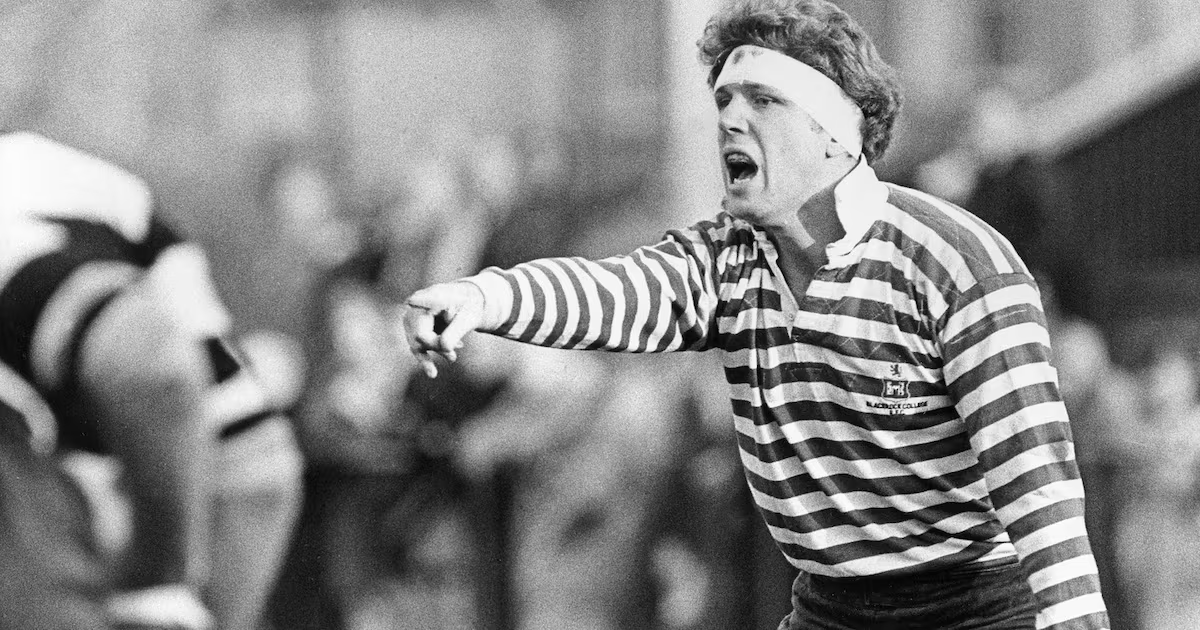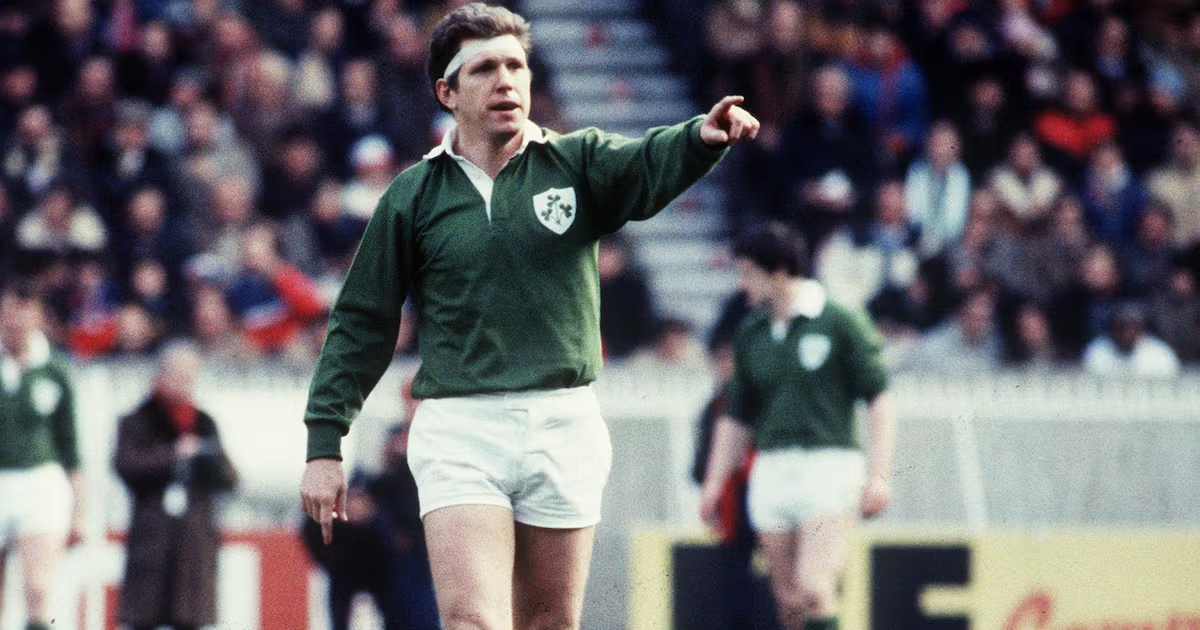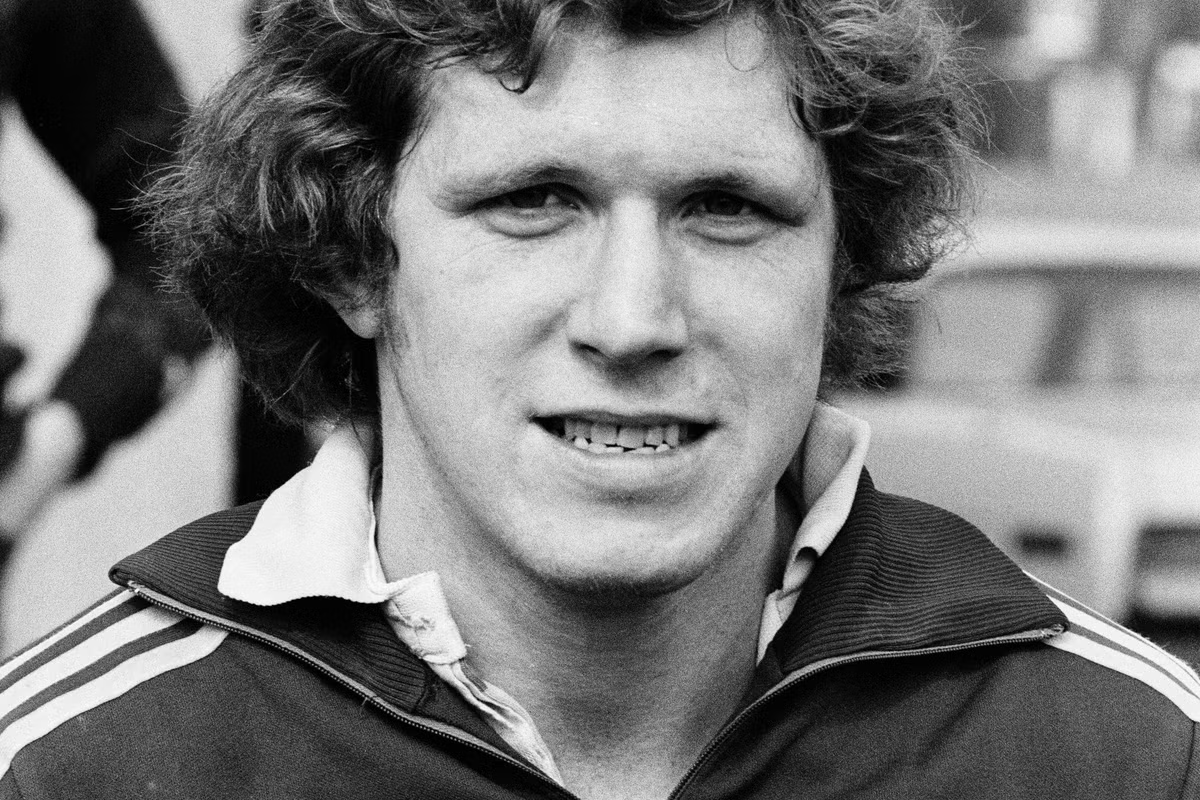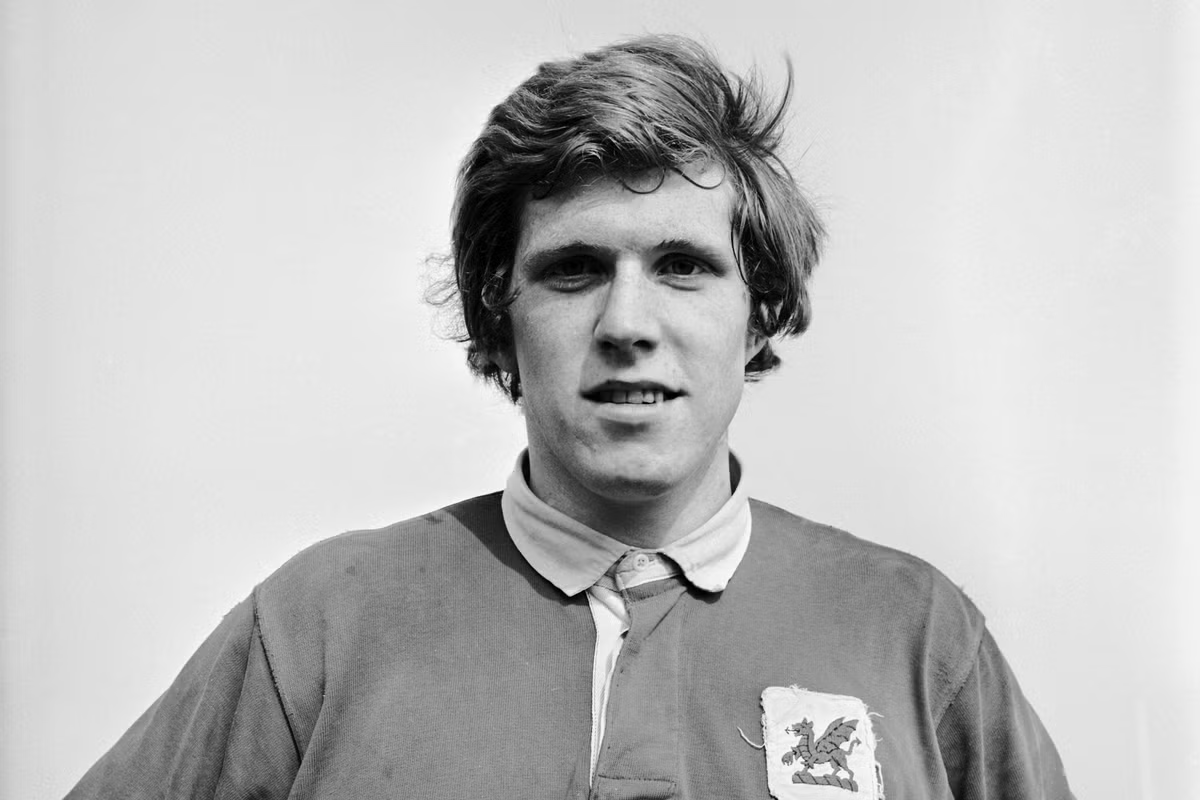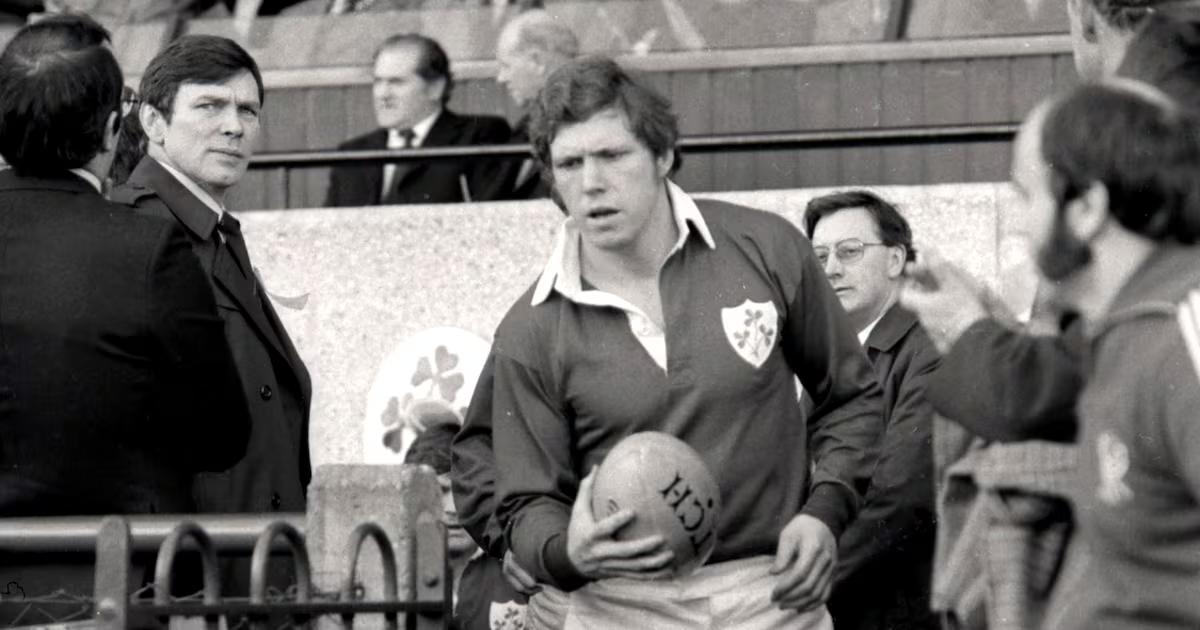
It might seem a little weird for a South African to pen a tribute to an Irishman. It is, however, just another indication of the universal aura that Fergus Slattery exuded far beyond his native land. Jean-Pierre Rives, the Casque d’Ornd of French rugby and one of Slattery’s fiercest rivals as an openside flanker, summed it up best when he remarked: “What a loss for the game. We loved this guy. And that’s rugby.” A quick delve on the internet shows Slattery and Rives opposed each other in eight Tests, going head-to-head in every Five Nations championship from 1976 to 1983.“Fergus is Ireland, Ireland is Fergus,” Rives laughed when approached for a comment in Grimaud, France. “What a man, what a fighter, what a player. Incredible. “I don’t know, for me, Ireland is Fergus. To play against him was terrible. It was war! You were not playing, you were surviving.“Yet, Fergus was so nice, so friendly off the field; I actually thought he was two people! A gentleman off the field, but so difficult on it. The spirit has to survive, his spirit, and what he means to Irish rugby.”France' Jean-Pierre Rives is tackled by Ireland's Ollie Campbell during a Five Nations game in Paris in January 1984. Photograph: Philippe Bouchon/AFP via Getty Images Having made his international debut for Ireland at Lansdowne Road on January 10th, 1970, in 8-8 draw against the Springboks, a 20-year-old Slattery gained selection for the British & Irish Lions’ tour of New Zealand the following year. Injury prevented him from playing in the triumphant series, but when he eventually did get to take on the All Blacks two years later, it was spectacular.Welsh scribe JBG Thomas wrote in The Avenging All Blacks that Slattery played the “game of his life for the Barbarians at Cardiff”, on January 27th, 1973, in what is still regarded as one of rugby’s greatest games. That game achieved immortality courtesy of Gareth Edwards’ try, considered the greatest ever, while Slattery crowned his own marauding performance with a brilliant try. “Slattery was a bloody good player, with heaps of ball skills, and right up there as an openside flanker,” said Ian Kirkpatrick, the All Blacks captain in 1973.Canterbury's Alan McLellan is tackled by Fergus Slattery during a match during the Lions's 1971 tour of New Zealand. Photograph: Central Press/Hulton Archive/Getty Images “The way that game generated was right up Slattery’s alley. It just opened up, and space was never before or since utilised quite to the extent it was in that game.”In 1974, Slattery forced his way into the test side of the British & Irish Lions touring party to South Africa, and had the Springbok inside backs scared witless with his relentless pursuit of the ball and tenacious tackling.“That Lions loose trio of Fergus, Roger Uttley and Mervyn Davies was simply the best that I ever came across,” said Morné du Plessis, who played loose forward in the first two Tests of 1974 before leading South Africa to a series triumph over the Lions in 1980.“Though not huge in stature, he was one of those absolutely fearless men, frightened of nothing, and a great all-rounder. His rugby certainly left a great impression, but more important to me was the man. “Fergus was a special human, a larger-than-life character, and I just feel privileged to have crossed his path.”Fergus Slattery during the Lions tour of South Africa in 1974. Photograph: Allsport UK /Allsport In the fourth and final Test of the 1974 tour, a 13-13 draw played at Ellis Park in Johannesburg, Slattery forced his way over the goal line at the death for what would have been his first and only try for the Lions, a score which would have handed them a 4-0 clean sweep. However, South African referee Max Baise adjudged the ball had not been grounded.“I stood right over Slattery and the ball pressed against Bok centre Peter Cronje’s leg; it definitely did not touch the ground, I’m 100 per cent sure of that,” the late Baise told me a few years ago.Gary Pearse, the 1970s Wallaby flanker, reckons Slattery was the quickest openside he ever came up against.“I played my first full Test against Fergus at Lansdowne Road in 1976, which we won, but the following week we were racing each other to breakdown in the Wallabies’ final tour match against the Baabaas at the Arms Park,” Pearse recalled.“His athleticism, combined with tenacious, robust competition for ball security or turnover, made him a robust rival. We swapped jerseys in those days, and his takes pride of place in my man cave. “It is in times like these that the jersey and memories jump off the wall and remind me of how lucky I am to have played for my country against such a quality player and person.”Later in 1976, Slattery, together with Irish winger Tom Grace, returned to South Africa to represent the Quagga Barbarians against Andy Leslie’s touring All Blacks at Ellis Park.With 20 minutes left, the Baabaas had raced to a 31-9 lead, with Slattery and local outhalf Gavin Cowley their two standout performers, but the Kiwis rallied magnificently to salvage a thrilling 32-31 win.“It’s easy to heap praise on a player like him, but Fergus was some player,” said Cowley.“He was all over the park, and the amazing thing, which not many people realised, was that that game, in Johannesburg at altitude, was in the middle of the northern hemisphere off-season, yet his performance defied belief. I was amazed at how fit he was.“Moreover, Fergus was such a genuine guy.”Fergus Slattery during a Test between Ireland and Australia in June 1979. Photograph: Kenneth Stevens; Alan Gilbert Purcell/Fairfax Media via Getty Images In 1981, Slattery led Ireland on a short tour of South Africa. Although the Springboks had the upper hand in the first Test in Cape Town, leading 23-15 largely due to a stunning brace of tries by Bok midfield maestro Danie Gerber, the second Test was a different story.I was at Kings Park in Durban 45 years ago when Slattery inspired his charges to come agonisingly close to a massive upset. South Africa scraped through 12-10, thanks to the boot of Naas Botha, who succeeded with a penalty and three dropped goals.“I was honoured to make my test debut, and as captain, against Fergus in 1981,” said Springbok skipper Wynand Claassen. “Typically Irish, they refused to toss in the towel, while Fergus and his backrow colleagues, John O’Driscoll and Willie Duggan, gave us a torrid time in the loose. We were very lucky to get out of jail in Durban. “During the game, I had occasionally spoken to the referee, Francis Palmade of France, in French, and over a few beers afterwards, Fergus chuckled: ‘I don’t need to speak French to win a game!’“A most pleasant guy, and a phenomenal player.”Slattery’s adversary as openside in 1981 was the flamboyant Rob Louw, who said the Irishman was a role model to him.“I always tried to emulate the way that he played,” said Louw. “Fergus was way ahead of his time as a ball-playing loose forward; he was like a backline player operating as a loosie. “He was the ultimate flanker.”Ireland’s Brendan Foley, Philip Orr and Fergus Slattery during a Five Nations game against England at Landsdowne Road in March 1981. Photograph: Billy Stickland/Inpho According to Louw, Slattery employed some unorthodox methods to inspire Ireland ahead of the second Test in 1981.“We gave them a proper klap [whack] at Newlands, but with their backs against the wall in Durban, the Irish just turned it on. I actually heard that they had a major piss up on the Friday before the second Test. Fergus just said: ‘Let’s get together and get some gees [spirit] going…”Lions halfback John Robbie, who has been living in South Africa for more than 40 years, was a team-mate of Slattery’s with both Ireland and Leinster throughout the late 1970s.“Slatts was an absolute superstar, yet he never boasted about it,” said Robbie.“He was also a tremendous clubman and never ducked a club game. Sometimes he even turned out for his beloved Blackrock College RFC the day after he had played in a Test for Ireland. He also worked for BBC Radio as a co-commentator (alongside Jim Neilly), and always donated his BBC fee to the club.”“As a player, Slatts was without a doubt the fastest forward I ever played with or against. In fact, on the Lions tour of 1974 in South Africa, he was the second fastest member of the touring squad, after JJ Williams (winger), who was a Commonwealth sprinter and Welsh sprint champion in 1971. They pushed each other all the way at practice.”John Fergus Slattery. Born February 12th, 1949; died June 4th, 2026
‘I just feel privileged to have crossed his path’: Fergus Slattery’s ardent admirers spanned the rugby world
Former Ireland captain earned the respect of his international rivals both on and off the field
1,457 words~7 min read