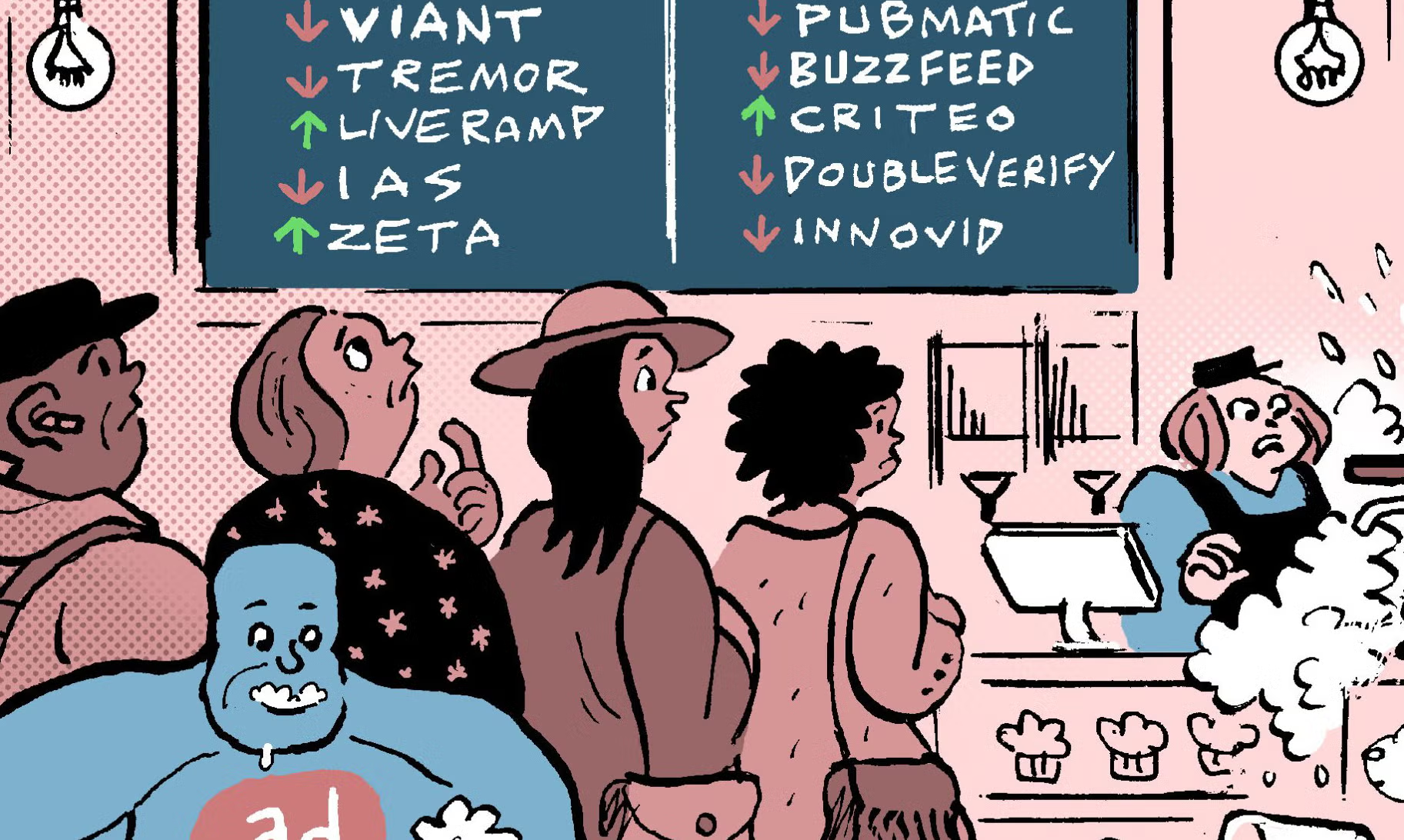
Trade Desk shares are approaching critical lows. Why is TTD stock at lows?
What Is Driving The Trade Desk’s Stock Performance?The current tape is being framed less around a single headline and more around whether TTD can sustain a rebound attempt after a steep 12-month slide, even as growth-oriented tech is getting rewarded. Short interest also ticked up to 76.55 million shares, or 21.06% of the public float, implying 3.61 days to cover based on recent volume.The Trade Desk also has an internal transition in focus after it named Nate Olmstead CFO effective July 9, 2026, with interim CFO Tahnil Davis returning to chief accounting officer to support the handoff. That leadership change can keep traders cautious. More management shakeup came Thursday with the announcement of Sarah Gavin as CMO and executive vice president.Despite a broadly positive risk-on session (Nasdaq up 0.44%), TTD is not participating, which reads as stock-specific hesitation rather than a market-wide de-risking move. Market breadth is also strong (10 sectors advancing, 1 declining), making the underperformance stand out.Critical Levels To Watch For TTD StockTTD is still in a long-term downtrend, trading below its 20-day SMA ($21.09), 50-day SMA ($22.00), 100-day SMA ($24.60), and 200-day SMA ($34.76). Put differently, the stock is 12.1% below the 20-day, 15.8% below the 50-day, 24.7% below the 100-day, and 46.7% below the 200-day—classic "repair phase" positioning rather than a confirmed reversal.The moving-average structure stays bearish, with the 20-day SMA below the 50-day SMA and the 50-day SMA below the 200-day SMA, which tends to cap rallies until price can reclaim those bands. The stock is also far from the 52-week high ($91.45), underscoring how much longer-term damage remains after the 74.39% 12-month decline.Momentum, via MACD, is leaning cautious: MACD is below its signal line and the histogram is negative, which suggests upside pressure is fading versus the prior upswing unless buyers can reassert control. From a trader's perspective, that often means bounces can stall quickly unless price starts reclaiming nearby moving averages.