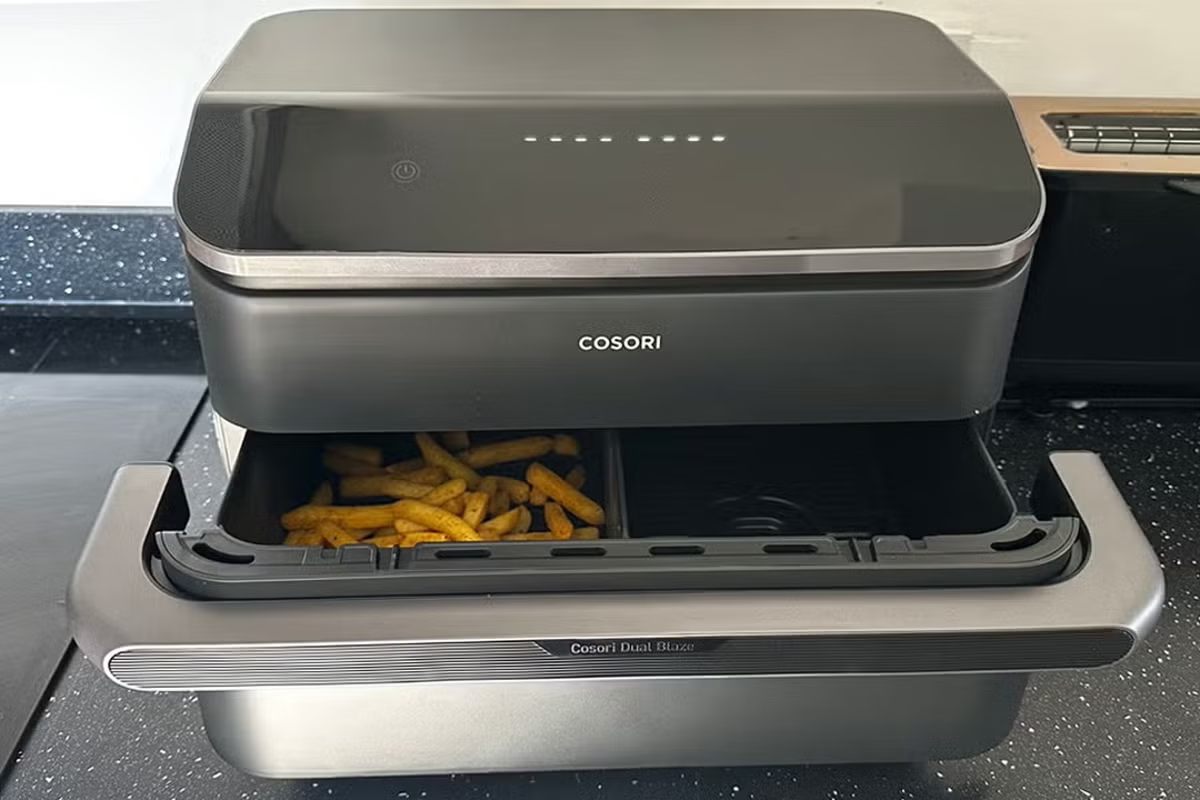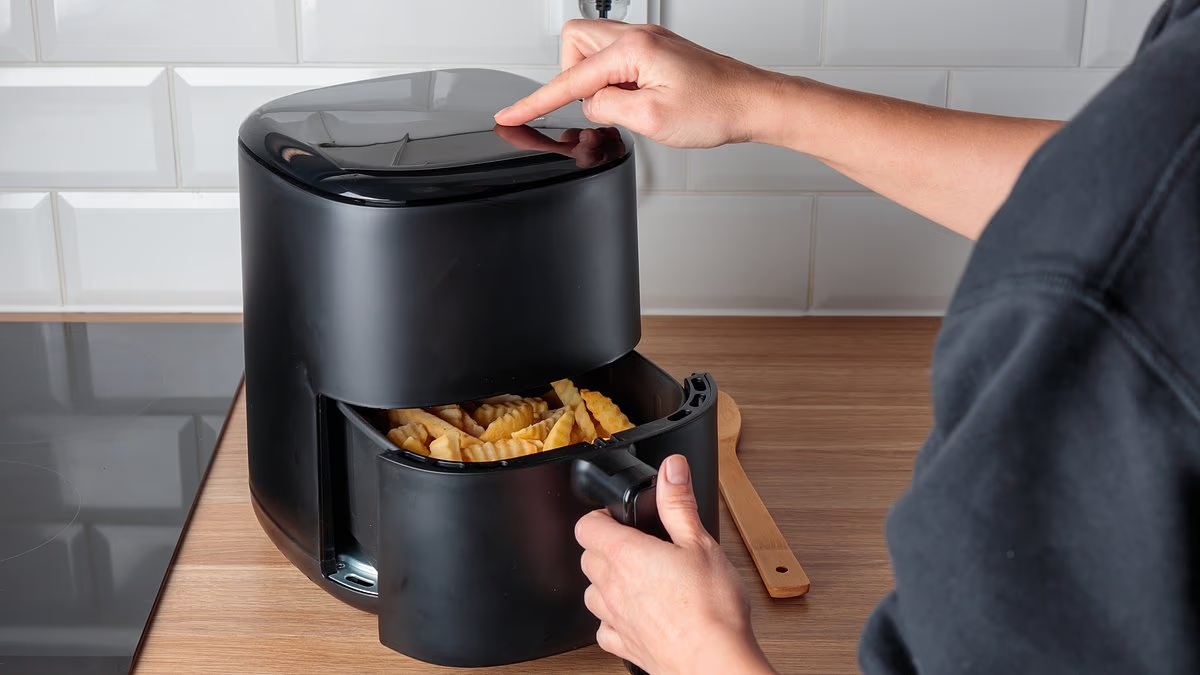
Your air fryer might be the most useful gadget in the kitchen, but experts warn that it might be getting up to a lot more than cooking your chips.The Information Commissioner's Office (ICO) cautions that smart devices such as toasters and air fryers could be harvesting your personal information.With 97 per cent of Brits admitting to owning at least one, experts say that these data–hungry devices collect far more information than they need.Studies have revealed that some internet–connected air fryers request to know the customer's exact location and even record audio through their phones.Research conducted by Which? has previously found that some of this data is sent to servers in China, without the manufacturer providing a clear explanation as to why.However, your flashy smart TV could be the worst culprit of all, harvesting data on what you watch and when you watch it.Found in 70 per cent of UK households, the ICO warns that smart TVs hoover up data to target you and your family with personalised ads.William Malcolm, ICO Executive Director for Regulatory Risk, says: 'Smart devices collect some of the most sensitive data about our lives, from our health to our daily routines and family life.' The Information Commissioner's Office (ICO) cautions that smart devices, such as toasters and air fryers, could be harvesting your personal informationThis warning comes as the ICO publishes its new guidance for smart device makers and developers, setting the rules for how customers' data should be treated.The ICO confirms that some data can be collected for legitimate purposes, such as learning the users' preferences.However, it now says that smart products should only collect the data that they actually need, be transparent about how it is used, and give people control over that information.That will be good news for the millions of Britons who admit to being baffled by their smart devices' data harvesting habits.The ICO's survey of over 2,000 UK adults found that a third of people said they don't feel confident that they understand how their devices collect and use data.Likewise, three–quarters of those surveyed said they would be surprised to learn that a smart toaster or toothbrush is gathering their personal data.40 per cent of Brits say that they have concerns about data collection, while 15 per cent actively avoid the tech for this reason.However, this hasn't stopped Brits from filling their homes with these nosy devices. A Which? investigation found that smart air fryers, such as the Aigostar air fryer, request to know their users' exact locations and to record audio using their phone microphone Five tips to help prevent your smart devices from spying on you Do your research before you buy: Check what data a device collects before you purchase it. Ask yourself whether you're comfortable with the information it wants to access.Take control of your permissions: During set–up, use the privacy controls to limit what your device can access. If a permission seems unreasonable, don't agree to it.Secure your device: Set a strong, unique password and enable two–step verification where possible to protect against unauthorised access.Stay on top of updates: Install software updates regularly – security patches help protect your data from new threats.Wipe your data before you part with a device: If you're selling or disposing of a smart product, factory reset it first to remove your personal information.Source: Information Commissioner's Office Almost half of UK consumers say they are willing to buy a smart device for the benefits that its data collection brings.Mr Malcolm says: 'They are designed to make our lives easier, but this should never come at the cost of our privacy.'Our findings suggest consumers are caught between convenience and concern – wanting to embrace the benefits of smart devices but not fully trusting or understanding how their data is being used.'This comes after previous studies revealed just how much data many of these smart devices really collect.A Which? investigation revealed that three products – Aigostar, Xiaomi Mi Smart, and Cosori CAF–LI401S – knew their customers' precise location and wanted permission to record audio on the user's phone.The Xiaomi app linked to its air fryer connected to trackers from Facebook, Pangle (the ad network of TikTok for Business), and Chinese tech giant Tencent (depending on the location of the user), while the Aigostar air fryer wanted to know the user's gender and date of birth when setting up an account.Meanwhile, both the Aigostar and Xiaomi air fryers sent personal data to servers in China – although this was flagged in the privacy notice.Meanwhile, several smart speakers are 'stuffed' with trackers – including for Facebook and Google. The ICO is particularly concerned by smart TVs, such as the Hisense 40A4KTUK (pictured), which gather data about viewers' daily habits that can be used to target them with adverts Which? rated popular smart devices across six categories and gave each a privacy score, with some air fryers and smart speakers revealed to be full of trackers Andrew Laughlin, Which? Tech Expert said: 'From air fryers tracking our location to smart washing machines demanding our date of birth, past Which? investigations have repeatedly exposed how smart devices harvest personal data far beyond what is necessary or acceptable.'It's encouraging to see the regulator's final guidance place a greater emphasis on limiting unnecessary data collection, improving transparency and giving people more control over their information.'The ICO also says that it has particular concerns about the amount of sensitive personal data being collected by smart TVs.These devices gather lots of data to build up a comprehensive picture of your viewing habits.While this data can be used to recommend shows or movies you might love, it can also be used to target you with personalised advertising.The ICO says that this will still be allowed, but that TV manufacturers will need to get the users' consent before going ahead.The regulator will be speaking with TV makers later this year to assess whether they are complying with the law and offering users 'meaningful transparency and genuine consent'.Mr Laughlin says: 'It's positive that the ICO will take a closer look at smart TVs. Companies that ignore the rules must face consequences. Households shouldn't have to trade away their privacy just to use everyday technology.' The most common air fryer fails and how to fix them – from dry chicken to undercooked chips Since Oprah Winfrey named it one of her favorite kitchen appliances back in 2013, the air fryer has surged in popularity, and is now a staple feature in many people's kitchens.The appliance uses hot air rather than hot oil to cook foods, offering a quick and healthy alternative to deep–fat fryers.However, after purchasing an air fryer, many budding chefs have learned the hard way that there's a small learning curve to mastering the appliance.Thankfully, help is at hand, as Which? has revealed the most common air fryer fails – as well as how to fix them.Speaking to the Daily Mail, Emily Seymour, Which? Energy Editor, said: 'Air fryers are generally easy to use, but it is possible for things to go badly wrong. If you overfill your machine or don't clean it properly you could end up with undercooked chicken and chips or a kitchen full of smoke.' After purchasing an air fryer, many budding chefs have learned the hard way that there's a small learning curve to mastering the appliance
Air fryer spying on you? Experts reveal how much data gadgets harvest
Your air fryer might be the most useful gadget in the kitchen, but experts warn that it might be getting up to a lot more than cooking your chips.
1,219 words~6 min read