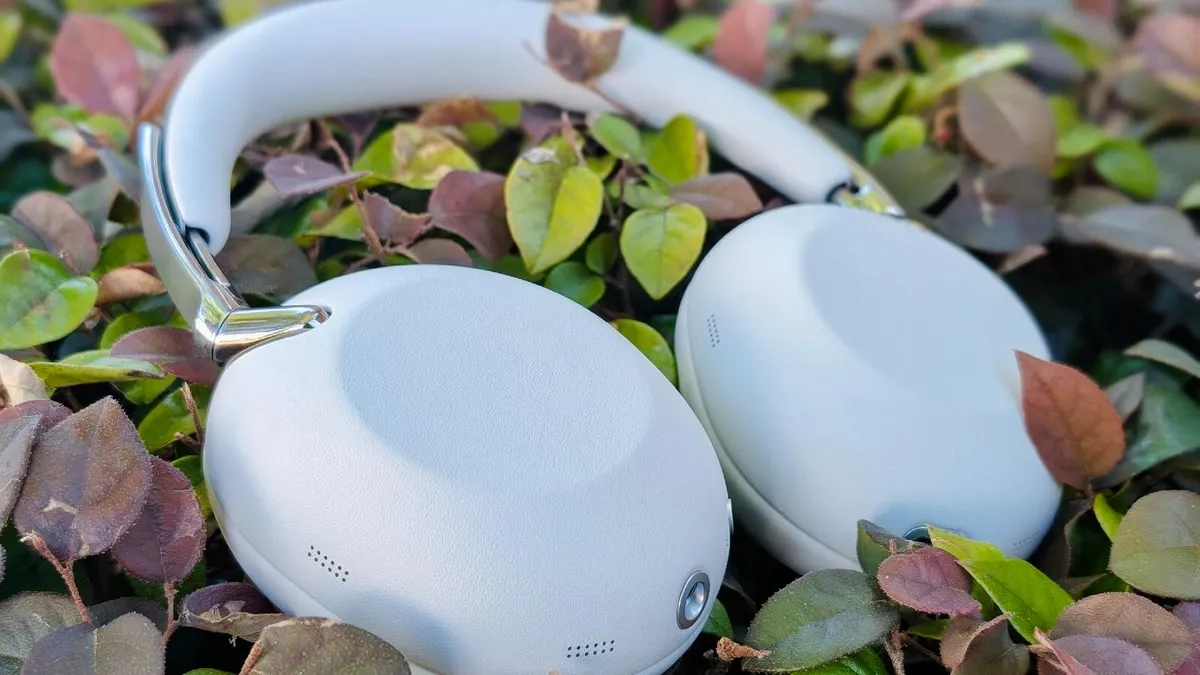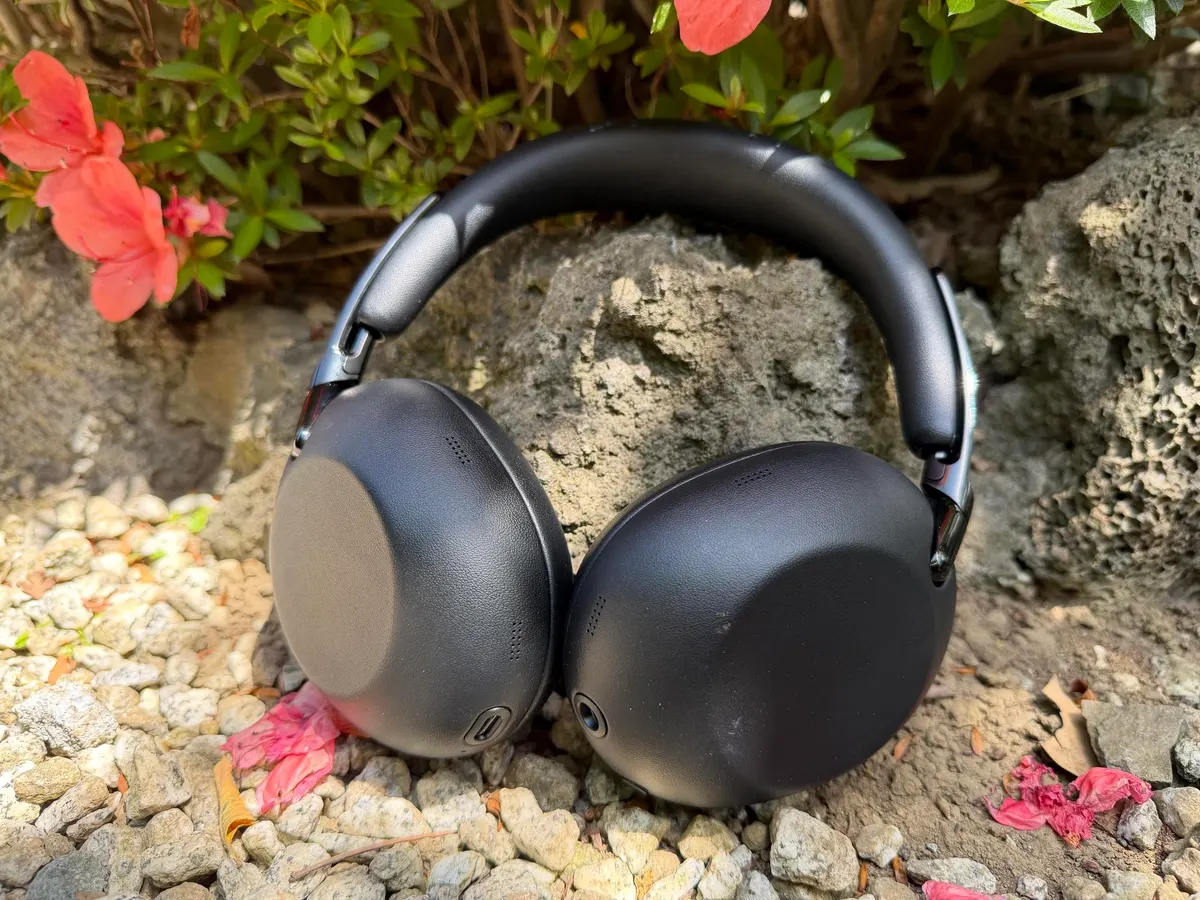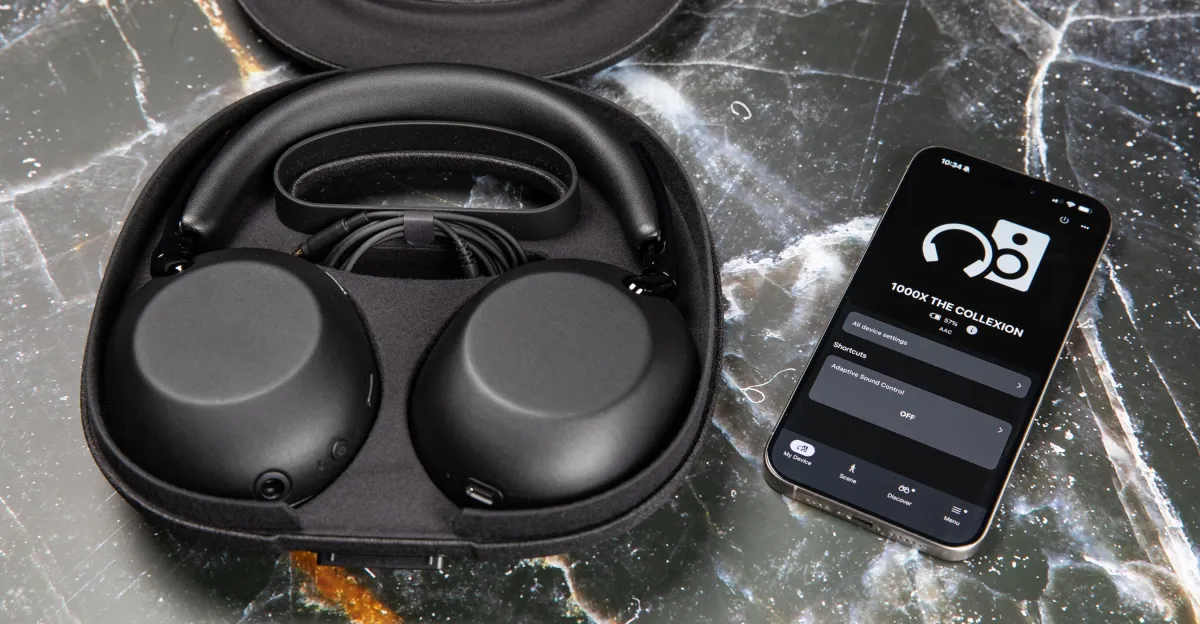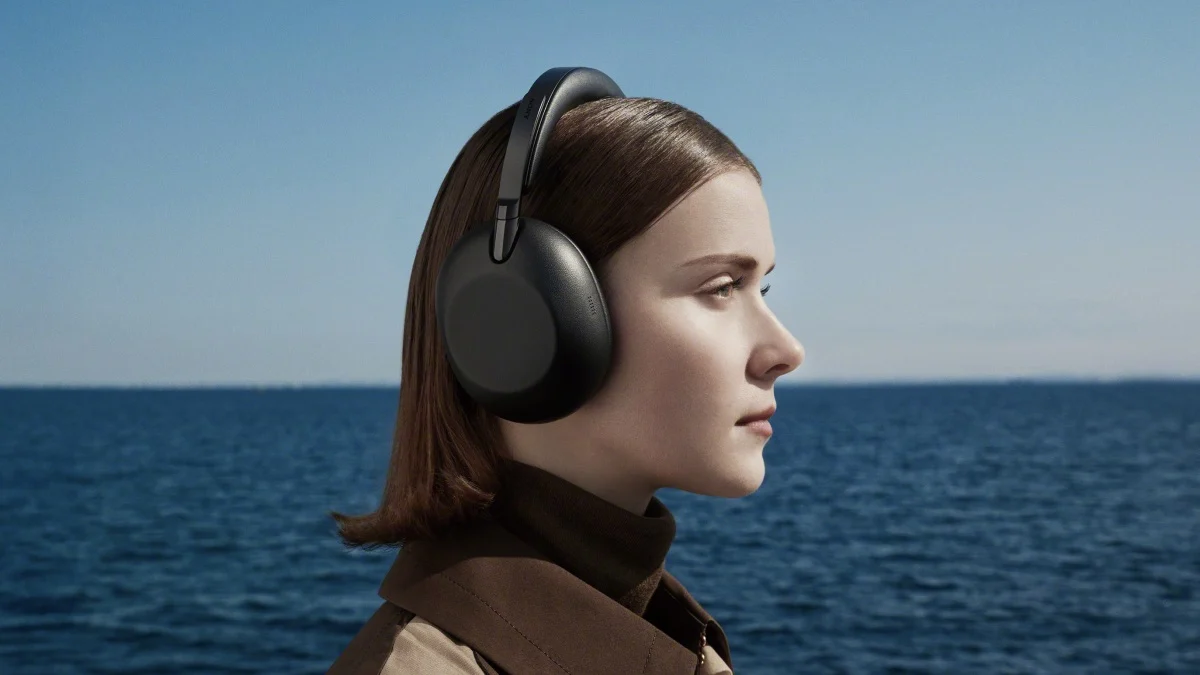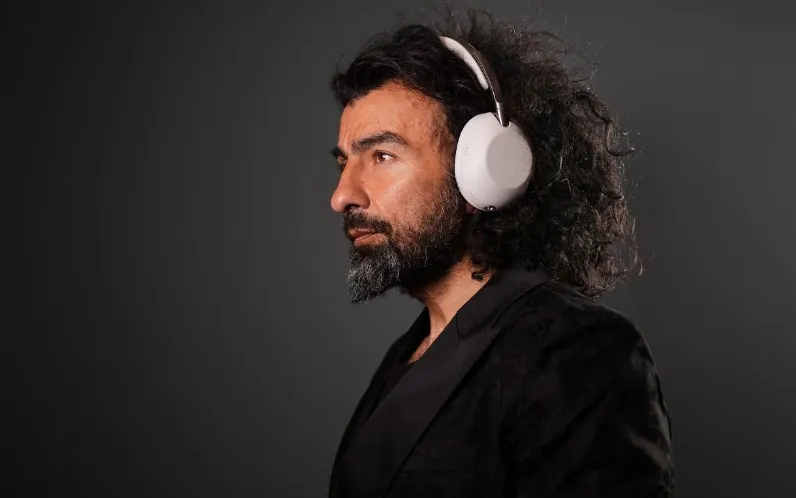
In the heart of Tokyo sits a century-old house that’s seemingly frozen in time. Tatami mats cover the floors, paper shoji screens filter the afternoon light and a peaceful garden filled with birdsong sits just beyond the veranda.Sitting on the floor, a model glides towards me, delicately placing a tray at my feet. But I'm not being served matcha and wagashi. Resting on the tray is Sony's latest pair of wireless headphones: the 1000X the collexion. With hand-polished metal, soft faux leather and a design inspired more by Bang & Olufsen than Sony's own XM-series, they're the company's most luxurious headphones yet, representing a whole new direction for the company. As it takes on a new market, Sony is betting that comfort, craftsmanship and sound quality matter just as much as silencing the world around you.Read more: Sony 1000X the collexion, reviewed They aren't the only headphones in the ancient house. Lined up around me is every generation of headphones and earbuds released under the 1000X banner, starting with the MDR-1000X, which launched in 2016. It's a visual timeline of audio innovation inside a house that predates them all by nearly a century.Inside this traditional Japanese house sits a line of very modern tech (Sony)This year marks the 10th anniversary of the 1000X series, an audio range that helped turn noise cancellation into an arm wrestle among the industry's biggest names. But Sony’s been working on building its best headphones for much longer than that. According to Tyler Ishida, president of the consumer business group at Sony Electronics, Sony’s 1000X headphones’ origins actually stretch back more than four decades, to a simple request from Sony co-founder Masaru Ibuka: “I want to listen to music outside, and I want to bring it with me when I go on a business trip.”Back then, you couldn't just pipe music into your ears with a pair of tiny wireless earbuds. All we had were home hi-fi systems, boomboxes and unwieldy cassette players. The desire to take music with him wherever he went ultimately led to Sony’s creation of the Walkman, completely changing how people consumed music. Sending his engineering team on what they must’ve thought was an impossible mission, they eventually figured it out. Within four months, the Walkman was built. “That experience changed the entire way consumers listen to music today,” Ishida says. “We now listen to music everywhere we go.”The headphones are presented to me on a tray (Sony)But once music became portable, what good was listening to your favourite album if it was going to be drowned out by the roar of an aircraft cabin? Sony's next mission was noise cancellation. The company began developing the technology in the early 1990s, starting with the MDR-5700 aviation headset in 1992, followed by its first consumer model, the MDR-NC20, in 1995, and later the MDR-NC500D – its first digital noise-cancelling headphones – in 2008.By the time the MDR-1000X had launched in 2016, Sony had already spent decades iterating on the technology. “We want people to enjoy music anytime, anywhere and in the best possible way," Ishida explains. "Back in 2016, the engineering team had a simple aspiration. We wanted to build the best noise-cancelling experience possible, whenever customers travelled, whether on a plane or elsewhere. That was the evolution that started the 1000X series.” Today, active noise cancellation is absolutely everywhere. You can get active noise cancellation on a cheap budget pair of earbuds; on a pair of premium over-ear cans; on almost every bit of audio gear in between. Ishida tells me that, with the first-generation MDR-1000X, the company focused heavily on noise cancellation. That focus helped establish the 1000X series as one of the most successful headphone line-ups of the past decade. Inside is a visual timeline of every 1000X headphones (Sony)But customers’ priorities have begun to change. “In the first generations, we were looking to focus on the noise-cancelling, and that was accomplished in a way with the Mark 1 and Mark 2,” reflects Ishida. “When we launched the Mark 3, with some design differences and a pop of colour, they started to resonate as a design piece.” Looking at all the headphones surrounding me, it's easy to see what he means. The earliest models feel utilitarian in their functionality, built first and foremost to block out noise, rather than to look pretty or feel comfortable. But as I walk towards the WH-1000XM4 and beyond, the headphones start to become classier, the materials more premium.The 1000X the collexion feels like the culmination of that, which raises an interesting question. After 10 years and with ANC now everywhere, has Sony pushed noise cancellation as far as it can go with the WH-1000XM6? Asked whether active noise cancellation has reached a point of maturity, Ishida isn't convinced. “I wouldn't say that it's reached the roof," he says. “It's the balance of how much pressure you will feel and how much noise cancelling you get.” It's an interesting point. The tighter a pair of headphones clamp to your head, the better the passive seal and, often, the stronger the noise cancellation. But comfort can suffer as a result. "The Mark 6 is great, and it obviously has the best noise cancelling," Ishida says. "However, the pressure is also sometimes a little bit tight, depending on how long you use it."They're Sony's most luxurious headphones yet (Sony)It’s a clever pivot for Sony. There’s no point chasing marginal gains in ANC performance when it’s already so good. While the collexion headphones still boast ANC, Sony is prioritising comfort, craftsmanship and sound quality over anything else. "The collection is different from the usual line," Ishida points out, adding that its customers have begun seeing the 1000X line as a lifestyle product, not just a device for listening to your tunes on the move, or a pair of noise-cancelling cans. For them, it’s not just about noise cancellation. "Comfort is very important. Because when you're relaxing on the plane, you need to feel comfortable the entire time,” he adds. “The leather, the cups, all the pressures and so on, and the balance of the noise cancelling – that's where we think those things have to be combined, not only just one thing standing out."It’s something that became crystal clear the minute I unboxed the headphones. Compared with the WH-1000XM6, the collexion feels like a design-centric pair of headphones. The hand-polished metal frame looks sleeker, the slimmer ear cups look more premium, and the softer faux leather padding is just so utterly comfortable on my head.Having spent more than a month testing them, including on a 14-hour return flight to the UK from Japan, these are the best headphones Sony’s made. The active noise cancellation is still brilliant, but what was most noticeable was the sheer comfort. Not to mention the wider soundstage, range of new 360 upmix modes and slicker design, helping them stand out against the WH-1000XM6.While Sony isn't replacing the WH-1000XM6 with the collexion, it is building a new kind of headphone for a different kind of listener. When the company launched the MDR-1000X a decade ago, it wanted to win the noise-cancelling arms race. And now resting on a tray in front of me in a traditional Japanese house is what comes next when the company has already won it.For more, we’ve reviewed the best wireless headphones
Inside Sony’s 10-year quest to build the perfect headphones
Sony's 1000X headphones cemented the company as a leader in noise-cancelling technology. But as active noise cancellation becomes commonplace, Alex Lee travelled to Tokyo to discover why Sony is heading in a new direction with the 1000X the collexion
1,223 words~6 min read