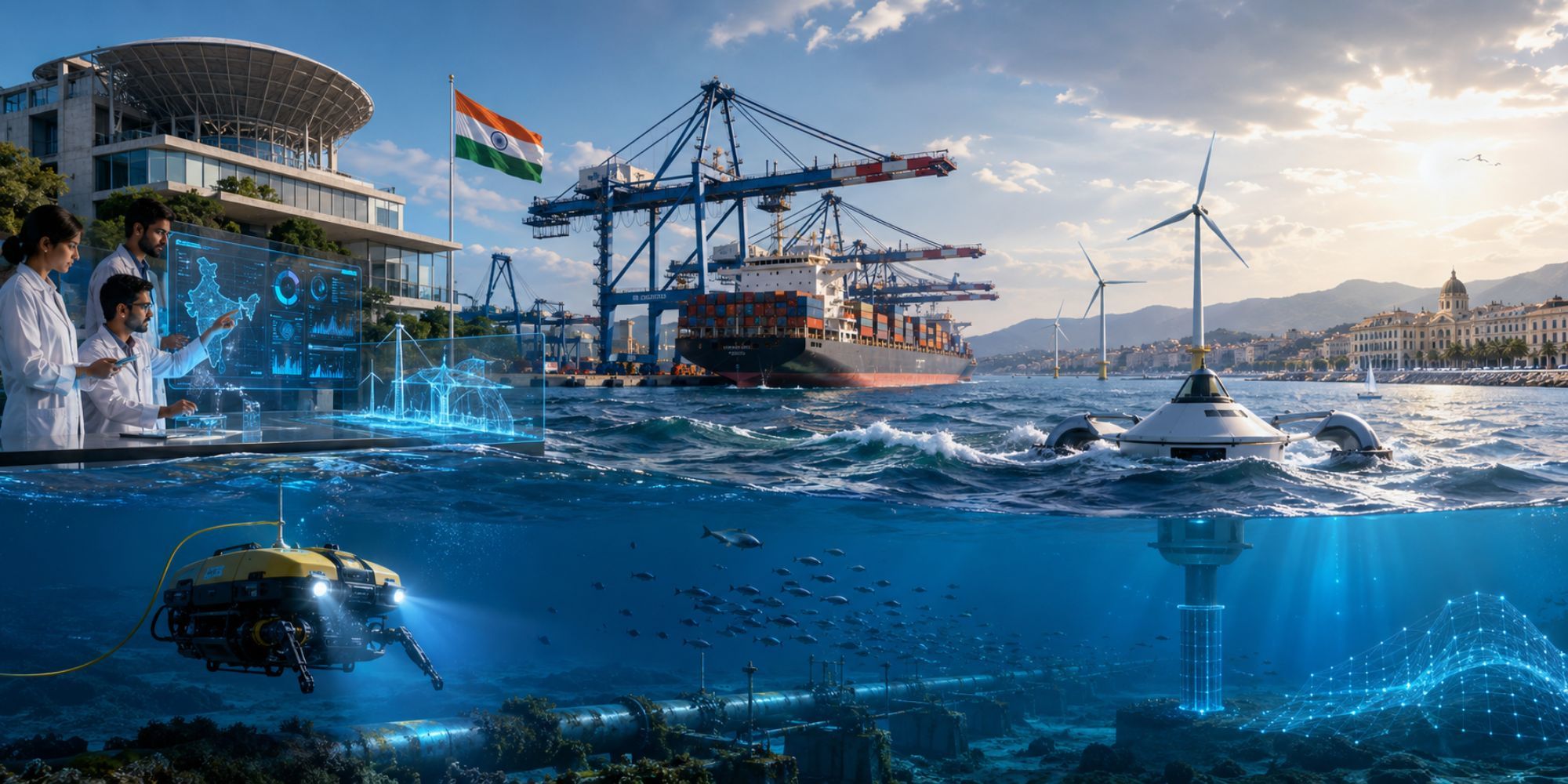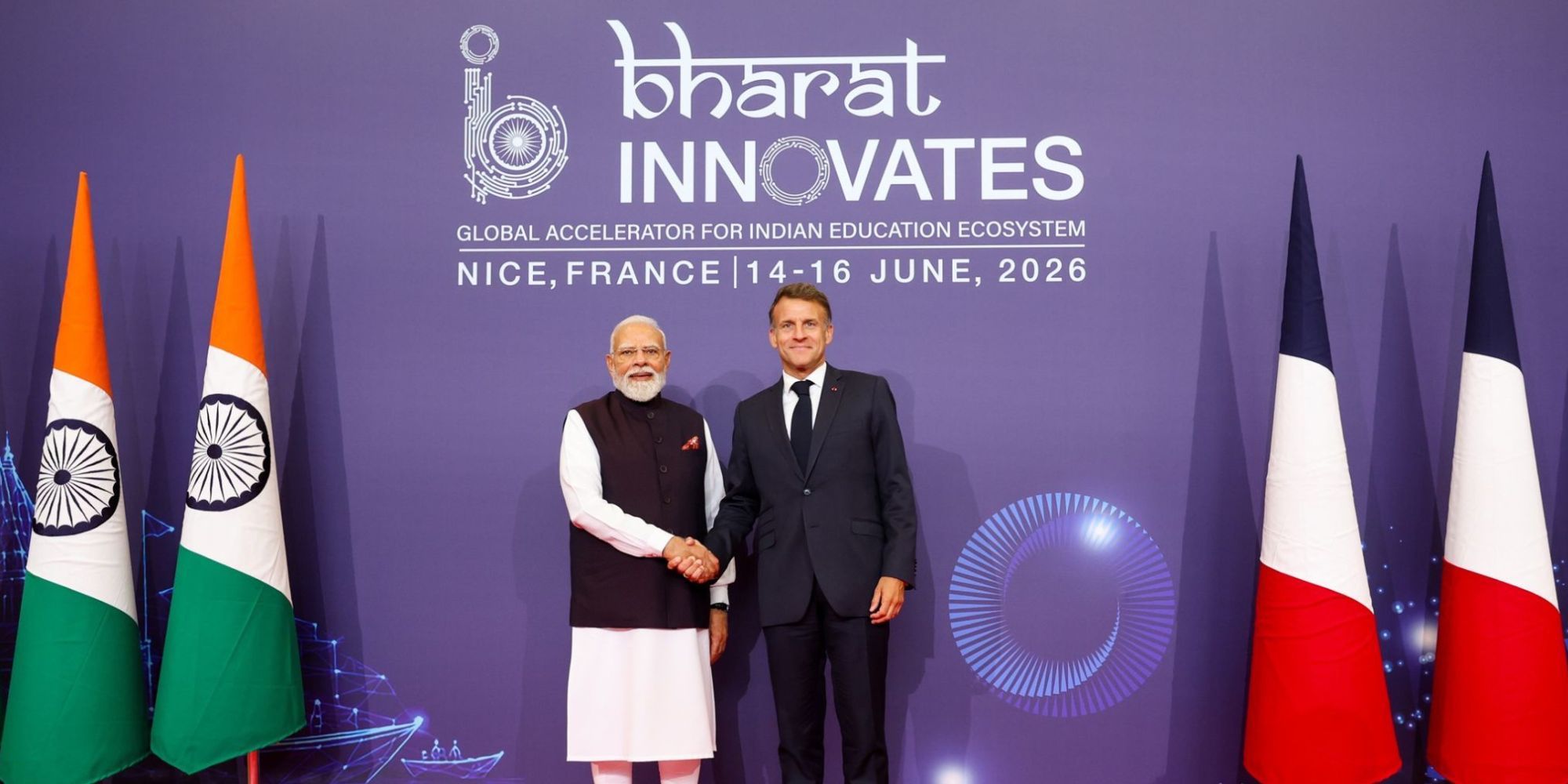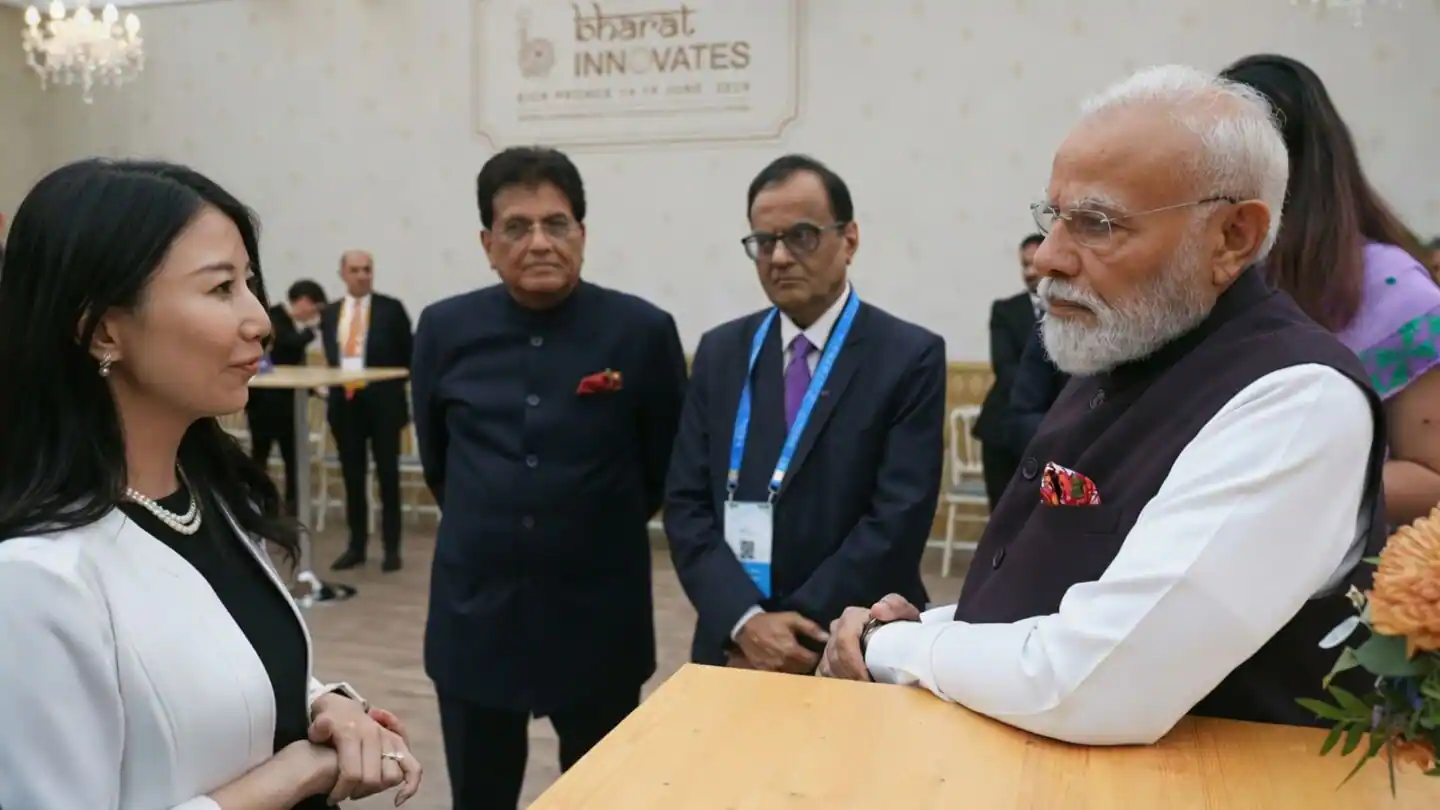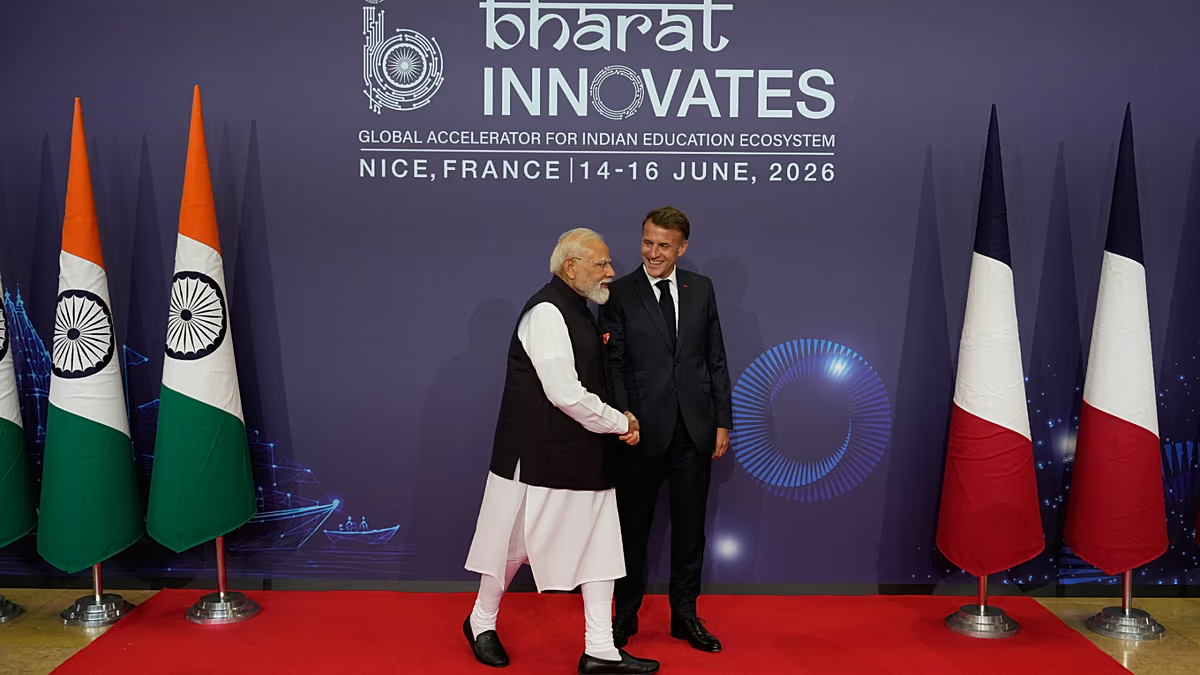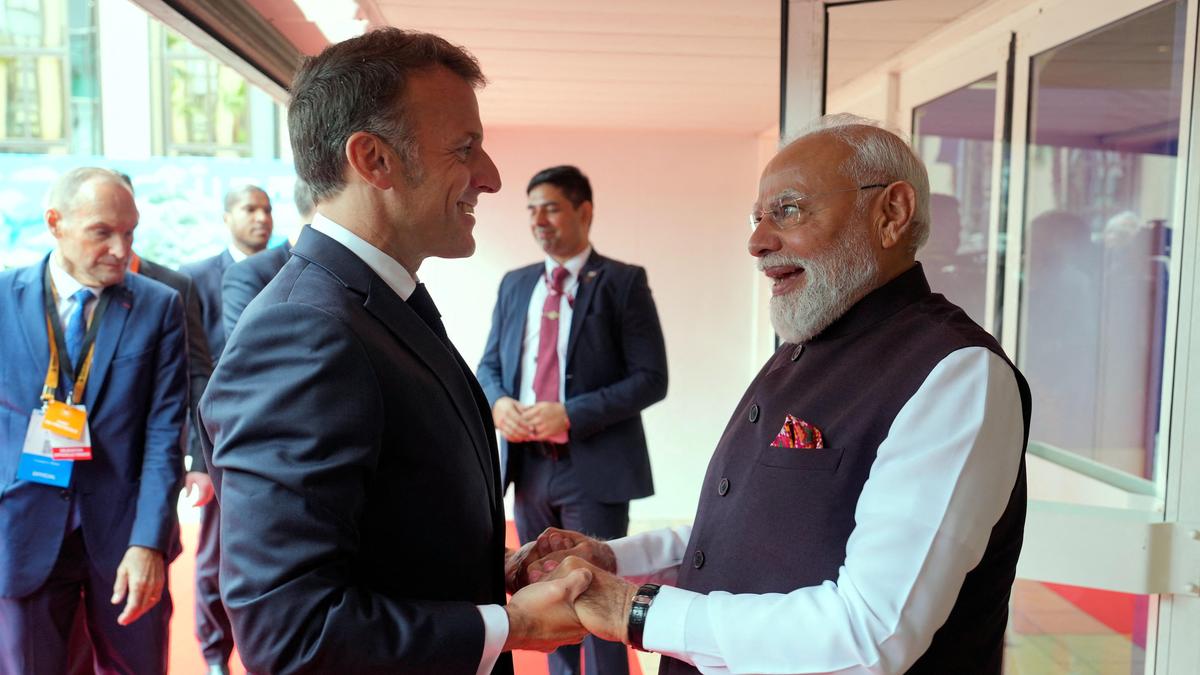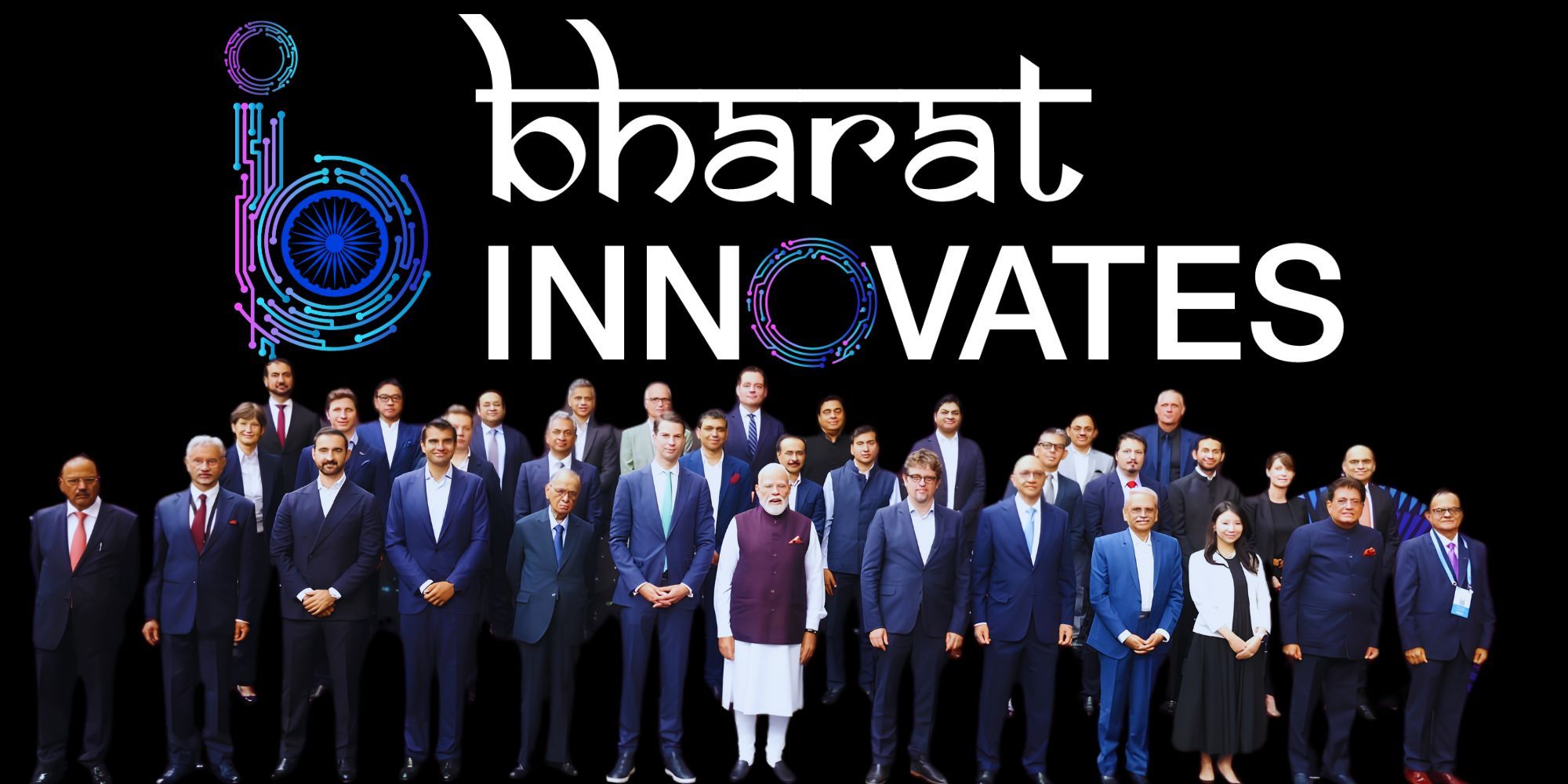
In June 2026, India will take its top 120 deep-tech ventures to Nice, France, for Bharat Innovates 2026, an initiative of the Ministry of Education of India. This initiative, announced by Prime Minister Narendra Modi in the presence of President Macron, is more than a showcase. It is a declaration. India is no longer just a technology market. It is a technology builder.And among the thirteen frontier themes India carries to Nice, one stands out for its sheer scale of opportunity: the Blue Economy. IIT Madras is proud to be the nodal institution for this theme.India has an 11,099-kilometre coastline, 1,298 islands, and an Exclusive Economic Zone of 2.3 million square kilometres. Nearly 95 per cent by volume of the country’s trade moves by sea. Millions of coastal families depend on the ocean for their livelihoods. India’s ocean economy holds extraordinary promise. The Government of India has recognised this with clarity and purpose and is now translating that recognition into bold, coordinated policy.Government Leadership: From Vision to PolicyThe Sagarmala Programme is modernising 13 major ports and over 200 minor ports, with 839 identified projects worth about ₹5.8 lakh crore, linking ports to the hinterland and enabling port-led industrialisation.The Deep Ocean Mission is funding scientists to explore the deep sea using the indigenous Matsya submersible, unlocking strategic resources and cutting-edge ocean science.The Pradhan Mantri Matsya Sampada Yojana, with over ₹20,050 crore in approved projects, is transforming fisheries and coastal livelihoods. The PM Gati Shakti framework ties ports, railways, roads, and logistics into a single digital map.And the Harit Sagar Guidelines are steering India’s ports toward sustainability. The Union Budget 2026–27 proposed the highest-ever annual budgetary support of ₹2,761.80 crore for the fisheries sector.Offshore wind targets of 30 GW by 2030 are being pursued along the Gujarat and Tamil Nadu coasts. India is now openly talking about a $100 billion blue economy.IIT Madras: Research at the FrontierIIT Madras has been building toward this moment for nearly five decades. Our Department of Ocean Engineering, celebrating its Golden Jubilee this year, is home to Asia’s largest shallow-wave basin research facility and seven hydrodynamic test facilities under one roof. Researchers here work on ship hydrodynamics, offshore structures, marine renewable energy, coastal engineering, underwater acoustics, autonomous marine vehicles and more. This is the infrastructure India needs to compete in the global ocean economy.The National Technology Centre for Ports, Waterways and Coasts (NTCPWC), hosted at IIT Madras and funded by the Ministry of Ports, Shipping and Waterways, exemplifies research with direct national impact. NTCPWC has completed over 100 projects worth ₹200 crore for major ports and public sector undertakings. In November 2025, it deployed India’s first fully indigenous Vessel Traffic Management System at the Vizhinjam International Seaport, inaugurated by the Prime Minister. The estimated savings in foreign exchange through indigenous technology over the past five years alone stand at approximately ₹1,500 crore.Our ME2ME Centre of Excellence, funded under the Government’s Institute of Eminence initiative, is building marine autonomous vehicles, testing wave energy devices off the Tamil Nadu coast, and developing AI-driven tools for port operations and ocean monitoring.Start-ups: Where Research Becomes RealityResearch that stays in the laboratory does not build an economy. At IIT Madras, we have built a culture where research knowledge walks out as companies. Our Incubation Cell has nurtured 567 startups, incubating 112 new ventures in FY 2025-26 alone across AI, robotics, climate, and ocean technologies.Planys Technologies, founded in 2015 by IIT Madras alumni and faculty, builds Remotely Operated Vehicles and autonomous underwater systems that inspect submerged infrastructure such as bridges, dams, ports, and offshore rigs, using AI diagnostics. It holds 21 granted patents, has logged over 25,000 hours of operational deployment across 500 sites in more than 10 countries, and has raised over ₹100 crore in funding. It is India’s first manufacturer of underwater ROVs, and it started in an IIT Madras laboratory. Another Bharat Innovates participant, Zerocircle, is a Pune-based startup using seaweed to create biodegradable packaging, linking marine biomass with solutions to plastic pollution.Beyond the start-ups participating in Bharat Innovates 2026 of the Ministry of Education of India, IIT Madras is also strengthening the wider blue-economy entrepreneurship pipeline.Virya Paramita Energy (VPE), a Visakhapatnam-based start-up, co-developed the Sindhuja-I ocean wave energy converter with IIT Madras researchers under a formal joint development agreement. India’s coastline has an estimated ocean-energy potential of 54 GW, including about 40 GW from wave energy.Sindhuja-I is a first, tangible step toward harnessing it. IIT Madras has also partnered with Cochin Shipyard Limited, backed by a ₹50 crore corpus, to build a dedicated funding pipeline and incubation support for maritime startups.Building the Partnership with FranceFrance is a natural partner for India in the Blue Economy. France has one of the world’s largest Exclusive Economic Zones, deep expertise in offshore energy and ocean science, and institutions, from IFREMER to INRIA, that complement India’s strengths. The India-France Year of Innovation is the right moment to move from goodwill to collaboration. Joint research in marine renewable energy, offshore technology, and coastal resilience is an obvious starting point. Co-development of deep-sea technologies, where both nations have ambition, but the problems are shared, is another.And for Indian start-ups like those we are bringing to Nice, France offers access to Europe’s innovation markets, funding networks, and industrial partners. We look forward to building, with France and the world, a blue economy worthy of our nations’ ambitions.The writer is the Director of IIT MadrasPublished on June 11, 2026
From the Ocean to the World: Bharat Innovates India’s Blue Economy moment
IIT Madras leads India's Blue Economy initiative, showcasing maritime innovation and fostering entrepreneurship for global collaboration at Bharat Innovates 2026.
902 words~4 min read