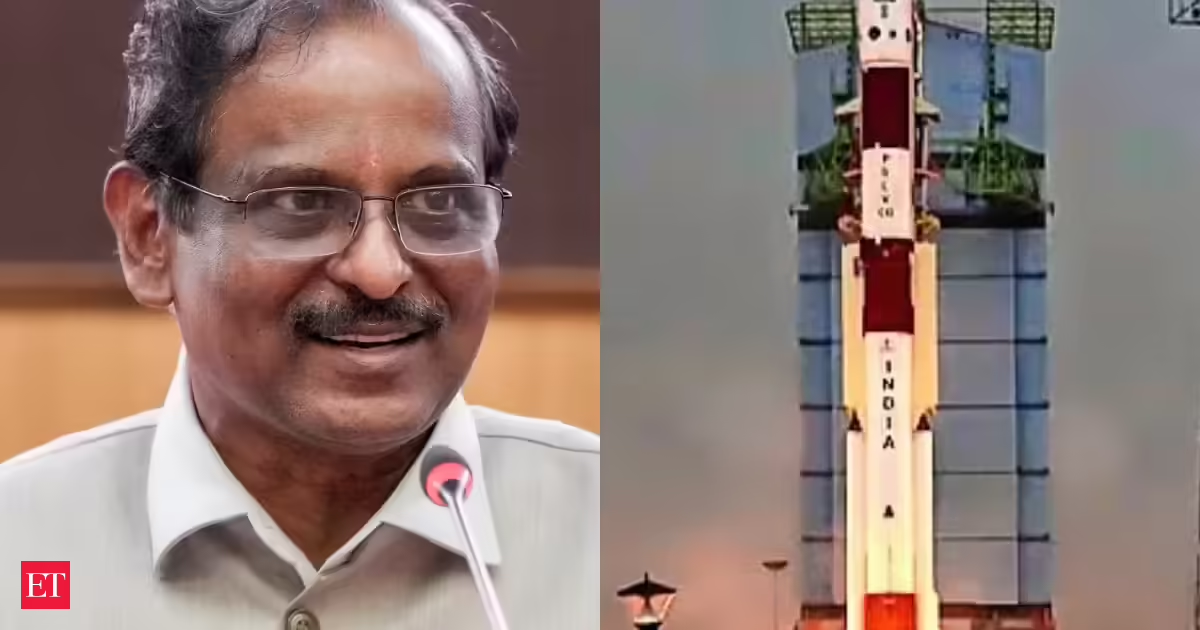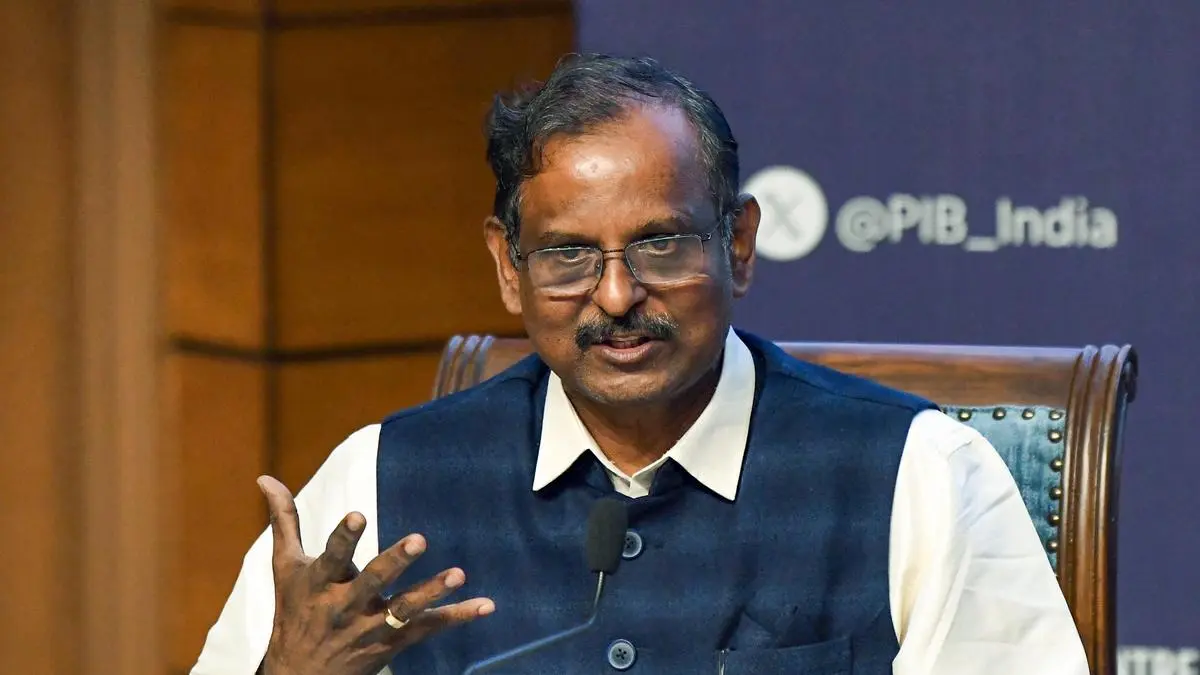
ISRO Chairman V Narayanan
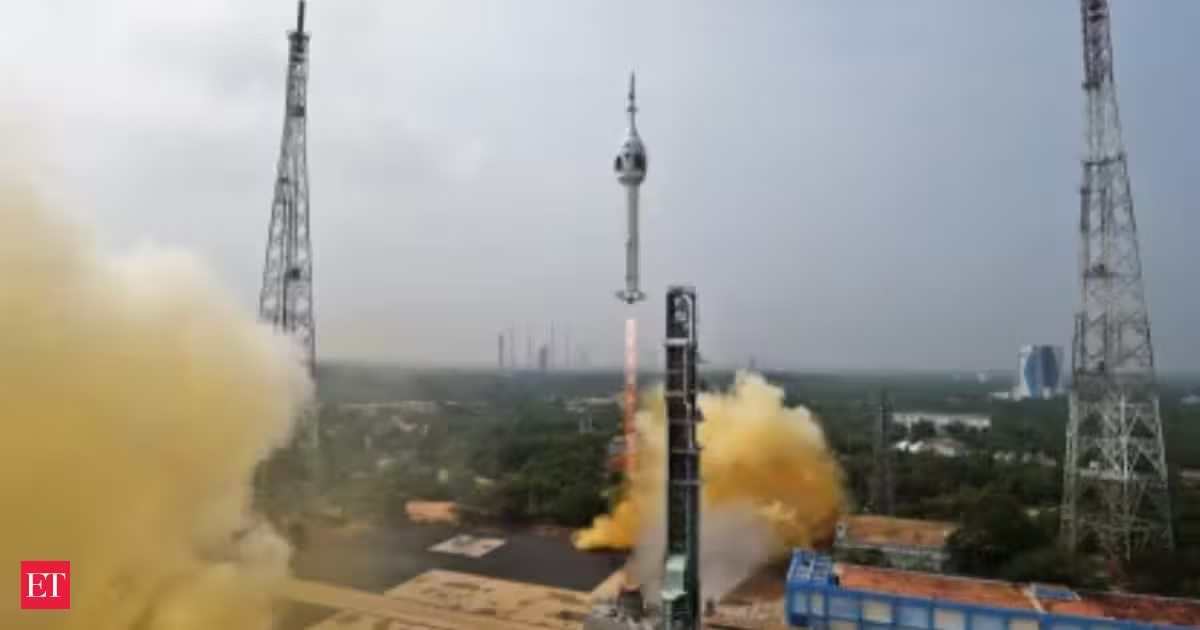
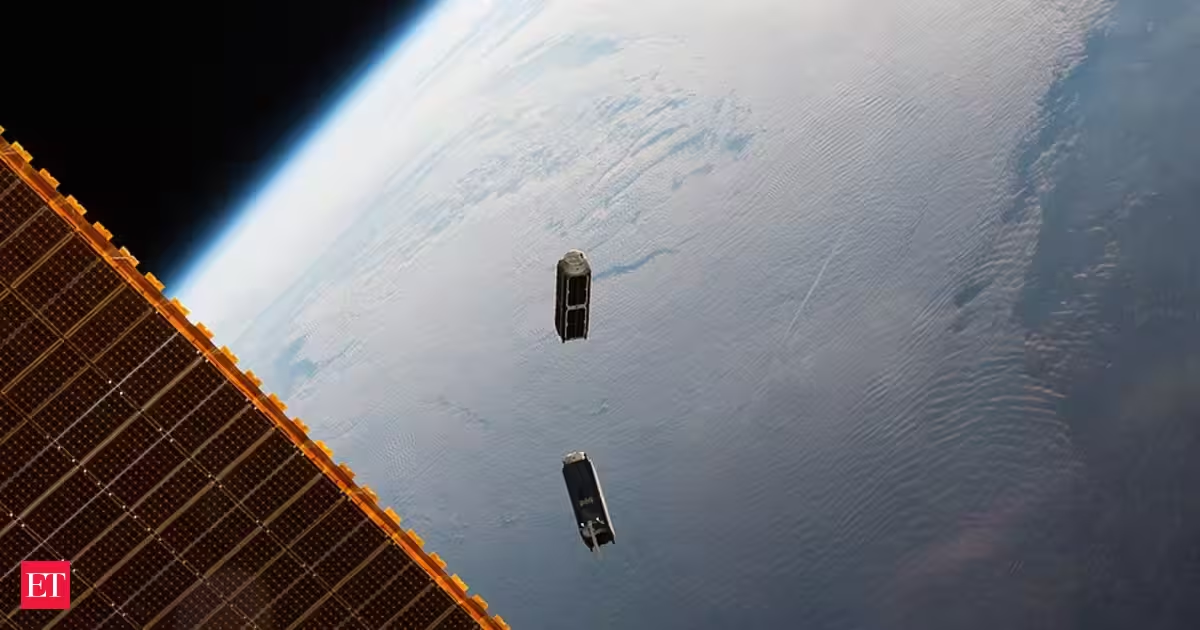
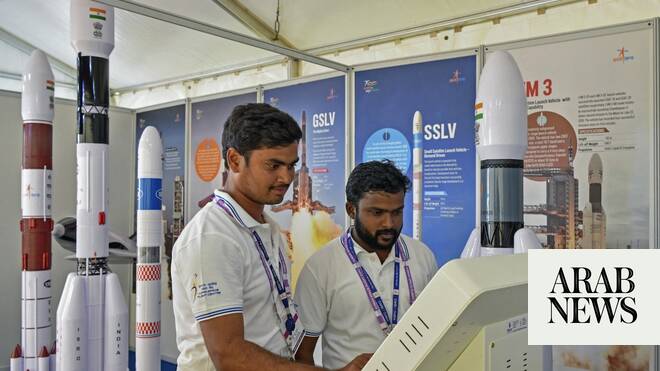
India will need to launch over 200 satellites in the next three years to meet growing national and commercial requirements, Indian Space Research Organisation (ISRO) Chairman V Narayanan said on Thursday, calling for deeper participation from private industry, start-ups and academia in the space sector.“Currently, we have 56 satellites in orbit. But we require 200-plus satellites in another three years for the country. ISRO alone cannot do this. The entire space ecosystem has to work towards that. Lot of opportunities are there,” Narayanan said at the 10th Industry Connect event organised by IN-SPACe in Ahmedabad.He said ISRO is increasingly positioning itself as an enabler for the broader ecosystem rather than working in isolation.“We are here to handhold and support the entire start-up ecosystem to contribute to the space sector of our country,” he said. Sectoral reformsNarayanan noted that India’s space start-up ecosystem has expanded significantly following sectoral reforms, with more than 400 start-ups now operating in the domain. He stressed that future growth will depend on coordinated efforts across ISRO, industry and research institutions.Highlighting long-term ambitions, the ISRO chief said India is also moving ahead with plans for an indigenous space station.“We are also building our own space station. You can see the model. It is a 52-tonne space station. India will have its own space station by 2035,” he said. Narayanan also outlined the evolution of India’s space programme — from early sounding rocket experiments to complex deep-space and commercial missions. He said satellites have become critical to communication, navigation, disaster management and strategic applications.Major milestonesHe highlighted major milestones including the Mars Orbiter Mission, Chandrayaan-1, Chandrayaan-2 and Chandrayaan-3, noting that India became the first country to successfully land near the lunar south pole with Chandrayaan-3. He also referred to the Aditya-L1 solar mission, which placed India among a select group of nations with dedicated solar observation capability. On commercial capabilities, he said India has transitioned into a global launch hub, including missions carrying large foreign payloads.“From that humble beginning, India progressed to a purely commercial launch of a 6,000 kg satellite for an American company using an Indian rocket,” he said. He added that India has conducted over 4,000 sounding rocket launches, while its satellite fleet has expanded from early experimental systems to advanced platforms used across communication, Earth observation and navigation. Narayanan said satellites now form the backbone of modern infrastructure, supporting services such as banking, telecom, disaster warning, education and healthcare delivery.On Thursday, IN-SPACe signed an agreement with the Government of Tamil Nadu for the development of a Common Technical Facility at the upcoming Space Vehicles Cluster at SIPCOT Allikulam, which is being set up with a focus on ‘manufacturing, testing and integration of launch vehicle systems’. The facility is intended for shared use by industries operating within the cluster, reinforcing a centre–state partnership model aimed at scaling India’s space manufacturing capabilities.The Ahmedabad event, held under the IN-SPACe framework, brought together industry leaders, policymakers and start-ups as India looks to significantly scale up its presence in the global space economy.Published on June 11, 2026