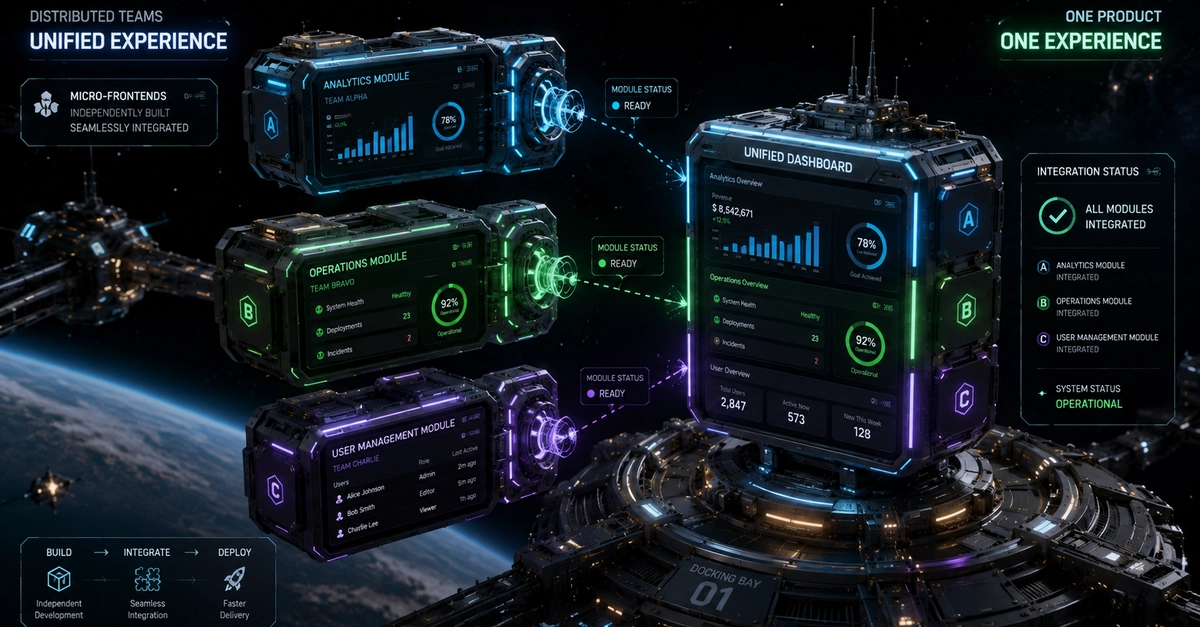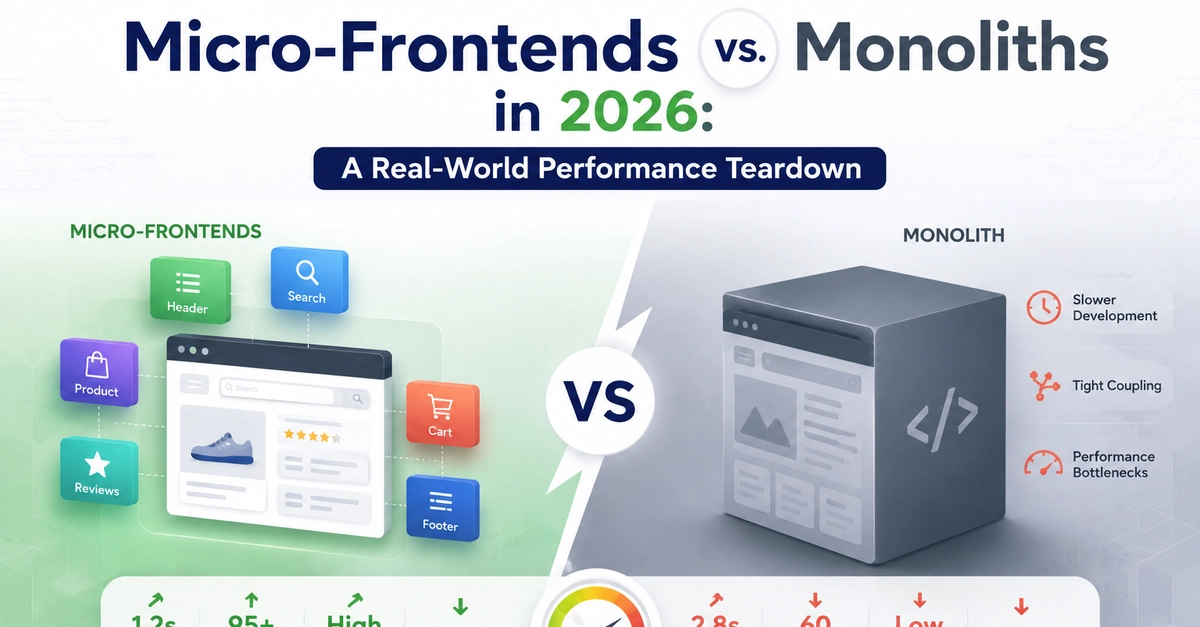
The architectural pendulum of frontend engineering has spent the last decade swinging violently. We watched the industry consolidate around massive monolithic Single Page Applications (SPAs), only to recoil at the weight of million-line codebases, agonizingly slow CI/CD pipelines, and organizational gridlock. The proposed antidote was Micro-Frontends (MFEs)—an architectural style where an application is sliced into decoupled, independently deployable modules that orchestrate seamlessly at runtime.
But architecture is never a free lunch. As we navigate 2026, the ecosystem has matured past the initial hype cycles of both paradigms. We are no longer guessing how micro-frontends scale; we have half a decade of production data from enterprise migrations. Furthermore, the underlying browser platform, infrastructure networks, and meta-frameworks have fundamentally transformed the performance calculus.
This real-world teardown pits Micro-Frontends against Modern Monoliths under the harsh light of 2026 metrics. We will dissect memory overhead, network payloads, Core Web Vitals impacts, and operational friction to answer the ultimate engineering question: Which architecture delivers the fastest, most reliable user experience today?