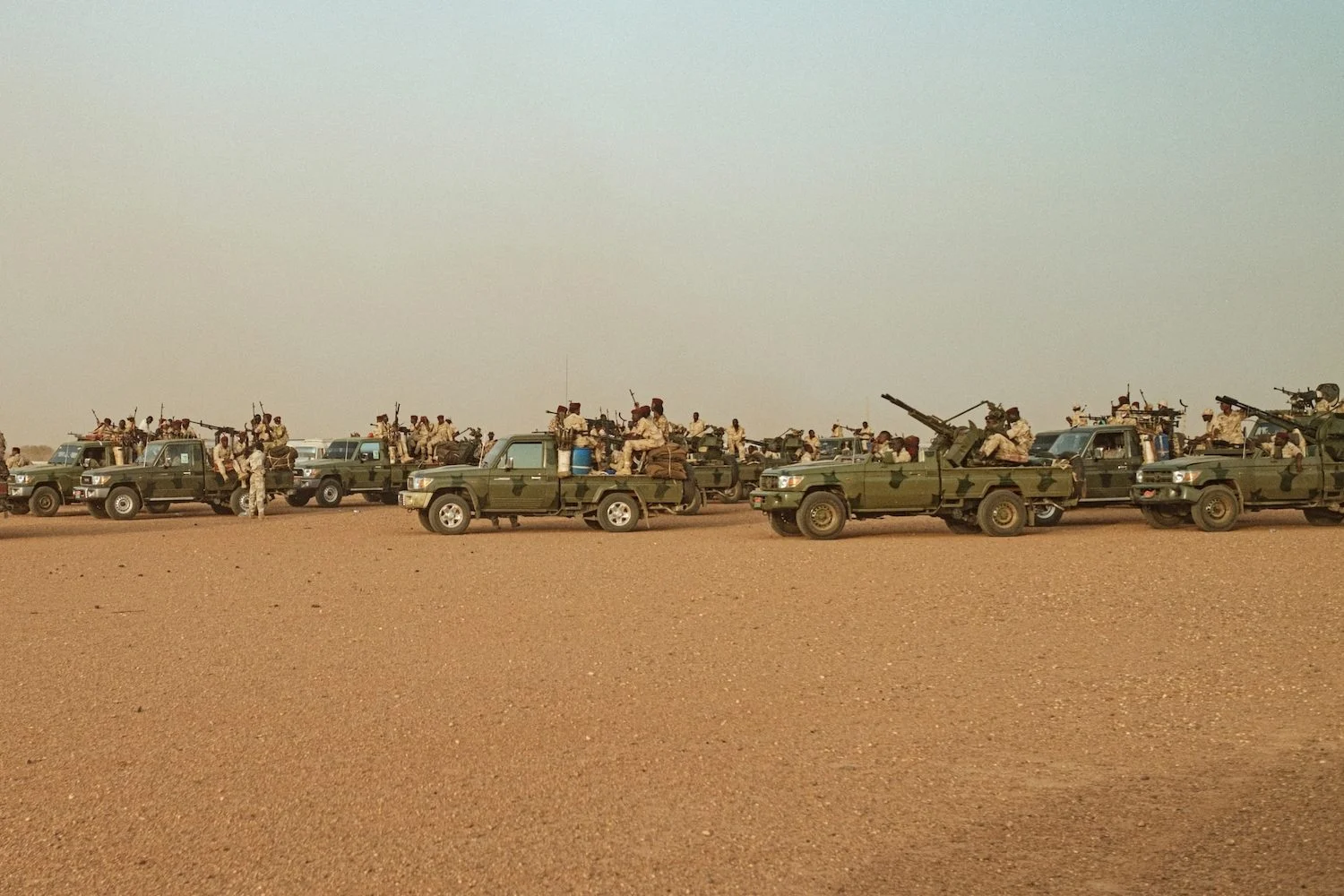
Sudan’s war enters its fourth year with no end in sight. Since April 2023, the conflict between the country’s army and the Rapid Support Forces (RSF) militia has displaced nearly 14 million people, including more than 4 million who have fled to other countries. International attention has waned even as the violence intensifies and the humanitarian catastrophe deepens. And international mediation efforts appear to be as stalemated as the fighting, and Sudan’s self-declared leaders cannot even agree on who should get a seat in any future political talks.
Meanwhile, the battlefield has few clear front lines. Territorial control across the central Kordofan region, rich in gold, agriculture, and gum arabic, flips between the Sudanese Armed Forces (SAF) and the RSF as both sides fight for control of the country’s economic heartland. From Kordofan, the RSF can threaten ground assaults on the capital, Khartoum, creating a major challenge for the army-led administration, which is trying to promote a return to normalcy.
The SAF, meanwhile, has ambitions of unifying the country, retaking Darfur in the west, and driving the RSF into the vast Sahelian hinterlands from where many of its fighters emerged. However, this could take years to achieve and worsen the already dire humanitarian circumstances for the very Darfuris they seek to liberate from RSF control.