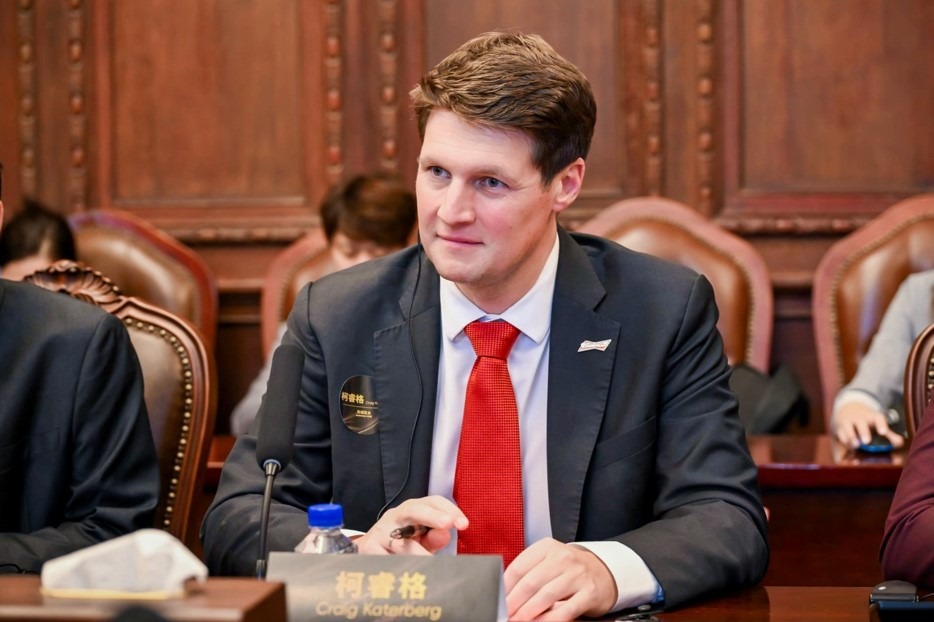
Craig Katerberg, chief legal and corporate affairs officer of Budweiser APAC. [Photo provided to chinadaily.com.cn]
As the country looks for new ways to stimulate domestic demand, the night economy is increasingly being seen as a promising source of consumption growth.
Shanghai, for example — which has ranked first in China's nighttime economy index for five consecutive years — is positioning its nightlife, entertainment districts, and public spaces not only as tools for boosting consumption, but also for extending economic activity beyond traditional business hours.
The strategy was a central theme at a gathering of international urban development experts, economists, officials, and business leaders in Shanghai this month. Their discussions highlighted a growing consensus that the nighttime economy is no longer viewed simply as an extension of retail and hospitality, but as part of a broader effort to reshape urban consumption patterns.
"The most successful cities do not view the night as a separate economy, but as an extension of urban life," Andreina Seijas, founder of Night Tank and academic lead for the World Economic Forum's 24-Hour Economy Initiative, said.