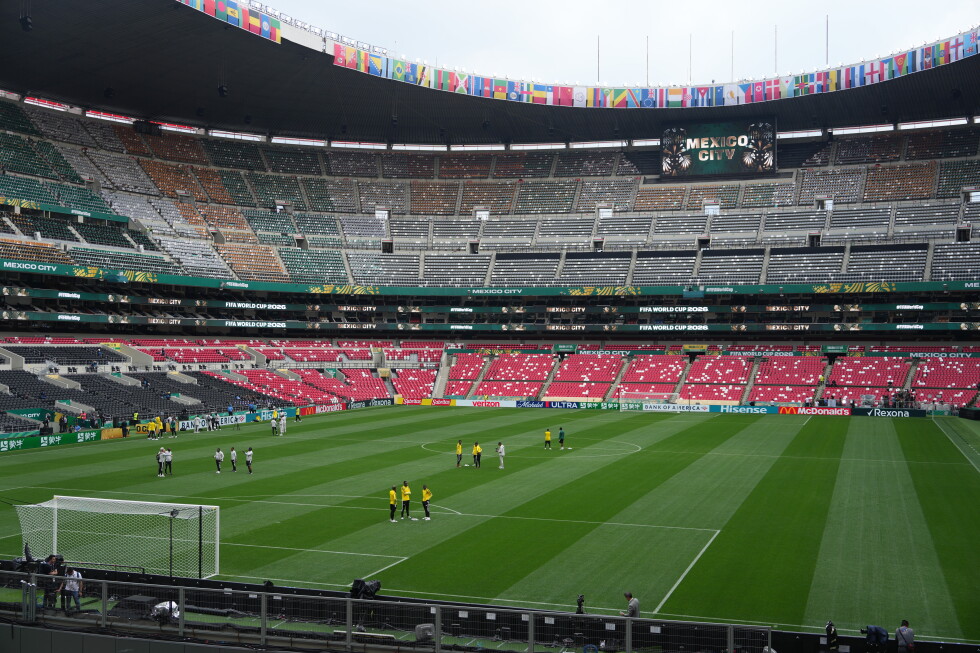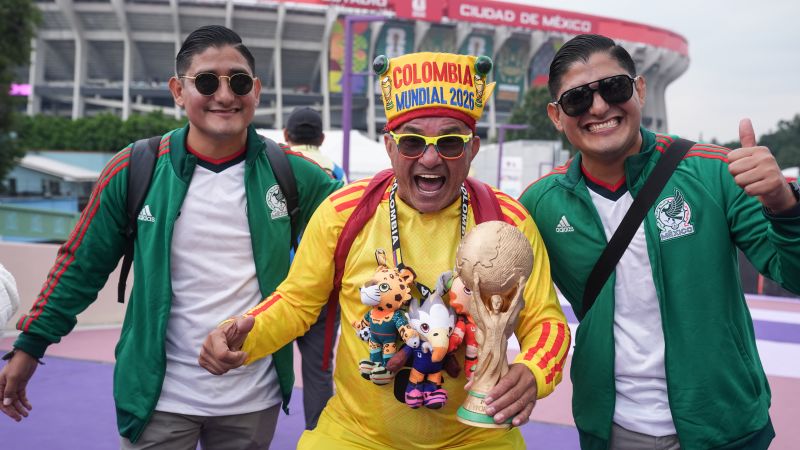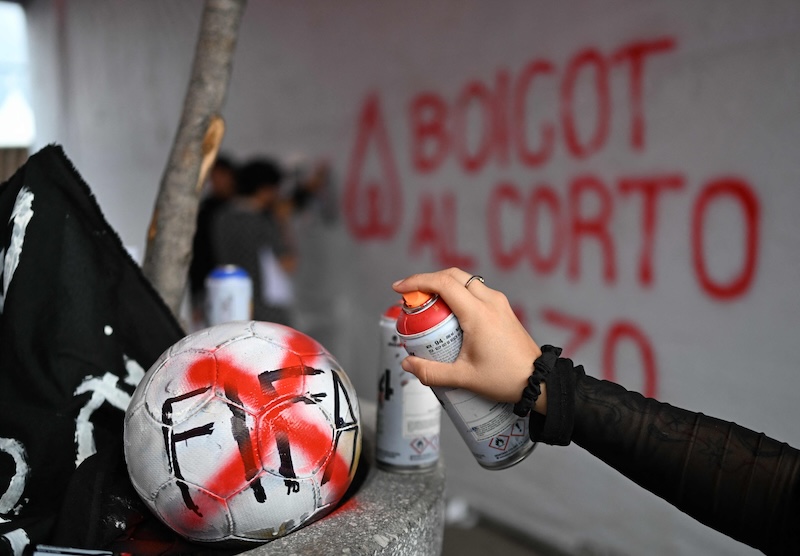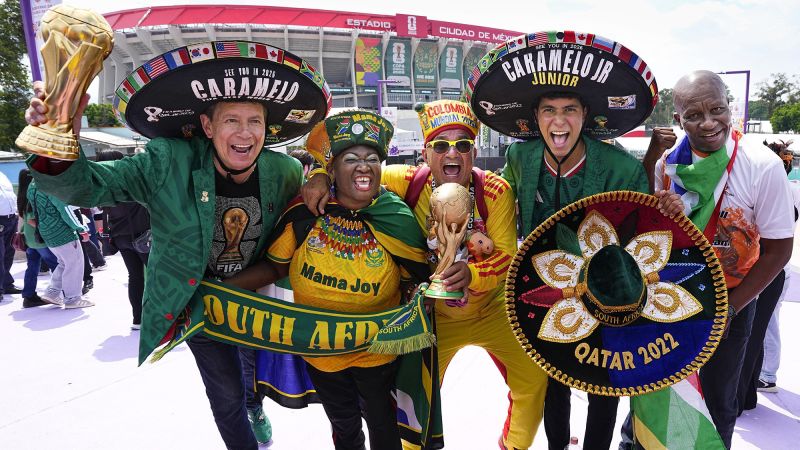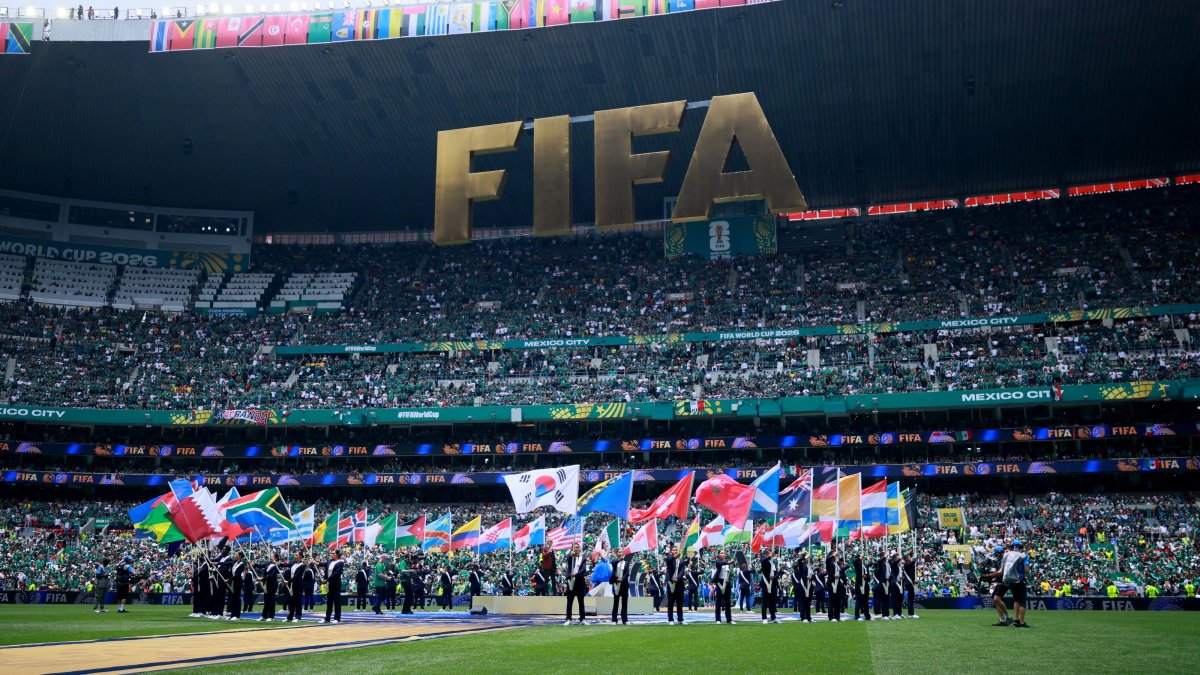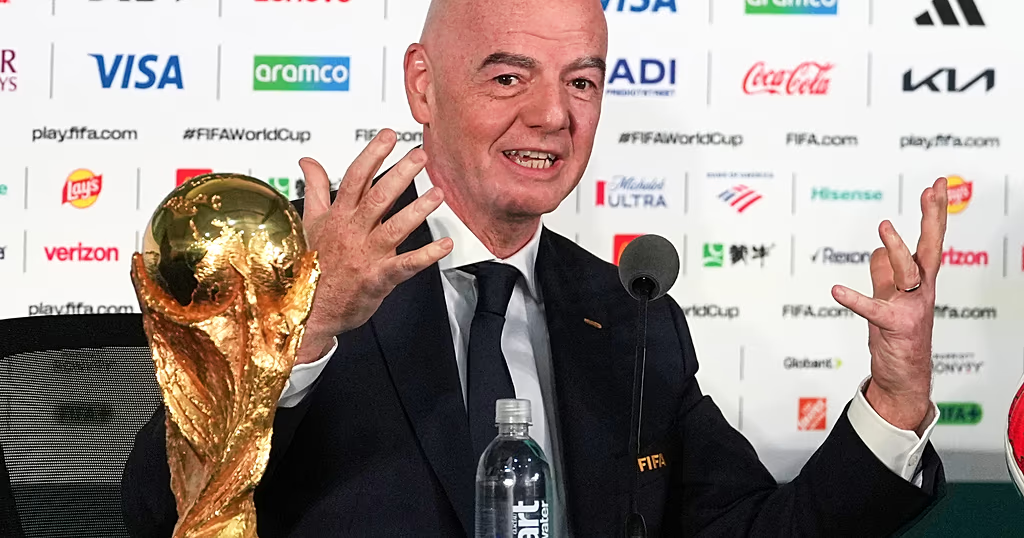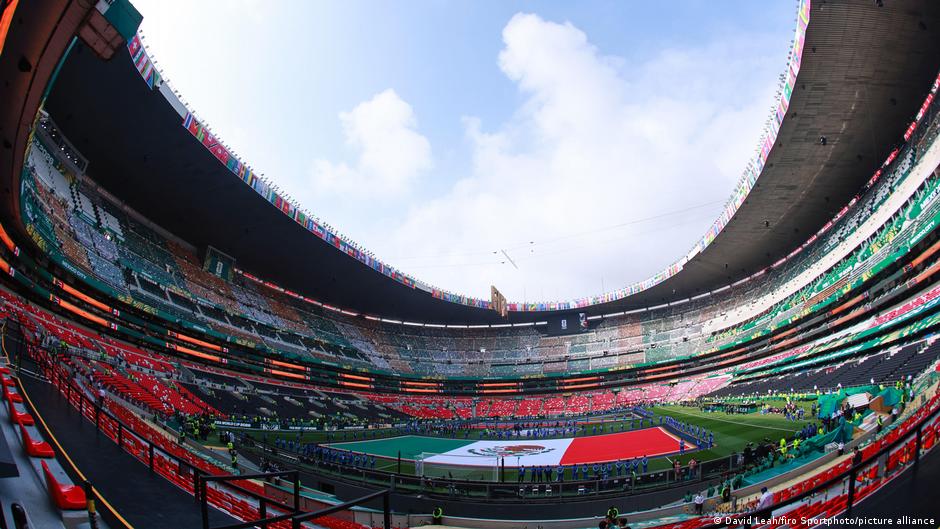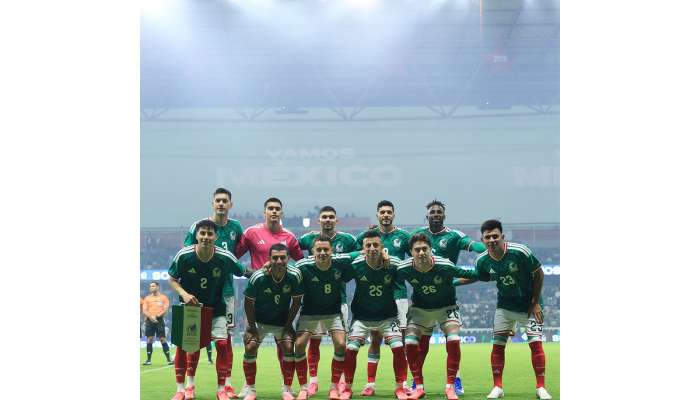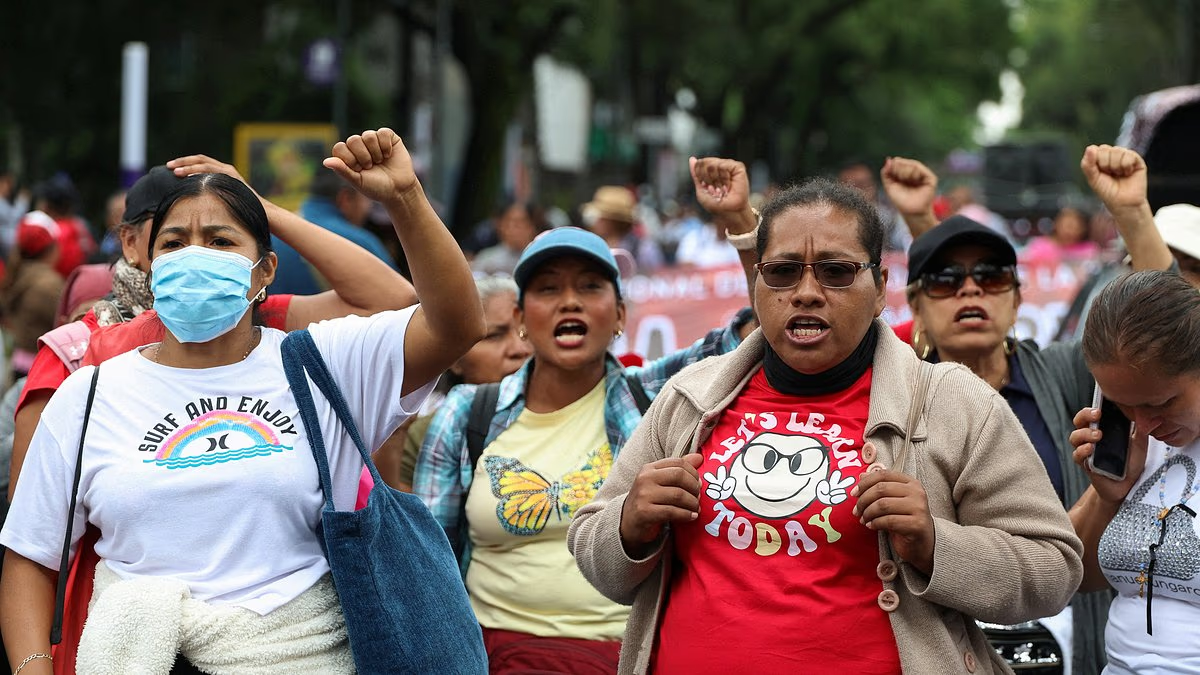
The World Cup finally gets underway this evening as Mexico take on South Africa at the Estadio Azteca in Mexico City.In a repeat of the opening match from the 2010 tournament in South Africa, excitement among football fans is at fever pitch. Yet the build-up to kick-off has been dominated by a series of off-field controversies involving politics, cost, security and logistics ahead of the largest World Cup in history.Mexico City itself encapsulates that contrast. There is pride at the country becoming the first to host World Cup matches across three separate tournaments following the 1970 and 1986 editions.But behind that football excitement, there is a mix of genuine tension, with large-scale protests taking place across the capital. The most visible demonstrations have come from members of the Coordinadora Nacional de Trabajadores de la Educacion, a teachers' union protesting over pay, pensions and labour reforms. The World Cup kicks off tonight but several off-field controversies have marred the build-up A teachers' union is protesting over pay, pensions and labour reforms in Mexico CityAs part of their campaign, thousands have marched through the city and established what has become known as a 'tent city' in the heart of the capital - effectively an area where the protestors have been camping out. The encampment has occupied a significant area of the city for more than a week and sits next to the World Cup fan zone, potentially impacting the usage of that area. They claim that Mexico President, Claudia Sheinbaum, has failed to deliver on promises made to teachers, and they are using the World Cup to draw attention to their plight and shine a light on the wider issues facing Mexico. Given the close proximity to the fan zone, authorities have installed security barriers and police presence around the area has been increased. Other groups including farmers, transport workers and families of missing persons, have also used the global spotlight of a World Cup to highlight their own causes. Elsewhere, environmental and human rights groups, including Greenpeace, have staged protests about the environmental impact of a World Cup spanning 16 host cities and three countries. Sections of the Mexican public are also unhappy about the costs associated with co-hosting the tournament when deep-rooted societal and economic issues remain unresolved. Some have argued the event primarily benefits wealthier sections of society, rather than the general population. As a result, the World Cup has become a focal point for wider frustrations surrounding public services, inequality and security in Mexico. Ticket prices have similarly become a major talking point ahead of the tournament opener. Despite FIFA insisting demand remains strong, the cost of attending matches has generated widespread criticism. According to the Financial Times, almost 180,000 tickets for the group stage are still available on official resale platforms.The report added that around 4,400 tickets were on the platform for the USA's opening game against Paraguay on Saturday morning (GMT), with the cheapest ticket available directly from FIFA costing $1,120 (£838.20). Ticket prices also don't include the wider costs associated with attending the tournament, including travel and accommodation across North America. Curacao, for example, face the longest group stage travel schedule of more than 6,200 miles. The protestors have formed a tent city in a central area of Mexico City near to the fan zoneOther groups have used the World Cup as an opportunity to protest, with Mexico President Claudia Sheinbaum coming under pressureThere has been an increased security presence around the Estadio Azteca amid the chaosVisa and entry issues have provided another source of controversy, with several fans, journalists and even officials having reportedly encountered problems obtaining visas or entering the US. The most high profile individual affected was Somali referee Omar Artan, regarded as one of Africa's leading officials. Despite being selected for the tournament, Artan was removed from FIFA's list of referees after American authorities denied him entry upon arrival at Miami International Airport. An official within the Donald Trump administration claimed this was due to Artan's alleged 'association with suspected members of terror organisations'. Speaking to the New York Times, Artan said: 'I am very, very disappointed. I'm just simply a referee who's trying to live his dream, the biggest dream of my life, to come to the World Cup.' Somalia is among the countries included on Trump's travel ban list. Last month, he described Somali immigrants in the US as 'all crooks,' having previously labelled the African nation as 'the worst country in the world' in January. The travel restrictions have attracted particular attention because they also affect qualified nations. Haiti and Iran are subject to full restrictions, while Ivory Coast and Senegal face partial restrictions. The issue has brought geopolitical tensions into the World Cup. Iraq national team photographer Talal Salah was denied entry to the US, while the Iranian Football Federation claimed their allocation of tickets for fans had been revoked.They added that some officials were denied visas, and Iran's team are now required to enter and leave the US on matchdays.As a result, Iran switched their base from Arizona to Mexico shortly before the tournament, disrupting preparations. Journalists from several countries have also reported problems with their visas or difficulties in obtaining entry to the US. The accumulation of these issues has led to some observers describing this World Cup as the most politically charged in history, despite FIFA's attempts to position it as a unifying global event.FIFA President Gianni Infantino claimed last year that 'fans from all over the world will be welcome' and only attracted more attention when pressed on visa problems, travel restrictions and ticket prices on Wednesday. Somali referee Omar Artan, regarded as one of Africa's best officials, was denied entry to the US FIFA President Gianni Infantino defended FIFA's handling of the various issues on WednesdayWhile defending FIFA's handling of the situation, he argued that immigration decisions rest with governments rather than the governing body. He similarly backed the ticket prices and claimed no-one else would have been able to secure Iran's participation at the tournament given their conflict with the US.He also urged his critics to 'chill' and 'relax'.'We don’t live on the moon, we live on planet Earth,' Infantino said. 'We have to respect that we are not kings of the world, who can rule over governments and police forces. 'We are a sports organisation that does as much as we can. It’s important sometimes to chill, relax. We work on everything. Sometimes screaming and shouting does not find a solution.'Nevertheless, it has all created an uneasy backdrop ahead of a tournament that will feature 104 matches over the next five-and-a-half weeks.
Chaos threatens World Cup start but FIFA chief tells critics to chill
The World Cup finally gets underway this evening as Mexico take on South Africa at the Estadio Azteca in Mexico City.
1,102 words~5 min read