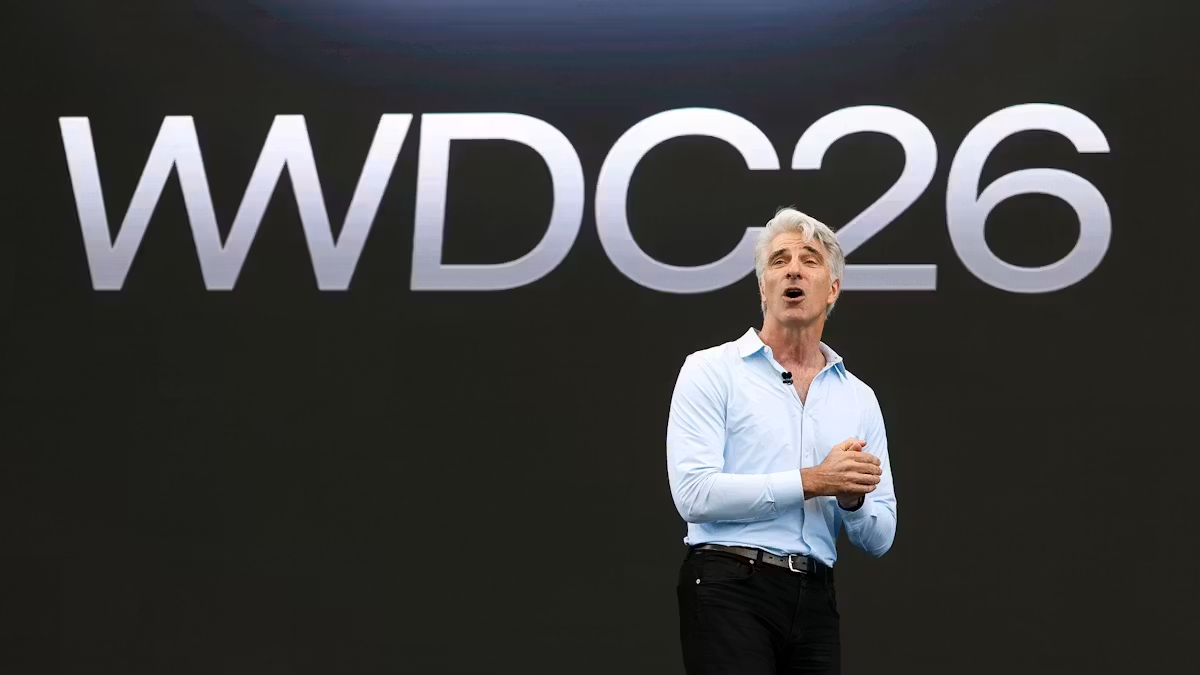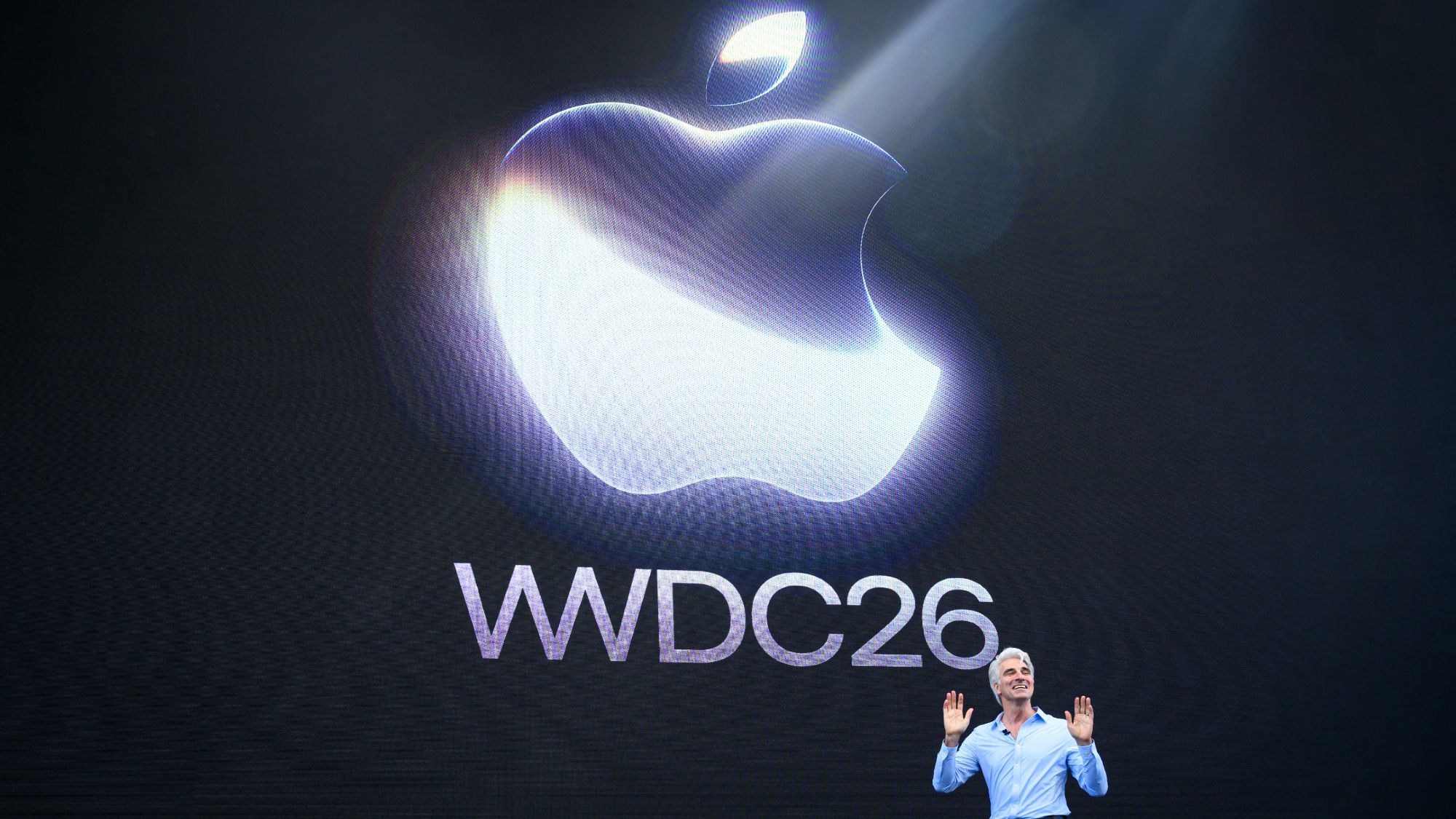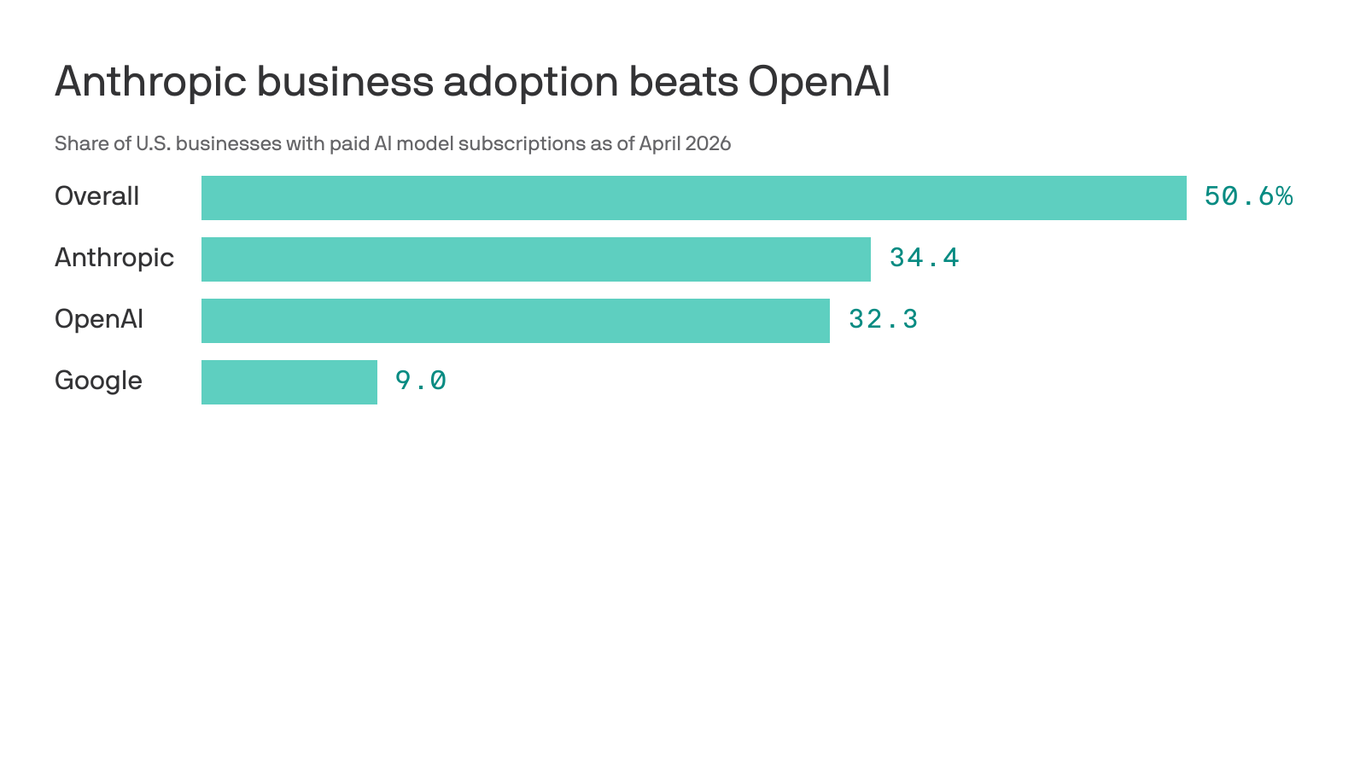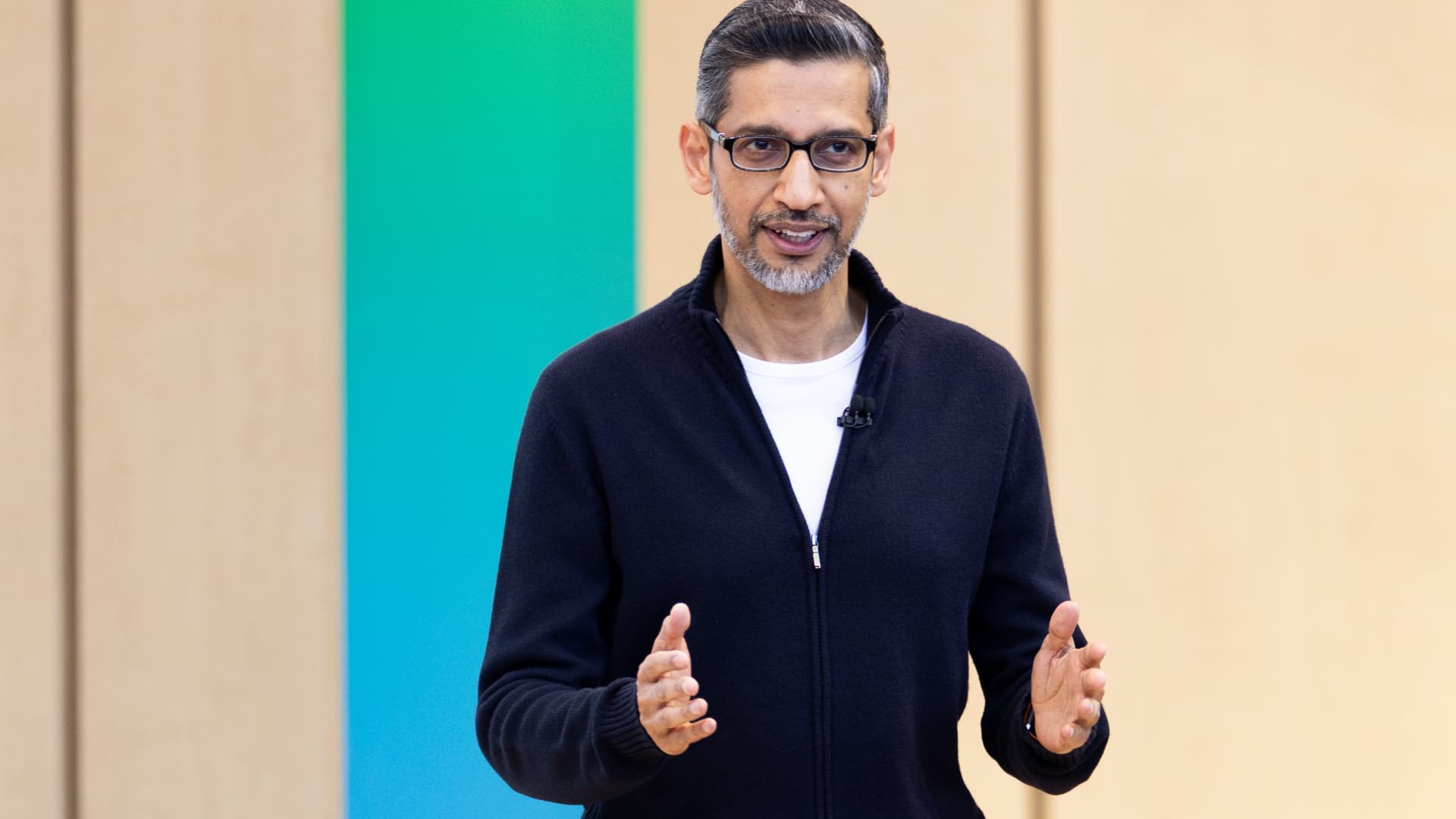
Google CEO Sundar Pichai speaks during a keynote address at Google I/O on May 19, 2026 in Mountain View, California. Benjamin Fanjoy | Getty ImagesAs OpenAI steers away from the consumer focus that made ChatGPT a household name, Google and Apple are rolling out a slew of new consumer AI offerings, trying to show how the technology can be practical for everyday users.The opposing approaches were laid bare this week, as Apple used its annual developers conference to introduce Siri AI as a new stand-alone app, and OpenAI announced that it's confidentially filed to go public, a move made possible by its recent traction in the enterprise market, largely in AI-assisted coding. The diverging tracks come at a pivotal moment in artificial intelligence, as OpenAI and Anthropic focus on building big — and eventually profitable — businesses by selling into enterprises that are eager to spend, rather than trying to lure paying consumers who are accustomed to free online services. Apple and Google, by contrast, have massive piles of cash and can afford to subsidize consumer use of AI if it means ramping up adoption and ensuring that coveted users stay in their ecosystem. Gartner analyst Kjell Carlsson said that for Apple, it's a matter of, "I can give this away for free, because I'll make it up on the iPhones or iCloud subscription they'll be buying." Apple says it has more than 2.5 billion active devices worldwide. Google currently has seven products that each serve more than 2 billion monthly users."Companies are realizing users get value from AI through these products, experiences, and the solutions that we build with them, not necessarily through the models or platforms," Carlsson said. watch nowWhile Apple is finally showing some progress in consumer AI, its Worldwide Developers Conference was widely viewed as underwhelming given how late the iPhone maker is to the game and how much anticipation there's been for an upgraded Siri. The stock dropped more than 5% over two days, as analysts questioned the lack of concrete timing and delays in certain parts of the world. In addition to the new Siri app, Apple also showcased how AI is now being integrated in various products, such as the iPhone camera, email, and the Shortcuts automation and productivity app. The company also spent a good chunk of its keynote presentation on Monday showing new child safety tools, which are rapidly gaining importance as AI becomes ubiquitous. Apple's annual event came less than a month after Google I/O, the search company's high-profile developers conference. There, Google showed off a number of consumer AI products such as Gemini Spark, which is a general-purpose AI agent, and information agents that the company says operate in the background in search and "will send you an intelligent, synthesized update, with the ability to take action."Google also unveiled smart glasses, an effort to crack a corner of the wearables market where rival Meta has found success, and a video editing tool that lets users "change what's happening" in a clip they shoot. Google and Apple are longtime rivals in consumer technology, but they're also partnering in AI. Gemini is powering Apple Intelligence, the technology behind the new Siri. And Apple executives said at WWDC that Google and chipmaker Nvidia are helping the company with its most advanced model, called Apple Foundation Model Cloud Pro.Apple didn't provide a comment for this story. A Google spokesperson said that the consumer slant at I/O had to do with the nature of the event and that the company had hundreds of enterprise-focused announcements in April at its cloud conference. 'That's where we make profit'Almost all of OpenAI's announcements this year have been enterprise-driven, as the creator of ChatGPT and pioneer in generative AI now finds itself chasing Anthropic. Anthropic, which was founded by early OpenAI researchers, was valued at $965 billion in its latest funding round in May, topping OpenAI's $852 billion valuation from March. Anthropic also beat OpenAI to the confidential initial public offering filing phase, disclosing its move a week before OpenAI did the same. Last month, OpenAI announced the creation of OpenAI Deployment Co., or DeployCo, a joint venture majority owned and controlled by OpenAI alongside 19 global investment firms, consultancies and systems integrators. Its stated goal is to deploy "forward engineers" directly into corporations to bridge the gap between model capabilities and complex corporate workflows. OpenAI also agreed to acquire AI consulting and engineering firm Tomoro, which included 150 "deployment specialists."Meanwhile, OpenAI has abandoned some consumer products as it tries to rightsize its financials. In March, the company shuttered its video generation tool Sora, which hit 1 million downloads less than five days after its launch in late September. The same month, OpenAI announced a pivot away from the Instant Checkout shopping feature it launched last year.Denise Dresser, OpenAI's chief revenue officer, said last month that the company is at a "tipping point" in enterprise AI adoption, after CFO Sarah Friar said in March that enterprise was up to 40% of total revenue and would be at about half by the end of the year. "If you look at the total value of software, the vast majority of it is business software," said Rob Collie, founder of consulting firm P3 Adaptive and a former business intelligence lead at Microsoft. "That's where we make profit. That's where productivity is worth paying for." watch nowOpenAI used the popularity of ChatGPT to build its brand. But the real money is currently being spent in the AI coding market, where developers and nontechnical people are using the company's Codex and Anthropic's Claude Code to write software and build apps based on text prompts. "Enterprise buying cycles are complicated and coding is the easiest funnel for companies to get into since engineering teams are blowing their budgets," said Ram Bala, associate professor of AI and analytics at Santa Clara University.OpenAI didn't provide a comment for this story. One particular risk that Apple and Google face in targeting consumers is that AI skepticism is running hot, due to fears that it's rapidly replacing jobs and leading to troubling behavior among children and teens.A Pew Research Center study published in March found that about half of Americans felt that AI in their daily lives made them "more concerned than excited." Alphabet CEO Sundar Pichai said in a recent episode of the "Hard Fork" podcast that people are "rightfully" anxious about what sort of future the technology will create, calling the scale of change unprecedented. Collie of P3 Adaptive said a "backlash" is happening, but that companies "perceived as friendly" could benefit from changing the narrative. With the entire tech industry almost singularly focused on AI and with Wall Street rewarding what it views as the AI winners and punishing the laggards, companies are investing as if the technology is inevitable and it's just a matter of who gets there first. "They've all learned the hard way the cost of missing a segment," Collie said.Gil Luria, a tech analyst at D.A. Davidson, said that even with OpenAI's race to capture the enterprise, the company still has a big lead over Google and others in the consumer market because of the viral success of ChatGPT. He said Apple's rollout of a Siri app "could very well attract a lot of consumers away from both ChatGPT and Gemini."And analysts at JPMorgan Chase wrote in a note on Tuesday that Apple's addition of expressive voices in Siri "could set up for a device upgrade cycle if these features gain strong consumer traction."Apple still has a lot to prove, and that task is soon to fall in the hands of incoming CEO John Ternus, the company's longtime hardware boss who's succeeding Tim Cook at the helm in September. Matt Rogers, co-founder of Nest and a former iPhone engineer under Steve Jobs, said Ternus has a high hill to climb. "Apple played it safe," said Rogers, who's now CEO of waste prevention company Mill, regarding the WWDC announcements. "As John Ternus takes over, he needs to steer the company towards making AI useful, trusted, and native across the devices people already live with."WATCH: Apple shares plummet following WWDCwatch now
As OpenAI leans into enterprise business, Apple and Google set sights on the masses
OpenAI's aggressive push into the enterprise, where it competes with Anthropic, coincides with efforts by Apple and Google to bring advanced AI to consumers.
1,358 words~6 min read