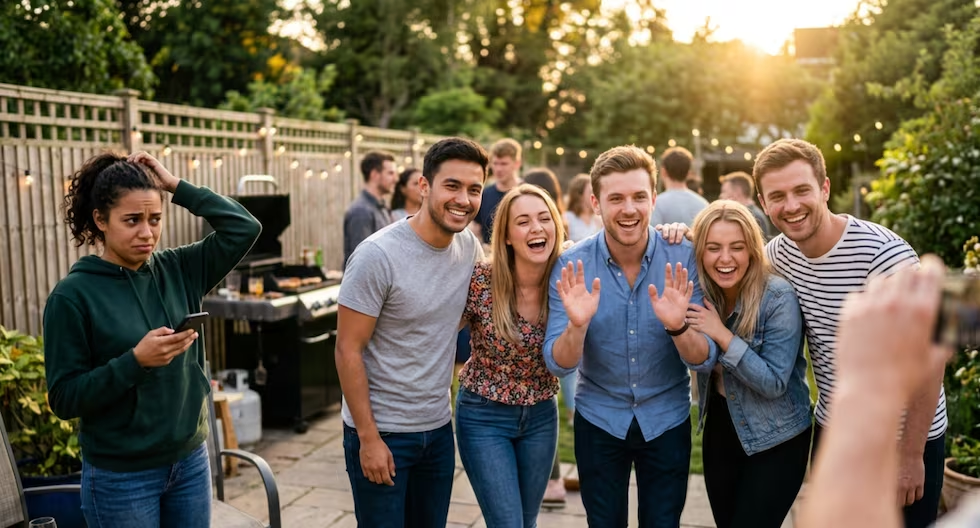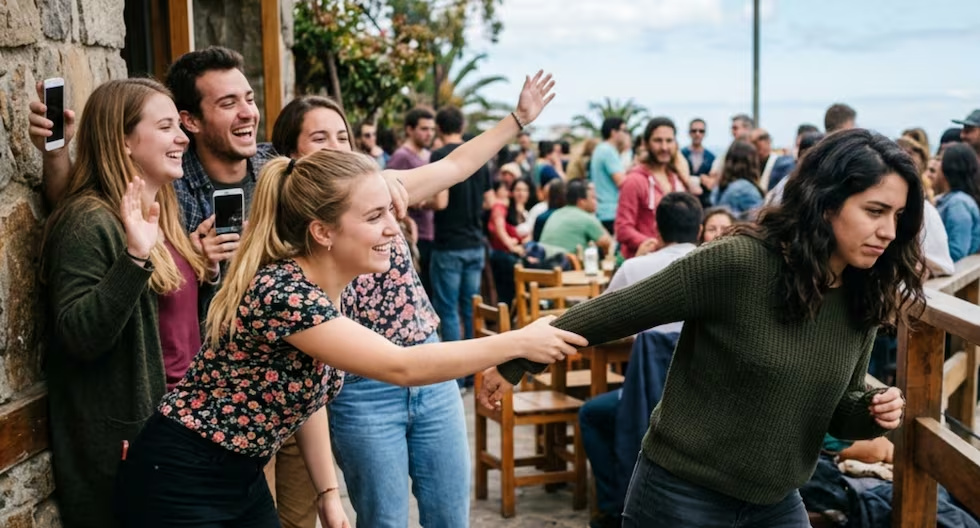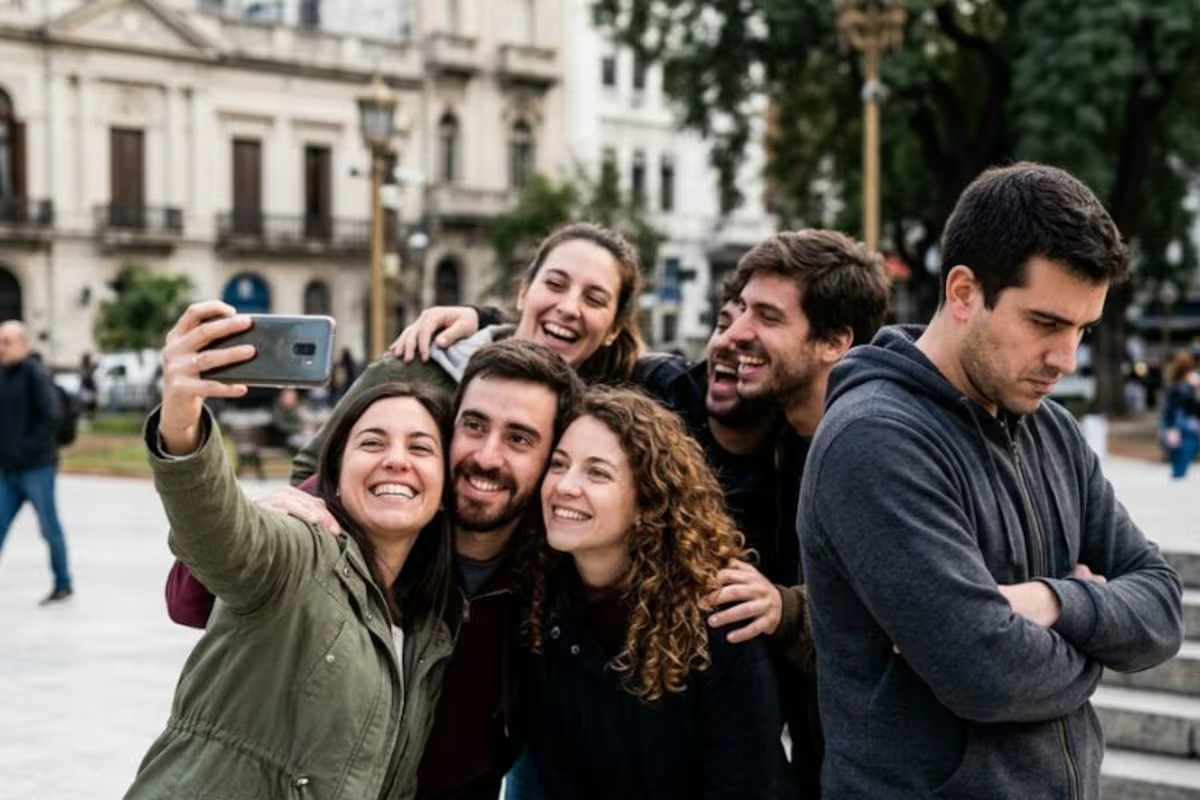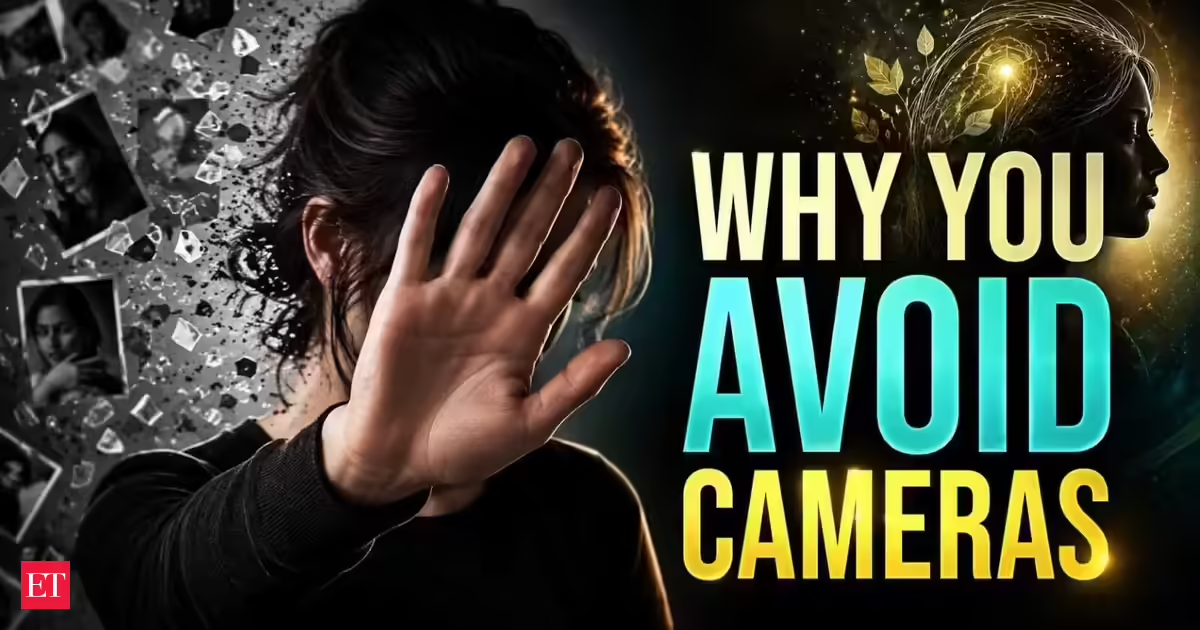
Almost everyone knows someone like this. The moment a camera appears, they step aside. They volunteer to take the group photo instead of being in it. They avoid selfies, dislike video calls, and rarely post pictures of themselves on social media.While some people love being photographed, others seem uncomfortable every time a camera is pointed in their direction. This often raises an interesting question: Why do some people hate getting their photos clicked?Psychology says the answer is far more complicated than simple shyness. In many cases, the behavior may be linked to self-awareness, perfectionism, social anxiety, identity, privacy preferences, or even the way the brain processes self-image.The surprising truth is that people who dislike photographs are not necessarily insecure. Sometimes they simply experience the camera differently from others.The Brain Sees You Differently Than the Camera DoesOne of the biggest reasons people dislike photographs is something psychologists call the mere-exposure effect. Humans become comfortable with things they see repeatedly.You Might Also Like:Psychology says people who hate getting their photos clicked aren’t rude, they may be revealing something unexpected about their personality Most people see themselves in mirrors every day. A photograph, however, often presents a reversed version of the face. As a result, pictures can feel unfamiliar. The image may be perfectly accurate, but because it differs from the reflection people are used to seeing, the brain interprets it as "wrong."This explains why someone may think they look perfectly normal in a mirror but dislike nearly every photograph of themselves.Highly Self-Aware People Often Overanalyze PhotosPsychologists studying self-consciousness have found that some individuals naturally pay greater attention to their appearance and behavior. This does not always mean vanity. In fact, it can be the opposite.Highly self-aware individuals often notice details that others completely ignore. A slightly awkward smile. A strange angle. A wrinkle in clothing. An unusual facial expression. While everyone else sees a normal picture, the individual may focus on tiny imperfections.You Might Also Like:This tendency is often associated with self-focused attention, a psychological process that can amplify perceived flaws.Perfectionism Can Make Photos StressfulAnother explanation involves perfectionism. Research has consistently shown that perfectionists tend to set extremely high standards for themselves. A photograph feels permanent.Unlike a conversation or a moment in time, an image can be viewed repeatedly. For perfectionistic individuals, this can create pressure. They may worry about looking unattractive, awkward, tired, or different from how they wish to appear.A modern example is the person who takes twenty selfies but deletes nineteen of them because none feel "good enough." The issue is often not appearance itself but the desire to meet an unrealistic standard.Social Media Has Changed How People View ThemselvesThe rise of social media has added another psychological layer. Platforms are filled with carefully edited images, filters, and curated lifestyles. Psychologists studying Social Comparison Theory have found that people naturally compare themselves with others.The problem is that most comparisons occur against highly polished versions of reality. As a result, ordinary photos may feel disappointing. A teenager comparing themselves to influencers. A professional comparing themselves to celebrities. A parent comparing family pictures to perfect online posts.These comparisons can increase discomfort with being photographed.Some People Simply Value PrivacyNot everyone avoids photos because of insecurity. Some individuals genuinely value privacy. Personality research suggests that introverted people often maintain stronger boundaries around personal information and self-disclosure.For these individuals, posting photographs may feel unnecessary. They prefer experiences over documentation. A modern example is someone who enjoys vacations, concerts, and celebrations but rarely posts pictures online. Their avoidance of photographs reflects personal values rather than emotional distress.Cameras Can Trigger Social AnxietyFor some people, cameras create a feeling of being evaluated. Psychologists refer to this as evaluation apprehension. The individual becomes aware that others may see, judge, comment on, or remember the image.This can trigger anxiety. The result is often awkward facial expressions, stiffness, or discomfort. Ironically, worrying about looking nervous can make someone appear nervous, creating a self-fulfilling cycle.This is why otherwise confident people sometimes become uncomfortable the moment a camera appears.Why Many People Prefer Taking Photos InsteadInterestingly, some people love photography but dislike being photographed. Psychologists suggest this may reflect a preference for control. Behind the camera, individuals decide what gets captured.In front of the camera, they surrender that control to someone else. For people who value autonomy, this shift can feel uncomfortable.What Psychology Really Says About People Who Hate Getting Their Photos ClickedPsychology does not suggest that everyone who avoids photographs lacks confidence. Human behavior is far too complex for that. Research indicates that camera avoidance can stem from self-awareness, perfectionism, privacy preferences, social comparison, evaluation anxiety, or simply unfamiliarity with one's photographed image.For some people, the camera feels intrusive. For others, it feels uncomfortable. And for many, it is simply a personal preference. The next time someone refuses a photo, remember that it may reveal less about their confidence and more about how they experience attention, identity, and self-perception in an increasingly image-focused world.FAQsIs disliking photos a sign of low self-esteem?Not necessarily. Many people avoid photographs because of privacy preferences, perfectionism, self-awareness, or social anxiety rather than low self-esteem.Why do I look different in photos than in the mirror?Mirrors show a reversed image that you see regularly. Photographs often appear unfamiliar, making them feel less comfortable.
Psychology says people who hate getting their photos taken aren’t shy, they may be revealing something unexpected about their personality
Psychology does not claim that everyone who dislikes being photographed struggles with confidence. Human behavior is far too nuanced to support such a simple conclusion. Research suggests that avoiding cameras can be influenced by a variety of factors, including heightened self-awareness, perfectionist tendencies, a preference for privacy, social comparison, fear of evaluation or discomfort with seeing oneself in photographs.
874 words~4 min read