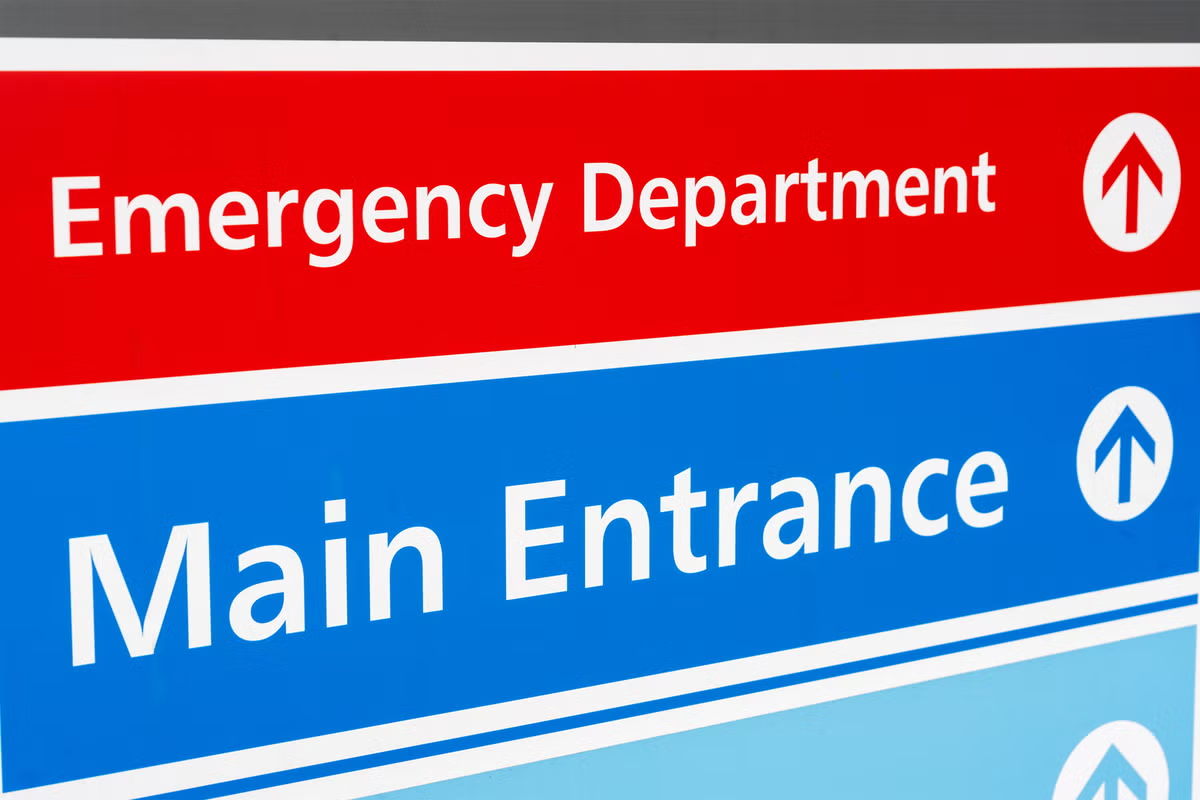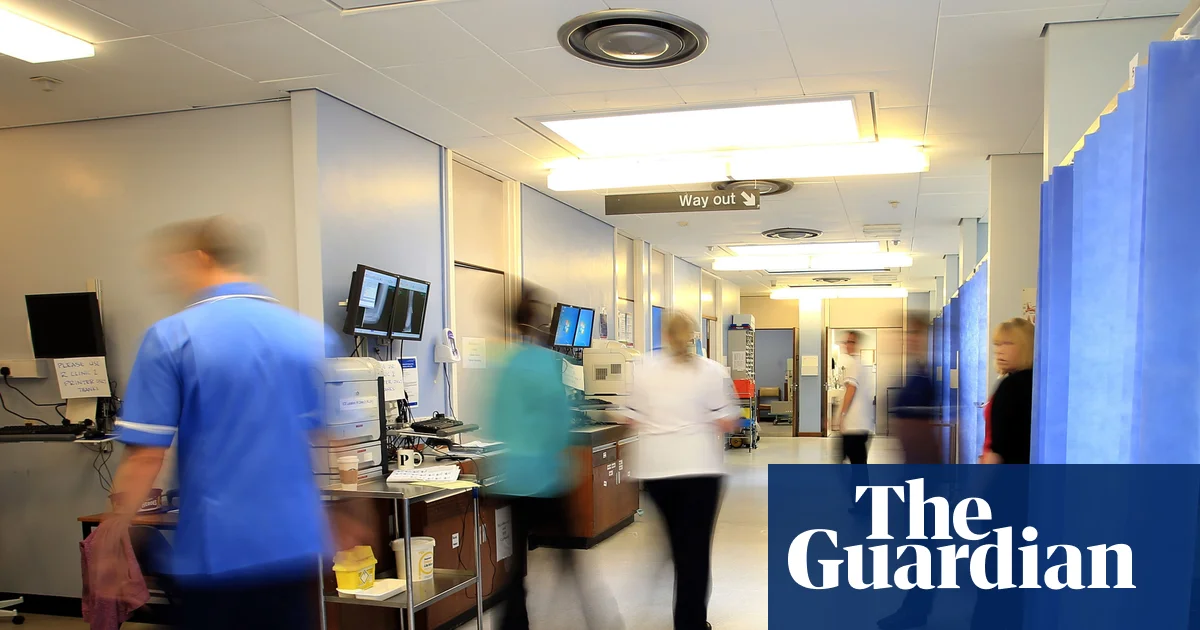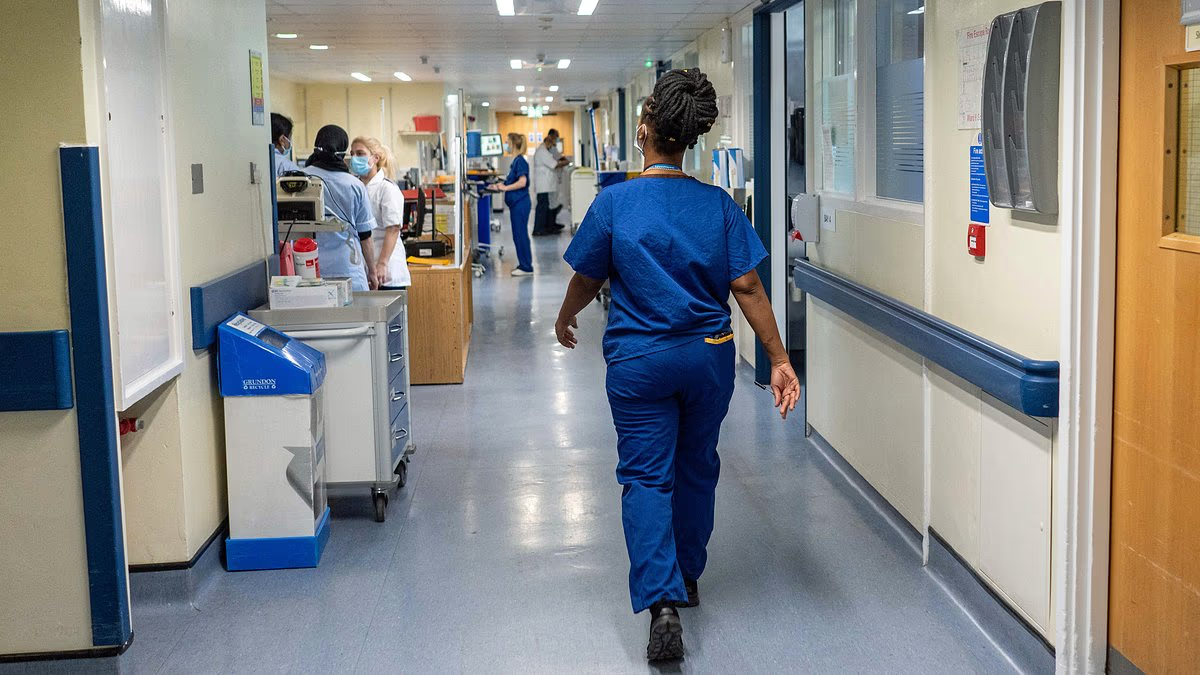
NHS accident and emergency departments faced their busiest month on record in May, after the bank holiday heatwave piled further pressure on the health service - and saw thousands of sick patients being treated in hospital corridors. Higher temperatures increase the risk of heart attacks and respiratory problems, especially among the elderly. Latest figures show the NHS treated 2,457,398 patients in A&E during May - around 25,000 more than the previous record set in March. This marks the second record-breaking month for A&E attendances in 2026, marking 'unprecedented' demand outside of the winter period. Experts in emergency medicine have previously warned that heatwaves and soaring temperatures could bring the NHS to 'its knees', resulting in extra deaths. For the first time, the NHS also published data on corridor care - with nearly 3,000 patients a day cared for in make-shift treatment areas last month.The data reveals the scale of the mounting pressure the NHS is facing, in conditions ministers have labelled 'unsafe' and 'unacceptable'.Corridor care is a term used for when patients spend more than 45 minutes waiting for an appropriate place to be treated. Nearly 3,000 patients a day had to be cared for in hospital corridors or make-shift treatment areas rather in a bed on a ward in England last monthMinisters have pledged to eradicate the dehumanising practice, which sees dying patients parked up outside nurses stations, by 2029. In A&E departments, this means patients are often left in side rooms or busy corridors where there isn't the proper equipment required to monitor them.On hospital wards, it is when patients have been waiting for a bed for 45 minutes or more. During May, 2,241 patients a day experienced corridor care, while on wards 669 patients were left in corridors, stripped of their dignity. NHS analysis found that 20 trusts across England accounted for more than half of cases in A&E. Health Secretary James Murray said: 'Corridor care is unacceptable, undignified and has no place in our NHS. 'That is why, for the first time, we are publishing this data to shine a spotlight on where the problems are greatest and ensure trusts get the support they need, with the vast majority of corridor care concentrated in a small number of organisations.' Professor Francesca Swords, National Medical Director for the NHS added: 'A&E staff bore the brunt of the heatwave in May, as the hot weather took its toll on the public. Latest figures show the NHS treated 2,457,398 patients in A&E during May - around 25,000 more than the previous record set in March'Despite the hard work of staff, we know too many patients are still waiting in hospital corridors before being admitted to a ward.'Corridor care is totally unacceptable and should have no place in the NHS, and this is why we have set out a seven point plan to eradicate it, alongside offering targeted support for the trusts facing the greatest challenges.'It comes as NHS staff in A&E departments have admitted to avoiding eye contact with patients because they are 'embarrassed' by the substandard care patients are receiving. Demand for treatment has become so high that an increasing number of patients are being treated in corridors – with reports of dying people left parked outside toilets or beside nurses' stations.One senior doctor was reported to have said: 'I don't think I can go back and do another shift, because I am embarrassed at the care we are delivering.'The comment was included in a dossier of evidence submitted to MPs by the Royal College of Emergency Medicine (RCEM), highlighting the scale of pressure facing A&E departments. Meanwhile, the waiting list for routine hospital treatment in England has risen for the first time in six months. An estimated 6.11 million patients were waiting for treatment at the end of April, NHS figures show.This is up from the six million patients at the end of March.The increase means the size of the list has returned to where it stood in February, following the winter flu period, reversing the fall that took place in March.
Nearly 2.5 million people sought help at NHS A&E departments in May
NHS accident and emergency departments faced their busiest month on record in May, after the bank holiday heatwave piled further pressure on the health service.
TL;DRAI
NHS A&E hit 2.47M patients in May; 3,000 daily in corridors as heatwave overwhelmed capacity. The crisis reveals critical need for real-time capacity monitoring and auto-scaling—infrastructure lessons applicable across all mission-critical sectors.
675 words~3 min read