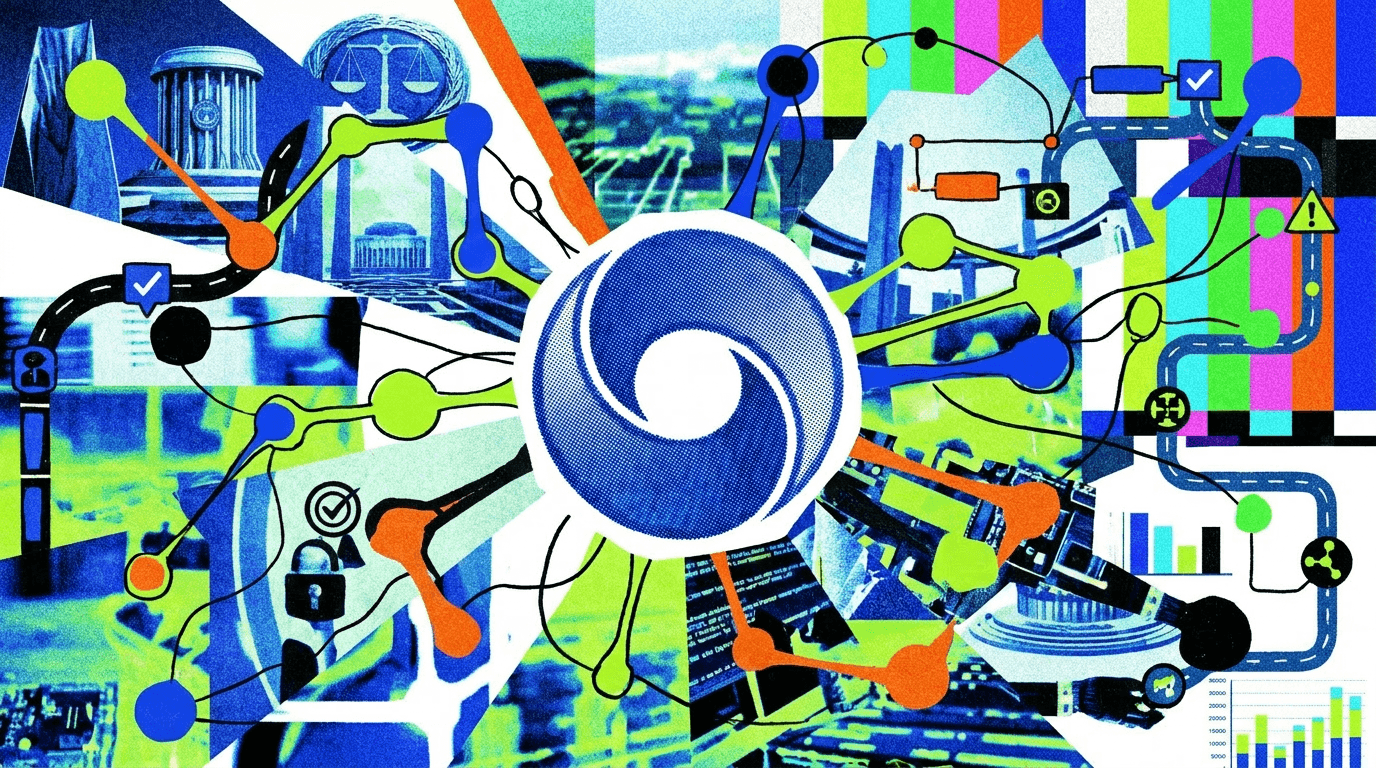
In an effort to address this, Google DeepMind—which made agent-based tools a centerpiece of Google I/O last month—has teamed up with several other organizations to announce a $10 million funding pot for researchers to study the behavior of multi-agent systems and come up with ways to prevent unsafe scenarios. Joining Google DeepMind are Schmidt Sciences, a philanthropic foundation set up by Eric and Wendy Schmidt; ARIA, the UK government’s moonshot agency; the Cooperative AI foundation, a UK-based nonprofit research outfit; and Google’s charitable arm Google.org. I asked Shah and James Fox, who leads the Science of Trustworthy AI program at Schmidt Sciences, what they hope to achieve with that $10 million. While it’s no small sum, it’s dwarfed by the budgets commanded by Google DeepMind’s own research teams.
The aim is to kickstart research outside of tech companies, says Shah: “The strength of academia is that it can look really quite far into the future and do the kind of work that isn’t top of mind at industry labs.” “The main issue is that there just isn't really a field of research for multi-agent safety yet,” he adds. “And we would like there to be.”
The concern is that as more and more AI agents get deployed and begin working together, we could hit a tipping point where imagined scenarios become real. “We see this with humanity too,” says Shah. “Our institutions can accomplish things that no individual human can.” Shah thinks that we have a few more months to go before agents are deployed throughout the economy in numbers that make potential risks a real concern. He wants to get ahead of that moment. Risky business What risks are we talking about exactly? The possibilities that Shah and Fox have in mind mostly boil down to supercharged versions of bad things that happen on the internet already: scams, prompt injections (where an AI agent is fed malicious instructions, turning it into a self-guiding piece of malware) and other forms of cyberattack. We look at what humans do now and ask what the agent version of that would be, says Shah. “We've got this digital commons that is integral to how society works and you really want to ensure that this doesn't descend into just absolute anarchy,” says Fox. (I asked Shah if they were considering any worst-case scenarios more on the doomer end of the spectrum, such as widespread economic collapse. “Certainly not if we're talking by the end of the year,” he said. That's only 6 months away! He laughs. “Okay, a while after that.”) Shah and Fox both think that the only way to understand what might happen when large numbers of multi-agent systems interact with each other is to run realistic simulations. They want researchers to drop AI agents into sandboxes and study what they do. You can’t predict what’s going to happen by studying single agents, or even small groups of agents, in isolation. You can’t assume that AI agents underpinned by LLMs will always act rationally, says Fox. And the complexity comes from having huge numbers of interactions at once. Some researchers, including a team at Google DeepMind, have argued that artificial general intelligence (if possible at all) could come not from a single super-smart model but from a kind of agent hivemind, where the capabilities of the whole add up to more than the sum of its parts.