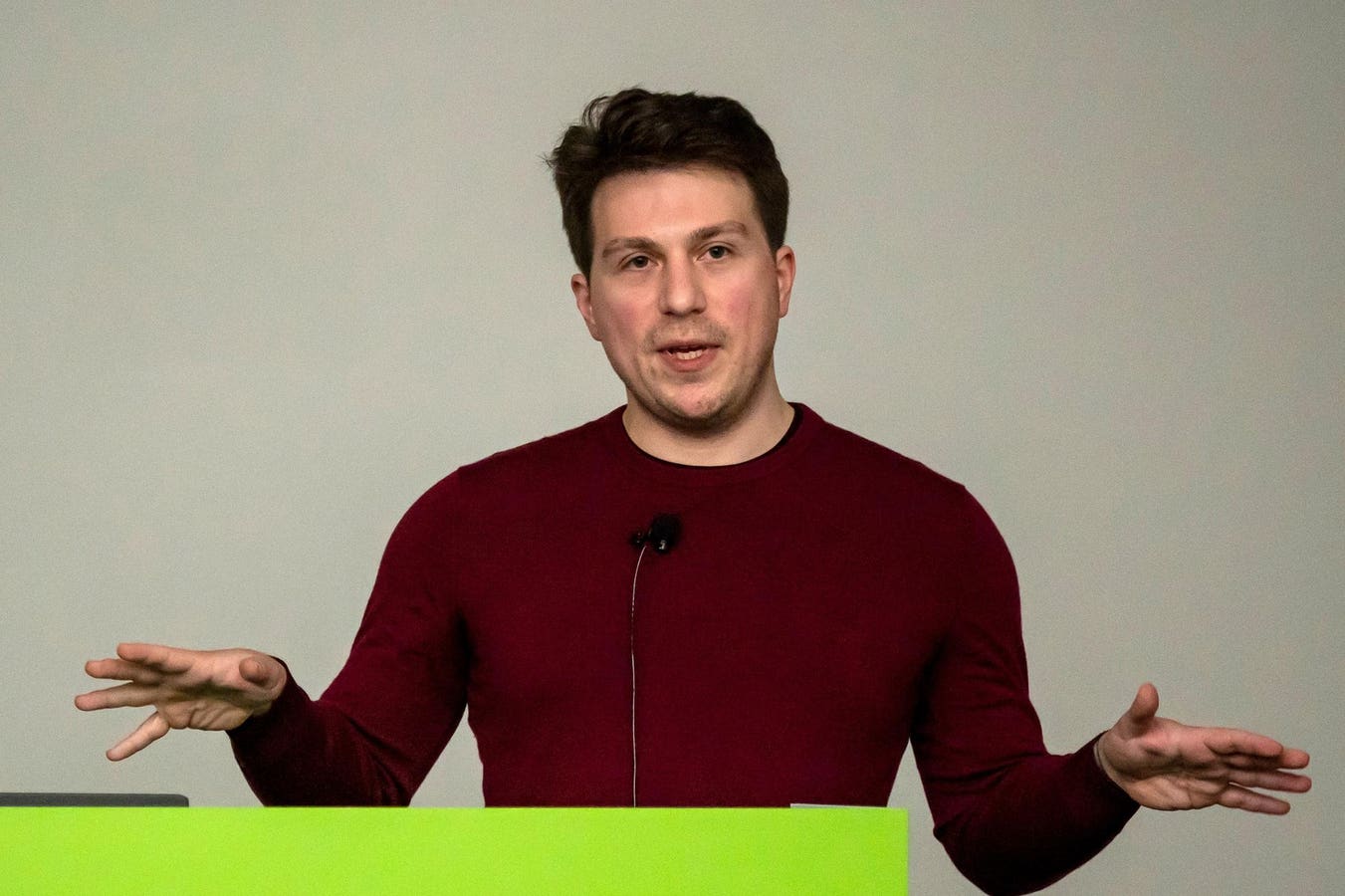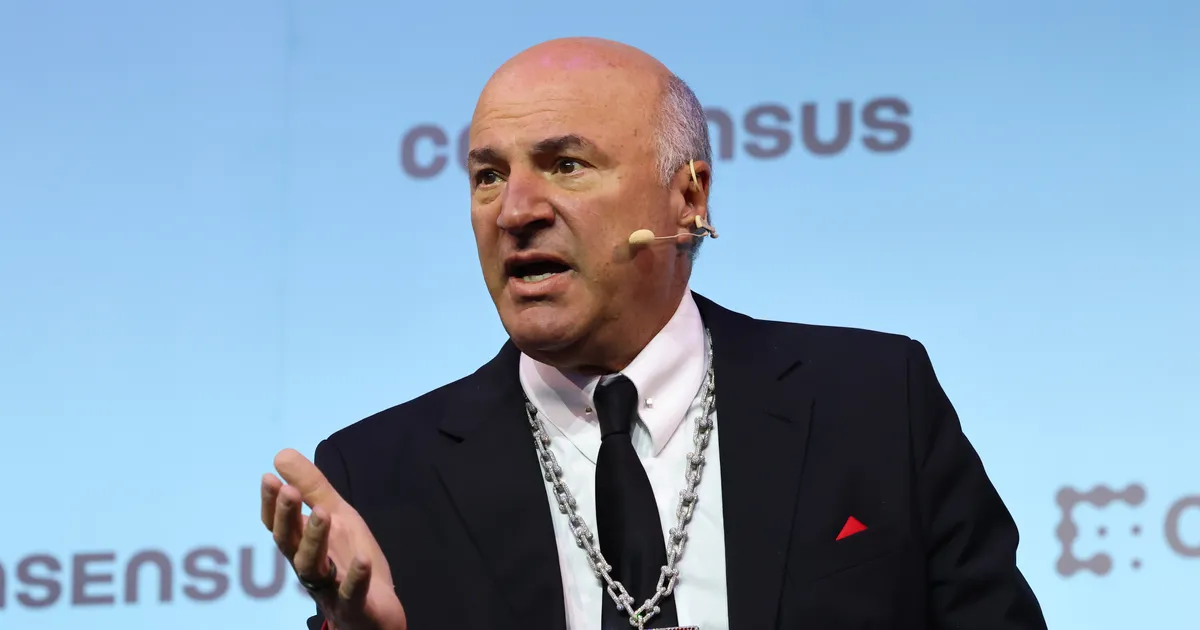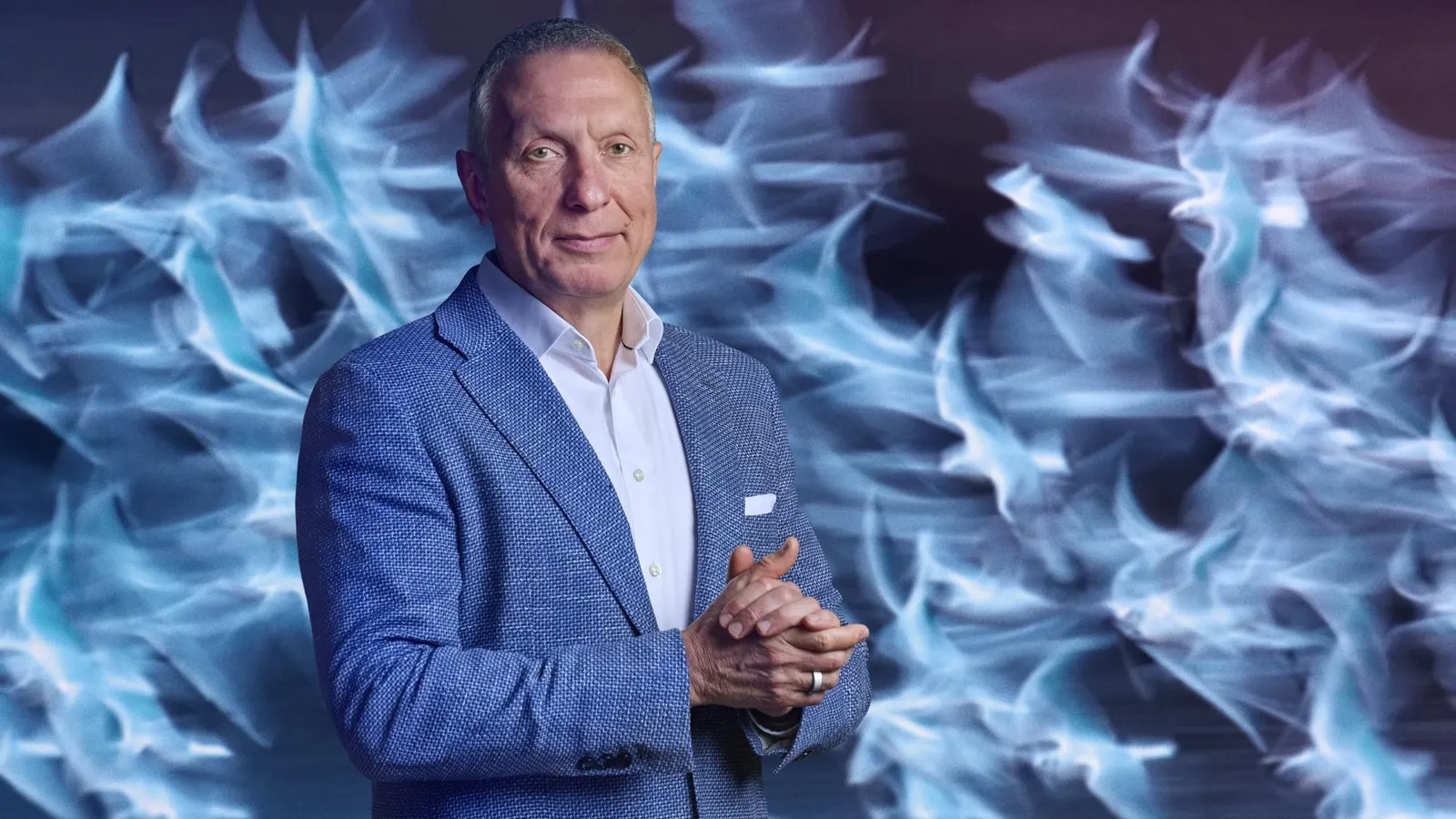
After 13 years in the U.S. Timashev returned to Russia in 2005 but didn't like what Putin was doing to the country. He returned to the U.S. in 2014 after a four-year stint in Switzerland. Says he, "You can go to Germany or Britain and build your own business, but you will never be German or British. But you will become American if you share our values."Jake Rosenberg for ForbesOn a sunny spring day at an upscale French restaurant in Greenwich, Connecticut, Ratmir Timashev is animatedly explaining his latest venture in a place far removed from his tony surroundings: Columbus, Ohio. Clad in a cream hoodie and white polo, the 59-year-old billionaire software entrepreneur launches into a pitch for why he wants to make Ohio’s capital the latest AI boomtown in America.“I’m a scientist by background. I like experiments,” he says. “So this is my experiment, to make Columbus the next Silicon Valley—America’s innovation hub.”It’s somewhat of a contrarian take. While AI startups are proliferating and valuations are booming, much of that wealth and creative destruction is happening on the coasts—not in Columbus, which is better known for housing healthcare and insurance firms than cutting-edge tech. The city ranked 29th—behind other college towns like Ann Arbor, Michigan and Gainesville, Florida but ahead of places like Pittsburgh and St. Louis—in a 2025 study of the top AI metro areas by the nonprofit Brookings Institute, which also named it one of 28 “star hubs.”Timashev is planning to invest $100 million over five years to turn his vision into reality. In February, he launched Oh.io, a venture capital firm that aims to bring 100 AI startups to Columbus. Unlike most VC funds that simply write a check, Oh.io’s plan is to hire and pay for entire sales and marketing teams for participating startups for 18 to 24 months—as long as they establish a base in Columbus. In return, the firm gets the option to invest at a lower valuation if that period is successful. The goal is to bring growth-stage startups with $1-5 million in revenue from elsewhere in the U.S., plus Europe and Israel, to Columbus and help them scale up. So far he’s signed up 8 startups, hailing from San Francisco to Switzerland—but is also facing a bitter legal battle with three former executives who claim he fired them in April.“We are a partner, we have skin in the game,” he says, preferring to call it a “performance venture platform” rather than a VC firm. “We build a team for you and the team is yours after that. Our goal is that teams will stay and grow in Columbus, so we bring great startups [there.] It doesn’t have to be the headquarters—management can stay in Israel or London or San Francisco, that’s fine—but the sales and marketing operations for North America will be headquartered in Columbus.” Jake Rosenberg for forbesThe Russian-born billionaire’s life has been intertwined with Ohio since the early 1990s, when he first moved to the U.S. in 1992 at age 26 to pursue graduate studies in chemical physics at Ohio State. He then cofounded two software companies in Columbus, including data management giant Veeam, which he and his partner Andrei Baronov sold to VC firm Insight Partners for $5 billion in 2020. Thanks to that sale plus his venture capital investments, Timashev is worth an estimated $5.4 billion. He’s also pledged some $150 million to his American alma mater including a $110 million donation in 2020 to establish a new center for software innovation—a gift that broke the previous record set by another notable alumnus, the Epstein-tarnished retail billionaire and major local philanthropist Les Wexner. (Wexner has said he cut off ties with Epstein in 2007.)Timashev’s also working with the Columbus Partnership, a group of about 80 local CEOs focused on economic development that Wexner cofounded in 2002 and Timashev joined earlier this year to advance his goal. “He deeply believes the region has what it takes to become the big tech startup, entrepreneurial hub for the Midwest and he wants to put his money and his time behind that vision,” says Jason Hall, CEO of the Columbus Partnership. “It’s a place he’s attached to emotionally and that he feels gave him so much and the success that he’s enjoyed.”Despite its size relative to larger AI boomtowns, Hall points to other strengths Columbus has: It’s one of the largest data center hubs in the country; it boasts a sprawling, $28 billion Intel semiconductor manufacturing campus named the “Silicon Heartland”; and it’s also home to five of the 500 largest American companies by revenue including Vertiv, a major provider of cooling and power infrastructure for data centers.For Timashev, the missing ingredient is startup founders. “Columbus has great industries like retail, insurance and banking, it has lots of healthcare and pharma startups,” he says, rattling off a list of corporations headquartered in the Buckeye State’s capital. “But what’s missing is entrepreneurship.”Long before he set foot in Columbus, Timashev was born in 1966 in the similarly-sized industrial city of Ufa in the Soviet Union. His parents, both engineers, encouraged him to pursue science. As a teenager he wanted to become an ice hockey player, but they wouldn't let him, so he buried himself in studying physics instead.“I always compare Ufa with Columbus because it’s very similar,” he says. “People are hardworking and have good values.”The Soviet Union was nearing collapse when he graduated from the Moscow Institute for Physics and Technology (MIPT)—known as Russia’s equivalent of MIT—in 1990 with a master’s in physics. He then started his PhD and worked as a researcher but it wasn’t enough to support his young family. So he picked up odd gigs on the weekends and summers, fixing roofs, cleaning windows and working small construction jobs: “In one summer I made more money than my dad did in 10 years.”In 1992, a year after Russia removed border controls, Timashev seized the opportunity to go to the U.S. for a shot at the American dream. “ ‘I said, ‘I need to go to America now, otherwise I’ll never have this opportunity,’ ” he recalls. “I just needed to go and learn the fundamentals of capitalism and entrepreneurship.”He was recruited to Ohio State by Terry Miller, a professor who had started bringing in Russian students a year earlier for his chemical physics lab, which had become one of the best in the country at the time. There was just one issue: Timashev’s English wasn’t good enough for admission. “Columbus is a great city with great talent and infrastructure, but maybe not paying L.A., San Francisco or New York prices.”
Inside A Russian-Born Billionaire's Plan To Turn Ohio Into An AI Hub
Ratmir Timashev aims to invest $100 million to bring 100 AI firms to the heartland in five years. So far he's signed up 8 startups but already faces a nasty legal battle.
2,446 words~11 min read